Can Leapmotor's 'Budget-Friendly Choice' Strategy Support a 200 Billion Valuation?
 08/03 2026
 437
437
Author | Wuzi
What is the potential for Leapmotor's stock price to climb further? The company's head has shared his perspective.
On July 23, 2026, Zhu Jiangming, the founder, chairman, and CEO of Leapmotor, appeared on Sina Finance's "Boss on the Road" and stated that Leapmotor's true value is significantly underestimated. "A valuation of 50 billion is way too low," he remarked.
Zhu outlined Leapmotor's four core product segments: complete vehicles, electronics (including lighting and intelligent cockpit driving systems), electric drives, and batteries. "If we consider each segment individually, a valuation of 50 billion is certainly achievable. Therefore, combined, a valuation of 200 billion is reasonable," he explained.
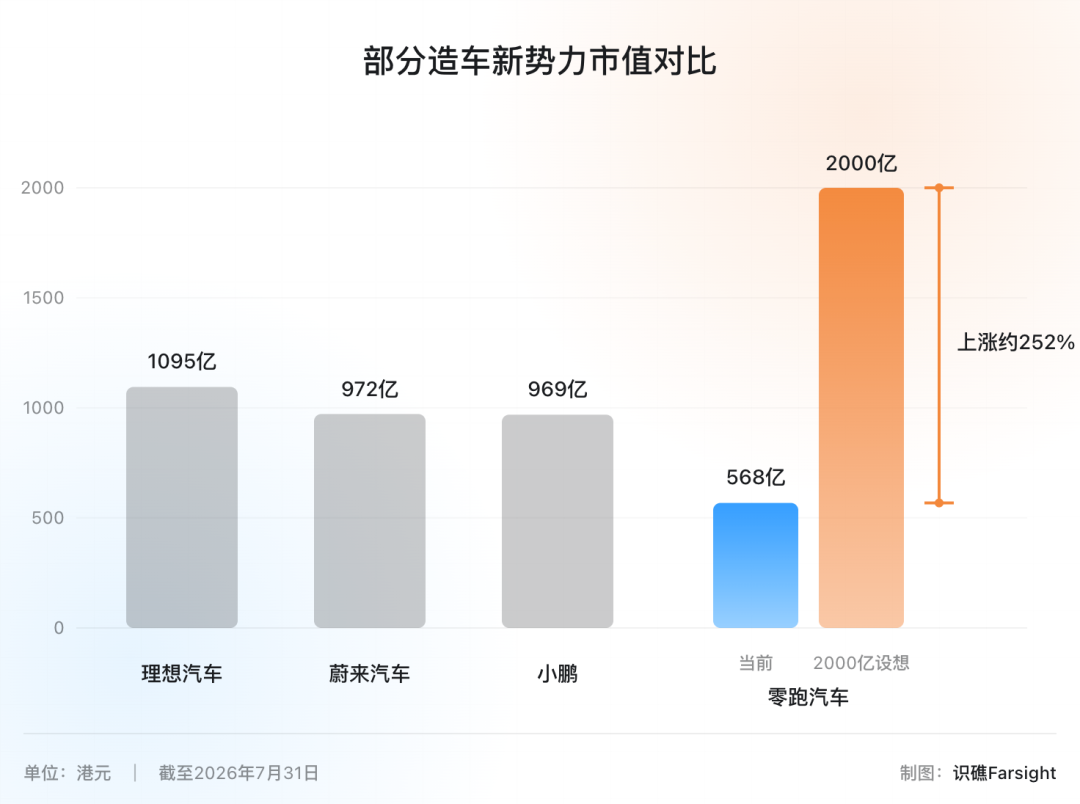
As of July 31, Leapmotor's market capitalization on the Hong Kong stock exchange stood at approximately HK$56.8 billion. During the same period, Li Auto's market cap was around HK$109.5 billion, NIO's was approximately HK$97.2 billion, and XPeng's was about HK$96.9 billion. According to Zhu's vision, Leapmotor's stock price has the potential to increase by around 252%, positioning it as the leader in market capitalization among China's new energy vehicle (NEV) startups.
However, the reality is that Leapmotor's stock price has been highly volatile. In August 2025, Leapmotor's stock price peaked at HK$76.3 per share but has since declined. As of July 31, it closed at HK$39.96 per share, below its initial public offering price of HK$48 per share.
It is widely acknowledged that market capitalization reflects the capital market's assessment of a company's long-term ability to generate free cash flow. While Leapmotor has achieved sales breakthroughs through its high-value strategy, the question remains whether this model can sustain long-term profitability—a crucial factor in reaching a 200 billion valuation.
01 Leapmotor as a 'Budget-Friendly Choice' to Li Auto: A Breakthrough
Although Leapmotor has focused on delivering high value since its inception, its sales struggled initially due to its focus on the niche market of microcars.

Source: Li Auto
Around 2022, Li Auto successfully captured the market by introducing extended-range electric SUVs as "budget-friendly alternatives" to luxury full-size SUVs like the Mercedes-Benz GLS and BMW X7, becoming the top-selling NEV startup.
Since Li Auto did not venture into the market below 200,000 yuan, Leapmotor keenly observed a significant market gap in the mid-to-low-end extended-range vehicle sector. Subsequently, Leapmotor shifted its focus to high-value extended-range SUVs, aiming to serve as a "budget-friendly choice" to Li Auto.
Source: Leapmotor
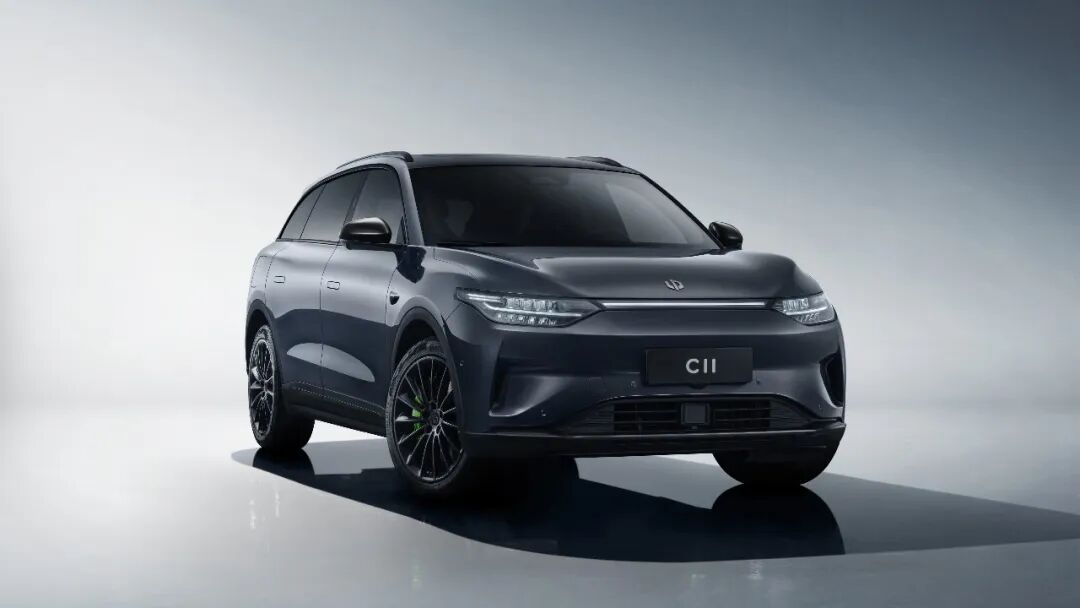
For instance, in February 2023, Leapmotor introduced the mid-size SUV Leapmotor C11 Extended Range, featuring a 43.74 kWh battery, a CLTC pure electric range of 285 km, Nappa leather seats and steering wheel, and the Leapmotor Pilot intelligent driving assistance system, priced between 149,800 and 185,800 yuan.
Source: Leapmotor
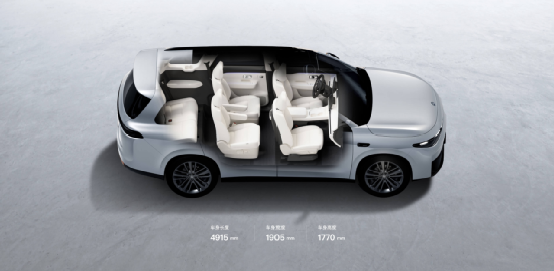
In June 2024, Leapmotor launched the mid-to-large-size SUV Leapmotor C16, available in both pure electric and extended-range versions, with a 2+2+2 seating configuration, a length of 4915 mm, and a wheelbase of 2825 mm. The extended-range version offers a pure electric range of 200 km, priced between 155,800 and 185,800 yuan.
Given the market's positive reception of Li Auto's extended-range SUVs, Leapmotor's strategy of serving as a "budget-friendly choice" enabled it to penetrate broader lower-tier markets and achieve rapid sales growth.
Source: Leapmotor
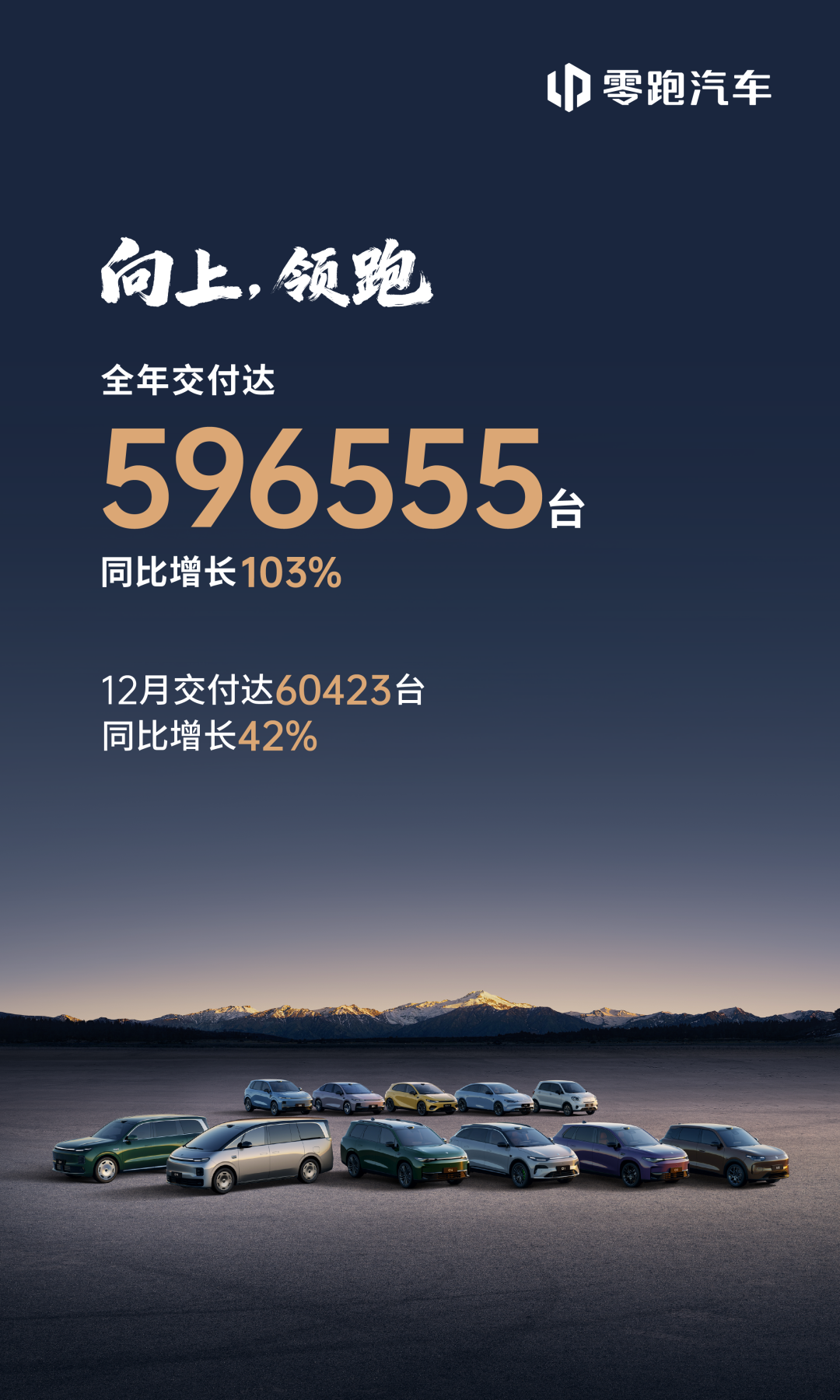
Official data reveals that from 2023 to 2025, Leapmotor's sales volumes were 144,200, 293,700, and 596,600 units, respectively, ranking third, third, and first among China's NEV startups.
In contrast, as automakers like Leapmotor continued to introduce high-value extended-range SUVs, Li Auto, which maintained a premium positioning, faced its "toughest period." In 2025, Li Auto's sales volume was 406,300 units, down 18.81% year-on-year, achieving only about half of its 700,000-unit sales target.
In fact, Leapmotor's sales breakthrough through its "budget-friendly choice" strategy relative to Li Auto is, to some extent, a microcosm of the homogeneous competition in the NEV market. After electrification eliminated power differences, the differentiation among NEVs gradually diminished, compelling automakers to compete for consumers through price advantages.
In this context, while Leapmotor has achieved a temporary "lead," it must also address the negative impact of low-price competition on its financial performance.
02 Leapmotor Excels in Sales but Struggles with Profitability
In recent years, relying on its high-value strategy, Leapmotor's sales have steadily increased, but profitability remains elusive.
Financial reports indicate that from 2019 to 2024, Leapmotor's net losses were 901 million yuan, 1.1 billion yuan, 2.846 billion yuan, 5.109 billion yuan, 4.216 billion yuan, and 2.821 billion yuan, respectively, totaling 16.993 billion yuan in losses.
Source: Leapmotor's 2025 Financial Report
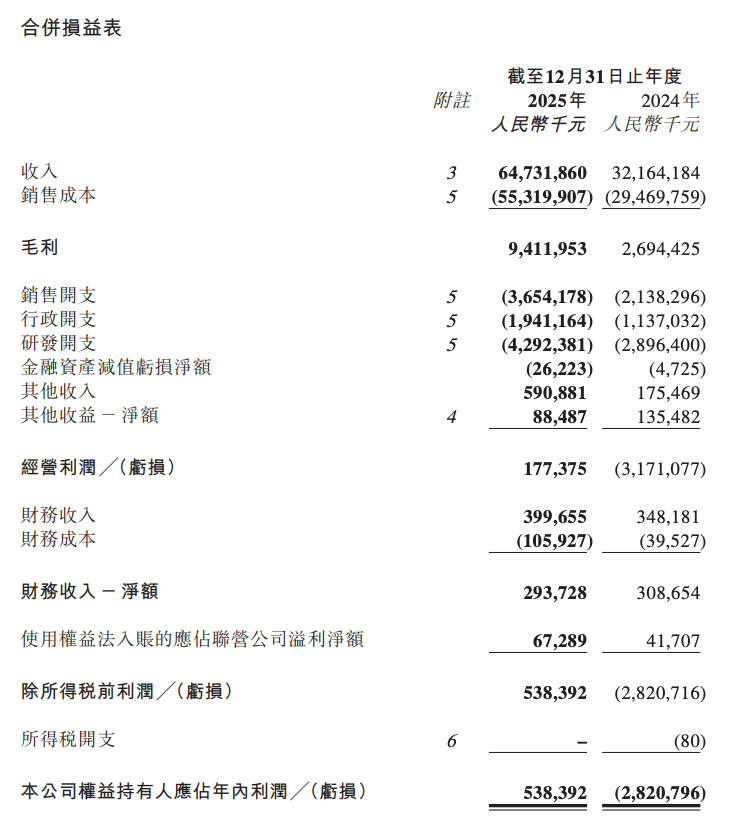
In 2025, although Leapmotor achieved its first annual profit, generating a net profit of 538 million yuan, this was largely driven by carbon credits, government subsidies, and financial gains, with an unstable profit model for its automotive business.
In 2026, Leapmotor returned to losses. In Q1 2026, Leapmotor's revenue was 10.82 billion yuan, up 8.0% year-on-year; however, its net loss was 390 million yuan, compared to a profit of 360 million yuan in the previous quarter.
Leapmotor's swing from profit to loss was partly due to a reduction in high-margin strategic cooperation business and partly due to increased sales of low-priced models.
In Q1 2026, Leapmotor sold 110,200 units, up 25.8% year-on-year, but revenue increased by only 8% year-on-year. Roughly calculating, Leapmotor's revenue per vehicle was about 98,000 yuan, down about 14% year-on-year. Strong sales of low-priced models led to a 5.5 percentage point year-on-year decline in Leapmotor's gross margin to 9.4%.
In essence, Leapmotor's current structural issue is its heavy reliance on high-value strategies, making it difficult to effectively convert sales growth into profits.
Since sales growth primarily relies on low-priced models, revenue growth lags behind sales growth, and Leapmotor's profit margins continue to decline. In this context, fixed costs such as R&D, production, and operations remain high, naturally leading the company back to losses.
As BBK founder and investor Duan Yongping said, "No matter how much revenue an unprofitable business generates, it's ultimately meaningless." Although Leapmotor has become a leader among China's NEV startups and its revenue has steadily increased, it has not yet achieved profitability. Since its major business lines are not "effective net assets" capable of generating profits, Leapmotor's market capitalization is unlikely to rise steadily.
03 Can Leapmotor Achieve Premiumization in a Maturing Market?
In recent years, as the penetration rate of NEVs continues to rise, the industry's high-growth dividends are gradually diminishing. Data from the China Association of Automobile Manufacturers shows that in the first half of 2026, China's NEV sales volume was 7.446 million units, up only 7.3% year-on-year, a significant slowdown compared to double-digit growth in previous years.
Source: Huxiu
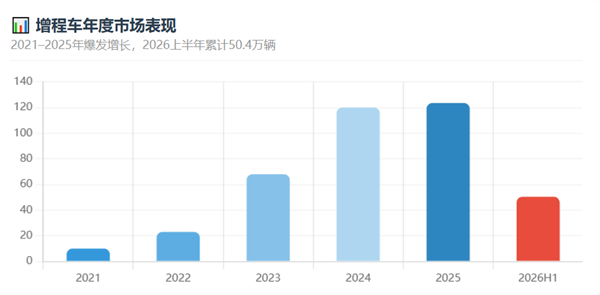
The extended-range vehicle market has even started to contract. In the first half of 2026, wholesale sales of extended-range models in China were 504,000 units, down 13.1% year-on-year.
As market space narrows, automakers find it challenging to continue scaling up through high-value strategies. In light of this, Leapmotor has proposed a "brand up" strategy, attempting to open up new growth space by focusing on premium products.

Source: Leapmotor
In April 2026, Leapmotor launched the tech-luxury flagship SUV Leapmotor D19, available in both pure electric and extended-range versions, equipped with 800V high-voltage fast charging, dual 8797 chips, dual-vector electric drives, and other flagship technologies. The extended-range version has a battery capacity of up to 80.3 kWh, priced between 219,800 and 269,800 yuan.
Two months later, Leapmotor introduced the tech-luxury flagship MPV Leapmotor D99, available in both pure electric and extended-range versions, sharing the same three-electric, chassis, and intelligent driving technologies as the Leapmotor D19, providing a more comfortable cabin experience, priced between 249,800 and 319,800 yuan.
The configurations of products like the Leapmotor D19 and D99 are indeed highly competitive, but it is important to note that competition in the premium automotive market is not solely about configurations; it also revolves around brand value, market reputation, and user perception.
Due to its long-standing focus on high value, Leapmotor's budget-friendly image is deeply ingrained in the consumer market. In this context, it is challenging for the company to convince consumers to pay higher prices for its products.
Therefore, although the prices of the Leapmotor D19 and D99 have entered the 200,000-yuan price range, when compared horizontally with competing products, the two models still offer strong value advantages. This means that Leapmotor is not relying on brand premium to break into the premium market but is instead trapped in a path dependency of serving as a "budget-friendly choice" to flagship products.
With strong value propositions, sales of the Leapmotor D19 and D99 may steadily increase. However, Leapmotor has not yet resolved the issue of relying on high-value models to drive sales, which puts pressure on profit per vehicle. Due to limited profit margins, sales growth of premium models is unlikely to translate into profits and may even further narrow Leapmotor's profit margins due to the need to incorporate more cutting-edge technologies.
For Leapmotor, sales growth is just the first stage. Over the past few years, the rapidly expanding NEV market provided a unique opportunity for high-value models to sell well. Leapmotor achieved a transition from a marginal player to a leading one through its "budget-friendly choice" strategy.
However, as the industry enters a phase of mature competition, the model of relying solely on price advantages to gain scale is facing challenges. For Leapmotor, the real issue to address is not whether it can continue to sell more cars but how to convert its scale advantages into brand premium and profitability.
After all, what the capital market cares about most is not short-term sales but a business model that can continuously create value. Shedding its reliance on "budget-friendly choices" and establishing its own business moat may be the key to Leapmotor's journey toward a higher valuation.
Interactive Topic
Have you experienced Leapmotor cars? What do you think of this brand?
This article is original content from Shijiao Farsight and is prohibited from reproduction without authorization. For reprints or business collaborations, contact us on WeChat: shijiao_farsight
-
![]()
Microsoft: Has the Tide Turned in Favor of the Old Guard?
-
![]()
Amazon: AWS Soars, Catching Up with Competitors at Last!
-
![]()
Acknowledging Task Incompletion: Neither Shameful Nor Daunting
-
![]()
How to Efficiently Manage and Control Street Lights in Industrial Parks? The Smart Street Light Control System Solution for Parks Offers Insights
-
![]()
Only One of Its Kind in the Country! Shenzhen's 'Five-Party Collaborative Operation' Pilot for Unmanned Delivery Takes Off, Steering Autonomous Driving Away from 'Money-Burning Competition' into the E
-
![]()
Qwen Still Sees Value in Open Source Initiatives
-
![]()
Qwen Still Sees the Merits of Open Source
-
![]()
A Complete Retrospective of the Thailand Campaign: A Detailed Review of the First 'Complete Model' for Chinese Automobiles Going Global