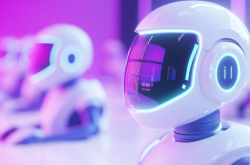
China Unveils Its First Embodied AI Development Bureau: Why Shunde Takes the Lead?
 08/07 2026
 476
476
This marks the 106th original article from Think AI Society.
Approximately 1,340 characters, with an estimated reading time of 4 minutes.
You may have missed it, but on July 28th, Shunde District in Foshan City quietly established a new entity—the "Embodied AI Development Bureau."
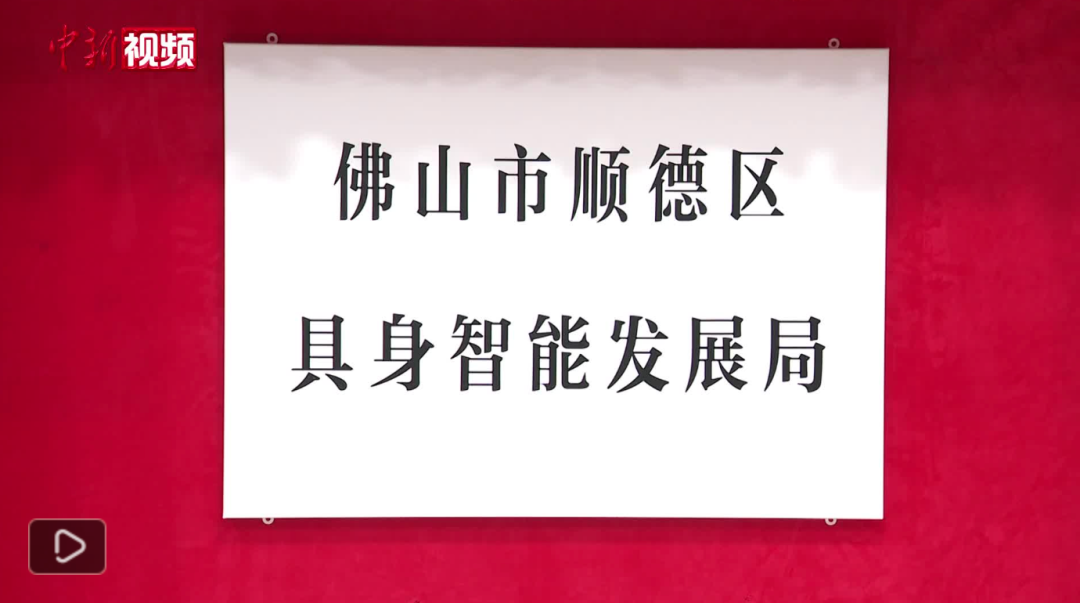
This isn't a temporary office or an industry association; it's a fully-fledged government bureau—the first of its kind in China, dedicated to managing the entire embodied AI industrial chain.
My initial reaction to this news was: Why Shunde? And why create a separate bureau now?
Why Shunde?
Shunde may not be a household name, but you've likely heard of Midea, Galanz, and Country Garden—all prominent companies based in Shunde.
Shunde is not only a powerhouse in the home appliance sector; it's also China's largest industrial robot production hub.
In 2023, Shunde's robotics industry cluster was designated as a national-level characteristic industrial cluster for small and medium-sized enterprises. By 2025, the district's robotics industry is projected to achieve an output value of nearly 40 billion yuan, with over 100 upstream and downstream enterprises[2].
More crucially, Shunde boasts a unique advantage that is difficult to replicate elsewhere: real-world application scenarios.
The district is home to a vast manufacturing sector, encompassing thousands of industrial enterprises of significant size. The production lines, logistics, and warehousing in these factories naturally serve as ideal testing grounds for humanoid robots. Smart homes and urban operations also provide authentic deployment scenarios for embodied AI.
As Shunde Party Secretary Chen Xinwen aptly stated, "Establishing the Embodied AI Development Bureau is a forward-looking, strategic move." This isn't a hasty attempt to follow trends; rather, it's grounded in solid industrial foundations.
What Does This Bureau Oversee?
Many might dismiss this as just another layer of bureaucracy.
However, the embodied AI industry is uniquely interdisciplinary, spanning AI, robotics, manufacturing, chips, and software, with an exceptionally long industrial chain that involves multiple regulatory departments.
Previously, companies advancing projects had to coordinate with several departments simultaneously—industry, technology, development, and market supervision—resulting in high transaction costs.
Before Zhuhai's AI Development Bureau was established, Kingsoft Office CEO Zhang Qingyuan made a similar observation: The deployment of AI applications involves data, scenarios, computing power, and policies under different regulatory purviews, creating long coordination chains that hinder efficiency.
Shunde's bureau essentially consolidates functions that were previously scattered across departments into a single point of contact for enterprise needs.
Specifically, Director Hai Yubao announced three key initiatives:
1. The "AI + Industrial Restructuring" plan to drive innovation;
2. The "Intelligent Robots 100" plan to deploy 100 real-world application scenarios within two years;
3. The "Embodied AI Supply Chain Strengthening" plan to address gaps in the industrial chain.
Four supporting mechanisms complement these efforts: cross-departmental joint meetings for coordination, expert think tanks for technical oversight, industry alliances for enterprise collaboration, and innovation centers for platform empowerment.
Consider a concrete example: A Shunde machinery equipment company previously relied on manual material sorting on production lines—a process that was inefficient and labor-intensive. They sought technological upgrades but struggled to find suitable partners. After the Embodied AI Development Bureau's establishment, it directly connected the company with Lishifeng Robotics and other collaborators to develop a customized unmanned sorting solution.
This exemplifies the bureau's value—not as a mere stamp-approving entity but as an industrial "facilitator."
Not Just Shunde: Nationwide Momentum
Shunde isn't pioneering this effort alone.
Over the past year, numerous dedicated AI agencies have emerged across China:
- May 2025: Shenzhen Longgang District establishes an AI (Robotics) Department.
- September 2025: Wenzhou, Zhejiang, unveils its AI Bureau.
- December 2025: Zhuhai and Guangzhou's Haizhu District launch AI development bureaus.
- January 2026: Nanjing's Yuhuatai District forms its AI Bureau.
- April 2026: Huizhou's AI and Robotics Development Bureau is inaugurated.
- July 2026: Shunde's Embodied AI Development Bureau officially launches.
From "AI Bureaus" to "Robotics Departments" to "Embodied AI Bureaus," the naming reflects increasingly specific focuses.
Why this sudden nationwide push?
Chen Yushan, Deputy Director of Guangdong's Science and Technology Information Institute, offers a compelling analysis: This aligns top-down strategic imperatives ("AI+" initiatives) with bottom-up developmental needs (enterprise coordination pain points). A dedicated agency becomes essential to bridge this gap.
There's also an element of competition. The AI wave is too massive to ignore.
Shenzhen Longgang boosted its AI special support funds from 60 million to 160 million yuan and introduced 100 million yuan in "robotics vouchers."
Nanjing's Yuhuatai District went further, allocating 100 million yuan annually in special funds plus 300 million yuan in "patient capital."
Hanging the Sign Is Just the Start
Frankly, establishing an agency is easy; hanging a plaque is even simpler. The real challenge lies in dismantling institutional barriers and delivering tangible benefits to enterprises.
Zhejiang University's Professor Li Fei puts it bluntly: "Agency establishment is merely the first step. The true test is breaking down institutional barriers and sustaining industrial dividends through systemic reforms."
The embodied AI industry is still in its infancy, with evolving technologies, business models, and regulatory frameworks. The government's role here is delicate—neither overly restrictive nor laissez-faire.
Whether Shunde's experiment succeeds remains to be seen. But one thing is clear: When a sector warrants a dedicated government bureau, it's transitioning from laboratories to industrialization.
That China's first "Embodied AI Development Bureau" landed in Shunde—a manufacturing powerhouse—speaks volumes.
The next phase of embodied AI won't hinge on robots performing well in demonstrations but on their ability to penetrate factories and households.

Article content sourced from publicly available information.
Views expressed are personal.
-
![]()
China Unveils Its First Embodied AI Development Bureau: Why Shunde Takes the Lead?
-
![]()
#Hytera HP780 #PDT Two-Way Radio #Industrial Private Network #Field Communication #Equipment for Extreme Cold Communication #Emergency Communication
-
![]()
Huawei Router Tops China’s Market, Xiaomi Claims Second Place Worldwide
-
Will Leading Content Creators All Transition into Sellers of 'AI Courses'?
-
![]()
Semi-annual Report | China's Sports Camera Market Nearly Doubles in Size in H1 2026, with DJI and Insta360 Dominating as a Dual Oligopoly; Full-Year E-commerce Sales Forecast to Exceed RMB 20 Billion
-
![]()
Automakers Embark on a Collective 'Downsizing' Path: Can Model Reduction Rescue Profits?
-
![]()
STO Express Under Scrutiny: Low Delivery Costs, but Safety Remains Paramount
-
![]()
Five Major Players Enter the Arena: The All-Out Battle for the Ultimate AI Office Super Gateway Begins