7:04 at the Nürburgring: Has Xiaomi Once Again Leveraged Geely's Expertise?
 08/11 2026
 550
550
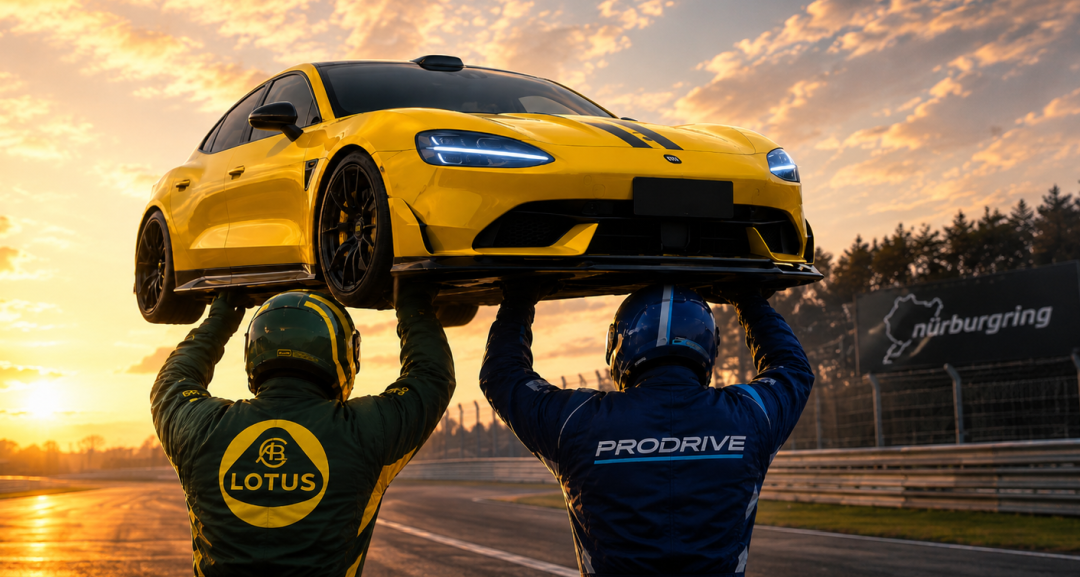
Lotus Suddenly Steps into the Spotlight of Nürburgring History
The Nürburgring performance of the Xiaomi SU7 Ultra has added a new chapter to its story.
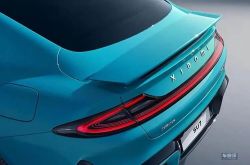
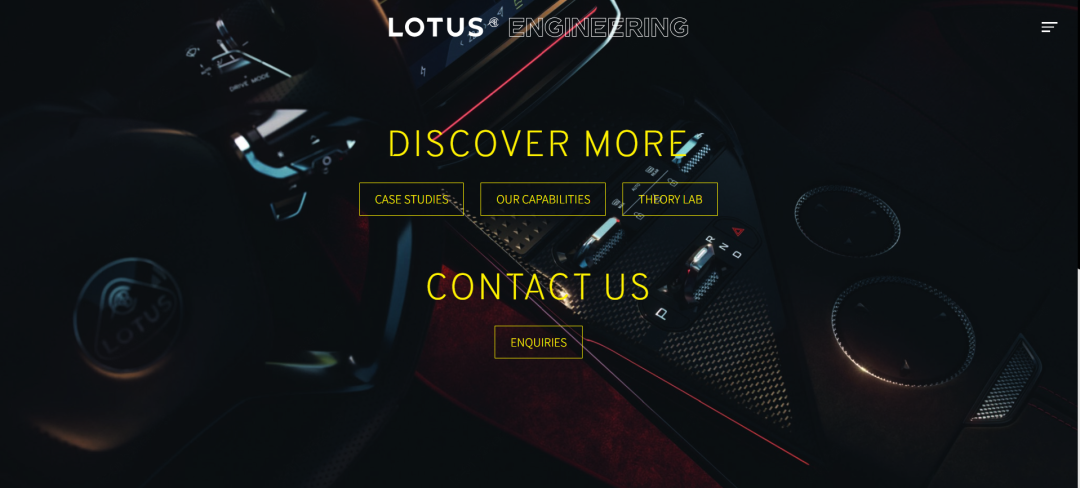
Recently, Lotus Engineering's official website unveiled a case study detailing its collaboration with a 'challenger automaker' to achieve a Nürburgring lap record and transition that track prowess into a legally roadworthy, mass-produced vehicle. Although the case study doesn't explicitly name the client, specifics such as the Track Package, suspension development and tuning, production certification, and the Nürburgring record strongly suggest a connection to the Xiaomi SU7 Ultra.
Overseas netizens who stumbled upon this page on Reddit also highlighted that the SU7 Ultra Nürburgring test vehicles, bearing British license plates AU25 ZFZ/AU25 ZFX, were the ones fine-tuned by Lotus.
Interestingly, this case study was later removed from the official website.
Controversy soon followed.
Some were taken aback by Lotus's sudden emergence from the shadows, especially given Xiaomi's previous emphasis on its independent development and tuning of the SU7 Ultra at the Nürburgring. Others, however, argued that this was simply business as usual in the automotive industry—where high-performance vehicles often rely on multiple companies for racing engineering, chassis tuning, and tire development.
Indeed, revisiting the SU7 Ultra's journey to the Nürburgring reveals that Lotus may not be the only 'giant' Xiaomi has relied on.
From Prodrive during the prototype phase to Lotus Engineering for the mass-production track version, and the seasoned veterans Xiaomi recruited from the traditional automotive industry early on, Xiaomi's strategy over the past five years has been to leverage existing expertise rather than reinvent the wheel.
And thus, the SU7 Ultra's 7:04 Nürburgring lap time was achieved through a series of calculated steps.
01 A 7:04 Nürburgring Lap: Xiaomi Enlists Top Lap-Time Experts
Xiaomi understood that raw horsepower alone wouldn't guarantee a swift Nürburgring lap—so they sought out the world's top lap-time specialists.
The SU7 Ultra first captured global attention with its prototype, a vehicle designed almost exclusively for the track.
In October 2024, it clocked a 6:46.874 lap; by April 2025, it had improved to 6:22.091, securing third place on the Nürburgring's official leaderboard. Xiaomi later showcased this achievement in its financial reports.
Yet, behind this impressive feat was a name largely unknown to Chinese consumers: Prodrive. This British racing engineering firm has a long history of participation in WRC, Le Mans, and other prestigious events. Prodrive later revealed that it had provided engineering support for the SU7 Ultra Prototype and had been involved since the first 6:46.874 lap.
In other words, Xiaomi didn't attempt to conquer the Nürburgring single-handedly from the outset.
For the mass-production SU7 Ultra, the strategy was similar, but this time Xiaomi was joined by another professional team: in 2025, the production SU7 Ultra with Track Package achieved a 7:04.957 lap time, which Xiaomi hailed as one of the fastest mass-production four-door electric sedans at the Nürburgring. This track capability was made accessible to ordinary consumers, although Xiaomi only mentioned tuning by a 'Nürburgring team' in its promotions, without specifying the team's name.
Now, Lotus Engineering's disclosed case study sheds light on another piece of the engineering puzzle behind this Track Package.
According to Lotus's previously published case study, it set Nürburgring performance targets for a 'challenger automaker,' conducted competitive benchmarking and vehicle dynamics development, participated in designing, simulating, and integrating new components, and introduced tire and suspension partners for the client. Most notably, it stated: 'Developed and tuned new suspension and Track Pack for final production certification.'
Additionally, Lotus mentioned representing the client in the Nürburgring lap project and vehicle homologation.
While the case study doesn't explicitly name 'Xiaomi,' details such as the Track Pack, production certification, Nürburgring record, and the project's culmination in a road-legal sales model strongly align with the SU7 Ultra's experience.
This suggests that from the 6:22 Prototype to the 7:04 production SU7 Ultra, Xiaomi followed a typical automotive industry path:
Define the product yourself, but don't rebuild all the expertise from scratch.
The Prototype demanded extreme racing engineering—so Xiaomi turned to Prodrive. The production car needed to be fast at the Nürburgring while fitting suspension, tires, and track settings into a road-legal vehicle—so Lotus Engineering stepped in.
Because for a newcomer with only a few years of car-building experience, the hardest thing to acquire at the Nürburgring isn't horsepower—it's experience.
How to optimize suspension for the Nürburgring, match tires, balance track performance with road comfort, and—most importantly—transform a lap-record car into a mass-producible, certifiable, and marketable vehicle are all lessons European automakers have spent decades learning through trial and error.
Xiaomi didn't need to relearn these lessons from scratch. Standing on the shoulders of giants may well be the fastest way for a latecomer to catch up—but that's precisely where the controversy lies.
When Xiaomi previously shared the SU7 Ultra's Nürburgring story, it emphasized its own R&D and tuning efforts. Xiaomi's official website still describes this as 'professional tuning derived from the Nürburgring,' noting that since June 2024, the SU7 Ultra has undergone real-world validation testing and chassis tuning at the track.
Earlier, when questioned about the Prototype's development experience, Xiaomi stated that the prototype was 'designed and developed primarily by Xiaomi Automobile,' while also mentioning that it invited 'global top technical advisory teams' to provide suggestions and support for the Nürburgring challenge.
However, in Xiaomi's official public disclosures to date, there has been no further revelation about who these external teams were or the extent of their involvement.
Lotus's sudden appearance is thus sparking discussion.
According to Lotus Engineering's disclosed project content, its role seemed to extend beyond merely offering track testing advice. Lotus mentioned introducing tire and suspension partners for the client and directly 'developing and tuning new suspension and Track Pack' for production certification.
If this case study is confirmed to correspond to the SU7 Ultra, then based on the wording, Lotus's involvement appears to exceed that of a simple 'technical advisor.' How much did it participate? Which tasks were led by Xiaomi, and which by Lotus Engineering? Where were the final engineering boundaries drawn? Neither side has provided sufficiently detailed answers yet.
But this is precisely what makes the controversy intriguing. On one side, Xiaomi has consistently emphasized its own R&D, validation, and tuning at the Nürburgring; on the other, Lotus has, for the first time, revealed to the public that behind this 7:04 time, there may be an external engineering system previously unknown to the masses.
However, if we continue tracing these 'shoulders of giants,' we find that Xiaomi's borrowed expertise extends beyond Nürburgring experience.
02 Five Years of Car-Building: Has Xiaomi Always Had Geely's Influence?
Coincidentally, Lotus is not entirely unfamiliar to Xiaomi—because one layer behind it lies Geely.
In 2017, Geely Holding acquired a 51% controlling stake in Lotus. To this day, Lotus Engineering explicitly states on its website that its engineering capabilities serve not only Lotus but also the Geely Group, while remaining open to other automotive clients.
On the other side of Xiaomi Automobile stands another veteran who left Geely: Hu Zhengnan. According to Xiaomi's official website, Hu worked at Geely Automobile Group from 2012 to 2021, serving as Senior Vice President and Dean of the Research Institute, among other roles.
These nine years coincided with Geely's critical transition from 'making cars' to 'making premium cars.' During his tenure at Geely, he not only oversaw the development of key models like the Boyue but also led teams in developing architectures such as CMA, BMA, and later SEA, which underpin core products from Geely, Lynk & Co, and even Zeekr.
After leaving Geely in 2021, he joined Shunwei Capital, founded by Lei Jun, at an opportune time.
In March of that year, Xiaomi officially announced its car-building plans; that same year, Hu left Geely. Public records show he then served as an investment partner at Shunwei Capital while participating in Xiaomi Automobile's early work as an advisor. It wasn't until April of this year that he formally joined Xiaomi as Vice President of Xiaomi Group and CTO of the Automobile Division.
In other words, from Xiaomi Automobile's inception to the successive launches of the SU7 and SU7 Ultra, this veteran with years of traditional vehicle R&D experience has remained closely tied to the company.
And it wasn't just Hu Zhengnan—many of Geely's key personnel left alongside him. Future Car Daily cited sources stating that with Hu's move to Xiaomi, the company 'almost poached an entire team from Geely Automobile.'
Now, revisiting Lotus's 'claim' of the SU7 Ultra's Nürburgring project adds an interesting layer of coincidence: when Xiaomi was just starting to learn car-building, it had a veteran from Geely's Research Institute by its side; when the SU7 Ultra prepared to take a mass-production vehicle to the Nürburgring, Geely's own Lotus Engineering got involved.
While the story is steeped in 'Geely' overtones, what matters more is that Xiaomi knew exactly what it lacked—and where to find it.
When Xiaomi began building cars in 2021, its greatest need was vehicle R&D experience, so it brought in veterans like Hu Zhengnan from traditional automakers. When the SU7 Ultra aimed for the Nürburgring, it needed extreme racing engineering—so Prodrive appeared behind the Prototype. When a track machine had to become a mass-producible, certifiable, and marketable high-performance car, Lotus Engineering stepped in.
The problems these individuals and companies solved differed, but Xiaomi's approach remained consistent:
There was no need to have Xiaomi's own people relearn decades of accumulated automotive industry experience. Instead, find those who already knew, fill in the gaps, and then turn these capabilities into Xiaomi's own products.
From Hu Zhengnan to Prodrive, and now to the emerging Lotus Engineering, these three interlocking pieces form the puzzle of Xiaomi's car-building journey: people, extreme engineering, and mass-production execution. Xiaomi's cleverness lies in first securing world-class puzzle pieces before assembling them into its own complete picture.
- END -
-
![]()
The 'New Car Death Effect' Hits Series 9 Flagship SUVs
-
![]()
Seres Faces a New Crossroads: AITO’s Shift and the Uncertainty Surrounding Saidou’s Arrival
-
![]()
Buying Huawei’s Intelligent Driving Six-Seater for 100,000 Yuan: Can Fengxing Emulate the Success of Huawei-Powered S Model? | Mingjing Pro
-
![]()
The Tipping Point for AI Computing Power Domestic Substitution in China
-
![]()
Industry Projection: Will Xiaomi Auto Surpass 1 Million Annual Sales by 2028?
-
![]()
Qianwen App Rolls Out Paid Office Membership: A 'Dual-Track' Strategy with Qianwen Office?
-
![]()
Stocking 10 Million Units, Pushing Thickness Limits: Can Apple's First Foldable Break the Market Stalemate?
-
Has the Token Price War Come to an End with DeepSeek's Substantial Price Increase and QianWen's Potential Partial Fees?