How Can the Charging Industry Overcome the Challenge of Inefficient Competition in the Era of Vehicle-Energy Integration?
 08/18 2026
 486
486
In recent years, China has witnessed rapid growth in its charging infrastructure, establishing itself as the owner of the world's largest charging network. However, the industry's profitability challenges have become increasingly apparent. In May 2026, an investigation by CCTV's Economic 30 Minutes program revealed that over 80% of charging station operators are incurring losses. Price wars have spread from the charging operation sector to the upstream of the industrial chain, with the competitive landscape shifting from price-based to technology and service-oriented.

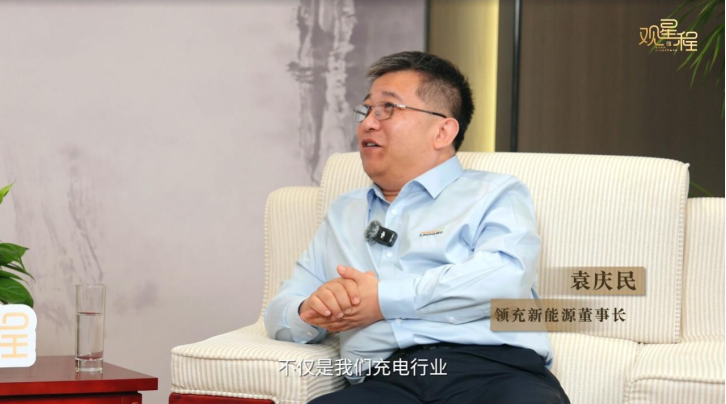
During the "Finding China's Future Hidden Champions in the Automotive Industry Chain" series of high-end dialogues, "Viewing the Stars," hosted by the Che Baihui Research Institute, Shi Jianhua, Vice President of the Institute and Dean of the Che Baihui Think Tank Research Institute, engaged in an in-depth conversation with Yuan Qingmin, Chairman of Lingchong New Energy. Their discussion highlighted the ongoing value restructuring within the industry: leading equipment companies are transitioning from competing on single-station costs to competing on system synergy capabilities, and from one-time hardware sales to providing full-lifecycle technical services.
I. Why is the "Selling Equipment" Model Becoming Less Viable?
The declining profitability of operators is primarily attributed to four factors:
Firstly, a singular revenue model. Operators heavily rely on charging service fees for profit, with intense competition driving these fees down to around 20 cents, a level expected to persist in the long term.
Secondly, heavy asset investment. Around 2015, spurred by policy subsidies, numerous companies entered the industry. However, due to a lack of site selection expertise and imperfect technical solutions, these heavy investments often resulted in poor operations, with some stations becoming "zombie piles." Moreover, technological advancements have rendered existing charging stations obsolete, further shortening their economic lifespan.
Thirdly, low utilization rates. Statistics indicate that from January to May 2026, the utilization rate of public charging stations across the industry ranged between 5.13% and 6.12%. Enterprise surveys suggest that to break even, charging station utilization needs to reach 10-15%. The current utilization level falls significantly short of this profitable threshold.
Fourthly, inadequate control over electricity costs. Electricity costs constitute the largest operational expense, accounting for 50-60%. However, most charging stations lack effective electricity scheduling and cost-benefit management.
Shi Jianhua bluntly stated, "Heavy asset investment, rapid and unregulated growth, a singular profit model, and inadequate control over electricity costs have led to widespread internal competition within the industry."
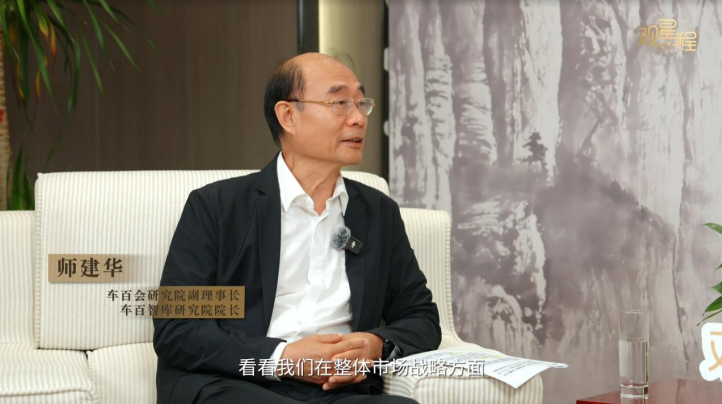
In Yuan Qingmin's view, relying solely on hardware price reductions cannot fundamentally resolve the issue and will only drag the entire industrial chain into a cycle of low-quality competition. He believes that price wars are not the endpoint but the starting point for a new round of competition. "We don't want this industry to be solely price-competitive. The optimal approach is to compete on technology, products, and services."
II. How to Redefine the Industry Through Systems Thinking
In the context of vehicle-energy integration, charging stations are no longer isolated energy replenishment points. They connect to grid scheduling demands above and vehicles below, forming an integral part of the new power system. The true core competitiveness lies not in the parameter specifications of individual modules but in system-level synergy capabilities: in multi-device coordination scenarios, it's about optimizing overall efficiency through coordinated scheduling rather than individual devices operating independently; in response to electricity price fluctuations, it's about intelligent scheduling to minimize costs rather than passive acceptance.
Most charging equipment companies view their products as independent modules. When the grid experiences overvoltage or undervoltage, their initial response is to shut down modules for self-protection. However, Lingchong's approach is markedly different. "When the grid malfunctions, we should step in to help resolve the issue," Yuan Qingmin said. For instance, Lingchong's distribution area governance solution can provide support when transformers experience voltage fluctuations, "preventing power system faults from worsening with the aid of our power electronics modules and products."
Based on this understanding, Lingchong has developed several core technologies: grid flexibility coordination to ensure the charging system does not burden the grid; environmental adaptability and low-noise design; power electronics conversion efficiency, achieving first-level energy efficiency with silicon carbide and new topologies; coordinated power calculation and high-voltage direct connection; and vehicle-oriented battery detection technology, which assesses battery life and safety and incorporates the results into charging strategies. This "grid-charging-vehicle" trinity systems thinking originates from Lingchong's R&D philosophy. "The power industry necessitates more systems-level thinking rather than single, component-based, or modular thinking. This has been a prevalent misconception in the power electronics industry in the past."
III. How Will Business Models Evolve?
The second growth curve for the charging industry lies not in incremental hardware sales but in the service value across the entire lifecycle.
Traditional charging station companies operate on a one-time transaction revenue model: selling equipment essentially terminates the cooperative relationship. In contrast, tech service providers' revenue model involves continuous value delivery: from site selection planning and charging network architecture design to equipment engineering delivery, software platform deployment, intelligent operation and maintenance, and power trading scheduling, covering the operator's entire business cycle.
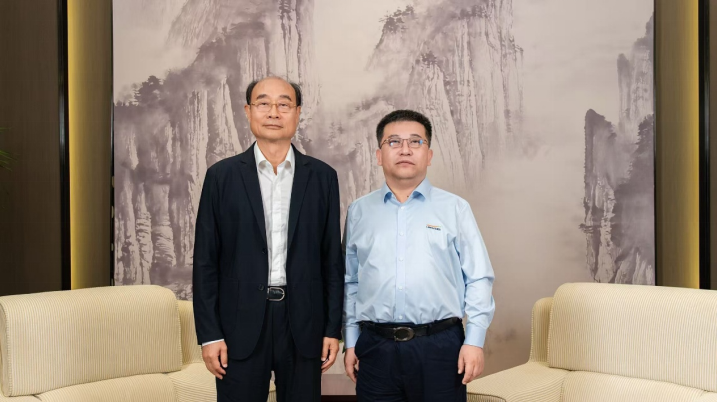
Regarding the company's strategic transformation, Yuan Qingmin provided a clear positioning: "The entire company is transitioning from a traditional charging station enterprise to a tech service provider. We cannot merely provide hardware products. Relatively speaking, the threshold for hardware products is low, but by incorporating software and services, we can meet personalized needs."
This transformation is evident in Lingchong's newly released product matrix. The AI agent focuses on intelligent operation and maintenance and power coordination algorithms, capable of analyzing various data files during the operation and maintenance process based on the logical reasoning capabilities and data processing efficiency of large models, identifying abnormalities in charging station operations, and enhancing user service and experience. The high-voltage direct connection DCDC technology adopts a solid-state transformer solution, paired with 80kW DCDC modules, to form a 1.6MW to 2.4MW charging system, significantly improving operational efficiency in high-power scenarios. The heavy-duty truck group charging system for trunk logistics scenarios can deliver a single-gun power of up to 720kW, with dual-gun parallel operation reaching a maximum of 1.44MW, replenishing 240 kWh in 10 minutes, and adapting to heavy-duty truck models of different capacities.
To address the industry pain points of "difficult and expensive station construction" in trunk logistics, Lingchong, in collaboration with financial institutions, site resource providers, logistics demand parties, and automakers, launched the trunk logistics financial ecosystem solution—the Meridian Initiative—to lower the initial investment threshold and ensure station operation revenue through ecological collaboration.
Shi Jianhua also recognizes the industrial value of trunk logistics scenarios: "A well-established ecosystem for trunk logistics will provide significant support for national economic development." Transitioning from selling single devices to delivering a complete set of implementable station profitability solutions is not just an upgrade of the company's business model but also an expansion of the entire charging industry's value dimension.
IV. Looking Ahead to 2030: When Charging Stations Become the Gateway to the Energy Internet
From an industry perspective, the charging industry will undergo three fundamental changes by 2030.
Vehicles are evolving. V2G (Vehicle-to-Grid) bidirectional interaction is transitioning from pilot projects to large-scale applications, transforming cars from single energy-consuming terminals to mobile energy storage units. According to relevant plans, the adjustable V2G scale will reach 50 million kilowatts by 2030, with a large number of new vehicle models featuring bidirectional interaction capabilities. Charging facilities will no longer be just devices for "delivering electricity to vehicles" but also key interfaces for "vehicle-grid interaction."
Electricity is transforming. The proportion of new energy power generation continues to rise, and the traditional power scheduling model of "source following load" is shifting toward "source-load interaction." User-side flexible loads will become an important resource for grid balance, and charging networks, as the largest and most flexible load cluster, will deeply participate in power system operations.
Data is evolving. Battery health data, energy scheduling data, station operation data, and user behavior data continue to accumulate, with the paths for data monetization gradually becoming clear. Regarding the industry's revenue landscape in 2030, Yuan Qingmin predicted, "In the future, we can earn money not only by serving vehicles and car owners but also by providing grid services and generating revenue from data."
These three changes imply that operators' transition from "single charging service fee collectors" to "comprehensive energy and data service providers" is both feasible and necessary. Equipment manufacturers will also upgrade from "hardware suppliers" to "industrial technology infrastructure service providers," offering power electronics technology, digital technology, and intelligent control technology to automakers, energy companies, and operators to support the industry's transformation.
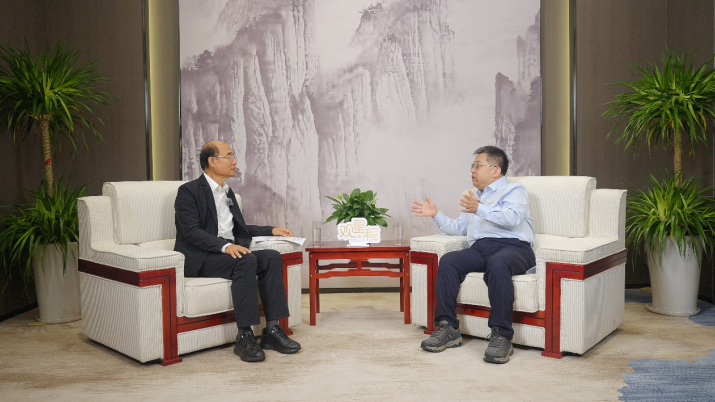
Lingchong New Energy is transforming into a "tech service provider." Yuan Qingmin stated that future enterprises should not just provide charging equipment but become technology infrastructure service providers in their clients' transformation processes. "Whether it's automakers, energy companies, or operators, they all need technical support in digitalization, power electronics, and intelligent control. We hope to help our clients achieve strategic transformation and efficiency improvements through our technology, products, and solutions."
Conclusion
The charging industry is undergoing a transformation from technology to business models. Charging stations are upgrading from energy replenishment interfaces to gateways for vehicle-energy integration, nodes in the energy internet, and carriers of data value.
For companies in the industry, upgrading from "selling hardware" to "selling technology and services" will provide them with a greater competitive advantage in the next round of competition. This not only concerns the survival and development space of enterprises but also the effectiveness of the national strategy for vehicle-energy integration development.
-
![]()
New Energy Vehicle Penetration Soars to Record High in July, Triggering Accelerated Industry Transformation
-
![]()
Why Has the Pricing Strategy of Leading AI Models Shifted: GPT Goes Free While DeepSeek Raises Prices?
-
![]()
Luxury Fuel Vehicles Struggle to Compete: Audi A6L Prices Plummet Below 250,000 Yuan. Are BBA Trapped in a Downward Spiral?
-
![]()
Geely Automobile Bolsters 'One Geely' Initiative with Management Team Realignment, Including Shift in Li Shufu's Role
-
![]()
[In-depth Report] Building a Solid Foundation of Quality to Lead the New Development of the New Energy Vehicle Industry
-
![]()
VOYAH Pursuit S Seeks to Outshine YU7? VOYAH Aims for Top 3 in BEV Market with Spiral Growth Strategy | Mingjingpro
-
![]()
6 Years, 7 Models, 2 Generations, 3 Major Categories: VOYAH Is Not Missing Any Battle
-
![]()
Will Gasoline Vehicle Owners Opt for Electric Vehicles with a 1,000-Kilometer Range?