Encircling and Suppressing DJI: Mobile Phone Giants Enter the "Pocket" Arena, Launching a Long-Planned Displaced War
 12/15 2025
 682
682
The most dangerous business in the world is to earn huge profits alone and persistently in a market surrounded by giants.
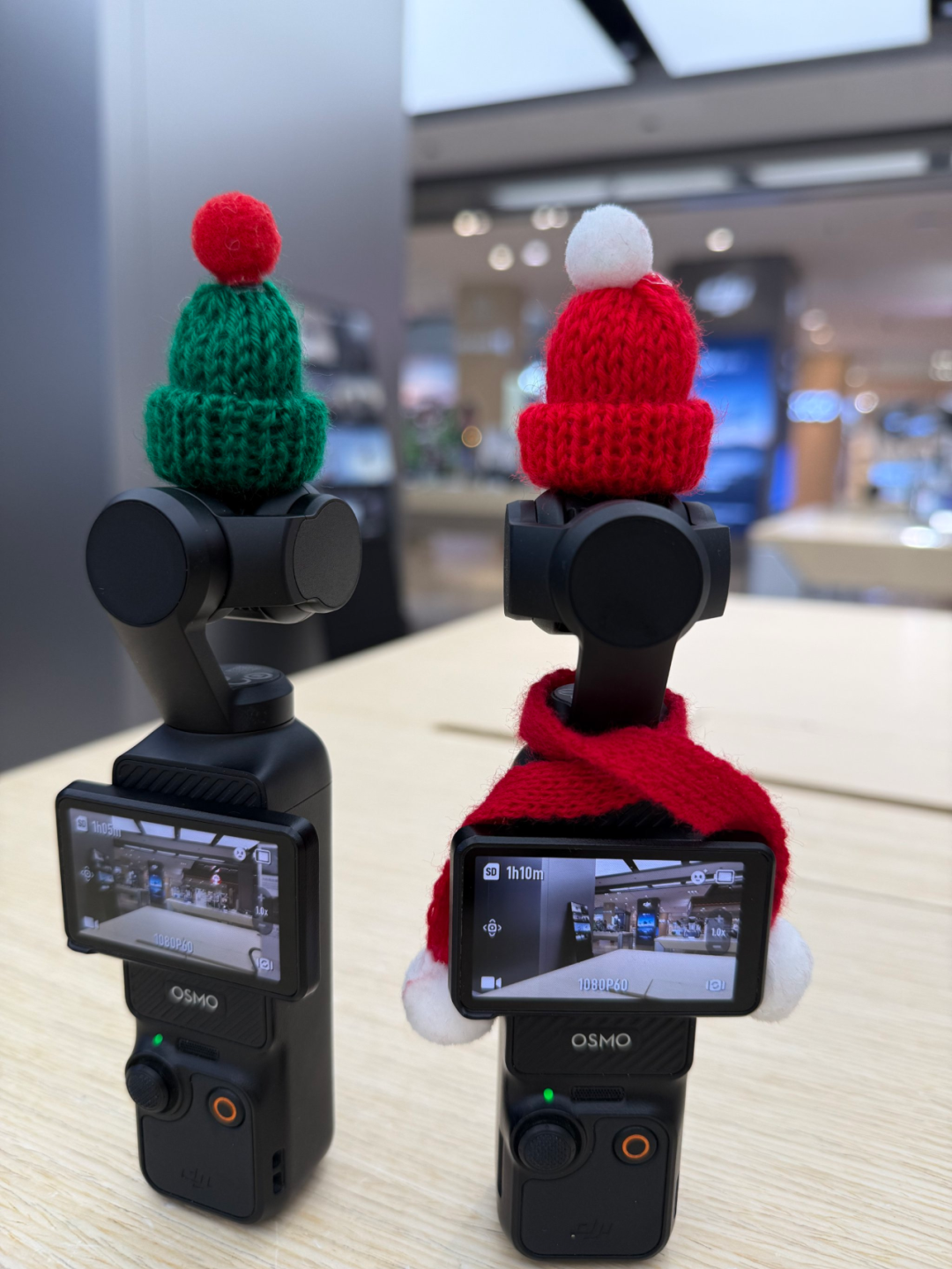
Over the past year, the consumer electronics industry has been characterized by intense competition: mobile phones competing on brightness, fast charging, and thickness, even arguing fiercely over frame widths measured in tenths of a millimeter. However, on the edge of this red ocean, DJI has carved out a highly coveted blue ocean with a small black box—the Osmo Pocket 3.
More than a year after its release, official channels still experience intermittent stock shortages, and prices remain firm in the second-hand market. On Xiaohongshu, tens of thousands of notes share "optimal shooting parameters." Under the iron law that digital products "depreciate upon release," the Pocket 3 has become a peculiar footnote. It is not just a product but a mockery: while you are still competing intensively over mobile phone camera capabilities, users actually prefer a "physical enhancement" that fits in their pocket.
The giants will not allow DJI to enjoy this market alone for long.
Multiple sources confirm that a "encirclement and suppression" campaign against DJI has completed its pre-war mobilization. OPPO and vivo have been operating secret project teams for an extended period, with code names directly referencing the "Pocket" form factor. Xiaomi has chosen a more disruptive route, partnering with gimbal veteran "Hohem" to target the lower-end market. On the other side of Shenzhen, panoramic camera leader Insta360 is reevaluating its product strategy, with mechanical gimbal blueprints potentially laid out anew.
The Gap Forgotten by Mobile Phones
To understand this war, one must first understand why the Pocket 3 became popular.
Before the Pocket 3, the imaging market was extremely polarized: at one end were increasingly powerful smartphones with surplus (excessive) computing capabilities but physical thickness limitations that made sensor and aperture improvements near their limits; at the other end were professional mirrorless cameras with unparalleled image quality but heavy and cumbersome designs, tools for "old masters" and professional teams.
Ordinary people—especially young people who want to shoot Vlogs to document their lives or become short video creators—were caught in the middle.
When they used their phones, they found the footage shaky when walking, noisy in low light, and their phones were not just cameras but also WeChat, navigation tools, and payment codes. Battery anxiety and thermal throttling from prolonged shooting made "mobile photography" extremely awkward in heavy-use scenarios.
DJI sharply (keenly) seized this gap. With a one-inch sensor, three-axis mechanical stabilization, a rotating screen for instant shooting, and excellent audio recording,
the Pocket 3 essentially crammed "a smartphone's brain" and "a mirrorless camera's foundation" into a lipstick-sized tube.
"It doesn't solve image quality issues but mental state issues," a tech blogger with millions of followers commented. "When I pick up a phone, I feel like I'm checking WeChat; when I pick up a mirrorless camera, I feel like I'm working; only when I pick up the Pocket do I feel like I'm documenting my life."
This "mental gap" is worth billions. And that figure is enough to make mobile phone manufacturers, mired in a stagnant market, spring into action.
OPPO and Vivo's Calculated Move: Algorithm Spillover and Redemption
OPPO and Vivo's entry is the most intriguing variable in this encirclement campaign.
Over the past decade, these two companies have invested crazy ( crazy , crazy ly) in mobile imaging. Vivo's self-developed imaging chips, OPPO's Mariana (though disbanded, its technological legacy remains), collaborations with Hasselblad and Zeiss for tuning, and massive algorithm teams are their core assets.
But here's the problem: the hardware ceiling for mobile imaging has been reached.
When smartphone camera protrusions challenge users' tolerance limits, the marginal effects of algorithms are diminishing. At this point, "spilling over" excess algorithm capabilities to a standalone hardware device is almost a natural choice.
According to sources close to OPPO and Vivo's supply chains, the core logic behind both manufacturers' Pocket projects is clear: we are not making replicas of DJI but "refined versions" of DJI.
While DJI boasts powerful hardware, its imaging style has long been criticized by users (especially female users) as "too masculine"—overly sharp, with skin tones rendered too realistically (almost harshly), and dark areas appearing pitch-black. This gives OPPO and Vivo a massive opportunity.
Imagine a gimbal camera with the same "Blueprint Imaging" algorithm as the Vivo X100: not only does it have mechanical stabilization, but it can also apply master-level portrait beautification in real-time while shooting video, with radiant skin tones, natural background blur, and even direct application of popular Xiaohongshu filters.
"DJI understands gimbals but not young women," a phrase widely circulated among product managers in Shenzhen.
For Vivo, this is also an ecological defensive move. Since users need a more durable and stable device than a phone for concerts, travel, and store explorations, why can't that device be a Vivo product? Through proprietary protocols, this gimbal camera can instantly transfer footage losslessly to a Vivo phone and even serve as a second detachable lens for the phone—this is the true killer feature for mobile phone manufacturers: ecological interconnection.
If rumors are true, OPPO and Vivo's products are likely to debut in 2026, targeting "portrait video magic devices" and directly cutting into DJI's weakest markets: female users and lifestyle documentation.
Xiaomi and Hohem: The Price Slasher Strikes Again
If OPPO and Vivo are pursuing a premium route, Xiaomi's strategy continues its traditional approach of offering affordable alternatives.
The DJI Pocket 3's full kit is priced near 4,000 yuan, with the standalone device around 3,500 yuan. This price is steep for many college students and users in lower-tier markets.
A massive price vacuum exists between 1,000 and 2,000 yuan.
Rumors of Xiaomi partnering with Hohem are not unfounded. Hohem is a hidden champion in the mobile gimbal space, with high market share on Amazon and other overseas channels despite lower brand recognition than DJI. It has deep technical expertise in three-axis motor control algorithms and excels at cost control.
Xiaomi's calculations are clear:
1. Eliminate premium features: Do users in lower-tier markets really need Log mode? 4K/120fps? Professional-grade microphones? If not, cut them all.
2. Retain core experiences: Mechanical stabilization, a one-inch (or high-quality 1/1.3-inch) sensor, and beautification algorithms.
3. Extreme affordability: Leverage Xiaomi Youpin's supply chain advantages to price the device at 1,999 yuan or even 1,499 yuan.
This is a classic "Redmi model." For DJI, this is the most troublesome opponent because Xiaomi doesn't compete on ultimate image quality but on "good enough."
When a college student wants to buy their first Vlog camera, facing a 3,499-yuan DJI and a 1,499-yuan Xiaomi, even if DJI is 50% better, the sales scale may tilt toward Xiaomi. The goal of this war is not to defeat DJI but to expand the denominator and capture the long tail.
Insta360's Rebalancing Act: Attacking Out of Fear
Among all opponents, Insta360 has the most complex emotions.
As the leader in panoramic and action cameras, Insta360 and DJI have maintained a "frenemy" relationship. DJI's Action series action cameras encroach on Insta360's territory, while Insta360's previously released Link gimbal camera demonstrates its capability in mechanical gimbals.
Insta360 has long adhered to the technical philosophy that "electronic stabilization (FlowState) is superior to mechanical stabilization." They believe that with advancements in sensor technology and algorithms, bulky mechanical structures will eventually become obsolete.
But the success of the Pocket 3 has harshly educated the market: physical laws are difficult to fully overcome with algorithms.
In low-light conditions, electronic stabilization requires cropping the frame and is prone to motion blur, while mechanical gimbals can physically offset vibrations and maintain pure image quality. This physical advantage allows the Pocket 3 to outperform all action cameras in nighttime shooting.
Market speculation that Insta360 is reviving its gimbal camera project is less an offensive move than a strategic defense.
Insta360 possesses strong product definition and creative marketing capabilities (think of its invisible selfie stick). If Insta360 can create a gimbal camera with panoramic capabilities or unique AI tracking features, it would become DJI's most direct technological competitor.
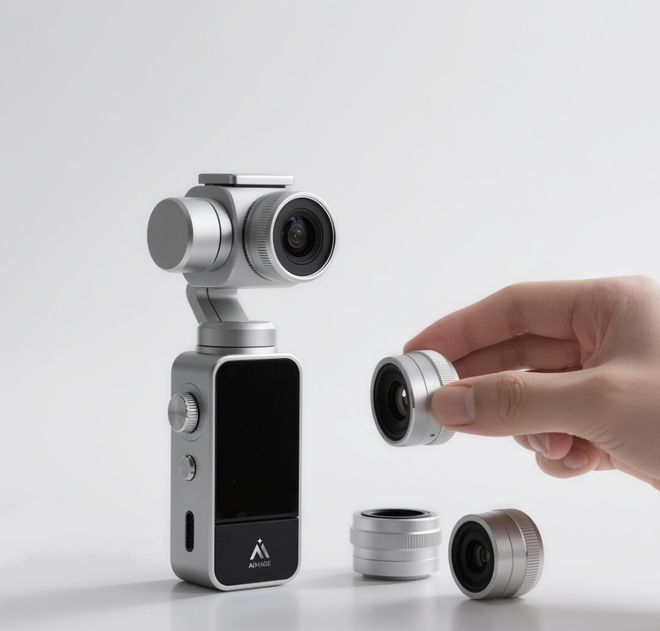
Sources reveal that Insta360 is internally evaluating how to incorporate "modular" design (a legacy of the One R series) into gimbal cameras or develop a new product category between Action and Pocket devices.
An Impregnable Moat and Hidden Cracks in the Corner
Facing encirclement on all sides, will DJI lose?
In the short term, DJI's position remains formidably stable. Many underestimate the difficulty of creating a "user-friendly gimbal camera."
The first moat is "mechatronics integration." Mobile phone manufacturers excel in electronics, and camera manufacturers excel in optics, but DJI excels in motors. Since the drone era, DJI has accumulated unparalleled motor control technology. Cramming three-axis motors into the Pocket 3's tiny body while ensuring millisecond-level response speeds, balancing the weight of the focusing module, and managing the massive heat generated by a one-inch sensor is an extremely complex systems engineering challenge.
Many competitors (including early Pocket 1 and 2 models) have encountered issues like overheating shutdowns, focusing hesitation, and gimbal drift. The Pocket 3's ability to achieve full-pixel autofocus and stable 4K video recording is backed by decades of expertise in thermal design and motor algorithms.
The second moat is "autofocus and tracking." DJI's ActiveTrack has undergone iterations from drone obstacle avoidance and multiple product generations, boasting extremely high "stickiness" and recognition rates. When you speak to the camera alone, whether it can firmly (firmly) lock onto your face directly determines if the footage is usable. In this regard, while mobile phone manufacturers have strong algorithms, they still need time to catch up in gimbal coordination tuning.
The third moat is supply chain leverage. DJI has achieved the ability to customize imaging sensors (CMOS) with Sony and possesses extremely high self-research and self-production rates for core components like miniature (micro) gimbal motors. For new entrants, surpassing DJI in both cost and performance requires paying massive "tuition" in the supply chain.
However, the most fortified bastions often crack from within.
DJI's real concern lies not in external competitors' technological advances but in the "talent spillover" behind its technical barriers.
According to headhunters who have interacted with departed DJI employees, intense internal "involution" culture, increasingly complex KPI assessments, and adjustments to core projects in recent years have led to the departure of senior engineers with expertise in core algorithms and motor control technologies.
Where have these ex-DJI personnel gone? Besides flowing into autonomous driving and humanoid robotics sectors, another portion has joined the consumer electronics giants now encircling DJI.
This creates an awkward situation: DJI is not only the industry dominator and technological "black box" but also, reluctantly, the "Whampoa Military Academy" for its competitors.
In the past, OPPO, Vivo, or Hohem might have needed three years of trial and error to solve certain gimbal control challenges. Now, if they hire a former DJI Pocket project team technical lead, this timeline could be drastically shortened. Technical patents can be encrypted, but experience resides in people's minds.
For DJI, the most dangerous aspect of this war is that its enemies may wield swords forged by DJI itself. This seemingly wide "technological moat" risks being filled in by its own people.
From "Single Product" to "Scene" Warfare
The encirclement campaign of 2026 promises to be highly entertaining.
Mobile phone manufacturers aim not just to carve out profits but to expand their imaging ecosystems. After all, in the stagnant smartphone market, where imaging competitions have become brutal, building ecosystems is a superior competitive strategy. For Insta360, the battle lines with DJI have already been fully drawn, and offense is the best defense. As for DJI, this drone dominator with net profit margins twice those of Apple, it is only natural for competitors to target it. The real puzzle may be why they waited until now.
Regardless of the battle's outcome, the biggest winner will be consumers.
In the past few years, the Pocket series had hardly any (almost no) direct competitors, leading to DJI's prolonged iteration cycles (a three-year gap between Pocket 2 and Pocket 3). Now, with giants entering the fray, competition will force technological advancements. We may soon see cheaper mechanical gimbals, stronger AI computing power, richer beautification features, and more interconnected ecological experiences.
The essence of this war marks the consumer electronics industry's shift from the era of "general-purpose computing devices" (smartphones) to the era of "specialized scene devices."
Smartphones remain central but are no longer the sole option. When people are willing to buy a separate device just to shoot a 30-second video well, a new trillion-dollar market is born. DJI lit the torch, and now others have arrived with firewood.
The only question is whether this fire will ignite the entire market or burn up the ambitions of its challengers. After all, in the hard tech battlefield, money and algorithms alone are often insufficient. The late-night lights burning bright in DJI's Nanshan headquarters remain its hardest armor.
-
On the Eve of Its IPO, Avatr Finds Itself Embroiled in a 'Farce of Controversy and Belittlement'
-
![]()
Yutong Optics' Japanese Subsidiary Unveiled in Tokyo, Shifting Strategic Focus to Technology-Driven Growth
-
![]()
Half-Year Revenue Outstrips Last Year’s Total! Zhongrun Optics Forecasts 80.2% H1 Revenue Growth
-
![]()
Why Does AI Competition Start with Computing Power?
-
![]()
Apple AI Finally Makes Its Debut in China, Yet iPhone's 'AI Autonomy' Faces Uncertainty
-
![]()
Apple AI and QianWen Make Up Lessons: Alibaba Has Its Own 'Doubao Phone'
-
![]()
QianWen Joins Apple, Signal for Large Models to ‘Fade into the Background’
-
![]()
The ‘Anchor’ Strategy of Google Hidden Behind the Bleeding Financial Report