Microsoft and Bosch Express Interest: This Optical Firm Secures $110 Million in Funding!
 01/23 2026
 602
602
Recently, a startup called Neurophos declared the successful completion of an early-stage funding round, amassing $110 million and bringing its total cumulative funding to $118 million. This company is a specialist in optical computing technology, with a mission to address the escalating challenges of computing power and energy consumption in the artificial intelligence sector through photonic chips.
This funding round was spearheaded by Gates Frontier and saw the involvement of several well-known investment institutions. These include M12 (Microsoft's venture capital division), Carbon Direct Capital, Saudi Aramco Ventures, Bosch Ventures, Tectonic Ventures, and Space Capital.
The swift advancement of artificial intelligence has spurred an unprecedented demand for computing power. Meanwhile, traditional electronic chips are gradually encountering physical constraints when it comes to enhancing performance and controlling energy consumption.
Neurophos offers a solution in the form of a photonics-based 'Optical Processing Unit' (OPU) chip. This innovative chip incorporates over a million micrometer-scale optical processing elements on a single silicon-based platform. By harnessing optical signals for high-speed parallel computing, it substantially elevates AI computational efficiency.
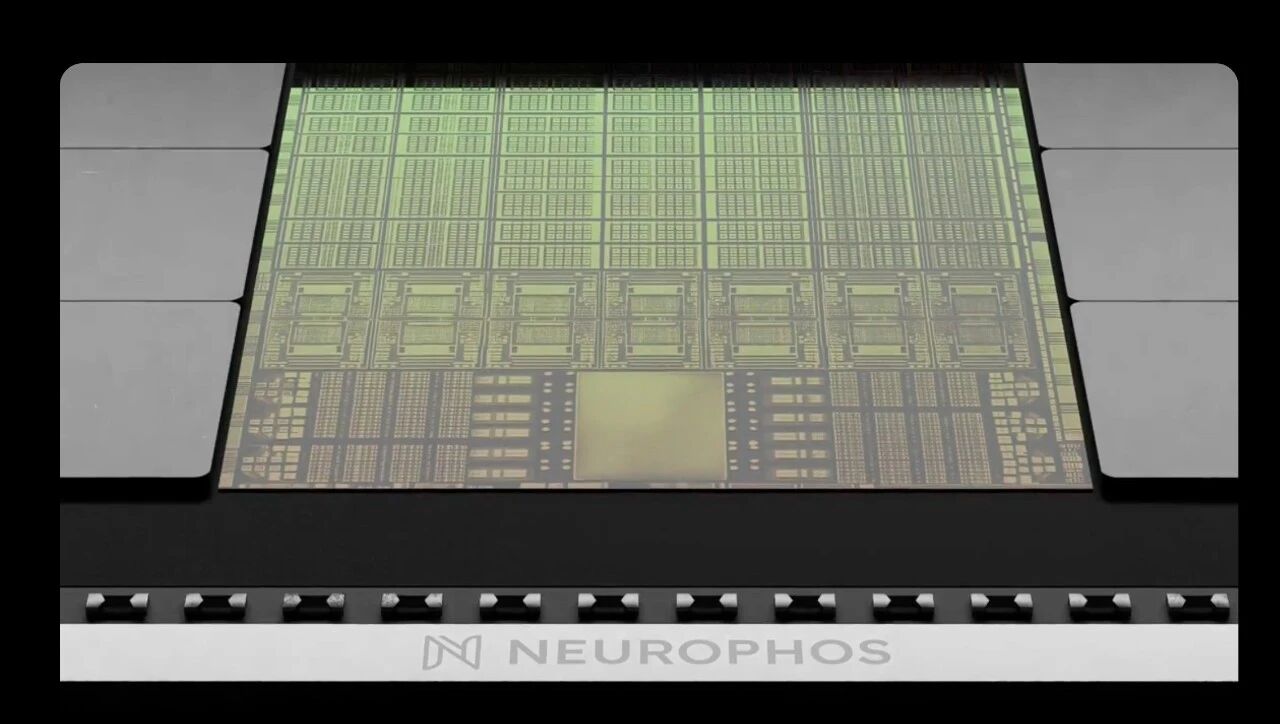
Patrick Bowen, the co-founder and CEO of the company, emphasized that Neurophos's advancements in photonics have unlocked a new realm of scalability by integrating large-scale optical parallel computing onto a single chip. This physical-level transformation implies that as the scale expands, both efficiency and raw speed will experience an uptick, overcoming the power consumption limitations of traditional GPUs.
The crux of Neurophos's technological breakthrough resides in its proprietary 'metamaterial optical modulator.' This component is ten thousand times smaller than existing photonic parts, paving the way for high-density integrated photonic computing for the first time. The chip merges optical computing with in-memory computing technology, executing matrix multiplication operations directly in memory. This reduces data movement and significantly boosts energy efficiency.
According to the company, its prototype chip has demonstrated performance exceeding 300 trillion operations per watt in initial testing, with a clock frequency surpassing 100 GHz. This represents a significant leap over current mainstream AI processors. Optical computing, which leverages photons instead of electrons for information processing, not only operates at a faster pace but also substantially cuts down on operating power consumption.
Neurophos has plans to team up with Norwegian data center operator Terakraft to commence the pilot deployment of optical AI accelerators in 2027, with the aim of delivering the first complete systems in early 2028.
Mark Tremblay, Microsoft's Corporate Vice President and Head of AI Infrastructure Technology, voiced his approval, highlighting that modern AI inference necessitates substantial breakthroughs in computing power to keep up with model development.
Neurophos stated that this funding round will be utilized to expedite the launch of its first integrated photonic computing system. This system will encompass OPU modules, supporting software stacks, and developer hardware. The company also intends to expand its Austin headquarters and set up a new engineering and demonstration center in San Francisco to enhance technical interaction with customers.
Optical computing has long been viewed as one of the pivotal avenues for breaking through existing computing bottlenecks. Neurophos's significant capital injection underscores the market's high hopes for the pivotal role of photonic technology in the AI era.
-
On the Eve of Its IPO, Avatr Finds Itself Embroiled in a 'Farce of Controversy and Belittlement'
-
![]()
Yutong Optics' Japanese Subsidiary Unveiled in Tokyo, Shifting Strategic Focus to Technology-Driven Growth
-
![]()
Half-Year Revenue Outstrips Last Year’s Total! Zhongrun Optics Forecasts 80.2% H1 Revenue Growth
-
![]()
Why Does AI Competition Start with Computing Power?
-
![]()
Apple AI Finally Makes Its Debut in China, Yet iPhone's 'AI Autonomy' Faces Uncertainty
-
![]()
Apple AI and QianWen Make Up Lessons: Alibaba Has Its Own 'Doubao Phone'
-
![]()
QianWen Joins Apple, Signal for Large Models to ‘Fade into the Background’
-
![]()
The ‘Anchor’ Strategy of Google Hidden Behind the Bleeding Financial Report