Multiple Pocket-Sized Products Set to Hit the Market: DJI, Insta360, and Mobile Phone Makers Join the Race—Who Will Reign Supreme?
 01/29 2026
 604
604
Why Does DJI Remain Unfazed Despite Fierce Competition?
Unbeknownst to many, DJI's once-revered Pocket 3, often dubbed the 'electronic Moutai', has been on the market for over two years. Users like Xiaolei are eagerly anticipating the arrival of the Pocket 4.
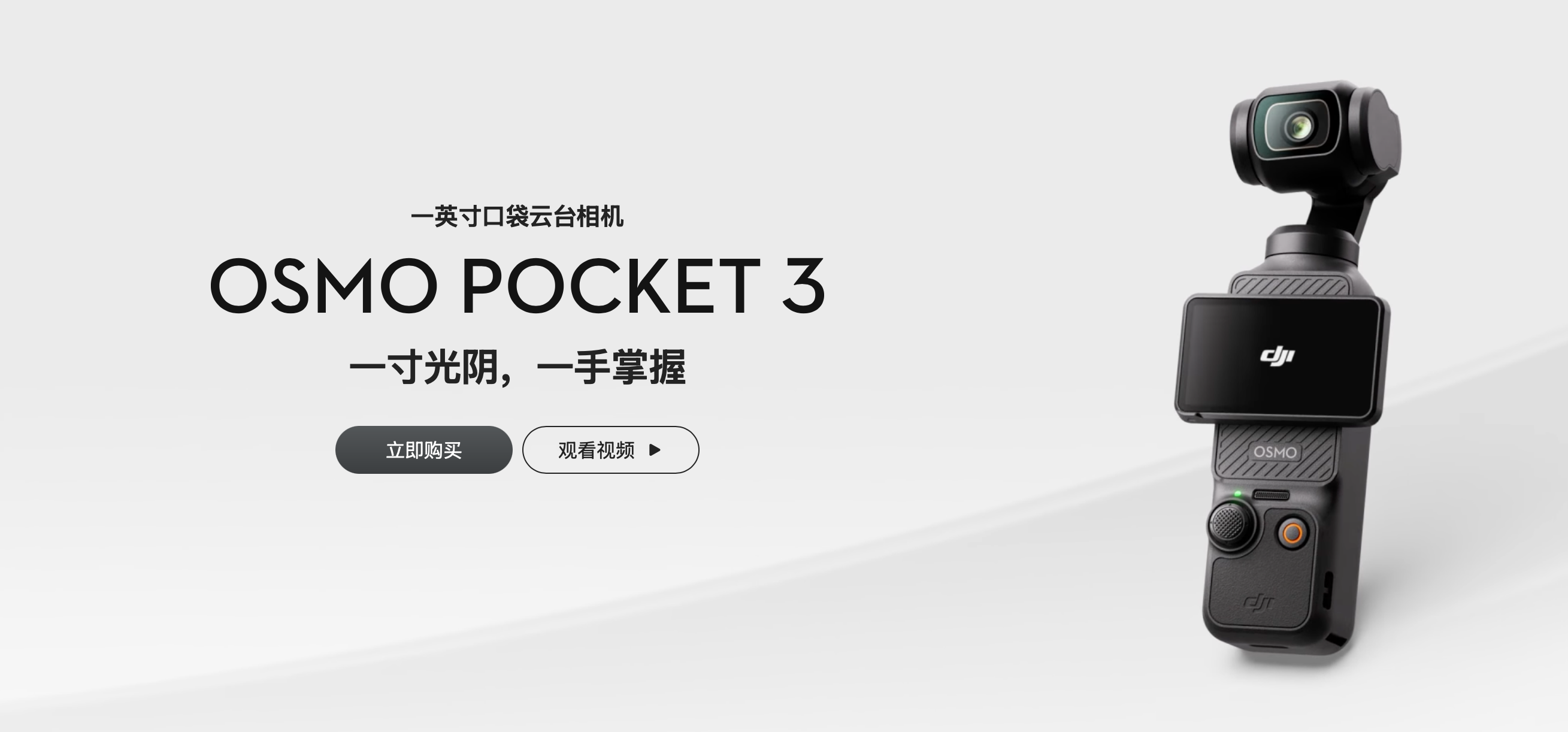
(Image Source: DJI Official)
In fact, around September of the previous year, Xiaolei stumbled upon some rumors about the Pocket 4 online. While their authenticity remains uncertain, based on DJI's previous product release patterns, Xiaolei speculated an October launch. However, to everyone's surprise, February is now upon us, and DJI has yet to unveil any details about the Pocket 4.
Nevertheless, considering recent reports that OPPO, Vivo, Honor, and Insta360 are all gearing up to launch Pocket-sized products, DJI likely has its own strategic plans.
Multiple Pocket-Sized Products Poised for Market Entry—Everyone Vying for a Slice of the Pie?
Among the five contenders, Xiaolei believes Insta360 is poised to be the first out of the gate. After all, it boasts the most experience in the outdoor camera market and has previously developed relevant demo products.
More significantly, just a few days ago, foreign media outlet @gtm_ray leaked a photo of a dual-camera handheld gimbal camera. When netizens speculated it was the DJI Pocket 4, Liu Jingkang, the founder of Insta360, hinted on Weibo, 'Could it not be DJI's?' Coupled with his previous revelation that Insta360 is about to launch a related product, it's almost certain that this is Insta360's Pocket offering.

(Image Source: @Liu Jingkang Insta360)
In Xiaolei's opinion, if these speculations hold true, Insta360 is unlikely to follow DJI's path of perfecting a single product. Instead, it will leverage its strengths—App features, AI camera movement, content ecosystem, and dissemination—to transform the Pocket from a 'professional tool' into a 'content gateway that simplifies high-quality content production'.
While Insta360 aims to broaden its user base, mobile phone manufacturers entering the handheld gimbal camera market are primarily driven by a desire to propel mobile imaging forward. Whether it's OPPO, Vivo, or Honor, their mobile imaging capabilities require a fresh entry point and direction. Moreover, if you're familiar with these three manufacturers, you'll notice they've all launched similar external telephoto lens photography kits, indicating a shared understanding of imaging.
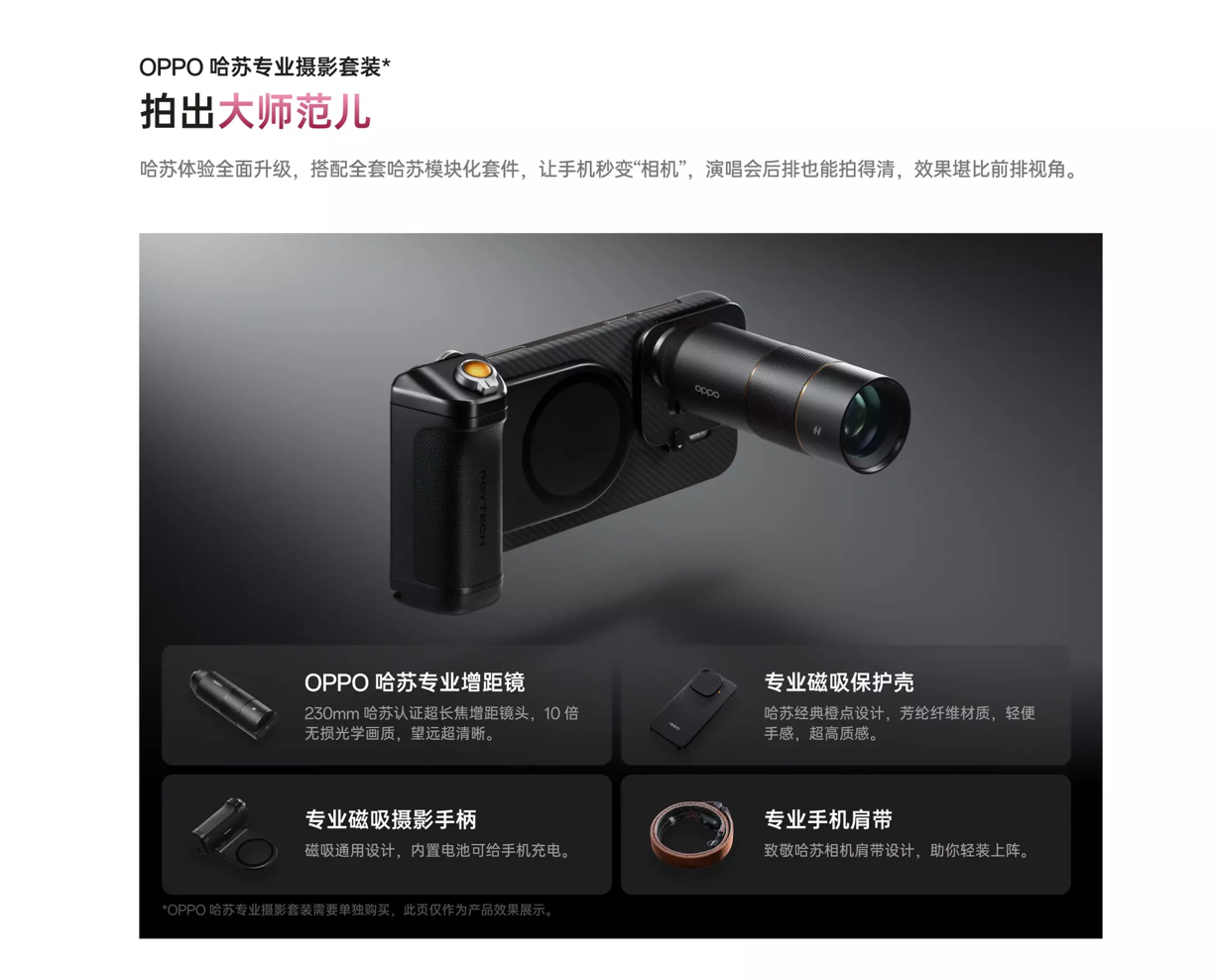
(Image Source: OPPO Official)
However, Xiaolei is more intrigued by how they will execute their strategies rather than when they will launch. After all, simply imitating others is bound to result in 'failure', as the market will inevitably compare them to DJI, which has been deeply entrenched in this field for years.
Of course, mobile phone manufacturers have their own advantages. Firstly, their expertise in color and portrait algorithms is unparalleled. They've accumulated extensive market feedback and experience in color grading, skin tone restoration, night scene stacking, and computational photography stylization, which aligns perfectly with the shooting scenarios of Pocket products.
Secondly, their ecosystem advantage is formidable. While outdoor camera manufacturers have established decent ecosystems, they still lag behind mobile phone manufacturers in terms of product interconnection. This refers not to the diversity of product lines but to the seamless interconnection between products. For instance, mobile phone manufacturers have extremely well-established data interconnection and control protocols for their phones, tablets, earphones, and watches. Incorporating Pocket products into their ecosystem is a relatively straightforward task for them.
Thirdly, their channel advantage is unmatched. Mobile phone manufacturers have already established vast online and offline networks, with numerous stores and after-sales service points nationwide. As long as the product pricing is reasonable, the sales volume is bound to be significant.
However, mobile phone manufacturers also face numerous challenges. The experience of Pocket products is not just about image quality but also about stability, sound recording, heat dissipation, battery life, reliability, and numerous details that 'go unnoticed during shooting but determine the final video quality'. These cannot be quickly compensated for by relying solely on an 'imaging algorithm team'.
Finally, there's Hohem, the only manufacturer so far to have released an actual product. During CES, Leitech was invited to experience their latest handheld gimbal camera, the Eyepic. Its most notable feature is that the body and lens can be detached, allowing users to place the lens at a special shooting angle and observe the footage using a handheld image transmission module. This meets users' multi-scenario needs without requiring different shooting equipment for different scenarios.
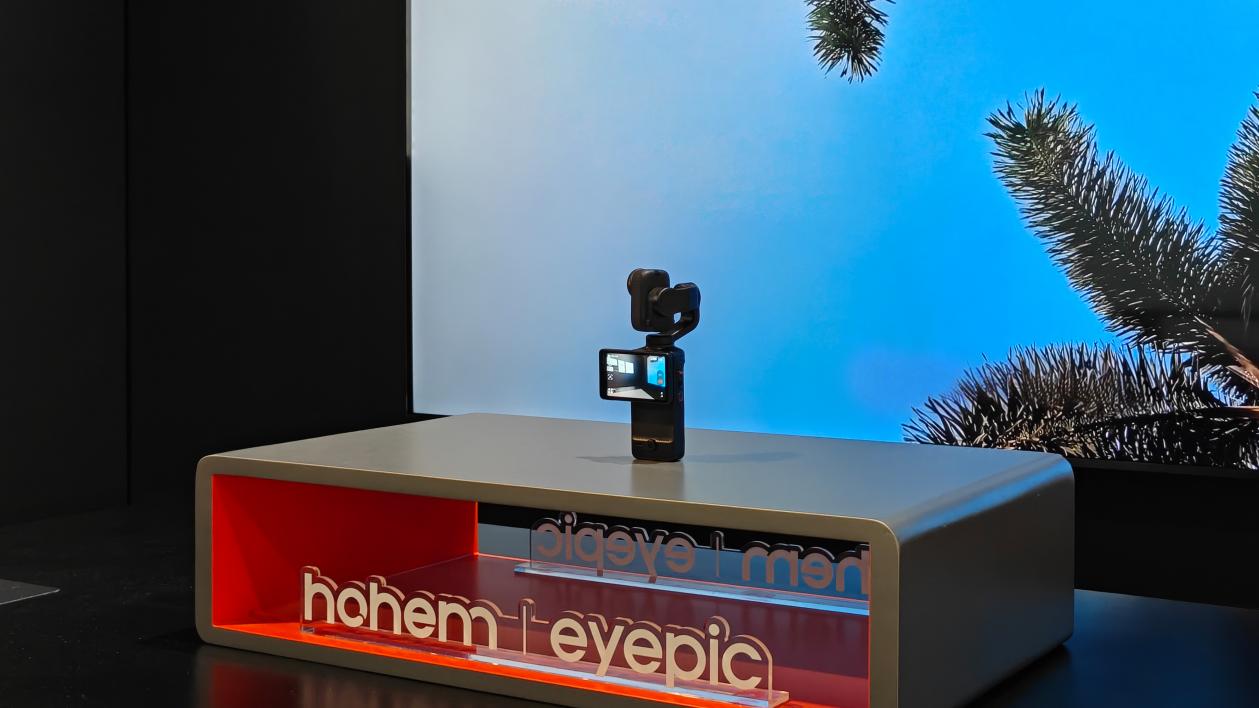
(Image Source: Hohem Official)
However, to be honest, even if all five manufacturers release their own Pocket products, Xiaolei believes DJI will still emerge as the winner this year. The reason is straightforward: the core of Pocket products lies not in a single parameter but in extremely high completeness across the entire chain. Image quality, stability, sound recording, accessory interoperability, editing templates, fast transmission, and after-sales reliability—these factors combined are why users are willing to pay a premium for Pocket products.
If they simply apply the mobile imaging approach, the outcome may be heavy marketing but users discarding the product after two weeks of use—this is precisely the type of competitor that DJI fears the least.
Will the Handheld Gimbal Camera Market Be a Fleeting Trend or a New Avenue for Mobile Imaging?
Despite the emergence of numerous new players in just one year, Xiaolei still views 2026 as a year of 'forced maturity': not because everyone suddenly loves handheld gimbal cameras but because the barrier to content production is continuously rising. In the past few years, mobile phones have pushed the image quality of static photos to the limit, but video production remains challenging: shaky footage, chaotic composition, poor sound recording, and struggles with lighting changes, not to mention the tedious editing process.
The biggest advantage of Pocket products is simplifying the process of 'taking good footage'. It's not just about making the footage clearer but integrating stability, camera movement, sound recording, direct color output, and even basic editing concepts into this 'ready-to-use' device.

(Image Source: DJI Official)
However, whether it will just be a passing trend depends on whether other manufacturers can offer something new. After all, the story of Pocket products has been solely written by DJI so far. But with manufacturers like Insta360, Vivo, and OPPO, which possess software and hardware integration capabilities, entering the market, the handheld gimbal camera market may shift from 'supply creating demand' to 'technology-driven differentiation competition'.
Xiaolei believes that under these market changes, Pocket products will evolve from a 'standard answer' into different approaches:
One category will continue the 'DJI route': integrated, high completeness, and low hassle;
Another category will follow the 'Insta360 route': stronger App features, stronger gameplay, and stronger dissemination;
Yet another category will become 'mobile phone ecosystem accessories': cheaper, more portable, and focused on interconnection.
Therefore, Xiaolei's judgment is that the handheld gimbal camera market in 2026 will likely become hotter but not necessarily experience a massive boom; instead, it will be more like a 'category expansion'. It will attract some users who previously only used mobile phones and draw some users who previously used cameras back to a lighter shooting method.
DJI Is Not in a Rush to Announce Because It Truly Aims to Create the 'Next Stage of Pocket'
Returning to the initial question: why has DJI not officially revealed any information since the leaks began in September last year? In Xiaolei's view, the reason is not that DJI is 'not ready' but that it is waiting for a more opportune time to play its cards. After its competitors have revealed all their cards, DJI will introduce products with higher completeness and stronger system capabilities, shifting the competition from 'parameter upgrades' to 'experience closure'.
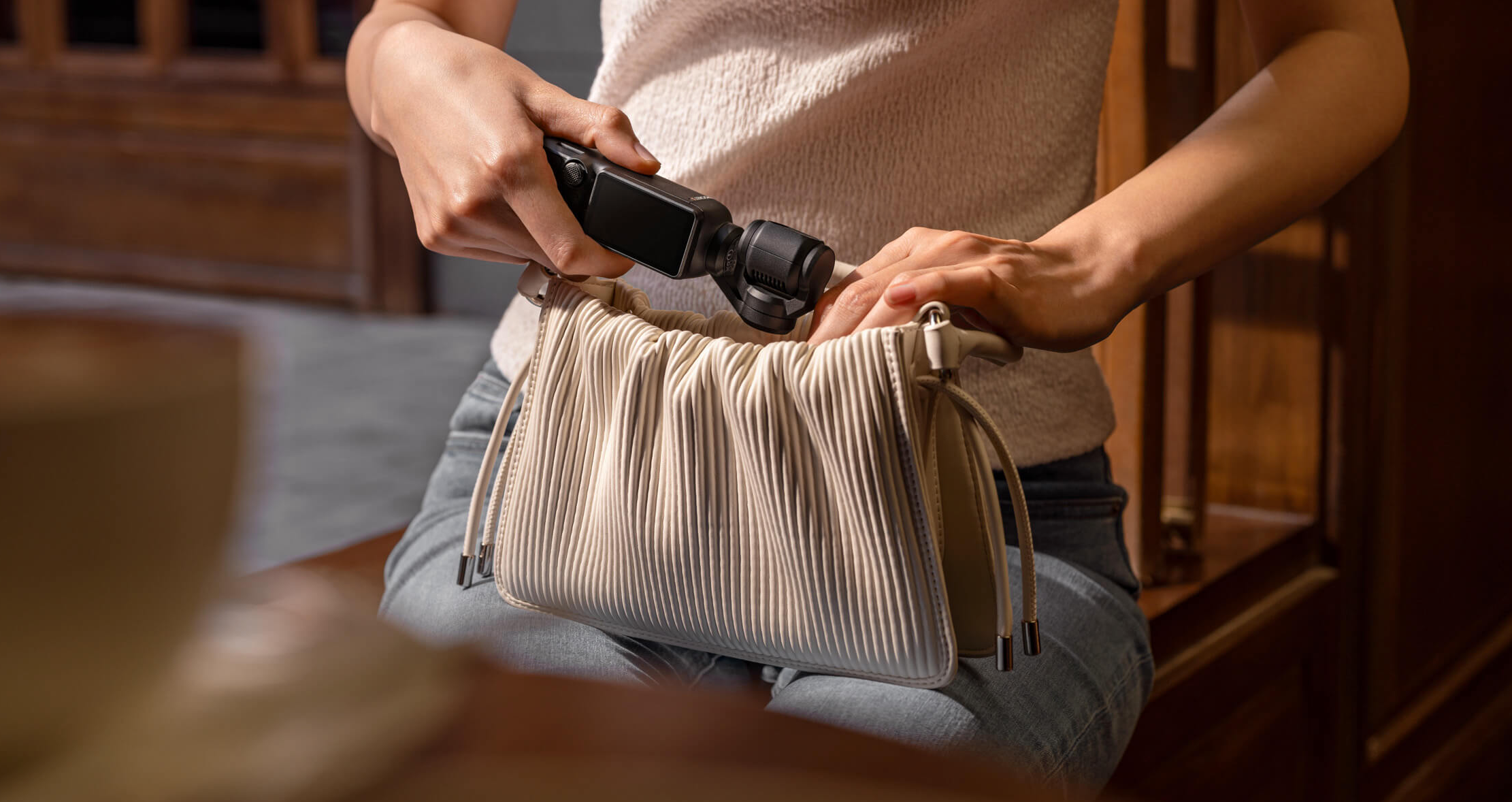
(Image Source: DJI Official)
As for when the Pocket 4 will arrive and whether it will feature more radical form factor upgrades, we can only wait for time to provide the answers. However, one thing is certain: when there are more competitors and DJI remains silent, it often indicates that it is preparing to unveil a blockbuster product.
Source: Leitech
Images in this article are from the 123RF licensed image library. Source: Leitech
-
On the Eve of Its IPO, Avatr Finds Itself Embroiled in a 'Farce of Controversy and Belittlement'
-
![]()
Yutong Optics' Japanese Subsidiary Unveiled in Tokyo, Shifting Strategic Focus to Technology-Driven Growth
-
![]()
Half-Year Revenue Outstrips Last Year’s Total! Zhongrun Optics Forecasts 80.2% H1 Revenue Growth
-
![]()
Why Does AI Competition Start with Computing Power?
-
![]()
Apple AI Finally Makes Its Debut in China, Yet iPhone's 'AI Autonomy' Faces Uncertainty
-
![]()
Apple AI and QianWen Make Up Lessons: Alibaba Has Its Own 'Doubao Phone'
-
![]()
QianWen Joins Apple, Signal for Large Models to ‘Fade into the Background’
-
![]()
The ‘Anchor’ Strategy of Google Hidden Behind the Bleeding Financial Report