A Whopping 200 Million Yuan Bet on Full-Color Waveguide: Guangna Siwei Gears Up for 2027!
 08/06 2026
 536
536
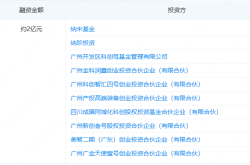
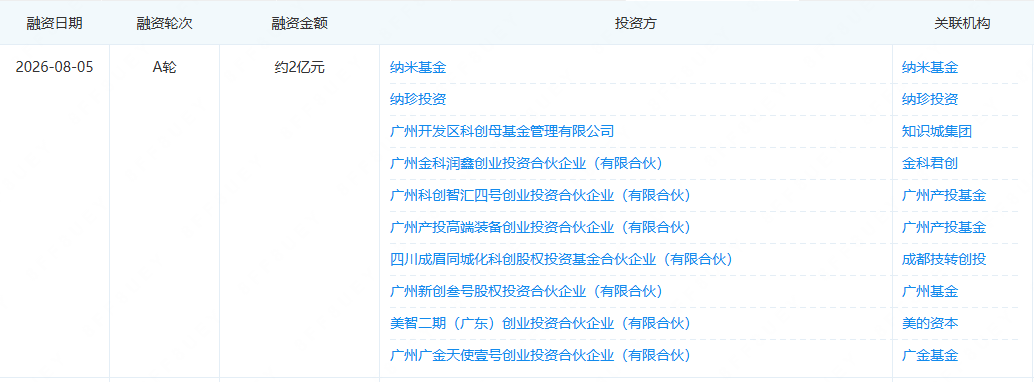
Recently, Guangna Siwei successfully wrapped up its Series A funding round, securing nearly 200 million yuan. The roster of investors is impressive, featuring Guangzhou Industrial Investment, Guangzhou Finance Holdings, Jinke Junchuang, Chengdu Science and Technology Innovation Investment, Emerging Fund, Midea Capital, Guangzhou Development Zone Science and Technology Innovation Mother Fund, Nami Fund, and Nazhen Investment. Notably, Nami Fund, an existing shareholder, doubled down on its investment.
The fresh capital will be channeled primarily into the R&D of next-gen full-color waveguide technology, the scaling up of new process production lines, the expansion of both domestic and international markets, and the recruitment of top-tier talent. This strategic move aims to bolster Guangna Siwei's IDM (Integrated Device Manufacturer) full-chain self-research and self-production capabilities within the AR diffractive waveguide domain. Concurrently, the company has embarked on its Series A funding journey, aiming to harness the power of the capital market to expedite technological advancements and capacity expansion, thereby positioning itself advantageously ahead of the anticipated 2027 industry technology and capacity boom.
This funding round is far from an isolated incident; it underscores the AR optics sector's imminent technological inflection point. Presently, the consumer-grade AR market predominantly relies on single-green diffractive waveguides for mass production, with companies offering similar performance and no significant generational leap. However, the consensus within the industry is that 2027 will mark a pivotal moment for waveguide technology evolution—ushering in the mass commercialization of single-chip dual-color and even single-chip full-color solutions.
With the rapid convergence of AI and AR glasses, the demand for high-performance display solutions is escalating, fueling industry enthusiasm. The transition from single-green to full-color is no mere parameter upgrade; it entails an exponential increase in the complexity of high-level processes such as multi-layer grating fabrication and multi-color optical path precise calibration. Hence, the company that first conquers the full-color mass production challenge will swiftly gain a competitive edge.
Just ahead of this industrial watershed, Guangna Siwei's distinct strategy is coming into sharp focus. Established in 2021 and nurtured by the Guangdong-Hong Kong-Macao Greater Bay Area National Nanotechnology Innovation Institute, the company's core team is a melting pot of research talent from esteemed institutions like the National Center for Nanoscience and Technology, Beijing Institute of Technology, and Germany's University of Jena, along with seasoned experts from industry titans such as BOE, SONY, and AMEC. This team boasts a dual background in cutting-edge optical R&D and display semiconductor mass production.
The company embraces an IDM vertical integration model, encompassing the entire chain from optical design, specialty materials, and nano-microfabrication to device packaging and testing. It has independently developed the optical design simulation tool SEEVerse, backed by the National Natural Science Foundation of China's key R&D program. This efficient internal collaboration enables the cycle from optical design to sample verification to be condensed to a mere 68 hours.
In terms of production capacity, Guangna Siwei has established a fully automated nanoimprint production line with an annual output capacity of millions of units. Following the launch of the new production line in 2026, the annual output capacity will surge to 1–1.5 million units, laying a robust manufacturing foundation in anticipation of the impending market demand surge.
Technologically, Guangna Siwei adopts a dual-track approach, focusing on both nanoimprinting and silicon carbide etching. In the consumer market, its single-green waveguides are already shipping in large volumes, featured in multiple mass-produced AR glasses, including the Even G1/G2 from Yiwen Technology. Its single-chip full-color waveguide C25C has also entered mass production.
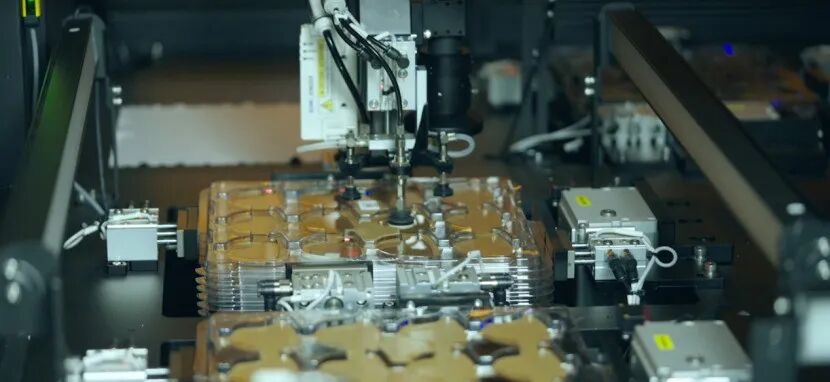
The true technological fortress lies in its silicon carbide-etched full-color diffractive waveguide. Currently, Guangna Siwei's silicon carbide full-color waveguide products are less than 0.6mm thick and weigh under 3g per unit. These have been mass-applied in the Coray Air2 commercial AR glasses, establishing a formidable technological lead of 1–2 years in the high-end full-color waveguide sector.
From a capital standpoint, the composition of this round's investors is telling. State-owned entities like Guangzhou Industrial Investment, Guangzhou Finance Holdings, and Chengdu Science and Technology Innovation Investment have collectively stepped in, while Midea Capital has joined as an industrial capital player, and existing shareholder Nami Fund has continued to invest. The involvement of state-owned backers implies policy endorsement and regional industrial support, while industrial capital validates its supply chain value and commercialization prospects.
In essence, Guangna Siwei has constructed a triple competitive barrier through IDM full-chain self-research, dual technology routes, and the early mass production of silicon carbide full-color waveguides. On the cusp of the AR optics industry's shift from single-green to full-color, the nearly 200 million yuan Series A funding provides ample financial and production capacity reserves for it to position itself strategically for the 2027 mass production window.
From the laboratory of the National Center for Nanoscience and Technology to emerging as a globally leading waveguide supplier, this young company is striving to carve out a key ecological niche in the "chip-level" core components of AI glasses. The upcoming Series A funding round is poised to determine whether it can sustain its leading position in the next phase of capacity competition. OFweek Optical will keep a close eye on this unfolding story.
-
![]()
Competing in the AI Work Arena: Is Qianwen Office Too Late?
-
![]()
Dongtian Micro Accelerates Semiconductor Optical Precision Machining with Wuxi Expansion
-
![]()
A Whopping 200 Million Yuan Bet on Full-Color Waveguide: Guangna Siwei Gears Up for 2027!
-
![]()
China’s eSIM Smartphones Adopt Three Key Strategies: Pure eSIM, Single SIM Slot with Dual eSIMs, and Quad-SIM Dual Standby
-
![]()
Traditional Fuel Vehicle Market Base Dwindles: BBA Vehicles Struggle Despite 300,000 Yuan Price Cuts, Prompting Closure and Absconding of Several 4S Dealerships
-
![]()
Largan Precision Makes Another Attempt at Hong Kong Stock Exchange IPO Amid High Growth, Raising Concerns Over 'Apple Dependency' and Operational Independence
-
![]()
From "Tongyi" to "Qianwen", and on to "Qianwen Office": A Showcase of Alibaba's Astute Leadership Decision-Making
-
![]()
Is Qwen3.8 the 'Zelda' for Qianwen Office?