By 2027, Will Jiangsu Eclipse Guangdong? Can Guangdong Maintain Its Leading Edge?
 02/02 2026
 793
793
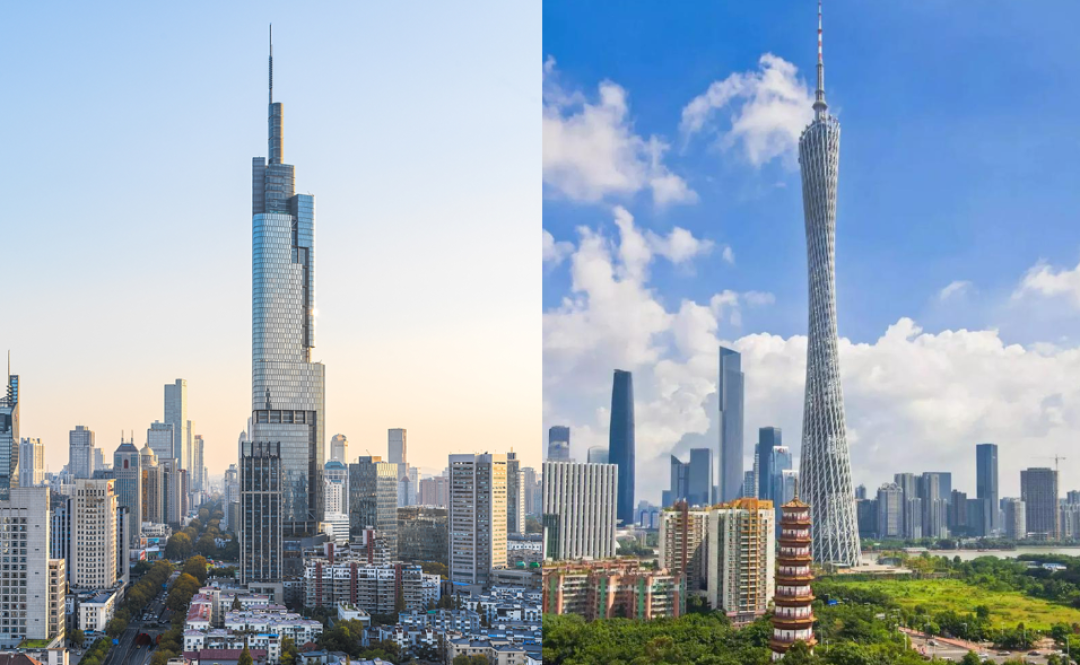
Jiangsu and Guangdong's Economic Gap Shrinks to a Decade Low
Recently, economic data for various provinces across China in 2025 have been released one after another. Guangdong has once again claimed the top spot, boasting an economic output of 14.5846 trillion yuan and marking its 36th consecutive year as China's premier economic province. Despite maintaining its leadership, the gap between Jiangsu and Guangdong is narrowing, with Jiangsu's GDP growth rate outpacing Guangdong's in seven out of the past ten years.
In 2025, the United States and China continued to dominate the global economic rankings, followed by Germany, Japan, India, the United Kingdom, France, Brazil, and others. Russia, Mexico, Australia, South Korea, and Spain ranked 11th to 15th globally. If Jiangsu Province were ranked globally, its 2025 GDP of 14,235.15 billion yuan would far surpass those of Australia, South Korea, and Spain, approaching Mexico and Russia, and ranking 13th globally. This would place Jiangsu ahead of more than 180 countries and regions worldwide, truly making it as prosperous as a nation.
In 2019, the GDP gap between Guangdong and Jiangsu reached its widest point in a decade at 810 billion yuan, sparking discussions on what Jiangsu could learn from Guangdong and areas for improvement. However, by 2025, this gap had narrowed to 344.8 billion yuan. If Jiangsu sustains its current growth advantage, with an annual GDP growth rate approximately 1.5 percentage points higher than Guangdong's, 2027 could mark a historic turning point where Jiangsu overtakes Guangdong.
The combined economic output of Guangdong and Jiangsu accounts for nearly one-fifth of China's total GDP. This underscores their roles as the bedrock and stabilizer of China's economy and represents two distinct models for pursuing high-quality development. They have entered a critical phase of direct competition: one is an outward-oriented Greater Bay Area driven by the service sector and innovation, while the other is an inward-looking Yangtze River Delta rooted in high-tech manufacturing and regional coordination. Beyond the comparison of total output and growth rates lies a broader narrative of China's quest for structural optimization and model innovation. The era of competition and cooperation between these two economic powerhouses has dawned.
What Fuels Jiangsu's Decentralized Economic Model?
Over the past year, as the "Jiangsu Super League" gained nationwide attention, more people have come to appreciate the remarkably decentralized nature of Jiangsu's economy. Here, you might even witness "Guannan vying with Nanjing for the title of 'Southern Brother'," though it's mostly playful banter. However, Jiangsu's decades-long commitment to a balanced township economy model has instilled confidence in most regions to "strive for excellence."
All 13 prefecture-level cities in Jiangsu rank among the top 100 in China's GDP, with significant variations in dialects, cuisine, and culture. The competitive spirit of "no one yielding to another" has fostered a "decentralized" economic landscape where everyone participates and competes fiercely. This model avoids the siphoning effect of a single core city while enhancing overall efficiency through industrial division and collaboration, particularly evident at the township level.
At the 2025 Township Economy Innovation and Development Forum, the "Research on High-Quality Development of China's Township Economy" report was unveiled. According to the report, 128 towns in Jiangsu ranked among the "Top 500 Township Economies," accounting for over one-fifth of the total, with 35 towns ranking among the top 100 nationwide. Notably, Yushan Town in Kunshan City once again topped the list with a GDP of 113 billion yuan, defending its title as "China's Strongest Economic Town," while Yangshe Town in Zhangjiagang City also ranked among the top ten.
Jiangsu's cluster industrial model offers greater possibilities for macroeconomic regulation. Amid insufficient endogenous economic growth, Jiangsu continues to drive economic growth through increased infrastructure investment and counter-cyclical adjustments.
In 2025, Jiangsu's secondary industry added value reached 6.00382 trillion yuan, with a 6.5% year-on-year increase in the added value of industrial enterprises above a designated size. The added value of the manufacturing industry for core digital products above a designated size surged by 10.2%, far exceeding Guangdong's 3% growth rate in industrial added value above a designated size. The cluster advantages of high-end equipment, new energy, and biomedical industries continue to stand out.
With the spillover of Shanghai's scientific and technological innovation resources and the acceleration of transportation, industrial, and market integration in the Yangtze River Delta, Jiangsu, particularly the southern Jiangsu region, has become the primary beneficiary. Suzhou, Wuxi, and other cities have formed a "research and development-manufacturing" collaborative chain with Shanghai, while Nanjing and Nantong have leveraged cross-river integration strategies to attract numerous high-end projects. This geographical advantage of "proximity to a resource hub" has injected sustained growth momentum into Jiangsu.
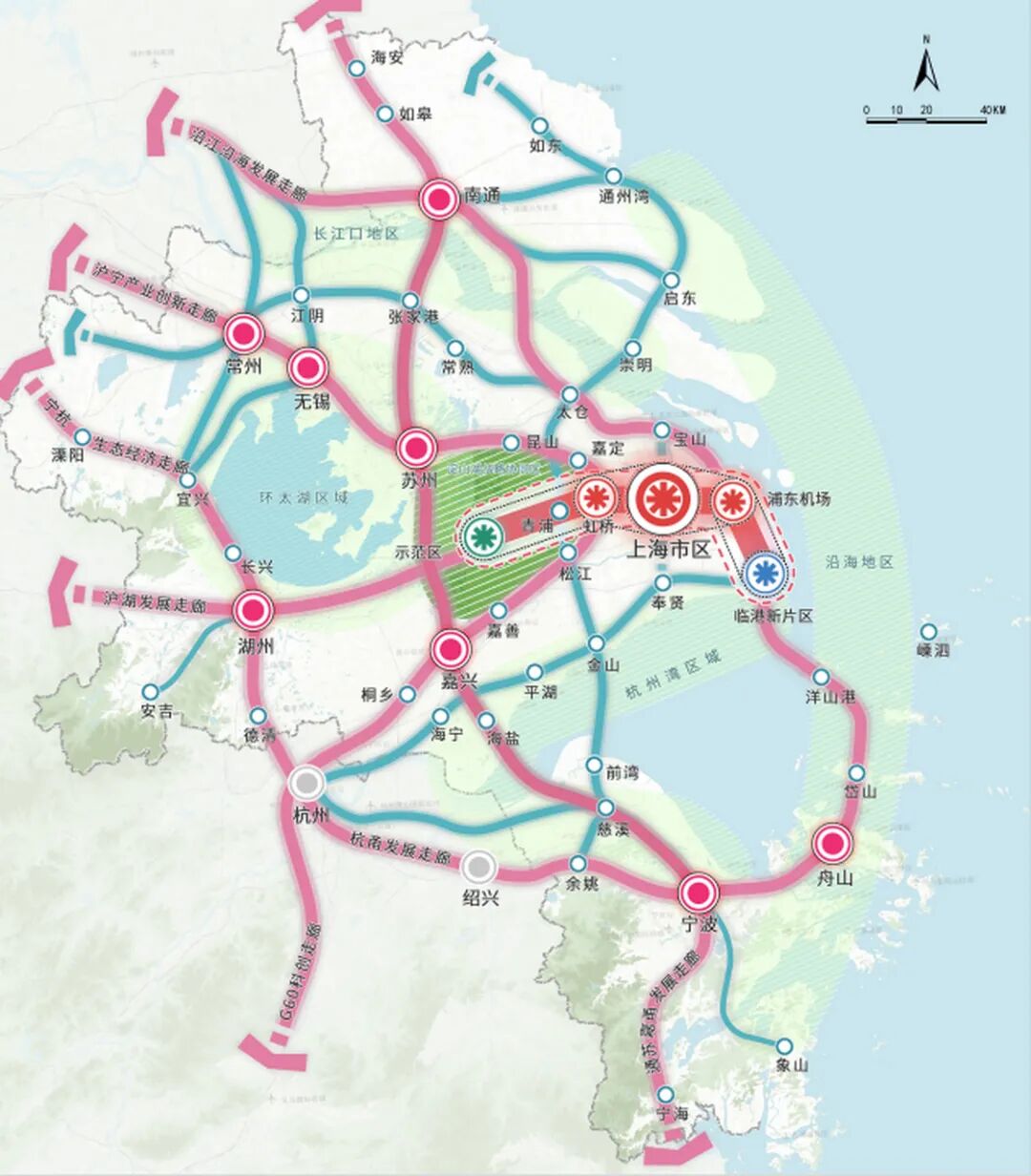
Image Source: Internet
However, it would be a misconception to assume that Jiangsu's economy is dominated by state-owned enterprises with limited market vitality. In contrast, Jiangsu's economy is primarily driven by B2B industrial chains, represented by companies such as Luxshare Precision, Hengli Group, Shenghong Group, Lead Intelligent Equipment, and Unisoc. B2B industries cater to corporate clients whose procurement decisions are typically more rational and cautious, involving multiple departments and complex processes. Once a partnership is established, corporate clients often exhibit loyalty and stickiness. Although B2B industries are influenced by economic conditions, their fluctuations are generally less frequent and severe than those in B2C industries. In contrast, Guangdong's economy is predominantly B2C-oriented, serving both domestic and international markets with well-known brands such as Gree, Midea, Huawei, BYD, DJI, and Tencent.
Under Jiangsu's unique fiscal system, high-quality resources such as land, assets, and franchises can be injected into county-level investment companies in a lump sum. Land, industrial parks, reservoirs, ports, sea areas, advertising spaces, and franchises are transferred to county-level investment companies, rapidly expanding their asset scales. Coupled with the implementation of a provincial administrative system for some counties, this has created a unique pattern where "county-level investment companies function as provincial platforms," significantly enhancing the financing and investment capabilities of county governments. This provides strong financial support for Jiangsu's industrial park construction, infrastructure investment, and industrial development.
This enables county-level investment companies in Jiangsu to secure funds at costs below 3%, forming a virtuous cycle of "debt-loan-debt" and providing continuous financial support for industrial park construction and infrastructure investment. Statistics show that the debt ratios of county-level investment companies in Jiangsu are generally lower than the national average, contrasting sharply with Guangdong's high-debt fiscal model.
This cluster industrial model also offers greater feasibility for macroeconomic industrial policy regulation in Jiangsu. The province implements a "chain leader system," where provincial leaders personally oversee various industrial chains, adhering to the principle of "attracting what is lacking" to manage each industrial chain from upstream to downstream comprehensively. This industrial development model enables Jiangsu to rapidly form complete industrial chains and clusters, enhancing industrial competitiveness and agglomeration effects. Taking industries such as LED, new energy, and biomedicine as examples, Jiangsu has established complete industrial chains and ecosystems.
However, Jiangsu is not without its challenges. For instance, it faces slow population growth. Since the 2025 data has not been released yet, the 2024 data is used for illustration. In terms of natural population growth, Jiangsu's natural population growth rate was -2.5‰ in 2024, significantly lower than the national average of -0.99‰. In terms of population inflow, Jiangsu had a net inflow of 213,000 people in 2024, which, combined with the natural population decline, resulted in zero growth in the resident population. If this were a one-time anomaly, it might not be concerning. However, Jiangsu's population has maintained a growth rate of around 0.1% for nearly five years, becoming a persistent issue for the province.
Objectively speaking, several factors contribute to this situation. Jiangsu faces a relatively severe aging population problem compared to the rest of the country. Additionally, the marriage and fertility intentions of the eligible population within the province are relatively limited. Factors such as Jiangsu's industrial structure, significant developmental disparities between southern and northern Jiangsu, long-standing differences in treatment between the public and private sectors, and relatively weaker population attraction measures compared to other southeastern coastal provinces are seen as constraints on population inflow.
Furthermore, some industrial chains in Jiangsu are not yet robust enough, with key technologies reliant on external sources. Taking Jiangsu's most representative electronic information industry as an example, with an output value exceeding 3 trillion yuan, it is a globally important production base for integrated circuits and laptops. However, the "pain of chip shortage" is particularly acute, with the self-sufficiency rate in key areas such as chip design and manufacturing only around 20%, and high-end chips still requiring substantial imports.
Guangdong's Transformation: A Work in Progress
Guangdong's economic output of 14.58 trillion yuan is built on a unique dual-wheel drive of "service sector-driven growth" and "innovation-led development." This represents a highly challenging growth strategy: maintaining stability as the world's largest export-oriented economy while fostering disruptive innovation from within.
Firstly, "structural changes" in the export engine have replaced "speed pursuit." In 2025, Guangdong's total foreign trade volume reached 9.5 trillion yuan, contributing 24.1% of the country's trade growth. Behind this impressive total lies profound internal adjustment. Export growth in the first ten months was only 1.7%, reflecting pressures from weak global demand. However, amid this flat trajectory, structural highlights of "innovation and optimization" stand out prominently. Exports to countries along the "Belt and Road," particularly Southeast Asian markets, have grown strongly. Mechanical and electrical products, intermediate goods, and the "new three" (new energy vehicles, lithium batteries, and photovoltaic products) have served as stabilizers and growth drivers for exports.
Guangdong's foreign trade momentum is shifting from large-scale contract manufacturing reliant on cost advantages to high-value-added exports driven by technological innovation and supply chain collaboration. In terms of total exports, high-tech products have become the mainstay, with annual export value exceeding 1 trillion yuan for the first time, reaching 1.14 trillion yuan. Among them, drones, 3D printers, and industrial robots have all seen growth rates exceeding 30%. On the import side, domestic demand potential continues to release, with integrated circuit imports accounting for nearly 40% of the province's total import value.
For a long time, Guangdong has maintained a "one superpower + two giants" industrial structure, which can be seen as both an advantage and a disadvantage. Specifically, the electronics industry dominates with a total output of around 4.5 trillion yuan; electrical equipment and automotive industries rank second and third, with outputs of 2 trillion yuan and 1 trillion yuan, respectively, while other industries have outputs below 1 trillion yuan. The disadvantage lies in the electronics industry's higher reliance on foreign trade, making it vulnerable to geopolitical and international economic changes. Although the automotive industry is sizable, its net profit margin has been declining annually, reaching only 1.4% at the end of last December, posing a significant drag on Guangdong's GDP growth. While the automotive industry also plays a role in Jiangsu's economy, Jiangsu focuses more on the upstream and midstream segments of the automotive supply chain, such as raw materials, components, and core suppliers, making it less susceptible to industry fluctuations. In contrast, Guangdong's automotive brands, including GAC, BYD, and Huawei, are more significantly impacted.
Guangdong is one of the most active provinces in China for real estate development investment, with headquarters of leading real estate companies such as Evergrande, Country Garden, and Vanke located here. Since 2021, the real estate industry has undergone profound adjustments, leading to a continuous decline in fixed asset investment in Guangdong. Data shows that real estate development investment in Guangdong decreased by more than 12% year-on-year in 2024. It is expected that the real estate development investment data for Guangdong in 2025 will not be favorable.
In terms of population, Guangdong leads the country with a resident population of 128 million, including over 30 million migrants, which theoretically forms a small domestic market. However, consumption data does not support this. In 2025, Guangdong's Consumer Price Index (CPI) decreased by 0.2% year-on-year, with the decline expanding by 0.2 percentage points from the previous year. From January to November 2025, Guangdong's retail sales of consumer goods grew by 2.5%, not only lower than Jiangsu's 3.3% but also falling short of Guangdong's own annual growth target of around 5.0%. In contrast, Jiangsu ranked first in the country with a total retail sales of consumer goods of 4,639.4 billion yuan for the year.
Liu Shijin, who previously served as the Deputy Director of the Development Research Center of the State Council, once highlighted in an article that the inadequacy of consumption can be attributed to several factors. These include the generally low level of basic public services, substantial disparities between urban and rural areas, the subpar quality of urbanization development, significant income inequalities, and the relatively limited size of the middle - income group. For Guangdong province, the long - standing problem of regional imbalance unquestionably poses a significant obstacle to boosting consumption.
In Conclusion
The comparison between Guangdong and Jiangsu is not a simple matter of determining which one is better. Instead, they each embody an “optimal solution” for high - quality development, tailored to their unique endowments and operating under different constraints. Guangdong faces the challenge of effectively transforming the innovation potential of its core cities into a driving force that can propel the entire region forward. On the other hand, Jiangsu's task is to create a top - tier innovative region that can lead the way into the future within the context of its balanced developmental framework. The true value of the competition between these two economic powerhouses lies in the fact that they offer two highly valuable real - world models for the diversified and resilient development of China's economy.
References:
“With 'Top - Tier Influencers' Driving Consumption, the Leading Province in Consumption Changes Hands.” Source: Urban Evolution Theory
“Guangdong Doesn't Have to Follow Jiangsu's Economic Model.” Source: Lingnan Business Review
“Jiangsu's Exceptionally Robust Township Economy.” Source: Phoenix Network Jiangsu
-
![]()
Net Profit Surges 13.65% Year-on-Year! Yutong Optics Reports RMB 1.782 Billion in H1 Revenue
-
![]()
Q2 Net Profit Slashes Losses by 80%! Has Costar Emerged from Its Darkest Hour?
-
AI Agents: The Paradigm Shift from 'Conversation' to 'Execution'
-
NVIDIA Takes Bold Strides to Lead in Both Hardware and Software Realms
-
![]()
It's Hard to Build Cars, Even Harder to Build Humans, and XPENG is Doing Both
-
![]()
Valuation Soars by $57 Billion: Three Entrepreneurs Born in the 1980s Forge an AI Unicorn Now Suddenly on the Market
-
![]()
How Can We Achieve the Goal of 100,000 Hydrogen Vehicles by 2030?
-
![]()
July Online Market for Consumer-Grade Sports Cameras: Robust Double-Digit Growth in Sales Volume and Value, Mid-Range Products Fuel Market Expansion