Guangzhou: Rewriting the Global Autonomous Driving Landscape with a Series of 'Firsts,' Transforming from the 'City of Autonomous Driving' to the 'City of Future Industries'
 03/24 2026
 625
625
Introduction
From being the 'torchbearer' to the 'dual IPOs,' Guangzhou, an old-school automotive hub, is rewriting the global autonomous driving landscape with a string of 'firsts.'
On November 2, 2025, during the torch relay for the 15th National Games in Guangzhou, a detail left many stunned.
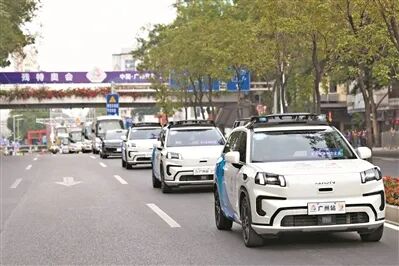
The 'guardians' escorting the flame were not humans but vehicles. Two autonomous vehicles jointly developed by Pony.ai and GAC Group delivered the flame precisely 6.8 kilometers to the Guangdong Gymnasium.
This marked the first time in National Games history that autonomous vehicles served as 'torchbearers.' Under the gaze of hundreds of millions, they performed as seasoned drivers.
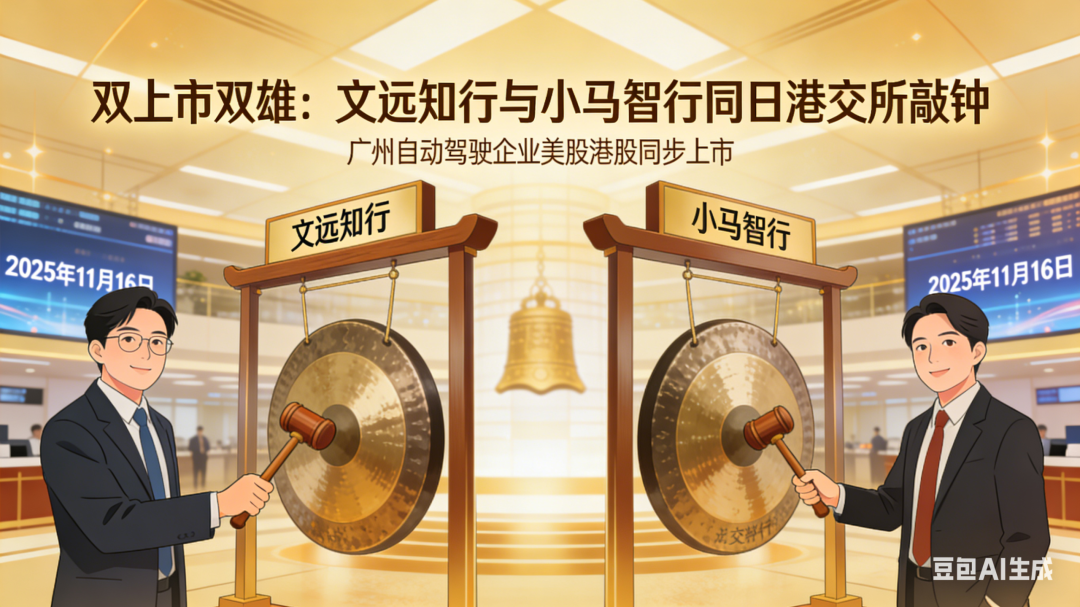
But this wasn't Guangzhou's most viral autonomous driving moment. The day the world truly remembered the city came two months later—on November 16, 2025, when WeRide and Pony.ai, two Guangzhou-based autonomous driving companies, rang the opening bell at the Hong Kong Stock Exchange on the same day.
Dual IPOs from the same city on the same day. A first in global autonomous driving history.
Many ask: Why Guangzhou?
'Autonomous Vehicles Are Here' (WeChat ID: wurenchelaiye) believes the answer lies in a series of 'firsts' and the city's patience and boldness in nurturing 'future industries.'
(For further reading, click: 'Double Celebration! Pony.ai and WeRide List in Hong Kong, Raising Over HK$10 Billion! Marking the Formation of a 'U.S.+Hong Kong' Dual Primary Listing Structure for Both Autonomous Driving Leaders')
I. A Decade-Long Bet: A Series of 'Firsts'
On December 19, 2016, Pony.ai was founded in Beijing and soon began R&D and early testing in Guangzhou.
In April 2017, Han Xu and his team established WeRide in Silicon Valley. By December of the same year, this overseas company chose to settle in Guangzhou.
To understand Guangzhou's leadership in autonomous driving, consider these statistics:
Guangzhou was the first city in China to issue passenger test licenses; the first to conduct road tests on main arteries in its central urban area ; the first to grant road transport operation licenses to autonomous driving R&D companies; and the first to launch commercial demonstration operations for autonomous taxis.
These 'firsts' are not slogans on paper but tangible actions.
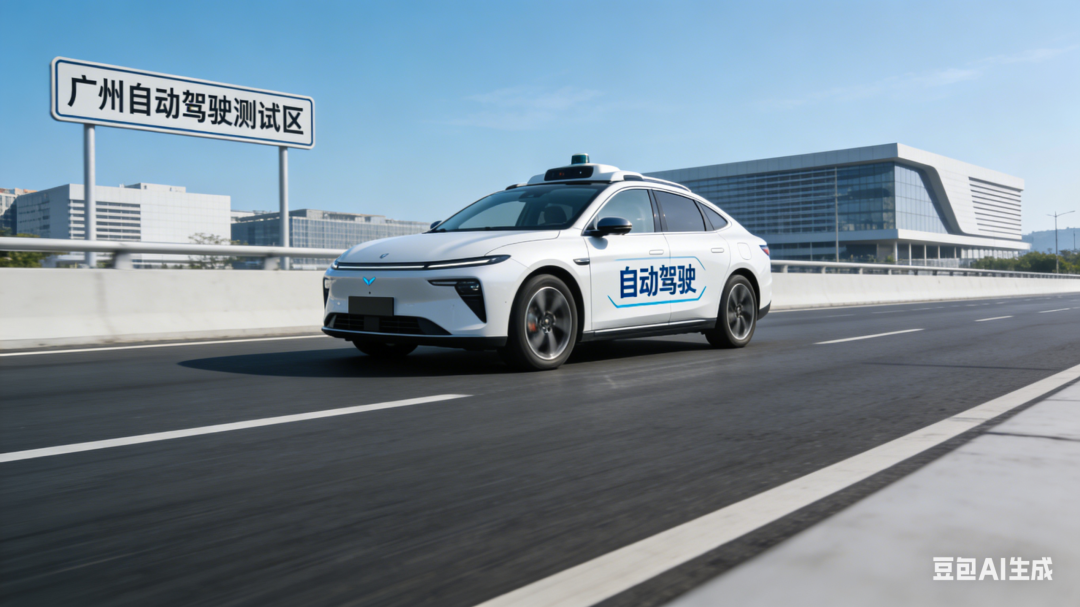
In 2018, while many cities hesitated, Guangzhou opened its first batch of autonomous driving test roads in Nansha.
In 2019, WeRide launched China's first fully public Robotaxi service in Guangzhou.
In 2023, Guangzhou took the lead in legislation with the 'Guangzhou Regulations on Innovative Development of Intelligent Connected Vehicles,' becoming the nation's first local regulation closely tied to autonomous driving.
This combination of moves provided autonomous driving companies not with preferential policies but with certainty.
WeRide founder Han Xu once said, 'Guangzhou is an excellent place for entrepreneurship. The government is open-minded, contract spirit (contract-driven), and highly encouraging of innovation and SME development.'
The first Cantonese phrase he learned was 'shi de xian yu di de ke' ('If you eat salted fish, you must endure thirst')—once you choose this path, you must bear the consequences.
This phrase reflects both his entrepreneurial journey and Guangzhou's bet on autonomous driving.
II. From 'Whampoa Military Academy' to 'Dual IPOs'
Han Xu's arrival in Guangzhou was no coincidence.
In 2017, he and his team founded WeRide in Silicon Valley. By December of the same year, this overseas company chose to settle in Guangzhou.
Why?
Because Guangzhou had already gathered over a dozen autonomous driving companies, fostering a strong innovation ecosystem with budding industry-academia-research collaboration.
Today, this ecosystem is even more robust.
Guangzhou is home to automakers like GAC Group and XPeng, with clear synergies across the automotive supply chain.
It houses institutions like the Guangdong Academy of Sciences and the Guangdong Institute of Intelligent Unmanned Systems, universities such as South China University of Technology (SCUT), Sun Yat-sen University, and Guangdong University of Technology, as well as key industry players like WeRide, Pony.ai, Zhongke Smart City, and GD Tech.
How strong is this autonomous driving ecosystem?
For example, SCUT is integrating technologies in perception, decision-making, control, and electronics to form a complete autonomous driving solution.
Last year, SCUT led the establishment of the National University Regional Technology Transfer and Transformation Center (Greater Bay Area) - Land-Air Integrated Intelligent Mobility Sub-Center, soliciting intelligent connected and autonomous driving technologies nationwide.
The Joint Laboratory for Intelligent Transportation and Artificial Intelligence, established by Sun Yat-sen University and GAC R&D, focuses on core technology breakthroughs for the 'four modernizations' of the automotive industry.
Industry-academia-research collaboration, with companies embedding and empowering each other—this is the true reason Guangzhou's autonomous driving leads other cities.
III. 'Hardcore Weapons' in Corporate Hands
If research institutions are the 'brain,' Guangzhou's autonomous driving companies wield 'hardcore weapons.'
GAC is a leader, participant, and investor in Guangzhou's autonomous driving.
GAC Capital has invested over RMB 520 million in autonomous driving technologies, building an ecosystem from chips to operations.
By 2027, GAC aims to rank among the global elite in product intelligence and R&D capabilities, officially launching L4 autonomous vehicles for individual users.
XPeng unveiled its second-generation VLA in November last year—a model architecture integrating visual perception, language understanding and reasoning, and physical motion control into a unified framework. As they put it, 'safer, smoother, more powerful.'
Pony.ai's 'Virtual Driver' technology is already deployed in L4 autonomous Robotaxis. By the end of 2025, Pony.ai's Robotaxi fleet will exceed 1,000 vehicles.
Its seventh-generation model features 34 sensors across six categories, covering 360° blind spots and objects up to 650 meters away. More impressively, the autonomous driving kit cost dropped 70% from the previous generation.
(For further reading, click: 'Pony.ai to Ruqi Mobility: Delivers Over 100 Seventh-Generation Autonomous Vehicles, Building a Joint Robotaxi Fleet')
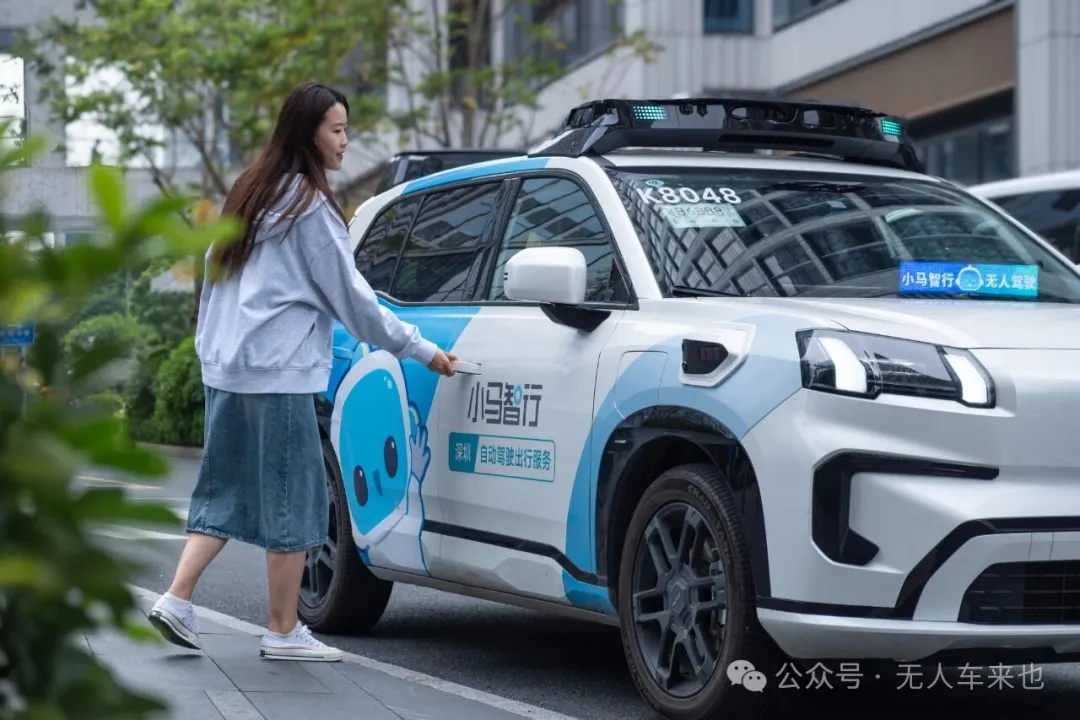
WeRide's WeRideOne platform supports a full product matrix from L2+ to L4, with its self-developed closed-loop simulation engine WeRideGENESIS effectively reducing real-world testing costs and safety risks.
Since launching public operations in 2019, WeRide has never faced regulatory penalties for autonomous system failures.
Behind these numbers lies technological maturity and market recognition.
IV. Making Roads 'Smarter'
In Guangzhou's autonomous driving landscape, not only vehicles but also roads are becoming smarter.
In Nansha Mingzhu Bay, a pilot zone for sea-land-air unmanned systems and low-altitude economy is taking shape.
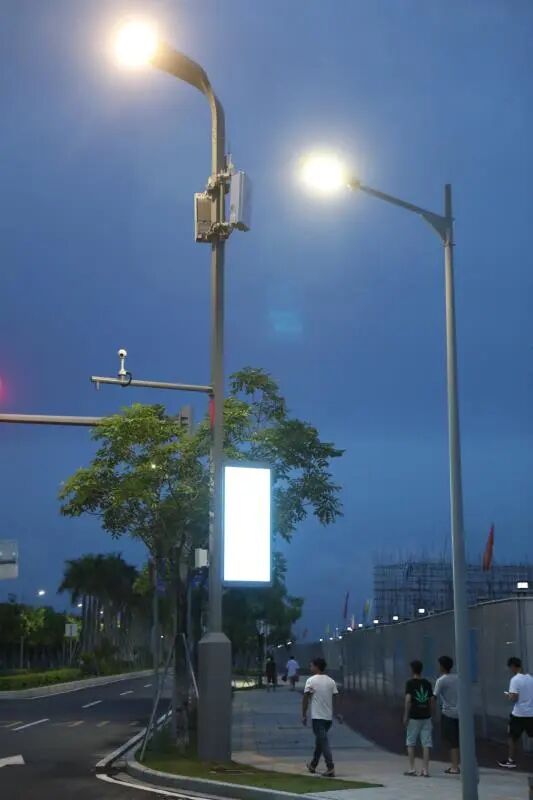
Here stands a special 'smart pole'—in 2015, Zhongke Smart City erected China's first smart pole in Nansha.
Today, this pole is equipped with 5G base stations, millimeter-wave radar, LiDAR, cameras, emergency intercoms, and weather monitoring devices.
It monitors road conditions in real-time, sending Warning message (early warning information) to nearby intelligent connected vehicles via C-V2X protocols or issuing broader alerts through the cloud.
Even more impressive is 'edge computing.'
Zhongke Smart City Chairman Yuan Feng gave an example: If a cargo falls from a truck ahead, the smart roadside system detects it, and the smart pole activates other poles behind the obstacle to warn vehicles in the area.
This intelligent roadside management platform is open to all intelligent connected automakers in Guangzhou.
It not only provides traffic light information in advance but also prevents 'ghost probe ' (unexpected pedestrian/object appearances) in beyond-line-of-sight scenarios.
Vehicle-road coordination in Guangzhou is not a concept but a daily reality.
V. From 'City of Autonomous Driving' to 'City of Future Industries'
Guangzhou's success in autonomous driving transcends transportation. It has pioneered a standardized 'Guangzhou Model' for nurturing hardcore future industries and is now adept at 'replicating' it.
Look at Guangzhou today:
While commercial aerospace seemed distant, i-Space rockets have already launched;
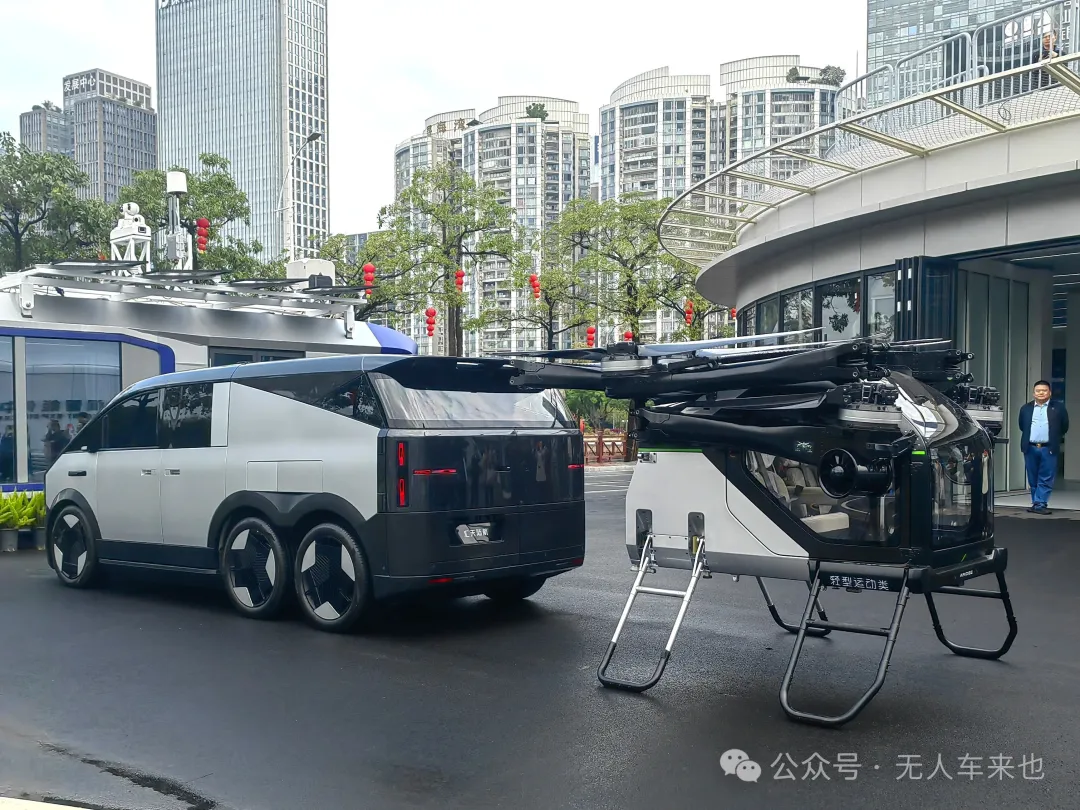
While 'flying taxis' seemed sci-fi, EHang's eVTOL secured the world's first airworthiness certificate;
While traffic congestion made flying cars seem appealing, XPeng Aeroht's flying car will enter mass production in 2026;
(For further reading, click: 'Issuing 'Licenses' for Autonomous Vehicles and Flying Cars! This National-Level Test Site Launches: XPeng Aeroht, Which Raised $200M in Latest Funding, Smiles?')
While biopharmaceuticals seemed high-risk, Akeso's bispecific antibody drug outperformed international 'blockbusters' in efficacy data.
Autonomous driving is just Guangzhou's first 'super case.'
Its core methodology is consistent: based on industrial strengths (manufacturing, commerce), it targets a massive future sector, then leverages strong ecological integration (industry-academia-research + supply chain) and bold policy innovations (open scenarios, pioneering legislation, financial empowerment) to attract and catalyze top players to converge, collide, and spawn giants.
Now, Guangzhou's ambition is clearly outlined in its 'Implementation Opinions on Accelerating the Cultivation of Future Industries,' with six future industries poised for launch.
It aims to systematically build 10 high-energy innovation platforms, 50 concept verification centers, and 100 first-trial scenarios.
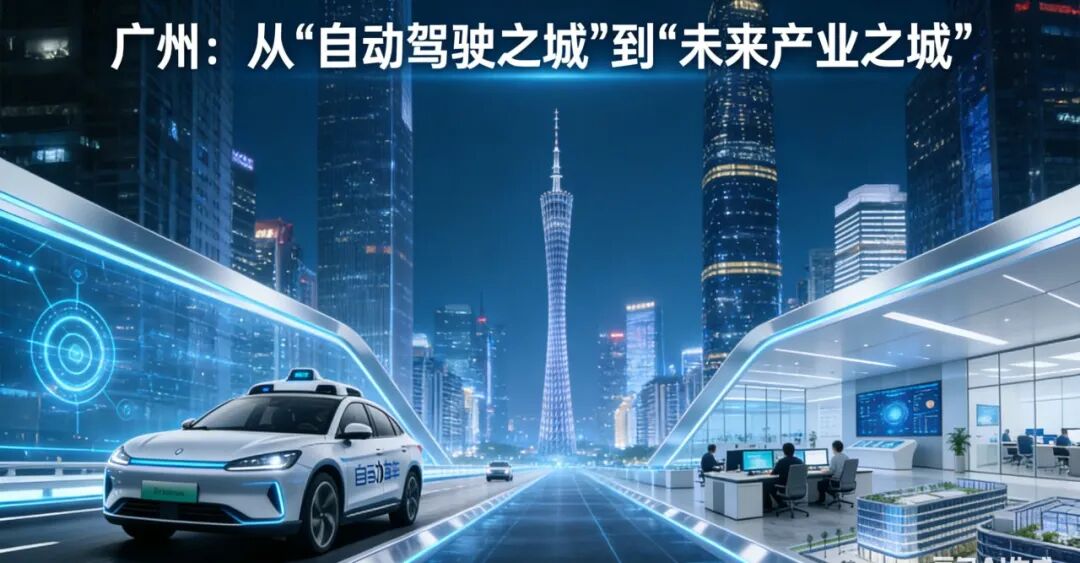
Guangzhou's story shows that new quality productivity is not just about more sophisticated blueprints or powerful computing in labs.
It's about deeply embedding cutting-edge tech into a vast, complex, and vibrant industrial and urban ecosystem, drawing infinite nourishment from it, and ultimately reshaping the host.
Here, autonomous driving is no longer elitist black tech but a practical tool to solve mobility pain points and boost economic efficiency;
Tech companies are not airy unicorns but key nodes embedded in the supply chain;
The government is not just a business recruiter but the most industry-savvy product manager and venture capital partner.
In short, 'Autonomous Vehicles Are Here' (WeChat ID: wurenchelaiye) argues:
When autonomous vehicles escorted the National Games flame in Guangzhou, they illuminated not just a smart road but a megacity's ambition and methodology to actively define the future and ensure its place at the forefront.
This is perhaps the most vivid practical lesson the 'old driver' by the Pearl River offers to all cities aspiring for the future.
What do you think?
#AutonomousVehiclesAreHere #AutonomousDriving #SelfDriving #DriverlessCars
-
![]()
Net Profit Surges 13.65% Year-on-Year! Yutong Optics Reports RMB 1.782 Billion in H1 Revenue
-
![]()
Q2 Net Profit Slashes Losses by 80%! Has Costar Emerged from Its Darkest Hour?
-
AI Agents: The Paradigm Shift from 'Conversation' to 'Execution'
-
NVIDIA Takes Bold Strides to Lead in Both Hardware and Software Realms
-
![]()
It's Hard to Build Cars, Even Harder to Build Humans, and XPENG is Doing Both
-
![]()
Valuation Soars by $57 Billion: Three Entrepreneurs Born in the 1980s Forge an AI Unicorn Now Suddenly on the Market
-
![]()
How Can We Achieve the Goal of 100,000 Hydrogen Vehicles by 2030?
-
![]()
July Online Market for Consumer-Grade Sports Cameras: Robust Double-Digit Growth in Sales Volume and Value, Mid-Range Products Fuel Market Expansion