"Meituan Retreats into the Background of AI", "Meituan, AI, API, local services, business strategy", "Meituan has announced a partnership with Tencent Yuanbao, enabling users to place takeout orders t
 07/29 2026
 353
353
This may seem like Meituan is adding a new channel, which is positive, but it also reveals its biggest contradiction in the AI era: If users first interact with another AI, which then engages Meituan, is Meituan the gateway, or has it become an API interface?
Investing Billions, Yet Potentially Reduced to a Delivery Service
AI has seen a surge in popularity in recent years, and Meituan's investment in AI has been significant.
In 2025, Meituan's R&D expenditure reached RMB 25.998 billion, up 23.5% year-on-year; in Q1 2026, R&D investment was RMB 7 billion, up 22% year-on-year. While not all of this substantial R&D investment is directed at AI—it also covers drones, autonomous vehicles, and real-time logistics scheduling technologies—AI has been placed at the core of Meituan's technological strategy.
Leveraging its self-developed large model LongCat as a foundation, Meituan has successively launched AI assistants 'Xiaomei' and 'Xiaotuan' for consumers, as well as intelligent store managers and AI digital employees for merchants. According to open-source information released by Meituan on July 6, the latest LongCat-2.0 model boasts a total of 1.6 trillion parameters, with each token (word unit) activating approximately 48 billion parameters on average. The entire model training and inference process is built on domestic computing clusters.
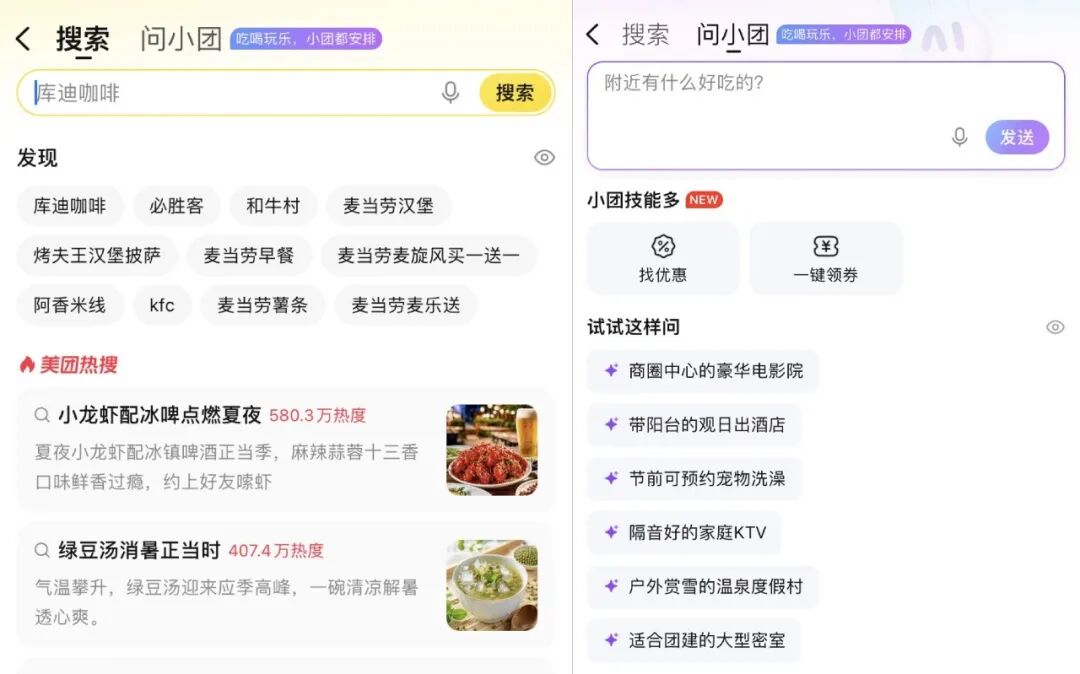
Judging by its lineup, Meituan is not merely dabbling in the AI industry—it has equipped itself with models, applications, merchant tools, and logistics hardware.
However, Meituan's heavy investment in AI is not due to a decline in demand for its original business. As of Q3 2025, the platform had over 800 million transaction users in the past 12 months, and its core local commerce business remained substantial. The real demand for takeout still exists; what Meituan truly fears is that the way users order takeout is changing.
In the mobile internet era, when consumers thought about dining out, their first reaction was to open Meituan. The platform thus controlled user demand, search behavior, comparison processes, and final transactions.
In the AI era, consumers may no longer actively seek out a specific app. Instead, they will entrust their needs to a general-purpose assistant: 'Book me a restaurant suitable for a date,' 'Find a pet-friendly hotel nearby,' or 'Order a dinner under RMB 40 without coriander.'
The AI handles understanding, while Meituan handles execution. Meituan's business remains, but its position has shifted backward—a precarious development.
Previously, using Meituan required users to enter the homepage, search for categories, browse merchants, read reviews, compare prices, collect coupons, and finally place an order. Although cumbersome, each step was crucial for the platform because every click, stay, and comparison strengthened Meituan's relationship with consumers and helped accumulate user data.
AI agents aim to streamline these steps.
Users don't need to browse twenty stores or study discount rules. They simply state their needs, and the AI provides an answer—or even completes the transaction. What used to take five minutes of user operation can now be done with a single sentence.
Of course, AI will not immediately take over all local life entry points. Reordering a fixed lunch or finding a dinner under RMB 40 are needs with clear objectives and constraints, making them the easiest for agents to handle.
From this perspective, the first orders to be diverted from the Meituan app will be standardized, directly executable orders. Ironically, these orders are high-frequency and short-path, making them ideal for upstream AI to cultivate user habits.
Being reduced to an 'API' refers not just to a technical interface but also to a commercial position. Users no longer enter Meituan directly but treat it as a service capability invoked by other AIs.
This is awkward: integrating with AI grants access to new traffic, but full openness may also encourage users to bypass the Meituan app.
In the past, users chose between platforms based on price; in the future, AI may choose platforms on behalf of users. This means Meituan must not only compete with peers for orders but also strive to be prioritized by upstream AI.
However, behaviors like casual weekend browsing, discovering new stores, viewing group deals, and reading reviews still require visual shelves and content browsing, so the Meituan app will not suddenly lose its value.
What's More Fatal Than Order Decline?
When discussing Meituan, we must look beyond takeout, riders, and delivery fees. One of Meituan's most critical capabilities is determining what users see first.
Search for 'hot pot' on Meituan, and the page displays natural rankings, sales lists, discounted packages, branded promotions, and recommended merchants. The platform not only facilitates transactions but also controls traffic allocation.
This 'shelf economy' supports a massive business. According to Meituan's 2025 annual report, its online marketing service revenue grew from approximately RMB 49.2 billion in 2024 to about RMB 51.9 billion (online marketing includes performance marketing, display marketing, etc., and cannot be simply equated with 'paying for rankings'). Merchants are willing to pay because ranking higher on Meituan increases their visibility to consumers.
However, AI is not a smaller shelf—it's more like a shopping guide that only provides answers. When a user asks, 'Which barbecue restaurant nearby is suitable for a group of four?' a qualified AI cannot present fifty options; it should offer at most two to three choices, or even directly recommend one.
This raises a critical question: Should the sole answer belong to the merchant best suited for the user or the one most willing to pay for promotion?
Of course, AI can still sell ads. Recommendation cards can be labeled 'sponsored,' and platforms can continue charging per click or transaction. However, the real shrinkage is in ad inventory. An app screen can display a dozen stores and multiple promotional spots, while a conversation typically leaves only two to three candidates—meaning the number of exposures available for the same transaction decreases significantly.
Moreover, if recommendations are consistently disrupted by paid content, it erodes user trust in AI. Thus, Meituan's marketing revenue will not disappear quickly, but its pricing, format, and ceiling must be recalculated.
This is the commercial paradox of Meituan's AI. The more useful AI becomes, the less users need to browse Meituan; the less users browse, the fewer traffic positions Meituan can display and sell. Worse still, if the final answer is generated by external AI, Meituan loses its last say in recommendations.
However, real pressure will only emerge when general-purpose agents gain multi-platform invocation capabilities. By then, Meituan will hold menus, prices, and riders, but the 'voice' that decides where to eat will belong to another AI. The most user-proximate vote may shift away from Meituan.
In this scenario, while orders are still fulfilled and commissioned by Meituan, the explanation for 'why this order' no longer comes from Meituan.
The AI-driven shift in entry points also takes away something more valuable: pre-order intent data. When users specify budget, taste, party size, and time in Yuanbao, Meituan only receives the final order. Data on what users searched, compared, why they abandoned certain stores, or why they chose the current one remains with upstream AI. Over time, while Meituan still earns commissions, it becomes harder to understand users, drive cross-category consumption, or justify the value of an exposure to merchants.
Which platform gets the order is superficial; who hears the demand first determines the next round of recommendation rights. When Meituan loses user intent, can it still be the platform that best understands users' tastes?
Playing Second Fiddle to AI?
Of course, with years of accumulation, Meituan is not so easily sidelined by AI.
AI can understand a user's desire for 'something light,' but it may not know which stores are open today, which dishes are sold out, which coupons are applicable, or how long delivery will take in a rainstorm. These seemingly trivial details are the hardest part of local life services.
According to Meituan, 'Xiaotuan' has verified 700 million merchant listings nationwide and calibrated them against 1.3 billion real user reviews; the intelligent store manager serves over 700,000 merchants, and digital employees cover over 300,000 merchants. Combined with its delivery network, payment systems, after-sales service, and real-time inventory updates, Meituan's true moat lies in fulfillment—turning a demand into a reliable transaction.
Many giants can recommend restaurants, but not all can deliver a bowl of noodles within half an hour.
Conversely, if all general-purpose AIs need to call on Meituan, Meituan could acquire more orders at a lower customer acquisition cost. Instead of persuading consumers to use its app, Meituan would need to make itself indispensable to various AIs.
Once upstream AIs control traffic, they could charge referral fees, demand revenue sharing, or use multi-platform price comparisons to lower commissions. The cost Meituan saves on user acquisition might convert to 'tolls' paid to new entry points.
Ultimately, three factors matter: who holds user intent, who decides the final recommendation, and who sets transaction terms. In short, whoever defines the rules behind the interface determines Meituan's position in the value chain.
If Meituan still controls merchant relationships, transaction closures, user data, and fulfillment standards, it becomes the operating system for local life. If it merely accepts pricing, order allocation, and negotiation from upstream AI while handling deliveries, it resembles a busy but passive backend. The former is infrastructure; the latter is just a supplier. Though both seem to process orders, their commercial standings differ entirely.
Thus, Meituan must simultaneously accomplish two conflicting tasks: building 'Xiaotuan' and 'Xiaomei' into its own AI gateways, fostering a habit of 'consulting Meituan first for local life,' while also opening its capabilities to become an indispensable service layer for external AIs like Yuanbao.
This battle is harder than training large models. Models can be measured by parameters and rankings, but convincing users to ask you first is not a problem solvable by compute power alone.
Conclusion
Ultimately, Meituan's AI dilemma boils down to commercial positioning. Its most familiar business is about to be redistributed by new entry points.
In the worst-case scenario, other AIs handle greeting, ordering, and recommendations, while Meituan bustles in the back kitchen. Orders may increase, but user relationships, ad space, and the final vote remain upfront.
Yet this 'invisible victory' is a more terrifying narrative for capital markets than losses. After all, when a company no longer decides 'what users see' but merely 'where goods are delivered,' its price-to-earnings ratio should align with logistics firms, not internet platforms.
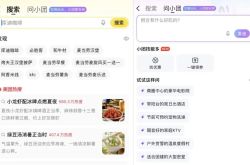
Can Meituan remain an internet giant if all it has left are riders and algorithms? (Image source: Meituan app)
-
![]()
Sales Soar: Has Ora Staged a Remarkable Comeback?
-
![]()
What Kind of AI Phones Do We Actually Need?
-
![]()
DingTalk, Feishu, and WeCom's Silent 'March Eastward'
-
![]()
Is 'Data Scarcity' More Fatal Than 'Computing Power Shortage'? Is It Bringing Disaster?
-
![]()
Yutong Bus Steps Up the Rollout of an External Circulation Marketing Model Among Listed Companies
-
![]()
The US Wants to Strangle Chinese Automakers, but Mercedes-Benz Becomes the First 'Sitting Duck'
-
![]()
Earning Foreigners' Money Is a Breeze: China's Car Exports Rock Europe and America!
-
![]()
"Meituan Retreats into the Background of AI", "Meituan, AI, API, local services, business strategy", "Meituan has announced a partnership with Tencent Yuanbao, enabling users to place takeout orders t