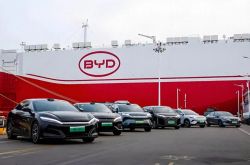
What! Are New Energy Vehicles Impacting the Summer Tourism Industry?
 07/29 2026
 331
331

Introduction
Introduction
Can we really blame new energy vehicles for this situation?
As we stepped into the summer of 2026, the cultural and tourism market, typically bustling with the year's highest visitor numbers, appeared unusually subdued.
At major domestic aviation hubs such as Shanghai Hongqiao, Beijing Daxing, and Chengdu Tianfu, the frenetic scenes of crowded check-in counters and long queues, common in previous summers, were largely absent.
Checking ticket-purchasing apps for long-haul flight routes revealed a significant drop in ticket prices across many cities. Numerous one-way fares, inclusive of taxes, were priced at just three to four hundred yuan, even lower than second-class seats on high-speed trains for the same routes. For instance, flights from Fuzhou to Chengdu and Lanzhou were discounted by 70-80%, with some time slots offering fares at over 80% off.
The downturn in the accommodation sector was even more pronounced. By the end of 2025, Dali and Quanzhou boasted 7,007 operational homestays with 68,300 rooms and 103,200 beds. While occupancy rates in many homestays reached 80% in previous summers, achieving 50% this year would be considered commendable.
The car rental industry in popular long-haul western destinations has also reached a low point. Previously, daily rentals for rugged off-road vehicles on routes in Xinjiang and Qinghai consistently exceeded 1,000 yuan, with high demand during peak summer seasons. Now, rentals have plummeted to five or six hundred yuan, with many vehicles sitting idle in parking lots all day.
Some netizens who traveled to northwest China during the summer reported that scenic spots in Dunhuang were no longer crowded, hotel and air ticket prices remained normal, and the camels at Mingsha Mountain were all resting, enhancing the overall experience.
Wang Ting, deeply entrenched in the car rental industry in Guilin for over a decade, felt this change acutely this year. The number of idle vehicles at his rental business had doubled compared to previous years, with a sharp decline in customer traffic. He stated that he had never encountered such a situation during previous summers.
In his view, while these changes are primarily driven by economic and consumption downturns, he also noted that the widespread adoption of new energy vehicles has fundamentally altered how tourists travel.
“Now, many people drive their own new energy vehicles for self-guided tours. We see many Sichuan, Chongqing, and Guangdong new energy license plates here. They no longer rely on planes or high-speed trains, spending most of their time eating and sleeping in their cars. While scenic spots remain popular, overall consumption has clearly decreased,” Wang said. He added that summarizing the situation with the phrase “new energy vehicles impacting the tourism industry” is not an overstatement.
To understand this causal relationship, one must compare the traditional fixed tourism chain with the new travel model brought about by the popularity of new energy vehicles, clearly seeing how new energy vehicles have thoroughly reshaped the entire tourism industry chain, from travel origins, on-road driving, accommodation, local transportation, to outdoor consumption.
Before the widespread adoption of new energy vehicles, most Chinese people's long-distance travel followed a fixed and inflexible consumption loop.
During holidays or summers, tourists would book plane or high-speed train tickets in advance, incurring significant transportation costs to reach their destinations. Upon arrival, they would either take taxis or public transportation for short trips between scenic spots or immediately head to rental outlets at airports or train stations to lease vehicles suitable for local road conditions.
During the day, they would visit various attractions and promptly check into pre-booked hotels or homestays in the evenings. Meals and outdoor leisure activities relied entirely on local dining establishments, with every expense flowing into supporting industries such as aviation, car rentals, local transportation, accommodation, and dining.
Now, with large-space hybrid and pure electric new energy vehicles entering ordinary households, this long-established tourism consumption chain has been thoroughly disrupted.
From the moment of departure to the end of the journey, new energy vehicles have reshaped user choices at every step, gradually diverting customers and revenue away from the traditional cultural tourism industry.
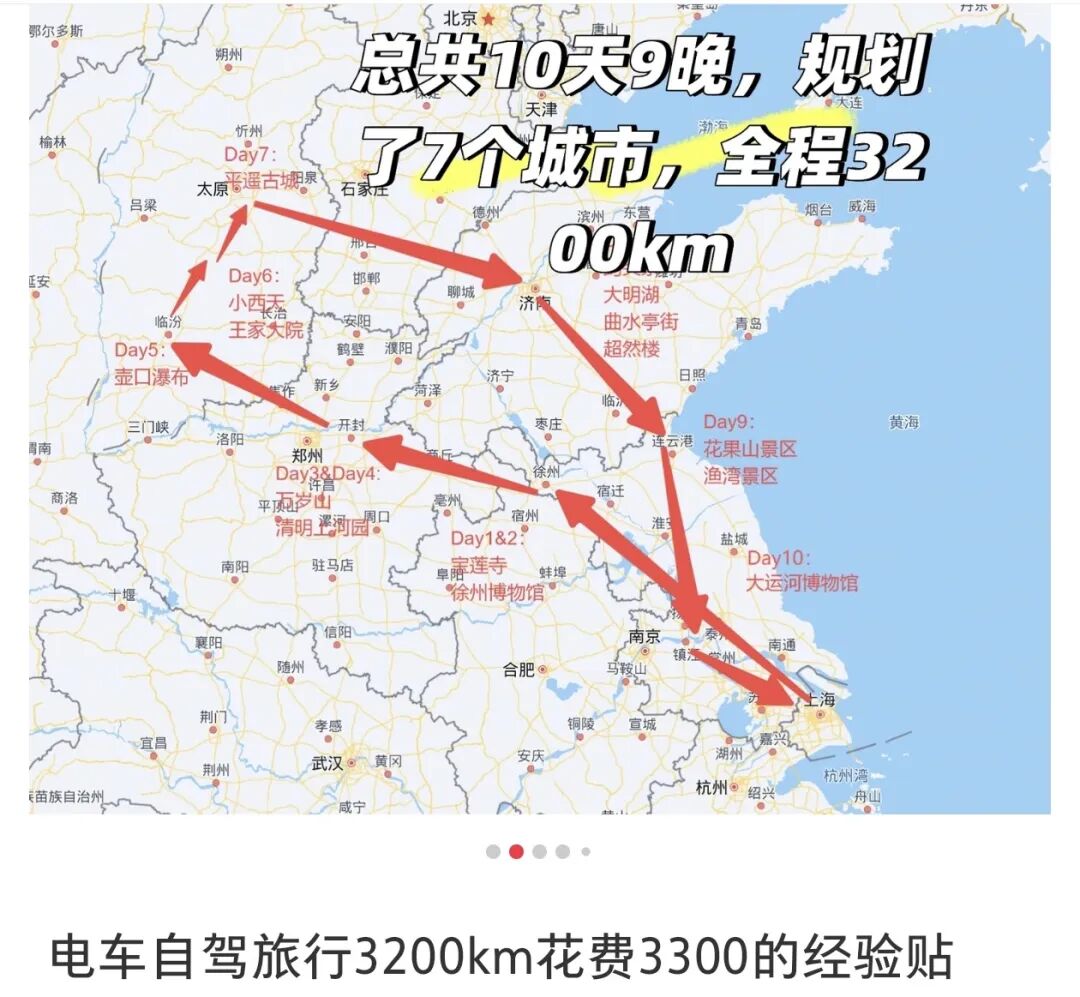
Firstly, in the cross-city long-distance travel segment, low-cost self-driving has replaced planes and high-speed trains.
A quick search on social media reveals many netizens sharing their experiences of long-distance self-guided tours in their new energy vehicles, with the primary reason being the extremely low energy consumption costs of new energy travel.
Public charging stations along most national highways generally charge around 0.5 yuan per kilowatt-hour during off-peak hours. Mainstream new energy vehicles consume only about 15 kilowatt-hours per 100 kilometers, translating to less than 10 yuan in electricity costs per 100 kilometers, or roughly 0.1 yuan per kilometer. A 3,000-kilometer trip would cost just 300 yuan in electricity, cutting travel costs by over 90% compared to air tickets, high-speed trains, plus car rentals and fuel.
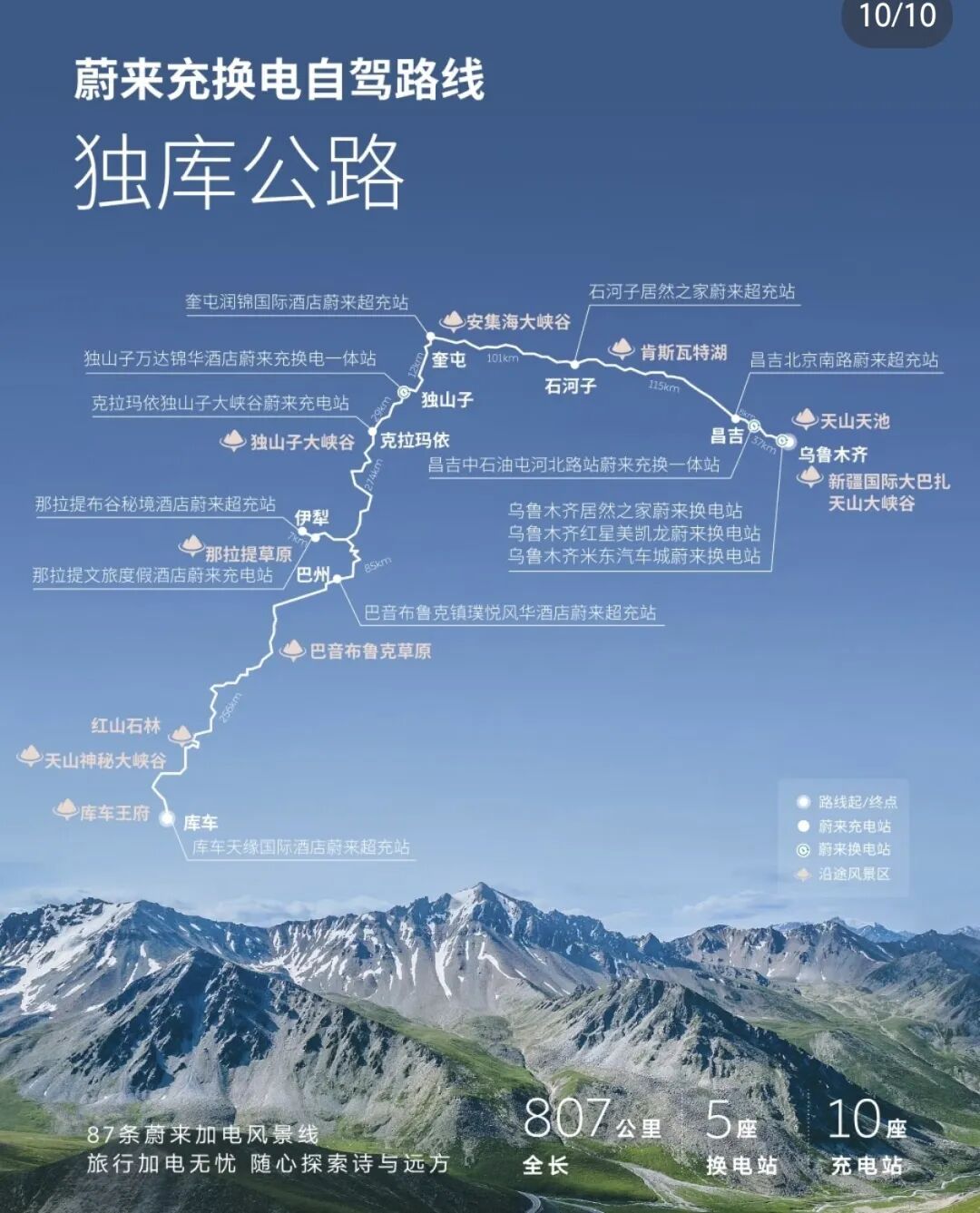
Moreover, with domestic new energy vehicle penetration exceeding 50%, charging is generally not a problem. State Grid charging stations cover almost all national highway service areas, and even on some national highways like G318, charging is worry-free throughout the journey.
Additionally, an increasing number of time-flexible office workers and freelancers are voluntarily giving up premium summer air tickets, opting to drive their own new energy vehicles to their destinations. Some netizens have even summarized money-saving tips, such as taking national highways and traveling leisurely, not only saving significant transportation costs but also allowing for spontaneous stops at off-the-beaten-path scenic spots, greatly enhancing travel freedom.
Secondly, intelligent new energy vehicles, most of which come equipped with intelligent driving assistance features, have made thousand-mile self-driving trips no longer arduous.
Previously, the pain of long-distance self-driving stemmed from the need to drive continuously, which was taxing on many people's backs.
Now, many new energy vehicles are equipped with urban NOA (Navigate on Autopilot), meaning they can assist with cruising even on national highways. Seats are generally equipped with ventilation and massage functions, transforming the journey to the destination from a physically demanding task into a relaxed, immersive experience. This has become a key factor driving the popularity of long-distance self-driving tours with new energy vehicles.
Furthermore, unlike traditional vehicles that serve solely as transportation, new energy vehicles have richer attributes, functioning as transformable and expandable mobile spaces that divert customers from hotels and homestays, representing the most direct impact on the accommodation industry.
New energy vehicles are equipped with large-capacity batteries, allowing air conditioning to run while parked without starting the engine, eliminating safety hazards such as exhaust poisoning and engine carbon buildup. Running the air conditioner all night costs just a few yuan in electricity.
Over the past two years, large new energy vehicles with a length of 5 meters and a wheelbase of 3 meters have maximized interior space utilization. The front and rear trunks offer additional storage space for more luggage, preventing the interior from becoming cluttered or compressed.
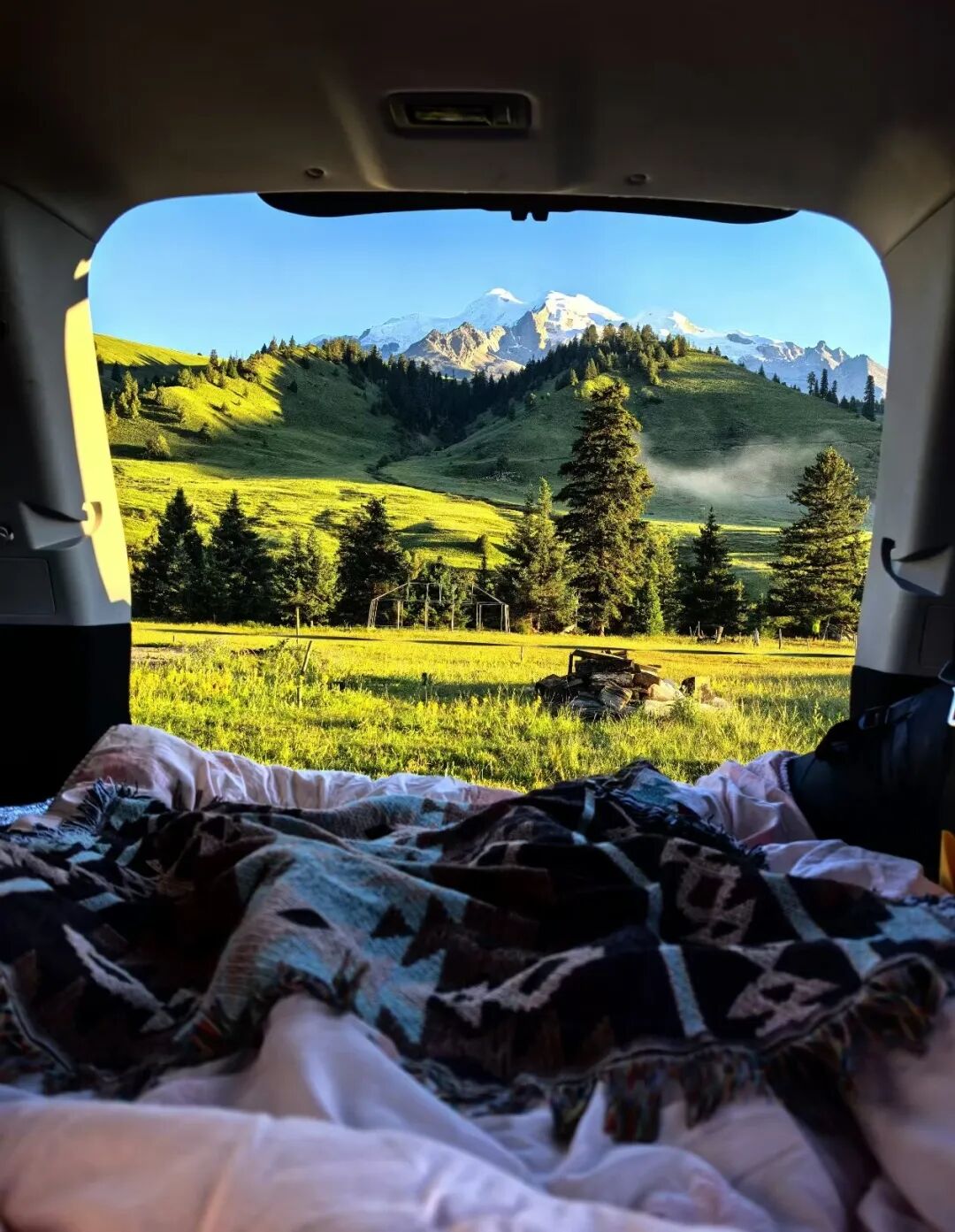
In a face-to-face seating arrangement, the interior can function as a living room, complete with small tables and storage racks for entertainment and relaxation. Seats that can be laid flat with one touch form a spacious bed, paired with privacy curtains and vehicle mattresses, along with parked air conditioning, providing sufficient comfort for overnight stays.
Thus, it can be seen that many tourists driving new energy vehicles now choose to visit scenic spots during the day and park their vehicles in free parking lots or campsites in the evenings, spending the night inside. They only need to check into a hotel every few days for rest, significantly reducing accommodation expenses that could reach hundreds or even thousands of yuan during peak seasons.
If concerns arise about the inconvenience of using the restroom or showering, many new energy vehicles now offer solutions and layouts in this regard. Vehicle showers are already available, and patents for vehicle toilets have emerged. New energy vehicles cater to user needs in every possible way.
Additionally, social media marketing and packaging have made sleeping in a car seem less like hardship and more like a fashionable and enjoyable experience. Even if station wagons don't go on trips and off-road vehicles can't go off-roading, at least the desire is there.
Moreover, the high-voltage external discharge function of new energy vehicles transforms them into mobile power stations, expanding scenarios for self-driving tours and outdoor activities. Most new energy vehicles come standard with high-power external discharge capabilities of 3.3kW or more, easily powering appliances such as induction cookers, rice cookers, electric kettles, and coffee machines.
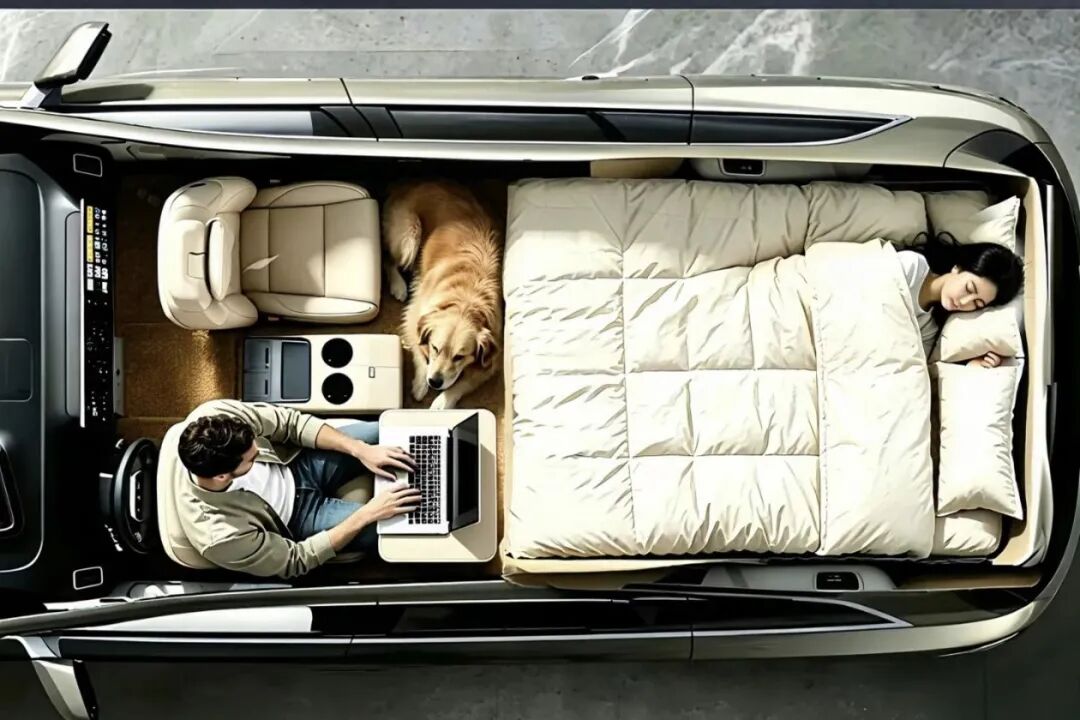
To save money, tourists can bring their own cookware or purchase ingredients to cook, make coffee, and barbecue at scenic parking spots. As for local culinary specialties, trying a few is sufficient, and frequent self-driving tourists have likely lost their fascination with them.
More importantly, traveling in one's own new energy vehicle completely avoids various forms of overcharging by rental companies, hotels, and scenic spot shuttles.
As the car rental market becomes saturated, some unscrupulous merchants, driven by profit, overcharge customers whenever possible. Consumers must carefully inspect vehicle conditions, worrying about hidden fees, disputes over accident damage assessments, and vehicle safety issues.
Driving one's own vehicle, familiar with its condition, handling, and configuration, offers complete freedom without the risk of being overcharged by rental companies, taxis, or facing premium accommodation prices during peak seasons.
From the practical experiences of many car enthusiasts embarking on nationwide self-driving tours in their bed-equipped vehicles, new energy vehicles have indeed reshaped the tourism consumption path across all dimensions, including long-distance transportation, driving experience, accommodation, supporting facilities, and local transportation. This represents the direct and superficial reason for the widespread cooling of the traditional cultural tourism supporting industries this summer.
It turns out that what impacted the tourism industry was never a competing hotel offering better value but the fiercely competitive new energy vehicles.
However, when considering objective factors, new energy vehicles may not necessarily bear full responsibility for the cooling of the summer tourism market. New energy vehicles have only altered how tourists allocate their spending, not the core reason for the overall downturn in the summer tourism industry.
According to senior analysts who have long followed the tourism market, the core customer base supporting the summer tourism market has always been families with children. With the annual decline in the number of school-age children in China, the high-spending group of families embarking on long-distance trips continues to shrink. Coupled with a trend toward conservative consumer expectations and defensive consumption among the public, there is a natural inclination to cut back on non-essential high-cost travel expenses.
Additionally, the continuous oversupply of cultural tourism homestays and scenic spots nationwide has inevitably led to price competition due to supply-demand imbalances. These deep-seated structural issues are the fundamental reasons for the sluggish performance of the cultural tourism industry during peak seasons, with new energy vehicles merely amplifying existing industry contradictions.
Editor-in-Chief: Du Yuxin Editor: He Zhengrong

THE END
-
![]()
Sales Soar: Has Ora Staged a Remarkable Comeback?
-
![]()
What Kind of AI Phones Do We Actually Need?
-
![]()
DingTalk, Feishu, and WeCom's Silent 'March Eastward'
-
![]()
Is 'Data Scarcity' More Fatal Than 'Computing Power Shortage'? Is It Bringing Disaster?
-
![]()
Yutong Bus Steps Up the Rollout of an External Circulation Marketing Model Among Listed Companies
-
![]()
The US Wants to Strangle Chinese Automakers, but Mercedes-Benz Becomes the First 'Sitting Duck'
-
![]()
Earning Foreigners' Money Is a Breeze: China's Car Exports Rock Europe and America!
-
![]()
"Meituan Retreats into the Background of AI", "Meituan, AI, API, local services, business strategy", "Meituan has announced a partnership with Tencent Yuanbao, enabling users to place takeout orders t