A 'Play' by Blume and Volkswagen's Grand Strategy
 07/29 2026
 455
455
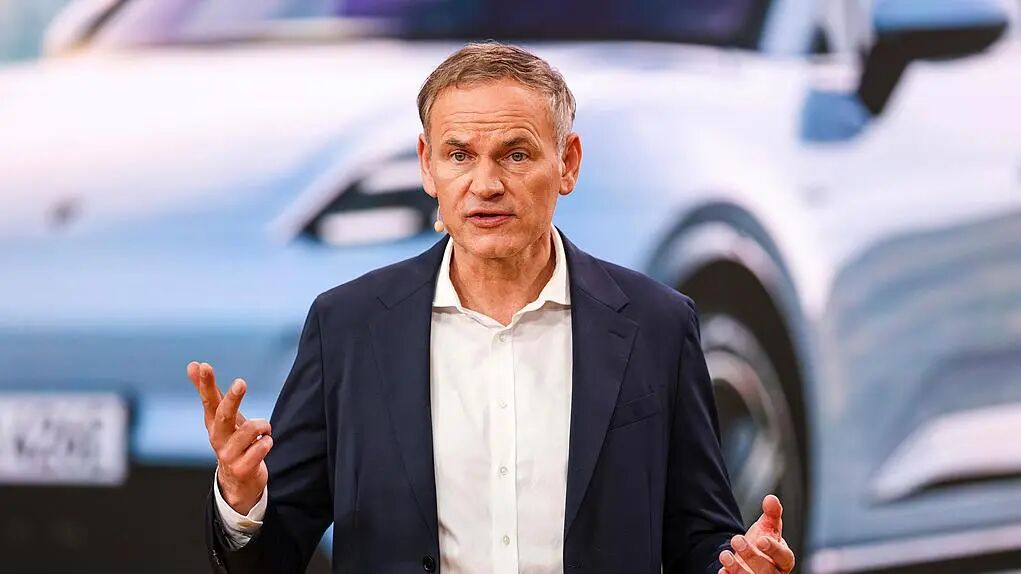
On July 24, in Brussels, Blume stood on the podium of the European Automobile Manufacturers' Association. Below him sat a group of EU officials, German union representatives, and media. His remarks—translated by foreign media as 'Volkswagen supports imposing tariffs on Chinese plug-in hybrid vehicles.' Three days later, Volkswagen issued a clarification: denying the radical accusation of calling for tariffs, stating that Volkswagen has always supported fair competition and localized cooperation.
Back and forth, it felt like a well-rehearsed 'double act.' Foreign media acted as the 'white gloves' that voiced Blume's tough words, while Volkswagen's official statement, restrained and almost formulaic, pulled the topic back to safety. But in reality, the real focus of this controversy was never what Blume said or whether foreign media misinterpreted it. The real question worth asking is: Why did the world's largest automotive group give the impression of testing public opinion?
In the first half of 2026, Chinese brands accounted for approximately 34% of plug-in hybrid vehicle deliveries in the European market, while nearly 40% of Volkswagen Group's global sales came from the Chinese market. Meanwhile, Volkswagen employs over 120,000 people in Germany, with ties to the IG Metall union and multiple state governments. Any decision regarding 'strategic relocation' would trigger political repercussions.
This is Blume's real dilemma. On one level, Blume must address European unions—otherwise, he would be accused of 'sitting idly by as Chinese vehicles erode the domestic market.' Yet he absolutely cannot push for actual tariffs—uncertainty in Sino-German automotive cooperation would directly harm Volkswagen's core profit source.
Thus, having the media voice 'radical' sentiments while using an official 'clarification' to adopt a 'moderate' stance made this approach plausible. To some extent, today's Blume is no longer just an automotive CEO. He is a spokesperson for European industrial interests, deeply tied to the Chinese market, and the 'voice' of 120,000 German workers. With these three overlapping identities, every word he says must be carefully weighed between politics and commerce.
Edited by Li Jiaqi
Image Source | Internet
1. Precise 'White Gloves' and a Misinterpreted Controversy
In fact, when many people heard about Blume's recent actions, their first reaction was: Is Volkswagen turning toward trade protectionism?
It is worth noting that Blume's original remarks during that earnings call did not directly use phrases like 'tariffs should be imposed' or 'call for tariffs.' According to the transcript, when answering a Financial Times reporter's question about Chinese vehicles, he used phrases such as 'a level playing field must be established as soon as possible' and 'Europe is not protected by tariff mechanisms in segments like plug-in hybrids.' In this approximately seven-minute speech, he did not mention the figure '45%' or explicitly target Chinese brands. The claim of 'imposing a 45% tariff' was actually a speculative interpretation by some European media based on the current policy of 'a 10% base tariff + 35.3% anti-subsidy tax' for pure electric vehicles.
From the perspective of multinational corporate communications, such wording allows Volkswagen to signal to Europe that it is concerned about fair competition without directly pushing the company into a protectionist stance. The problem is that Brussels' current public opinion environment (public opinion environment) is highly sensitive to terms like 'Chinese vehicles' and 'fair competition.' Once such remarks enter the European media ecosystem, they are easily further interpreted as a 'call for tariffs.'
The reason for the 'tariff' controversy lies in the complexity of the stakeholders Blume faces. As CEO of Volkswagen Group, he manages the world's largest automaker while also responding to shareholders, unions, local governments, regulators, and capital markets. Volkswagen has long been a pillar of German industry, employing over 120,000 people in Germany alone, with ties to influential unions like IG Metall. It must also continuously demonstrate competitiveness to European capital markets, local governments, and regulators.
In other words, every strategic decision by Volkswagen significantly impacts employment, taxation, and even Germany's manufacturing competitiveness, inherently carrying strong political overtones. For this reason, when Chinese brands rapidly expand in the European market, Blume can hardly remain silent. The plug-in hybrid market, in particular, has become a new source of anxiety for the European automotive industry.
Data shows that in June this year, Chinese brands accounted for approximately 34% of plug-in hybrid vehicle deliveries in Europe. However, the EU's current anti-subsidy measures against Chinese new energy vehicles primarily cover pure electric models, while plug-in hybrids remain subject to ordinary import tariffs. In the eyes of many European industry figures, Chinese automakers are using plug-in hybrid products to exert new competitive pressure on local brands. For European unions, this means more factory orders could be lost; for local governments, it further expands manufacturing employment risks; for capital markets, it poses new challenges to Volkswagen's future profitability.
Therefore, Blume must 'take a stance' to show that Volkswagen is not 'ignoring Chinese competition.' This is his political responsibility as CEO. But on the other hand, Blume absolutely cannot personally shout, 'I want tariffs.' If Volkswagen Group openly becomes an advocate of trade protectionism, it would immediately impact (undermine) its own core global interests.
In this dilemma, it is more accurate to say that Volkswagen left enough 'room for interpretation' in its statements rather than the media actively acting as 'white gloves.' Western media then followed this space to push the most concerning and impactful interpretation to the public first.
2. Caught Between a Rock and a Hard Place
If there is anything truly constraining Volkswagen's strategic choices behind this controversy, it must be the increasingly deep binding (entanglement) of global interests.
Today's Volkswagen is deeply reliant on China while also unable to ignore Europe. Thus, regarding whether to support higher tariffs, two starkly different voices exist within Volkswagen, representing two entirely different development logics.
One voice supports higher tariffs, representing the demands of European domestic industrial protection. In recent years, Chinese new energy vehicles have rapidly entered the European market by leveraging cost, supply chain, and intelligence advantages, significantly increasing competitive pressure on local automakers. If competition intensifies further and domestic factory capacity utilization declines, the first to be affected would be the employment of hundreds of thousands of industrial workers.
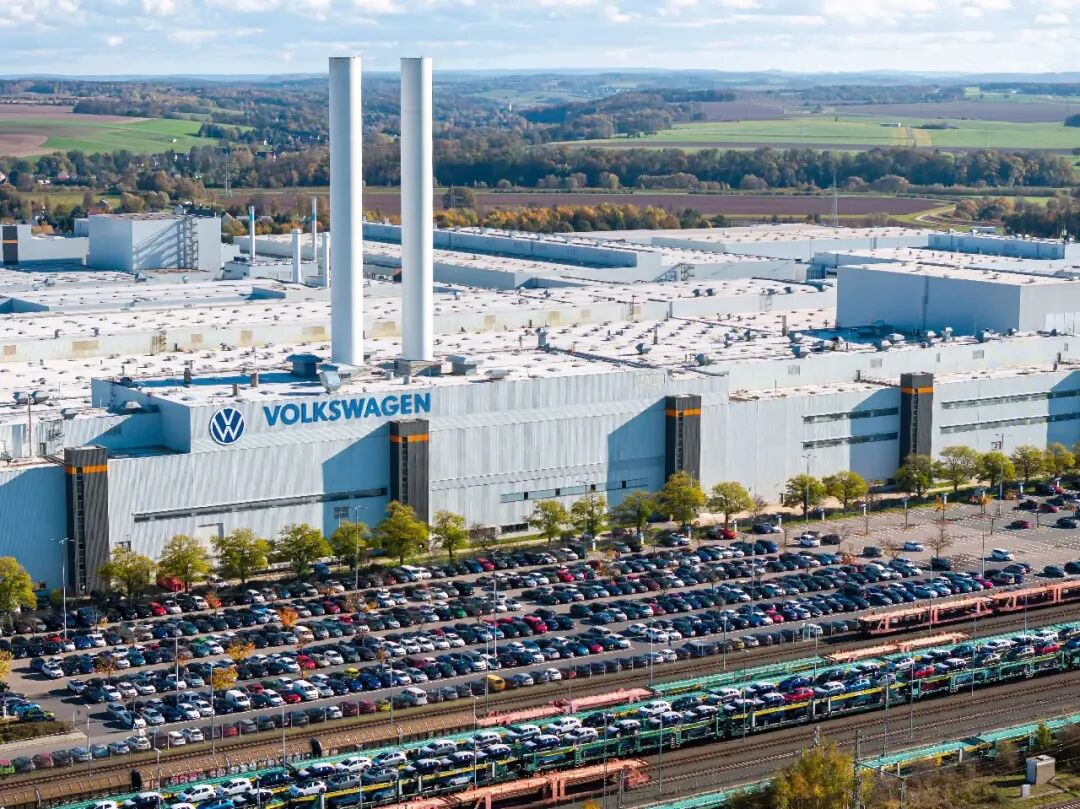
The other voice opposes using trade protection to address competition issues. This is not because Volkswagen is unconcerned about competition from Chinese brands but because it recognizes that China has become an irreplaceable strategic pillar for the group. For a long time, China has been Volkswagen's largest single market, accounting for about 40% of its global sales and one of its highest profit-contributing regions. From Volkswagen to Audi to Porsche, the Chinese market determines not just sales volume but also directly impacts group cash flow, R&D investment capacity, and global profitability.
For Volkswagen, China is the 'ballast stone' of its entire global business. More importantly, this dependency has extended beyond the market level to the industrial capability level. In the past, Volkswagen entered China to sell more cars; today, it stays in China to acquire future competitive capabilities. As China's new energy vehicle supply chain matures, it has become the world's most complete and efficient smart electric vehicle industrial cluster. For Volkswagen, which is at a critical stage of intelligent transformation, China provides not just sales but also technology, talent, supply chain, and R&D efficiency.
Additionally, the pressure Volkswagen faces in Europe makes trade protectionism increasingly unviable as a real solution. According to data from the German Association of the Automotive Industry, German automotive manufacturing costs have remained consistently higher than those in major Asian manufacturing hubs in recent years, weakening the competitive advantage of local factories. Against this backdrop, if Sino-European trade frictions escalate further, high-end models exported to China by brands like Volkswagen, Audi, and Porsche could be affected, and the operating environment in the Chinese market may face greater uncertainty.
Once both sides engage in reciprocal retaliation, the impact would not be limited to Chinese imported models but would also include export orders and employment stability at German domestic factories—precisely the most sensitive issues for the German government and unions.
In other words, Volkswagen is now trapped in a classic 'double bind.' What Blume truly needs to balance is finding a development path that can sustain the group's competitiveness over the long term between global operations and local interests.
3. Trading 'Rhetorical Costs' for 'Action Space'
Many believe that Volkswagen's contradictory statements in recent days are somewhat self-defeating. But from the perspective of multinational corporate strategic management, a public controversy has bought clearer strategic action space for the coming years.
The reason is simple. After foreign media first interpreted Blume's views as 'supporting tariffs on Chinese plug-in hybrid vehicles,' feedback from the Chinese market, industry, and public opinion was almost immediately concentrated. Volkswagen's swift clarification then demonstrated to the EU, German government, and all internal stakeholders within Volkswagen one thing: Any attempt to further escalate trade protectionism would face extremely high (extremely high) industrial risks and market costs.
For Volkswagen, this effectively completed a public 'stress test,' and this test helped Blume draw a clear strategic red line.
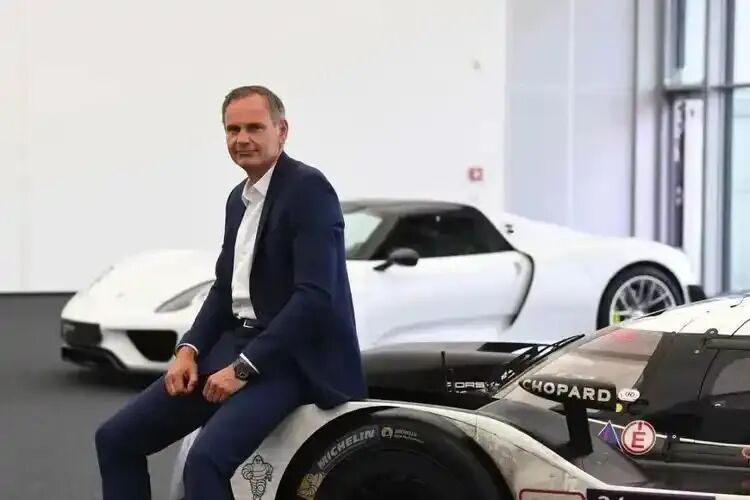
In the past, Volkswagen internally believed that the decline in European automotive competitiveness could buy time through higher trade barriers, using policy protection as a substitute for capability building. But after this round of public controversy, this logic has become difficult to sustain. When similar voices emerge within the group again, Blume can use this incident as a direct case study: It's not that we haven't tried; reality has proven this path simply doesn't work.
Shifting the gaze from Europe to China, it becomes clear that while the outside world was still debating 'whether Volkswagen would impose tariffs,' Volkswagen's strategic advancements in China have not slowed down but have noticeably accelerated.
First, the CEA electronic architecture developed by Volkswagen in collaboration with Xpeng has entered the production preparation stage. According to plans, starting in the second half of 2026, Volkswagen's next-generation ID. models will gradually adopt the CEA architecture, achieving higher software integration capabilities, faster OTA update efficiency, and a smarter experience more aligned with Chinese market demands. This means Volkswagen is directly leveraging Chinese companies' software capabilities to address its weakest link in the smart electric vehicle era.
Second, Volkswagen Anhui is taking on an increasingly important global export role. As export volumes expand, Chinese factories no longer serve only the Chinese market but have also begun exporting complete vehicles to Southeast Asia, the Middle East, and other overseas markets. For Volkswagen, China is no longer just the world's largest sales market but is gradually becoming a critical global hub for new energy manufacturing and supply chains.
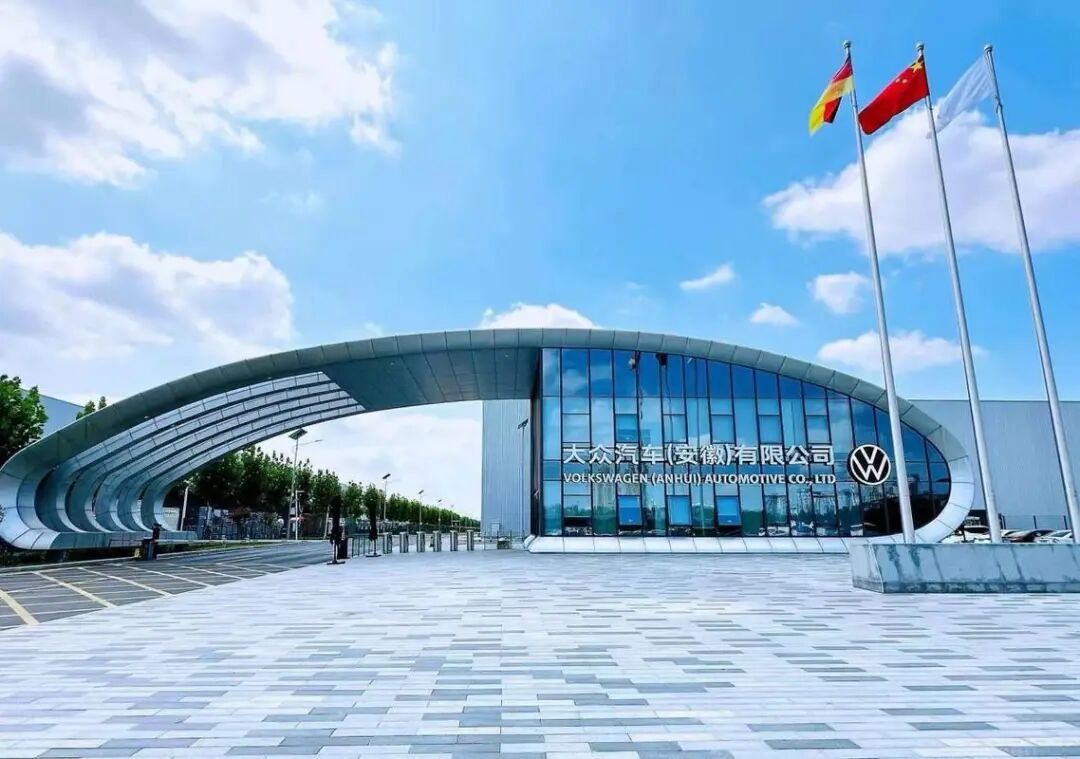
More critically, in the battery sector, Volkswagen's cooperation with Gotion High-Tech has entered a deeper phase. The joint venture system continues to advance localized battery supply, and Volkswagen increasingly relies on China's supply chain system to complete its global product layout (deployment) in core three-electric (battery, motor, electronics) capabilities.
When these actions are viewed together and Blume's recent statements are revisited, it becomes clear that while Volkswagen verbally emphasizes fair competition, its actual resource investments are focused on building an industrial system 'In China, For China' and further upgrading it to 'In China, For the Globe.' For Volkswagen, China has become a strategic center simultaneously undertake (shouldering) core functions in four dimensions: R&D, manufacturing, supply chain, and global exports.
Thus, the greatest value of this controversy lies not in whether it pushed the EU to adjust policies but in how it helped Volkswagen achieve internal strategic 'alignment.' Rather than placing hopes on tariff protections, Volkswagen is betting its future on China's technological capabilities, industrial efficiency, and global collaboration system. This is perhaps what Blume truly aims to achieve.
End
Knowledgeable and Stylish 'Whoosh'—Let's Go...
-
![]()
Sales Soar: Has Ora Staged a Remarkable Comeback?
-
![]()
What Kind of AI Phones Do We Actually Need?
-
![]()
DingTalk, Feishu, and WeCom's Silent 'March Eastward'
-
![]()
Is 'Data Scarcity' More Fatal Than 'Computing Power Shortage'? Is It Bringing Disaster?
-
![]()
Yutong Bus Steps Up the Rollout of an External Circulation Marketing Model Among Listed Companies
-
![]()
The US Wants to Strangle Chinese Automakers, but Mercedes-Benz Becomes the First 'Sitting Duck'
-
![]()
Earning Foreigners' Money Is a Breeze: China's Car Exports Rock Europe and America!
-
![]()
"Meituan Retreats into the Background of AI", "Meituan, AI, API, local services, business strategy", "Meituan has announced a partnership with Tencent Yuanbao, enabling users to place takeout orders t