The New King of A-shares, Are You Ready to Work for Auto Companies?
 07/29 2026
 435
435
Li Bin Spends 158 Million Yuan as 'Bride Price' First
”
Author | Wang Lei
Editor | Qin Zhangyong
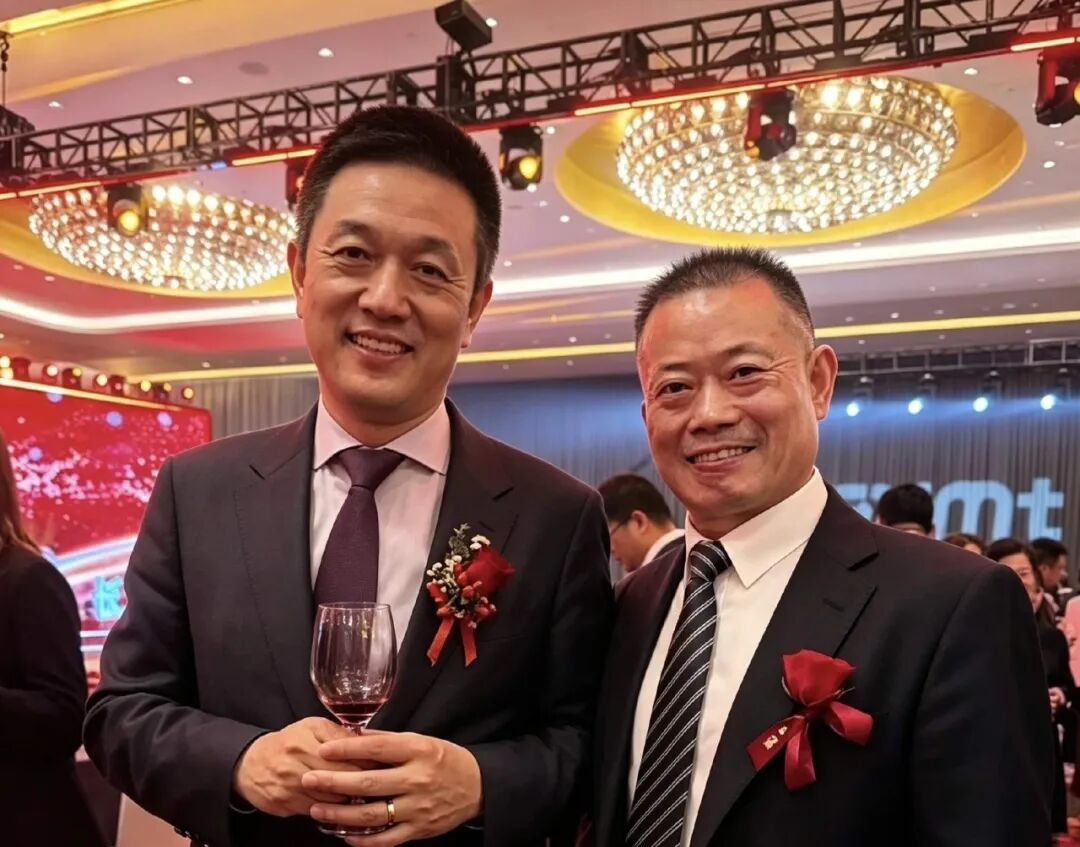
At Changxin Technology's listing appreciation dinner, a photo of Li Bin holding a glass of red wine with a smile went viral.
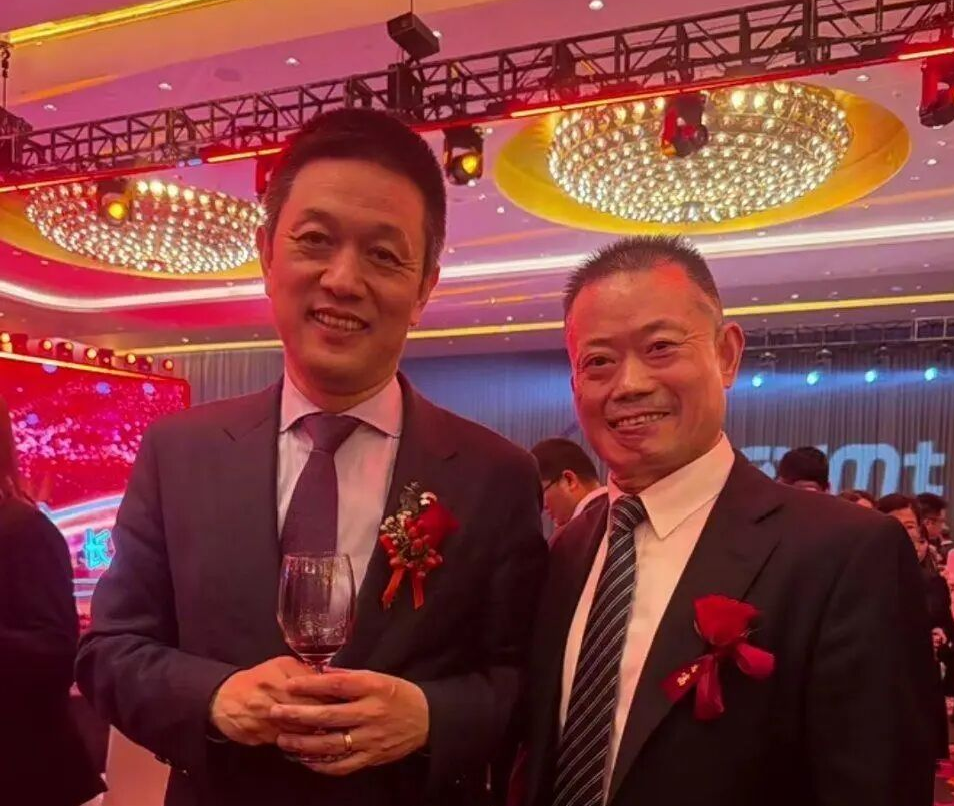
There was a reason for this.
Just hours before the dinner, Changxin Technology, a leading domestic memory chip company, officially listed on the Science and Technology Innovation Board with an issue price of 8.66 yuan. The stock surged immediately upon opening, triggering multiple trading halts during the session, and finally closed at 49 yuan per share, soaring 465.82%, with a total market capitalization reaching an unprecedented 3.31 trillion yuan.
What does this market cap mean? It exceeds Intel's, is equivalent to two Kweichow Moutai's, and conveniently dethroned Industrial and Commercial Bank of China (ICBC), which had long dominated the A-share market, setting a new ceiling and making Changxin Technology the highest-valued company in A-share history.
Among the placement list for this epic IPO, NIO's name stood out, committing to subscribe 158 million yuan worth of shares, becoming the only new energy vehicle (NEV) company in Changxin's IPO strategic placement list.
If we simply multiply by the first-day closing price, the paper value of this investment has surged to 894 million yuan. Subtracting the cost, the floating profit comfortably sits at around 740 million yuan, with an investment return rate nearing 466%.
Earning nearly 800 million yuan in a few hours—anyone would smile.
One netizen commented, 'NIO invested 158 million yuan, now worth 800-900 million yuan. Brother Bin is earning more here than from making cars so far.'
However, if our understanding of Li Bin stops at 'easy money,' we're missing the bigger picture.
01 The Real Intent Goes Beyond the Surface
According to the prospectus, NIO subscribed for 158 million yuan worth of shares with an 18-month lock-up period. At an issue price of 8.66 yuan per share, NIO acquired approximately 18.2448 million shares.
The prospectus clearly states that NIO's allocated shares account for 0.27%, but this 0.27% is based on Changxin Technology's initial issuance of approximately 6.688 billion shares, not the total share capital after listing.
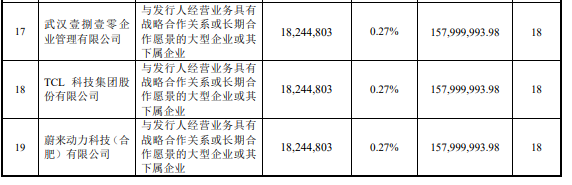
After issuance, Changxin Technology's total share capital is approximately 66.881 billion shares, ten times more. In other words, NIO's actual stake is about 0.027%. At Changxin's closing price of approximately 49.19 yuan, the paper value of this investment has surged to 894 million yuan. Subtracting the cost, the floating profit is about 740 million yuan, with a return rate nearing 466%.
While the paper returns are substantial, for NIO's scale, 700 million yuan isn't a massive windfall—after all, NIO had 48.2 billion yuan in cash at the end of Q1, according to its financials.
Moreover, current gains are just 'paper wealth.' NIO cannot sell any of these shares worth nearly 900 million yuan due to the 18-month lock-up period stated in the prospectus. This means NIO's current gains, big or small, cannot be realized, and future stock price fluctuations will affect final returns.
Li Bin clearly isn't just after this money. So, what does NIO want? NIO hasn't elaborated much, but the industry logic is clear: automotive-grade memory chips.
As we all know, a memory chip price surge occurred in the first half of this year. According to CCTV Finance and industry data, from March to June, domestic automotive-grade memory chip prices rose about 180% overall, with high-end DDR5 models surging over 300%.
A smart car requires far more DRAM and NAND than traditional vehicles, with specifications like LPDDR4X and LPDDR5X entering smart cockpits and autonomous driving domain controllers in large quantities. In the past, Chinese automakers relied almost entirely on Samsung and SK Hynix for such chips. Any supply fluctuations or trade restrictions could halt vehicle production.
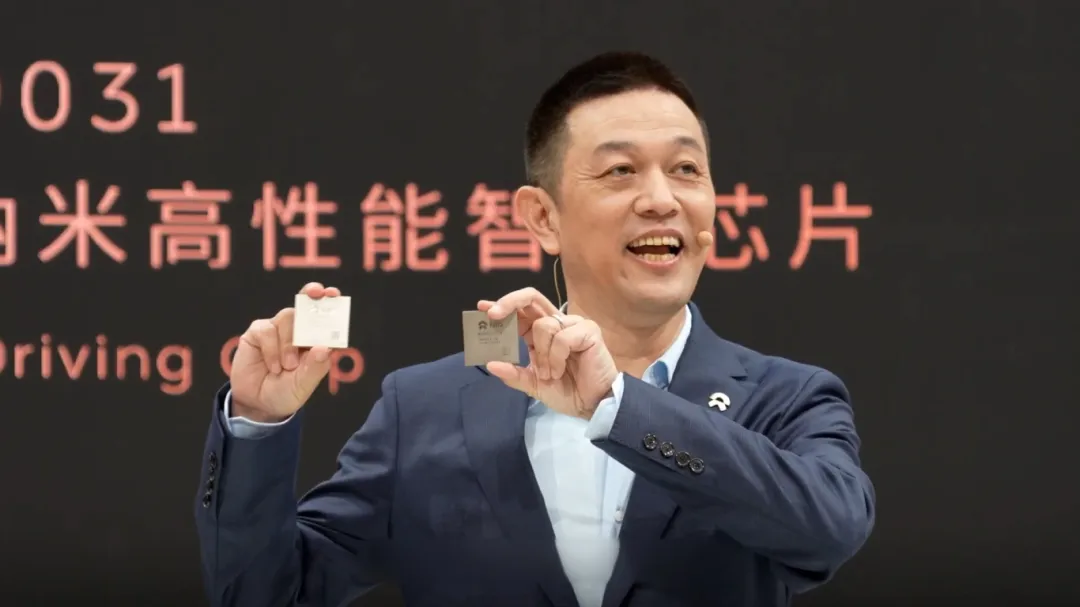
Li Bin had previously stated publicly that NIO's latest-generation models use over 4,000 chips per vehicle, involving over 1,000 semiconductor part numbers, with total chip value exceeding 36,000 yuan.
He also mentioned that memory price increases alone could raise costs by 3,000-5,000 yuan per high-end NEV; combined with other raw material price hikes, the impact on per-vehicle costs approaches 10,000 yuan.
More concerning for automakers than price hikes is supply stability. During the 2021 global automotive chip shortage, NIO's Hefei plant was forced to halt production for days, with monthly deliveries plummeting by half. That supply crisis taught Li Bin a lesson: no matter how precise cost control is, it becomes meaningless in the face of supply chain instability.
Thus, Li Bin's move is to insure NIO's chip supply chain. The 158 million yuan strategic placement essentially uses capital ties to solidify cooperation already at the product verification stage.
Li Bin's response in media interviews was straightforward: cooperating with Changxin Technology enhances NIO's supply chain stability.
He has also repeatedly mentioned a detail on multiple occasions: 'Changxin Storage's factory is very close to ours—within walking distance, both in the northern part of the economic development zone.'
Automotive-grade chips inherently face long adaptation and verification cycles and high costs. Geographic proximity drastically reduces communication costs and verification efficiency. A few hundred meters makes a critical difference.
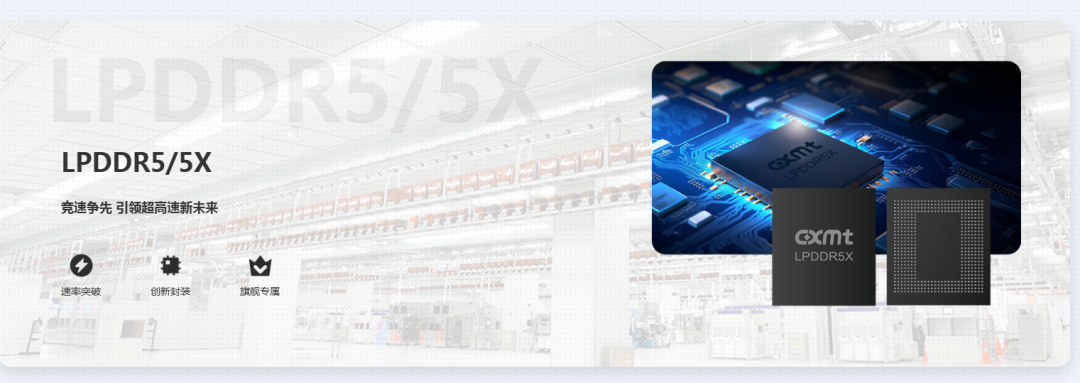
At the product level, Li Bin revealed at the April Science and Technology Exchange Conference that Changxin's LPDDR5X automotive memory chips have been installed in NIO's vehicles, with both teams collaborating on adaptation. The chip integration and verification have proceeded smoothly. Notably, NIO's self-developed 5nm autonomous driving chip, 'God's Eye NX9031,' will likely use LPDDR5X memory.
By spending 158 million yuan to secure 'memory supply rights,' Li Bin is creating value far exceeding the current 740 million yuan amid the automotive memory price surge.
02 Two Other Automakers Also Hit the Jackpot
While Li Bin was the only NEV executive present at Changxin Technology's appreciation dinner, two other vehicle manufacturers appeared on Changxin's strategic placement list: Chery and Xiaomi.
Chery participated through its subsidiary Chery Intelligent Vehicle Technology (Hefei) Co., Ltd., while Xiaomi used a subsidiary named Wuhan 1810 Enterprise Management Co., Ltd.
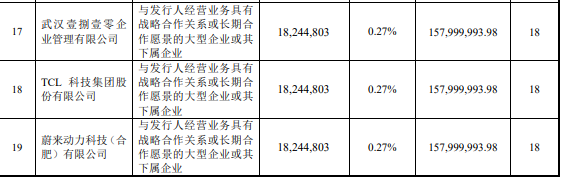
Founded in 2021 and based in Wuhan East Lake High-Tech Zone, Wuhan 1810 is lesser-known but noteworthy as it is a wholly-owned subsidiary of Xiaomi Technology. Xiaomi Technology's chairman, Lei Jun, holds 97.48% of its shares.
This aligns the pieces.
Like NIO, both Chery and Xiaomi secured 158 million yuan strategic placements with 18-month lock-up periods. Assuming similar allocation sizes, their theoretical floating profits also reach the 700-800 million yuan range. Given Lei Jun's over 97% stake in Xiaomi Technology, his personal paper gain is about 717 million yuan. Hence, the hashtag 'Lei Jun earns 700 million from IPO' trended on social media.

This even drew a response from Xu Jieyun, Xiaomi Group Chairman's Special Assistant and Deputy General Manager of Strategic Marketing: 'Friends, just enjoy the joke—don't take it seriously. This is a corporate investment; a subsidiary's actions can't be conflated with personal wealth.'
Business-wise, while Chery hasn't disclosed cooperation details like NIO, its strategic placement participation as a downstream application company aims to 'secure' next-gen smart car computing chip supplies, locking in capacity early to reduce future supply chain risks.
Xiaomi's case is unique. Public disclosures show Lei Jun's industrial fund entered Changxin's shareholder structure during financing rounds, suggesting his strategic investment returns likely exceed the other two companies' placement-only returns.
Business-wise, Xiaomi has been a core downstream customer of Changxin Technology since the smartphone era, with multiple flagship models using Changxin's LPDDR series memory.
After entering the automotive sector, Xiaomi's demand for automotive-grade DRAM will surge. Given its monthly vehicle sales and upcoming models, Xiaomi's reliance on memory chips for smart cockpits and autonomous driving rivals any NEV company.
Thus, Xiaomi's 1.58 billion yuan investment logic is essentially the same as NIO's and Chery's: securing stable automotive-grade memory chip supplies. The only difference is Xiaomi's larger procurement volume.
Additionally, among Changxin Technology's 'circle of friends,' a notable 'absentee' is BYD, though it was one of the earliest automakers to bet on Changxin.
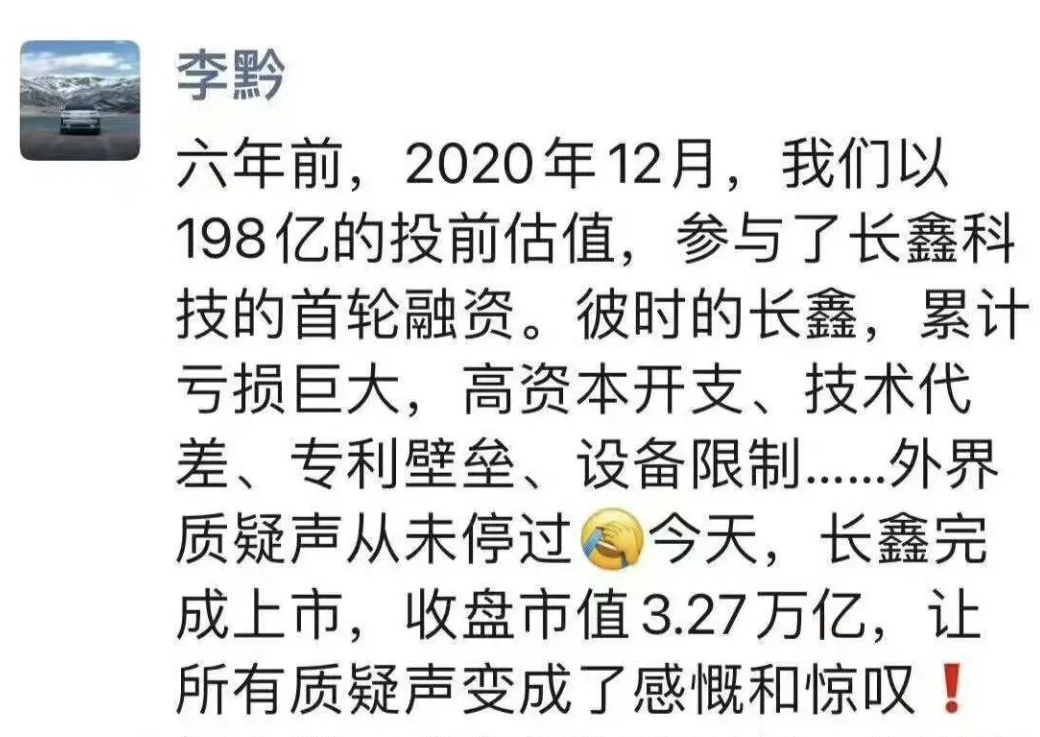
On Changxin's listing day, BYD Board Secretary and Investment Department General Manager Li Qian posted on WeChat, recalling the six-year investment journey. He mentioned BYD's participation in Changxin's Series A financing in December 2020 at a pre-money valuation of 19.8 billion yuan. At the time, Changxin faced massive cumulative losses, high capital expenditures, technological gaps, patent barriers, and equipment restrictions.
Records show BYD invested 50 million yuan in Changxin through Yifang Changda-CMB Wing Ting in late 2020 at the 19.8 billion yuan pre-money valuation.
Notably, BYD Chairman Wang Chuanfu is also listed among Changxin's individual shareholders with a 0.014% stake. At Changxin's first-day closing market cap of 3.28 trillion yuan, his paper value is about 462 million yuan, yielding a 165x return.
03 A Breakthrough Ecosystem
While Changxin Technology has grown into a chip giant with a market cap exceeding 3.3 trillion yuan, attracting automakers, their relationship is symbiotic—only automakers can validate automotive-grade chips like LPDDR5X.
Its impact on China's automotive industry extends far beyond 'adding another supplier.'
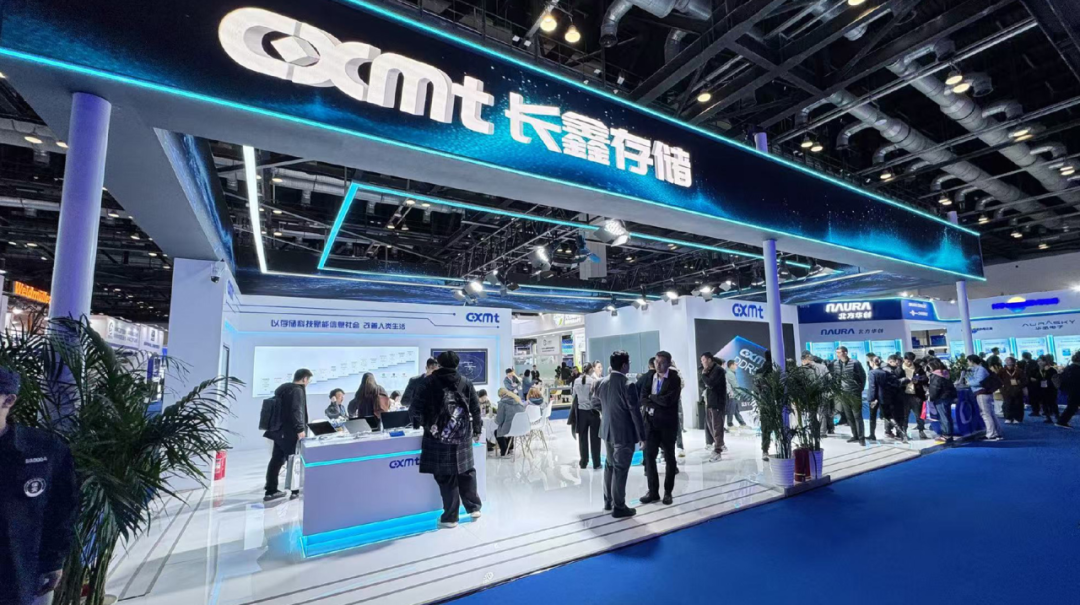
Memory chip supply chains were long controlled by overseas manufacturers, with Samsung, SK Hynix, and Micron holding over 90% of the global automotive-grade DRAM market.
Automakers previously relied on overseas vendors, facing Capacity allocation (capacity allocation), shipping delays, and geopolitical risks—any disruption could halt production. As a domestic player, Changxin prioritizes capacity for local clients, offers short communication lines, and high verification efficiency, drastically reducing supply risks.
Especially amid AI servers competing for capacity, having a domestic giant provides production insurance for automakers.
Geographic proximity allows direct joint debugging and product definition between automakers and chipmakers—a flexibility overseas giants like Samsung and Hynix struggle to match.
Crucially, Changxin's emergence helps China's automotive industry form a breakthrough ecosystem, penetrating upstream from vehicle manufacturing to platform development, then to powertrain systems, and now to core technologies like chips and operating systems.
When China's automotive industry gains domestic discourse power (voice) in 'storage capabilities,' we can confidently say its second half has strong momentum.
-
![]()
Sales Soar: Has Ora Staged a Remarkable Comeback?
-
![]()
What Kind of AI Phones Do We Actually Need?
-
![]()
DingTalk, Feishu, and WeCom's Silent 'March Eastward'
-
![]()
Is 'Data Scarcity' More Fatal Than 'Computing Power Shortage'? Is It Bringing Disaster?
-
![]()
Yutong Bus Steps Up the Rollout of an External Circulation Marketing Model Among Listed Companies
-
![]()
The US Wants to Strangle Chinese Automakers, but Mercedes-Benz Becomes the First 'Sitting Duck'
-
![]()
Earning Foreigners' Money Is a Breeze: China's Car Exports Rock Europe and America!
-
![]()
"Meituan Retreats into the Background of AI", "Meituan, AI, API, local services, business strategy", "Meituan has announced a partnership with Tencent Yuanbao, enabling users to place takeout orders t