Analysis of the Reputation Index for Vehicle Body Electrics in the First Half of 2026
 07/29 2026
 461
461
Not long ago, the Automotive Gate Network released the 'Analysis Report on the Automotive Reputation Index for the First Half of 2026.' During the compilation of this report, it was discovered that in the first half of 2026, issues related to vehicle body electrics became the most frequently reported problems by users, and the feedback also showed new trends. Therefore, we will provide a brief analysis of the reputation index for vehicle body electrics in the first half of 2026.
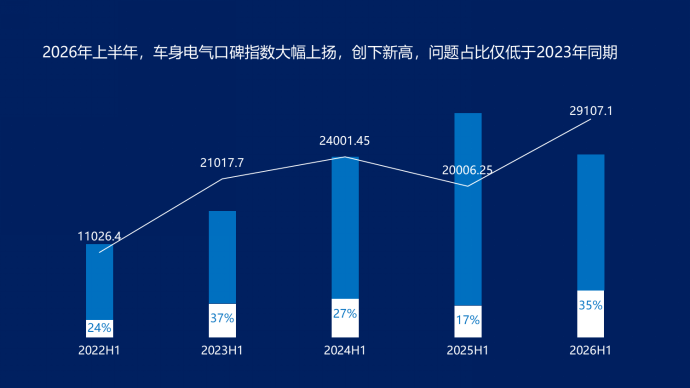
Data shows that in the first half of 2026, the reputation index for vehicle body electrics surged significantly, reaching a new high. Problems related to vehicle body electrics accounted for 35% of all feedback, far higher than the previous year and the year before, and second only to the same period in 2023 over the past five years.
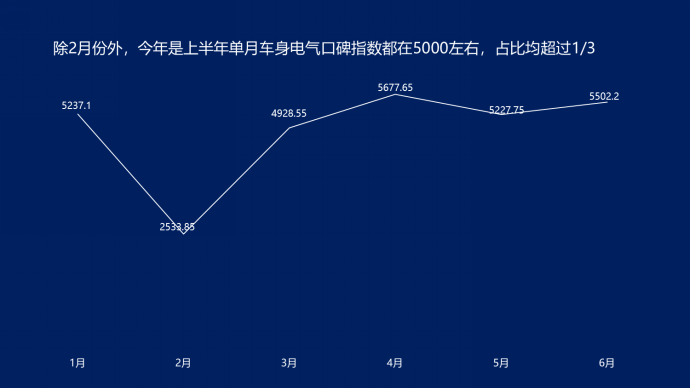
From a monthly perspective, in the first half of this year, the monthly reputation index for vehicle body electrics consistently hovered around the 5000 mark, with the proportion of problem feedback exceeding one-third each month. In the first half of 2026, issues related to vehicle body electrics have become the most frequently reported problems by users.
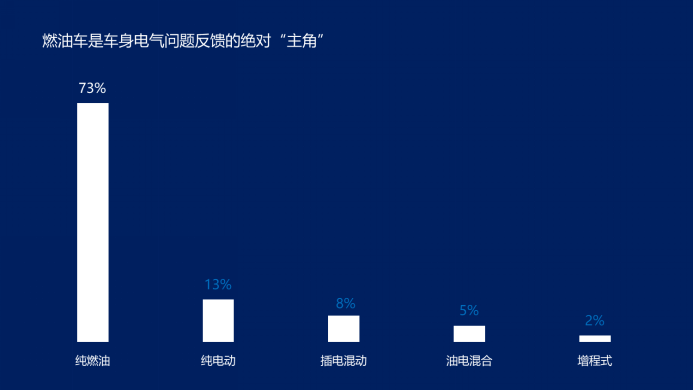
From the perspective of the powertrain types of problematic vehicle models, fuel vehicles emerged as the absolute leader in vehicle body electrical issues, accounting for a staggering 73% of the reputation index. Meanwhile, the combined problem feedback for pure electric vehicles and plug-in hybrid models also exceeded 20%. As the number of new energy vehicles on the road continues to grow, they have become a major source of problems.
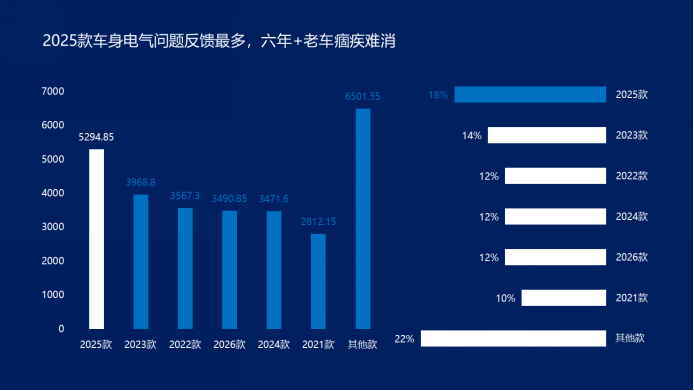
Looking at the model years of problematic vehicles, the proportion of problem feedback across different model years is relatively balanced. Vehicles still under warranty within three years remain the primary focus of complaints, with a combined problem feedback proportion reaching 42%. Among them, the 2025 model year emerged as the one with the highest proportion of vehicle body electrical problem feedback. The 2026 and 2024 model years also saw problem feedback proportions reaching 12% each. Additionally, vehicles over six years old accounted for more than 20% of the problems.
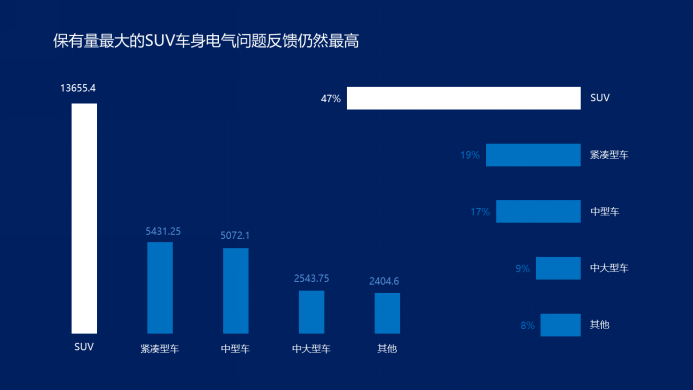
From the classification of problematic vehicle models in terms of vehicle body electrics, SUVs, which have the largest market share, have the highest problem feedback rate. Compact and mid-size cars also have relatively high proportions of problem feedback. In recent years, the feedback rate for vehicle body electrical issues in mid-size and large cars, which have been increasing in number, has also been on the rise.
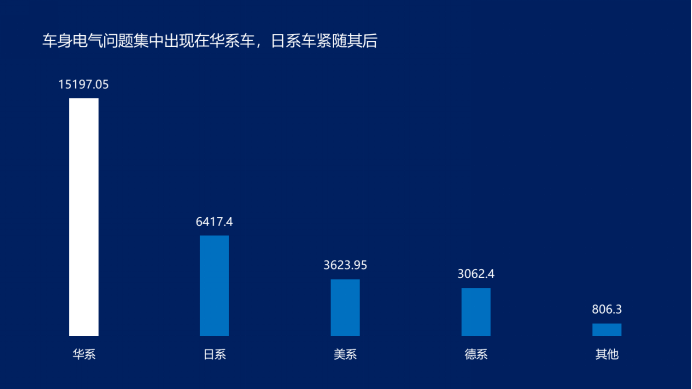
As expected, Chinese-brand vehicles, which have the largest market share, remain the vehicle series with the most feedback on vehicle body electrical issues, accounting for more than half of the total. The reason lies in the higher electrification and intelligence configuration rates of Chinese-brand vehicles, which objectively contribute to the increased problem feedback. Japanese vehicles follow closely, with problem feedback approaching one-third. Over the past many years, Japanese vehicles have consistently faced issues with aging and cracking of instrument panels, and this year, Toyota's key fob malfunctions have further elevated the reputation index for vehicle body electrics in Japanese vehicles. It is worth mentioning that the reputation index for vehicle body electrics in German vehicles, which have a larger market share, is lower than that of American vehicles, which have a smaller market share. Behind this, the consistently high feedback rates of old issues such as lamp cover cracking and instrument panel aging in American vehicles have been driving factors.
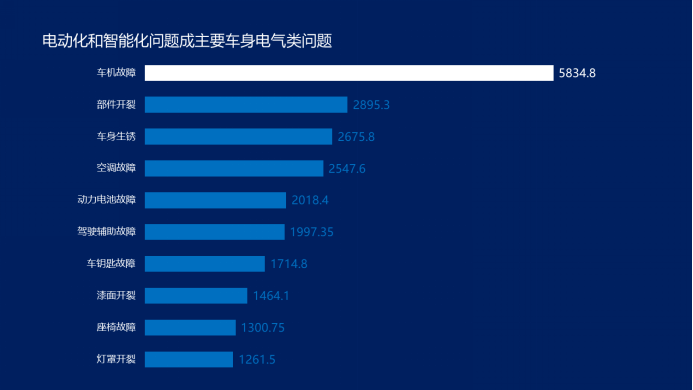
From the perspective of specific feedback issues, electrification and intelligence-related problems have become the most frequently reported vehicle body electrical issues by users in the first half of this year. Among them, various types of in-vehicle system malfunctions top the list, with a reputation index far higher than other electrical issues. Additionally, power battery malfunctions and advanced driver-assistance system (ADAS) failures also rank among the top five problem feedback categories. In recent years, as intelligent technologies and ADAS have become more widespread, related problems have also emerged based on user feedback.
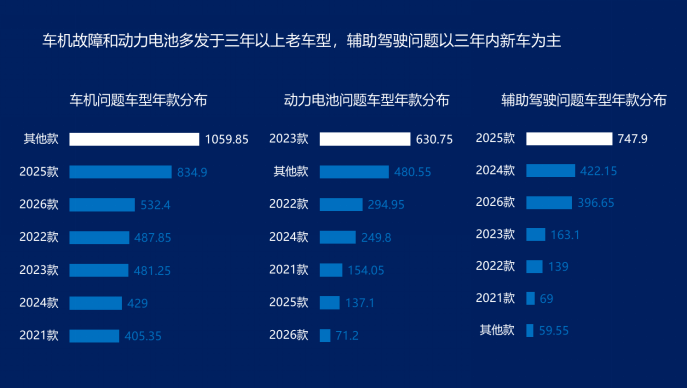
The distribution of specific issues across model years shows that in-vehicle system problems primarily occur in vehicles over six years old. At the same time, the feedback rate for problems in new vehicles within the past two years is also relatively high. The main manifestations of in-vehicle system issues are lagging and failure to upgrade, as well as inability to connect to the internet. Power battery malfunctions are more common in vehicles over three years old. Among them, the 2023 model year vehicles have the most feedback on power batteries, with battery swelling in multiple Aion models being the driving factor. Additionally, batteries in vehicles over six years old show significant degradation, with a relatively high feedback rate for problems. ADAS problems primarily occur in vehicles from the past three years, with the large-scale (mass) adoption of ADAS in recent years objectively contributing to the increased problem feedback rate.
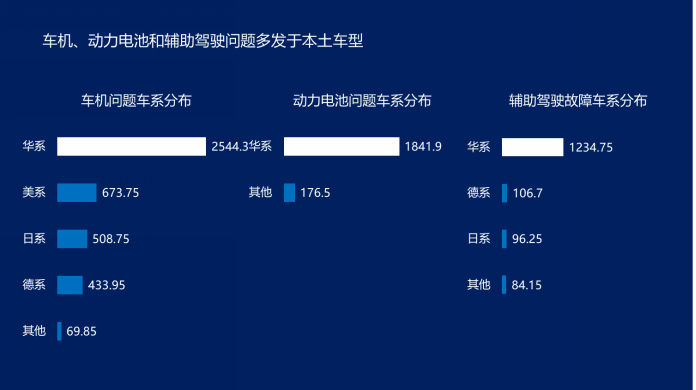
As mentioned earlier, in the first half of this year, issues such as in-vehicle systems, power batteries, and ADAS have predominantly emerged in domestic vehicle models. Over the past few years, the electrification and intelligence penetration rates in Chinese domestic vehicle models have been far higher than those in joint-venture models from other vehicle series. However, due to factors such as technological maturity and product failure rates, feedback on issues related to in-vehicle systems, power batteries, and ADAS has been on the rise.
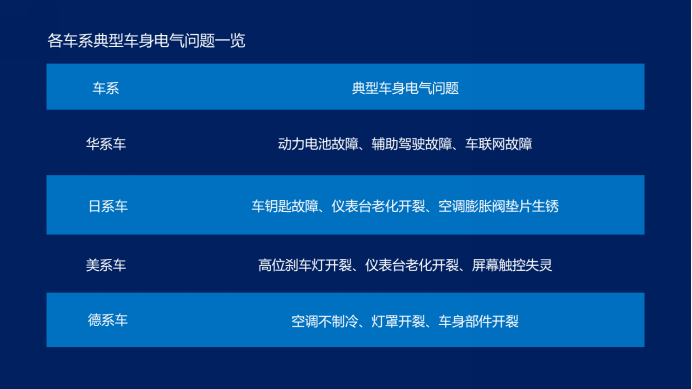
Based on the aforementioned data analysis, the following conclusions can be drawn: In the first half of 2026, Chinese domestic vehicle models have become the vehicle series with the most feedback on vehicle body electrical issues. Moreover, electrification and intelligence-related problems have also predominantly emerged in Chinese-brand vehicles. On one hand, over the past few years, Chinese automakers have been more proactive in electrification and intelligence, with higher penetration rates and greater market popularity, leading to far higher sales than other vehicle series. These objective factors have contributed to the high incidence of problems. On the other hand, although Chinese automakers are more enthusiastic about electrification and intelligence, due to factors such as technological level, cost, and failure rates, domestic vehicle models equipped with various electrification and intelligence technologies have also led to frequent problems. At the same time, it can also be observed that in the first half of this year, vehicle body electrical issues in Japanese, American, and German vehicles still primarily involve problems such as cracking of instrument panels, cracking of high-mounted stop lamps, component cracking, and air conditioning failure. Electronic and electrical issues such as smart card key malfunctions and screen touch failures are not the main problems.
(Image source: Internet. Removal upon infringement.)
-
![]()
Sales Soar: Has Ora Staged a Remarkable Comeback?
-
![]()
What Kind of AI Phones Do We Actually Need?
-
![]()
DingTalk, Feishu, and WeCom's Silent 'March Eastward'
-
![]()
Is 'Data Scarcity' More Fatal Than 'Computing Power Shortage'? Is It Bringing Disaster?
-
![]()
Yutong Bus Steps Up the Rollout of an External Circulation Marketing Model Among Listed Companies
-
![]()
The US Wants to Strangle Chinese Automakers, but Mercedes-Benz Becomes the First 'Sitting Duck'
-
![]()
Earning Foreigners' Money Is a Breeze: China's Car Exports Rock Europe and America!
-
![]()
"Meituan Retreats into the Background of AI", "Meituan, AI, API, local services, business strategy", "Meituan has announced a partnership with Tencent Yuanbao, enabling users to place takeout orders t