Wuhan Optics Valley Initiates 7 National Standards for Humanoid Robots: How Did a Startup Secure Hubei’s Exclusive Standard-Setting Role?
 08/14 2026
 393
393
Introduction
On August 13, Wuhan Optics Valley hosted a landmark national-level conference: the Launch Meeting of National Standards for Test Methods of Humanoid Robots and the First Overall Discussion.
The event, attended by the Secretary-General of the National Robotic Standardization Technical Committee, provincial, municipal, and district leaders from Hubei, and industry experts nationwide, marked the official kickoff of seven national standards for humanoid robot testing.
The meeting’s host and the organization entrusted with drafting these standards was Chengxin Zhilian, a Wuhan-based startup founded in October 2022.
While many companies were still experimenting with robots making coffee or popping popcorn, Chengxin Zhilian—barely four years old—had already secured the authority to shape national standards for localization and navigation in humanoid robots.
The WeChat public account “Self-Driving Vehicle Coming” described Wuhan’s transition from a “test-taker” to an “examiner” as a remarkable strategic move.
(For further reading, click: “Drones + Robot Dogs + Autonomous Sweepers Team Up for Work: Wuhan Optics Valley Fires the First Shot in AI Governance Commercialization for Parks”)
I. Seven “National Exams”: Wuhan’s Startup Leads Standard-Setting
Humanoid robots can walk, see, and perform tasks, but their stability and accuracy cannot be evaluated using inconsistent methods across manufacturers.
The seven national standards address seven core areas: general principles, environmental perception, decision-making and planning, motion control, task operation, localization and navigation, and human-robot interaction. These standards effectively establish seven “national exams” for humanoid robots.
Rather than dictating robot design or technical routes, they focus on a fundamental question: “How to test?”
Liu Xin, Secretary-General of the Humanoid Robot Subcommittee under the National Robotic Standardization Technical Committee, explained: “Only by testing the same capability under similar conditions using relatively unified methods can we establish a basis for comparison.”
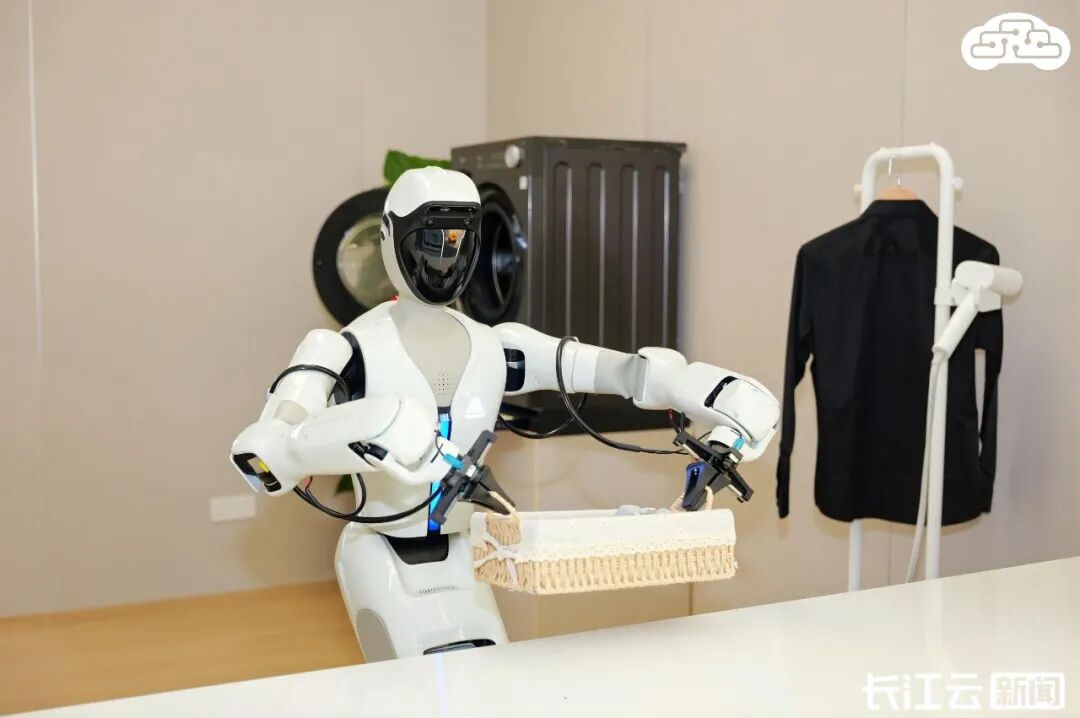
Image Source: Changjiang Cloud
This marks China’s first-ever set of national standards for humanoid robot testing methods.
Localization and navigation refer to a robot’s ability to “find its way”—including self-localization, mapping, route planning, obstacle avoidance, and stability under abnormal conditions.
Yin Lei, General Manager of R&D at Chengxin Zhilian, compared test methods to the “goalkeeper” of the humanoid robot standard system, akin to a nationally recognized “exam syllabus.”
Notably, the compilation timeline for these standards has been accelerated. National standards typically take 36 months from project initiation to release, but this series will be completed in just 12 months.
“Compressing the usual three-year development time to one year reflects the urgent need for standardization in the rapidly scaling humanoid robot industry,” said a representative from the Hubei Institute of Standardization and Quality.
Approved in April 2024, these standards are expected to be published in 2025.
Chengxin Zhilian is not only Hubei’s sole lead organization among the seven drafting entities but also the host of the national conference.
How did a startup less than four years old secure such a pivotal role?
II. From “Test-Taker” to “Examiner” in Three Years
The answer lies in Chengxin Zhilian’s rapid trajectory:
- 2022: Established in Wuhan Optics Valley.
- 2023: Joined the National Standardization Committee.
- 2024: Participated in drafting Technical Requirements for Humanoid Robots.
- 2025: Led the Localization and Navigation standard for Test Methods of Humanoid Robots.
Officially approved in April 2025, the standard’s compilation began in Wuhan in August.
In just three years, Chengxin Zhilian transformed from an industry newcomer to a lead standard-setting entity—a pace unparalleled in most sectors.
Its success stems from technical expertise. Chengxin Zhilian initially focused on inertial navigation technology for intelligent driving before expanding into multi-source fusion perception and high-precision positioning for robotics.
In an Optics Valley shopping mall’s underground parking lot, a robot dog—operating without satellite signals—relied solely on a palm-sized “black box” for navigation. It not only avoided obstacles but also mapped the garage in real-time, with its trajectory perfectly matching the actual layout.
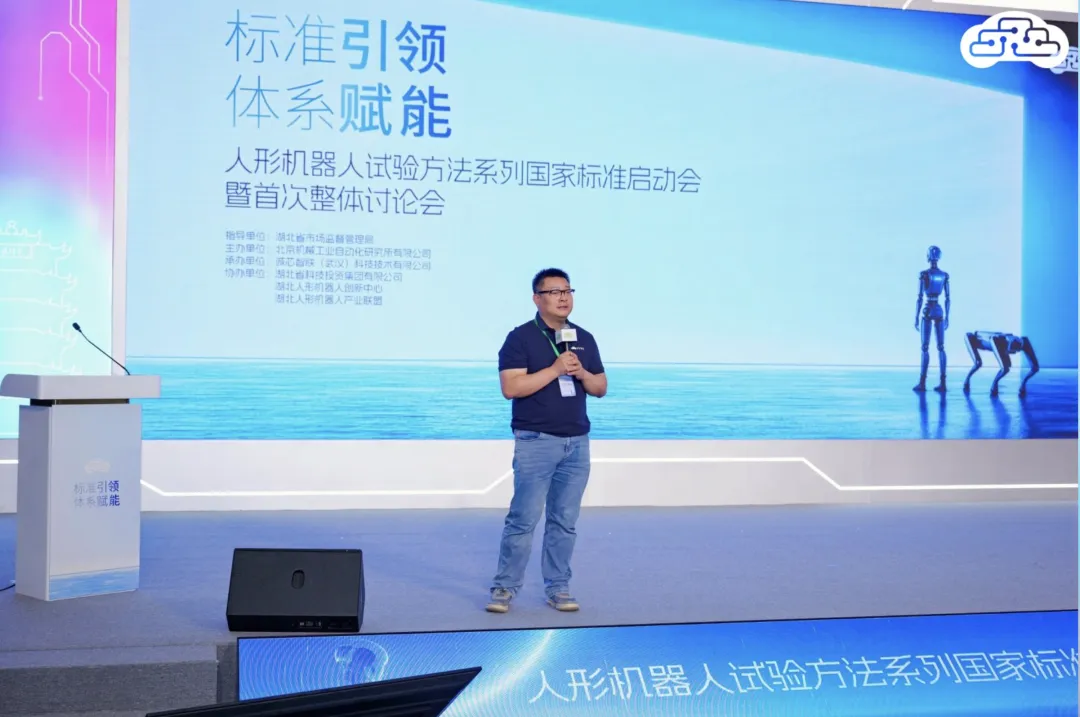
Fan Guopeng, Chairman of Chengxin Zhilian (Wuhan) Technology Co., Ltd. Image Source: Chengxin Zhilian’s Official WeChat Account
Fan Guopeng, the company’s chairman, dubbed this device the “three-no” box: no satellite signals required, autonomous navigation, and no terrain limitations.
Production capacity is also scaling rapidly.
In November 2025, Chengxin Zhilian relocated its headquarters to the East Lake Comprehensive Bonded Zone, establishing China’s largest MEMS IMU fully automatic calibration production line to date. With an annual capacity of 2.6 million IMU modules, it meets scalable demand from drones, intelligent vehicles, humanoid robots, and other fields.
On August 6, 2025—just a week before the national standards launch—Chengxin Zhilian delivered the first batch of 30 quadruped security patrol robots, “Xun 1,” to 20 clients nationwide via the Hubei Humanoid Robot Innovation Center. Priced at over 100,000 yuan each, this marked Central China’s largest robotics delivery to date.
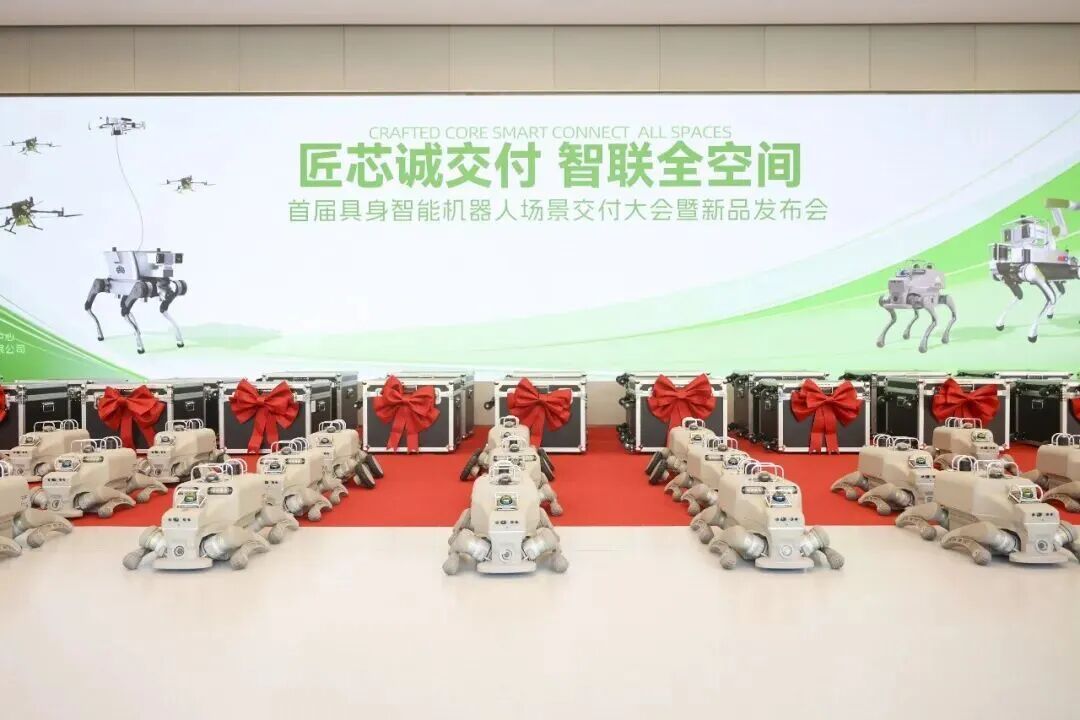
Image Source: Da Wuhan Network
Co-founder Xia Ke noted that these robot dogs will conduct security patrols in Wuhan, Shanghai, Wuxi, and other cities.
At the conference, Fan Guopeng emphasized: “Unlike lab-based single-algorithm research, enterprises operate in real-world scenarios. Vast amounts of data from actual conditions form testing benchmarks, ensuring standards align with industrial needs rather than remaining theoretical.”
Standards are not drafted in isolation; data from real workshops, parks, and underground tunnels provides the strongest foundation.
III. The Industry Races Ahead; Standards Can’t Lag
How competitive is the humanoid robot sector?
Morgan Stanley twice revised its 2025 forecast for Chinese humanoid robot shipments, raising estimates from 14,000 units in January to 50,000 in June.
The firm predicts China’s humanoid robot market will reach $2 billion by 2026 and $15 billion by 2030, with annual shipments potentially hitting 446,000 units.
But the industry’s rapid growth has outpaced standardization, leading to fragmentation.
Companies use varying testing methods, creating discrepancies between paper parameters and real-world performance. Downstream firms struggle to compare options.
Some sensor companies prioritize advanced metrics, achieving high stretch rates but compromising sensitivity and precision. OEMs sign partnerships based on impressive specs, only to find the products unusable.
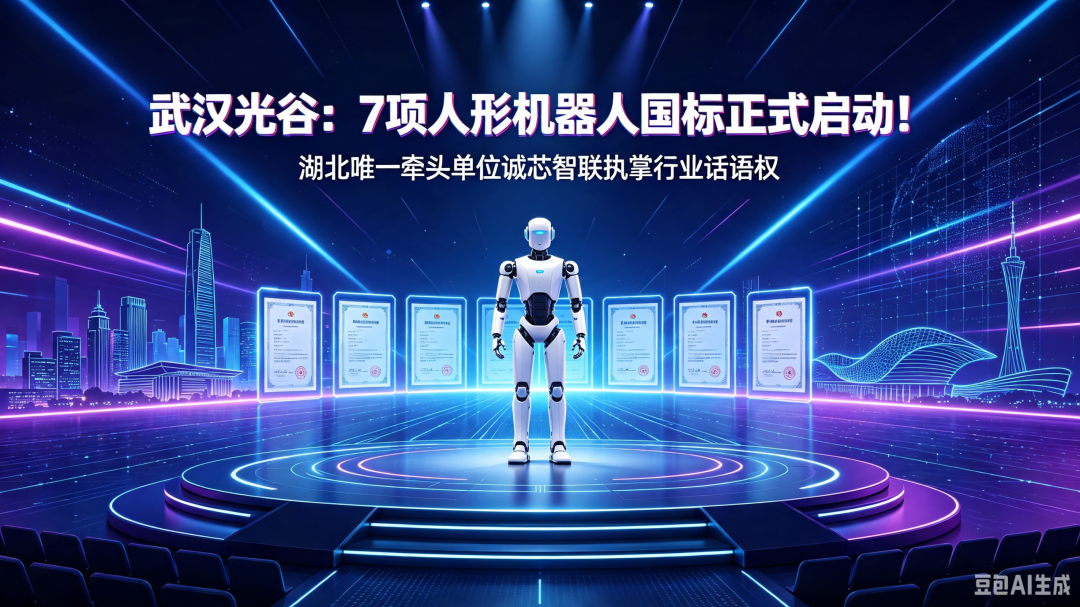
“Standards must clarify required parameters and valid testing methods,” experts noted.
Standards do not emerge in a vacuum. “They grow from market demand and product applications,” one expert said.
This is Wuhan’s strength: a concentrated automotive industry, a robust high-end manufacturing base, and diverse application scenarios.
IV. Optics Valley’s “Standardization Ambition” Is Just Beginning
The national standards launch meeting signifies more than seven new standards.
For Wuhan, hosting such a high-profile conference was no accident.
During the 14th Five-Year Plan period, the “Seven Stars of Optics Valley” led the formulation of 77 international standards. Extending this standardization capability to humanoid robots—a future-defining industry—is both a natural progression and a strategic priority.
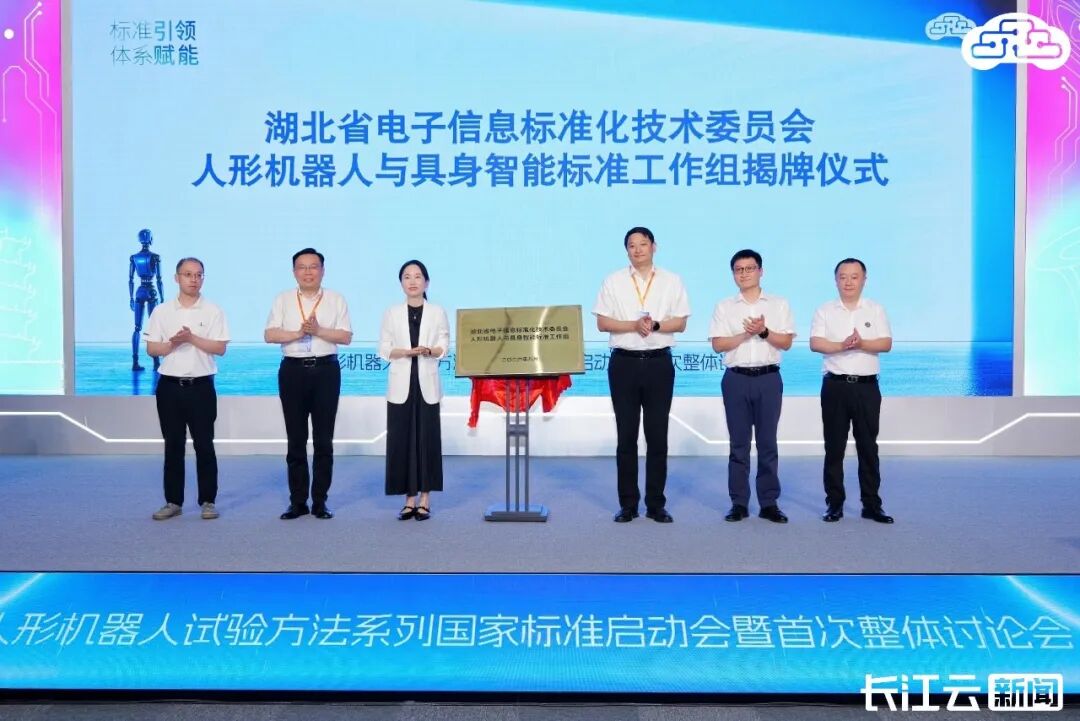
Image Source: Changjiang Cloud
On the same day, the Hubei Provincial Electronic Information Standardization Technical Committee’s Humanoid Robot and Embodied AI Standardization Working Group was unveiled, uniting 29 experts from universities, research institutes, testing agencies, and enterprises.
Over the past five years, Hubei has developed over 30 standards under research, including 21 national standards.
Out-of-region participants noticed a difference.
A standardization leader from Hangzhou Yunshenchu Technology Co., Ltd. observed that Hubei uniquely links innovative enterprises, investment firms, and standard-setting—a rare approach in past efforts.
“With investors involved, standards align more closely with industrial reality, giving enterprises greater confidence to participate,” she said.
In summary, the WeChat public account “Self-Driving Vehicle Coming” argues:
Wuhan is shifting from a bystander “executing standards” to a frontstage player “participating in standard-setting.”
And Chengxin Zhilian may well be the most iconic symbol of this transformation.
What do you think?
References: Reports from Jimu News, Changjiang Cloud, Chengxin Zhilian’s Official WeChat Account, Da Wuhan Network, and other media outlets.
#SelfDrivingVehicleComing #AutonomousDriving #DriverlessCars #SelfDrivingCars
-
![]()
The 'Lin Junyang Phenomenon' in AI Venture Capital
-
![]()
JD's Profit Increases While Revenue Stagnates: What is Liu Qiangdong After?
-
![]()
Creating "Liquid Lenses" with 70-Millisecond Focal Length Switching: Is XR Headset Zooming on the Horizon?
-
![]()
Xingyun Technology’s Remarkable Surge Over the Past Six Months
-
![]()
Chery Enters Korean Market with $75 Million Investment: A Strategic Model Combining Defense and Offense
-
![]()
JD Delivers an 'Above Expectations' Earnings Report, but the Market Doesn't Buy It
-
![]()
The 'Boxy' SUV Market Welcomes a 'Behemoth': Can the Great Wall H10 Stand Its Ground?
-
![]()
Half-Year Report | In the first half of 2026, sales volume of China's smart glasses market soared by 85.5%, with sales amount doubling; full-year sales volume forecast to reach 2.5 million units