Alibaba Shouldn't Have Missed Out on Manus
 01/06 2026
 548
548
Why Does AI Innovation Always Involve Others Reaping the Benefits?
The biggest buzz in the tech world recently has been Meta's announcement of acquiring Manus. This acquisition marks Meta's third-largest deal since its inception, trailing only behind WhatsApp and Scale AI.
Some media outlets have exclaimed in surprise: 'Manus has slipped away.'
Meta's swift move not only astonishes but also leaves a tinge of regret and puzzlement: With everyone focusing on AI, why did a Chinese team like Manus create a phenomenal AI product, yet domestic giants Alibaba, ByteDance, and Tencent remained inactive, only to see Meta seize the opportunity?
While Meta was busy negotiating the acquisition, Alibaba and Tencent were also busy formulating their AI strategies. Alibaba's Qianwen APP was striving to climb the ranks, Tencent had secured OpenAI scientist Yao Shunyu and was adjusting its organizational structure for large model businesses.
This scene inevitably evokes a sense of nostalgia: Once, Alibaba and Tencent missed out on DeepSeek, and now they've missed Manus. With these giants pledging billions into AI, are they truly so slow to recognize AI innovation?
Alibaba Shouldn't Have Missed Out on Manus
The giants haven't entirely overlooked Manus.
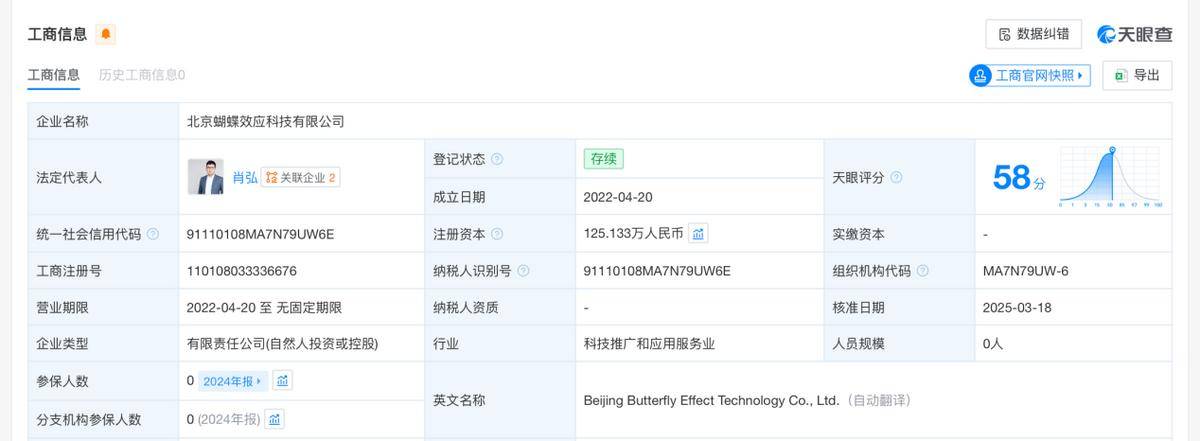
According to Tianyancha APP, Manus's parent company, Butterfly Effect, was founded in 2022. Subsequently, ZhenFund, Sequoia China, and Tencent joined in several rounds of financing. By April of last year, Silicon Valley investment firms entered the scene.
Over the years, there have been reports of domestic tech giants engaging with Manus, including ByteDance.
In early 2024, ByteDance offered $30 million to acquire the Manus team, intending to integrate its products into the Doubao ecosystem. At that time, the team's flagship product wasn't even Manus.
Looking back, Zhang Yiming might have regrets for not acquiring the Manus team then, but today Doubao AI sits comfortably as a top large model application. Even if Manus were integrated into Doubao AI, it would merely be icing on the cake, not a lifesaver.
In the latest week's AI application weekly active user rankings last month, Doubao AI led with 155 million weekly active users. DeepSeek and Yuanbao ranked second and third, with 81.56 million and 20.84 million weekly active users, respectively. Afu and Qianwen followed with 10.25 million and 8.72 million.
From a user data perspective, Doubao AI has already established a significant lead over DeepSeek and Yuanbao, and it's on a completely different scale compared to Afu and Qianwen.
Tencent, after initially participating in Butterfly Effect's financing, gradually lost interest. When Silicon Valley investment firms later drove up Manus's valuation, Tencent didn't follow suit.
Similar to ByteDance, Tencent's need to acquire Manus didn't seem urgent.
For Tencent, Yuanbao AI, backed by WeChat's ecosystem, didn't make acquiring and integrating Manus seem cost-effective. After DeepSeek's sudden emergence, Yuanbao AI's overnight success demonstrated Tencent's ability to make a comeback in AI applications.
Alibaba, however, is different.
Among Alibaba, ByteDance, and Tencent, Alibaba is the one that shouldn't have missed out on Manus the most.
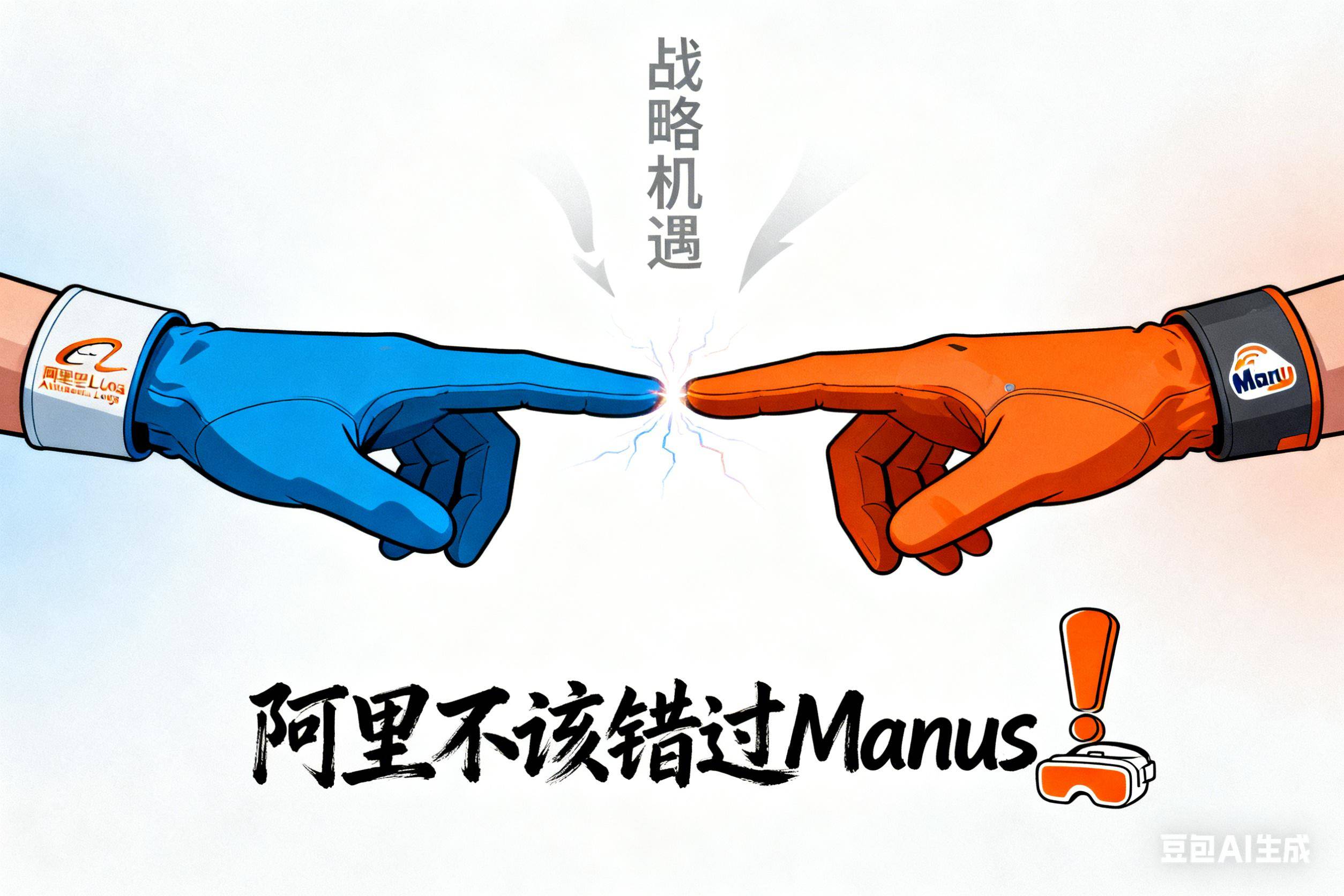
There are three reasons why:
Firstly, Alibaba's AI-to-C implementation is still in its infancy and needs more certainty injected into its AI strategy.
Alibaba's AI front is too extensive, having launched Qianwen, Lingguang, and Afu. Pursuing growth across such a long AI front will inevitably raise ROI concerns. Moreover, Alibaba's investments in Qianwen, Lingguang, and Afu may not yield commercial returns in the short term.
But Manus is different. With an annualized revenue of $125 million and millions of users, Manus has already achieved a closed loop. Acquiring and integrating Manus could accelerate Qianwen AI's arrival at the 'growth inflection point.'
When Qianwen AI's growth truly transitions from being driven by marketing spend to sustainable product growth, Alibaba's AI-to-C strategy will be largely successful.
Secondly, Manus aligns more closely with Alibaba's approach to implementing AI large models.
At the Quark AI Glasses launch event last year, Wu Jia stated, 'AI assistants aren't just chat toys; they compete on their ability to get things done.'
Wu Jia's vision is clear: to create a super AI entry point, Alibaba must innovate genuinely in applications. Why did DeepSeek become an instant hit? Because people discovered it could genuinely accomplish tasks. Doubao AI is no different.
This is why Alibaba's Qianwen AI emphasizes multimodal capabilities. Meanwhile, Ant Group's Lingguang attempts to innovate in production processes.
This indicates that Alibaba recognizes the need for its AI super entry point to be more 'capable and efficient' to surpass Doubao and Yuanbao.
And Manus excels precisely in 'getting things done.'
Manus caught Meta's eye not because of its exceptional underlying model code but because of its 'task execution' capabilities. Manus's core strengths lie in its end-to-end autonomous execution and multi-toolchain integration.
This is precisely what Alibaba's AI implementation desperately needs.
Thirdly, missing out on Manus could mean Alibaba loses an opportunity to 'create another TikTok.'
In implementing its AI strategy, Alibaba has its advantages, such as its strong cloud computing capabilities and the rapid growth of the Qianwen APP in its initial stages. However, Alibaba's strengths are primarily domestic.
To surpass Tencent and ByteDance in the large model sector, Alibaba shouldn't confine itself to the domestic market but look overseas.
As a potential global phenomenal AI application, Manus is no less significant than an AI version of 'TikTok.' By missing out on Manus, Alibaba might also miss the chance to recreate a TikTok success overseas.
In the future, if Alibaba AI wants to break into overseas markets, the cost of starting from scratch might not necessarily be lower than acquiring Manus.
In summary, from both domestic AI business growth and international AI business layout (translated as 'layout' for context) perspectives, Alibaba shouldn't have missed out on Manus.
Leading AI: Wu Jia's 'Alibaba Partner Ticket' Isn't Easy to Obtain
Alibaba's acquisition of Manus isn't just speculation; it's driven by real needs.
In fact, if Alibaba were to acquire Manus, the underlying logic would be similar to Meta's: both need AI businesses to become future key pillars.
In the AI large model sector, both Meta and Alibaba are 'latecomers.' Meta's bet on the metaverse failed, necessitating a shift to an AI valuation logic, requiring a standout product to compete with OpenAI and Google.
In the overseas large model market, with ChatGPT dominating the charts and Gemini and Grok closely pursuing, Meta needs a significant acquisition to assert its presence.
Alibaba faces a similar situation: After Jack Ma's speech at the Bund Finance Summit, Ant Group urgently needs to reanchor from fintech to AI tech. In the large model sector, with Doubao, Yuanbao, and DeepSeek ahead, and players like Nano AI closing in, Alibaba also needs a 'bold move' to advance in AI.
From a strategic decision-making perspective, Alibaba has heavily bet on AI.
Over the past year, Alibaba has made significant investments in its AI strategy. It first established a dual-core strategy of e-commerce + AI, followed by Wu Yongming's announcement of a $380 billion investment in AI over three years.
In the past year, Alibaba has also launched Quark AI, Lingguang, and Afu. Recently, it adjusted its organizational structure, integrating Quark, AI hardware, and other businesses to form the Qianwen Business Group, led by Alibaba Group Vice President Wu Jia.
These series of moves declare Alibaba's intent to advance in AI.
However, the actual impact of these combined efforts falls far short of the influence generated by Meta's single acquisition announcement.
Looking back, regardless of how Alibaba's organizational structure changes or whether Wu Jia leads the AI efforts, Alibaba shouldn't have ceded Manus to Meta.
Acquiring Manus would bring significant benefits to Alibaba, while missing out could result in substantial losses.
Can Alibaba Afford Manus?
Yes, it can.
Meta's acquisition price exceeded $2 billion, and as of the third quarter of last year, Alibaba had over $50 billion in cash reserves on hand. Even while engaging in a food delivery war, acquiring a small entity like Manus wouldn't be a problem.
Moreover, Alibaba has extensive merger and acquisition experience.
In the past, among domestic tech companies, Alibaba has been the most adept at acquisitions.
Half of Alibaba's commercial history is a history of mergers and acquisitions in the Chinese internet sector.
Alibaba's acquisitions of Ele.me and Gaode paved the way for today's local life services and Taobao Instant Shopping. The acquisition of Umeng brought Jiang Fan, a talented individual, under Jack Ma (Ma Yun, Jack Ma)'s wing... Investment, mergers and acquisitions, organizational structure integration, and business ecosystem synergy have been Alibaba's most proficient combination for growth and expansion.
So why did Alibaba, which excels in this area, 'fail'?
Ultimately, it might be due to overcommitting in the AI direction, leading to hesitancy. For Alibaba, acquiring Manus isn't a 'technical issue' but a 'decision-making issue.'
The goal of transitioning to AI is too vast and deeply intertwined.
Jack Ma has high expectations for Alibaba's transition to AI. In a speech last April, he said, 'We must make AI more understanding and better serve humanity.' He personally defined Alibaba's AI business as a 'second growth curve' that must be seized.
Consequently, in terms of personnel, Wu Jia, labeled as a 'young and dynamic realist,' was pushed to the forefront of Alibaba's AI business line. Wu Jia possesses both technical and product expertise. He previously served as the General Manager of Alibaba's UC Business Division, leading the Quark browser to carve out a niche in a competitive market. Later, he became the President of Alibaba's Intelligent Information Business Group.
From an external perspective, Alibaba's AI battle is also Wu Jia's battle for 'Alibaba Partner' status. Currently, several core executives at Alibaba, including Wu Yongming, Joe Tsai, and Jiang Fan, are Alibaba Partners. Wu Jia is the exception.
From an external viewpoint, even if Alibaba successfully acquires Manus and achieves success in its ToC large model endeavors, the success of Alibaba's AI strategy would likely be attributed to the merger's success. Wu Jia's chances of being promoted to Partner might remain uncertain.
In other words, if the Qianwen APP succeeds and Wu Jia leads the Qianwen Business Group to great heights, then Alibaba Partner opportunities might increase. Therefore, from an external perspective, even if acquiring Manus brings significant benefits, Alibaba is only permitted success on the Qianwen APP front, not failure.
Moreover, Alibaba's AI implementation also requires the initiation of an 'Wu Jia Era.'
In Conclusion:
Missing opportunities is a common occurrence in the tech and business world.
Reviewing the development of internet tech and business, there have been numerous missed merger and acquisition opportunities. However, missing out on Manus today reflects another aspect of China's current AI innovation landscape.
Today's AI tech giants possess substantial capital and vast ecosystems, lacking neither innovation capabilities nor resources. What they lack is the ability to retain innovation.
How to leverage these resources and capabilities to discover the next Manus and keep it might be a question worthy of deep contemplation for AI giants.
-
![]()
Registered Capital Slashed to 372 Million Yuan! Yutong Optical Finalizes Industrial and Commercial Change Registration
-
![]()
Zhuque-3 Successfully Lands, and 'Time Traveler' Secures Another ¥100 Million in Funding: China's Commercial Space Industry Experiences a 'Dynamic August'
-
![]()
Autohome Faces a Shrinking Window of Opportunity
-
![]()
Even a Titan Like Musk Has Faced Setbacks in Fulfilling Promises
-
![]()
AI Office: The End of the Racing Era, Context Becomes the Key to Success
-
![]()
Domestic Vehicle Chassis Revolution ②: The Steering Wheel Remains, But Mechanical Connections in the Steering System Are Decreasing
-
![]()
Exploring MiniMax Design: Can Video Editing Be as Simple as Speaking?
-
![]()
Why Can SenseTime Achieve Profitability While CloudWalk Still Faces Challenges, Despite Both Adopting Large Models?