A Fresh Insight into Energy Storage Safety: Evolving from Smoke Detection to Gas "Olfaction" for Early Fire Alerts!
 01/23 2026
 513
513
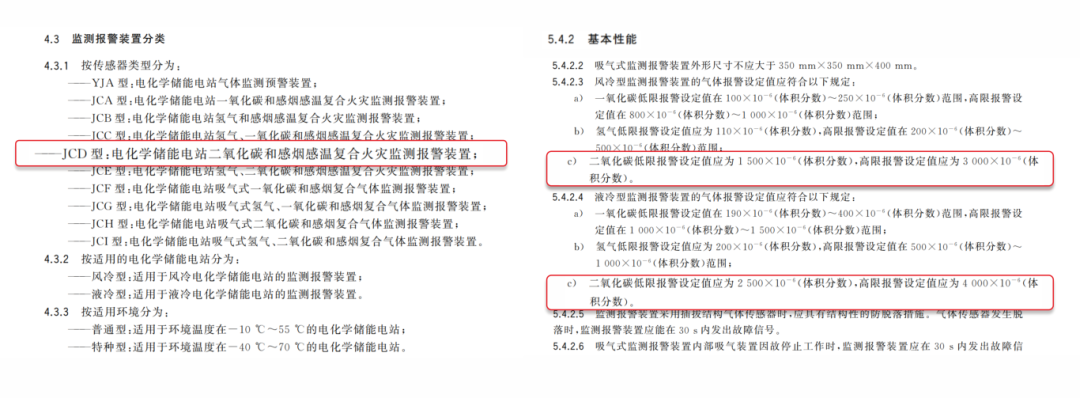
On August 29, 2025, the National Standardization Administration Committee unveiled the General Technical Requirements for Fire Monitoring and Early Warning Systems in Electrochemical Energy Storage Stations (GB/T 46261 - 2025). This standard is set to take effect on September 1, 2026, heralding a new era of standardized safety prevention and control for electrochemical energy storage stations in China.

New Standard: Shifting from "Fire Detection" to "Risk Anticipation"
The newly introduced national standard tackles the long-standing challenges in electrochemical energy storage stations, such as the difficulty in early fire detection, delayed alarms, and uncoordinated linkage mechanisms. It does so by standardizing the terminology, overall architecture, functional requirements, performance indicators, test methods, and inspection rules for fire monitoring and early warning systems. Key highlights of the standard include:
● Bridging the Gap: This marks the first national standard in China specifically tailored for fire monitoring and early warning systems in electrochemical energy storage stations. It represents a significant leap from reactive disaster response to proactive risk prevention in energy storage fire safety.
● Tailored Gas Early Warning: Innovatively, the standard incorporates CO2 gas into the monitoring scope and sets distinct CO2 alarm thresholds for liquid-cooled and air-cooled electrochemical energy storage stations.
● Multi-Parameter Surveillance: Detailed regulations govern the functional and performance requirements for monitoring alarm devices in multi-parameter surveillance, covering gases, temperature, smoke, and pressure. This ensures a holistic approach to fire risk perception and early warning.
Gas Monitoring for Early Fire Warning in Energy Storage Stations: The Rationale Behind CO2 Selection
Early Gas Release
The thermal runaway of lithium batteries is a chain reaction process. In the early stages of thermal runaway, processes like solid electrolyte interphase (SEI) decomposition and reactions between the anode and electrolyte release CO2. This characteristic makes CO2 a valuable early indicator of thermal runaway, enabling timely warnings.
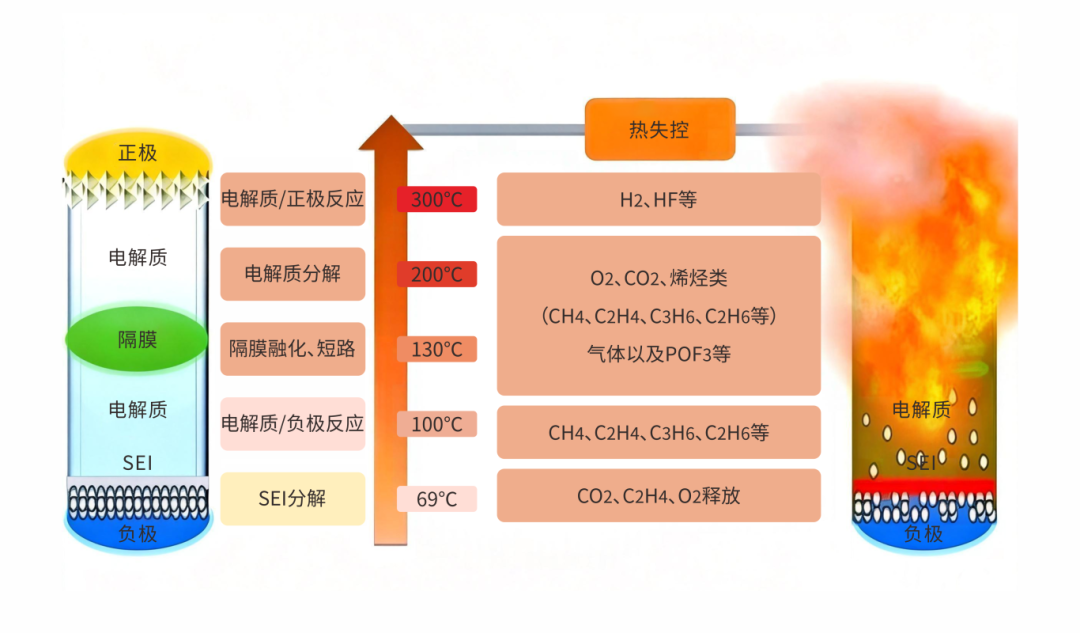
Image Source: Progress in Gas-Sensitive Technology for Monitoring and Early Warning of Thermal Runaway in Lithium-Ion Batteries, Energy Storage Science and Technology Journal
Substantial Release Volume
During thermal runaway, a significant volume of CO2 is generated. Processes such as SEI decomposition, anode-electrolyte reactions, and the reaction of oxygen released from cathode material decomposition with the electrolyte continuously produce CO2. The substantial release volume simplifies the detection of concentration changes, enhancing monitoring reliability and sensitivity.
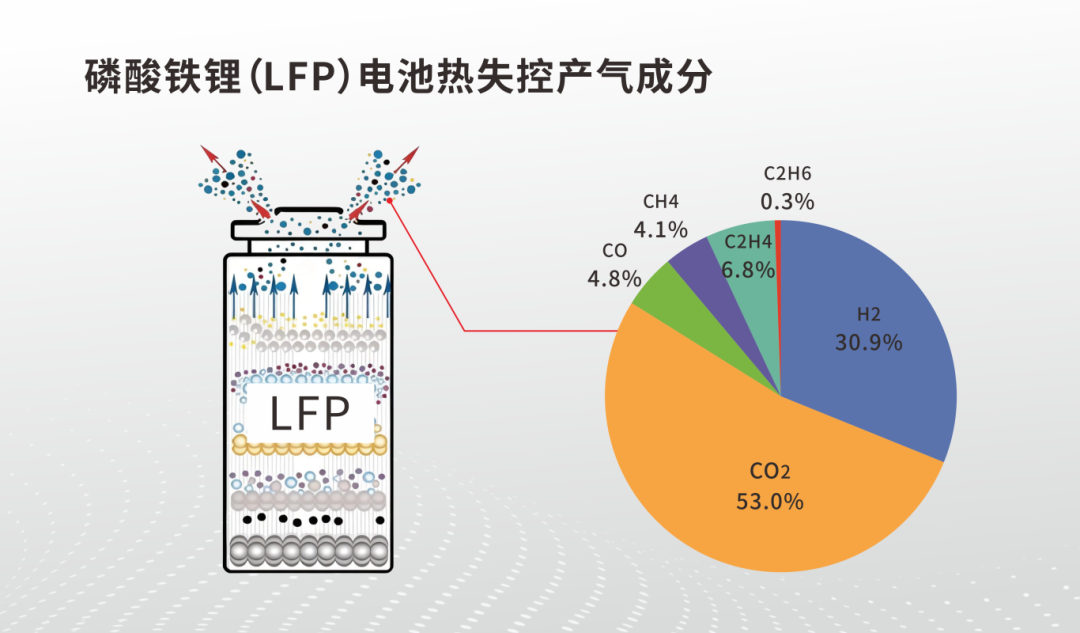
Image Source: Progress in Gas-Sensitive Technology for Monitoring and Early Warning of Thermal Runaway in Lithium-Ion Batteries, Energy Storage Science and Technology Journal
Minimal Environmental Impact
CO2 is an inert gas that does not engage in secondary reactions within the battery and is not readily adsorbed by materials like separators and electrodes. Compared to gases like H2 and CO, CO2 maintains a relatively stable concentration in both indoor and outdoor air, resulting in minimal environmental interference. This makes CO2 detection results easier to analyze and interpret. Furthermore, CO2 is rarely produced during normal charging and discharging, effectively preventing false alarms under normal operating conditions.
ATRS-1062 Composite Fire Monitoring Alarm: Dual Guarantee of Compliance and Safety
In response to the early fire monitoring and early warning needs in electrochemical energy storage stations, Cubic Sensor and Instrument Co., Ltd. has introduced the ATRS-1062 composite fire monitoring alarm. Leveraging NTC thermistors, light scattering, and non-dispersive infrared technology, it effectively monitors temperature, smoke, and CO2 concentration indicators during thermal runaway in energy storage stations:
01 Comprehensive Performance, Precise and Dependable
With a T90 response time of ≤ 30 seconds, the alarm operates stably across a wide temperature range and adapts to various harsh industrial and civil environments. The built-in CO2 detection element, featuring dual-engine technology and advanced automatic calibration, ensures long-term high precision and stability.
02 Composite Detection for "Zero" False Alarms
By composite monitoring of temperature, smoke, and CO2 indicators, the alarm effectively mitigates interference from environmental factors such as dust, particulates, and non-fire-related smoke, eliminating false alarms.
03 On-Site Automatic Emergency Response Without Human Intervention
The ATRS-1062 alarm utilizes relay output. When temperature, smoke concentration, or CO2 concentration reaches the warning threshold, it automatically activates on-site ventilation and alarm devices via relays, enabling localized linkage control.
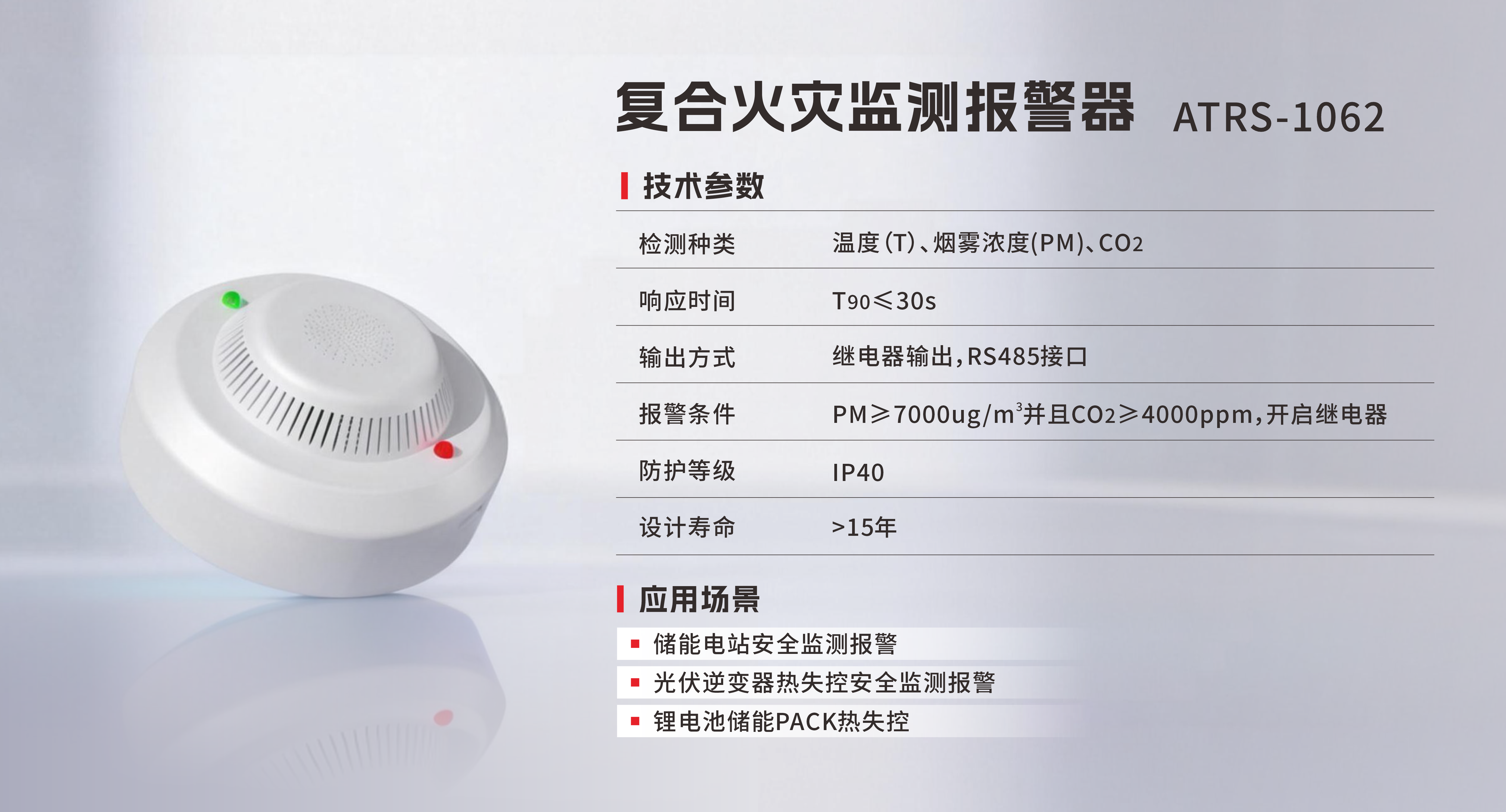
Faced with the stringent requirements of the new national standard, the Cubic Sensor and Instrument Co., Ltd. ATRS-1062 alarm, guided by national standards and centered on precise monitoring, establishes the first line of safety defense for electrochemical energy storage stations!
-
![]()
Registered Capital Slashed to 372 Million Yuan! Yutong Optical Finalizes Industrial and Commercial Change Registration
-
![]()
Zhuque-3 Successfully Lands, and 'Time Traveler' Secures Another ¥100 Million in Funding: China's Commercial Space Industry Experiences a 'Dynamic August'
-
![]()
Autohome Faces a Shrinking Window of Opportunity
-
![]()
Even a Titan Like Musk Has Faced Setbacks in Fulfilling Promises
-
![]()
AI Office: The End of the Racing Era, Context Becomes the Key to Success
-
![]()
Domestic Vehicle Chassis Revolution ②: The Steering Wheel Remains, But Mechanical Connections in the Steering System Are Decreasing
-
![]()
Exploring MiniMax Design: Can Video Editing Be as Simple as Speaking?
-
![]()
Why Can SenseTime Achieve Profitability While CloudWalk Still Faces Challenges, Despite Both Adopting Large Models?