Technology Evolution vs. Scenario Transformation: The AI Home Appliance Crossroads
 01/28 2026
 734
734
Thanks to the rapid advancement of AI technology, home appliances are becoming increasingly imaginative and convenient.
Previously, the ability to turn home appliances on and off via voice commands was already considered quite innovative. Subsequently, the deep integration of home appliances with smartphones allowed users to customize their devices through smartphone operations, further extending control range and enhancing convenience.
By 2025, AI will empower home appliances to take on a more proactive role. Imagine an oven that can automatically recognize ingredients and determine cooking times, or a washing machine that can identify fabric types to adjust wash cycles and even automatically dispense the right amount of detergent based on clothing weight. In the eyes of home appliance brands, these devices are no longer standalone products but components of comprehensive intelligent home systems. For instance, Changhong has embraced the slogan, "From Home Appliances to Family."
This intelligent revolution in the home appliance sector is also reshaping consumer perceptions. For example, an AI-equipped gaming monitor launched in late 2025 sparked significant discussion within the gaming community. For gamers, this monitor uses AI to highlight enemies, autonomously adjust visibility, provide night vision effects for dark scenes, and make enemy outlines clearer in smoke screens, creating a "physical cheat" effect. Moreover, since this function processes images at the hardware level without altering game data, traditional anti-cheat systems struggle to detect it, giving players using this monitor a significant tactical advantage.
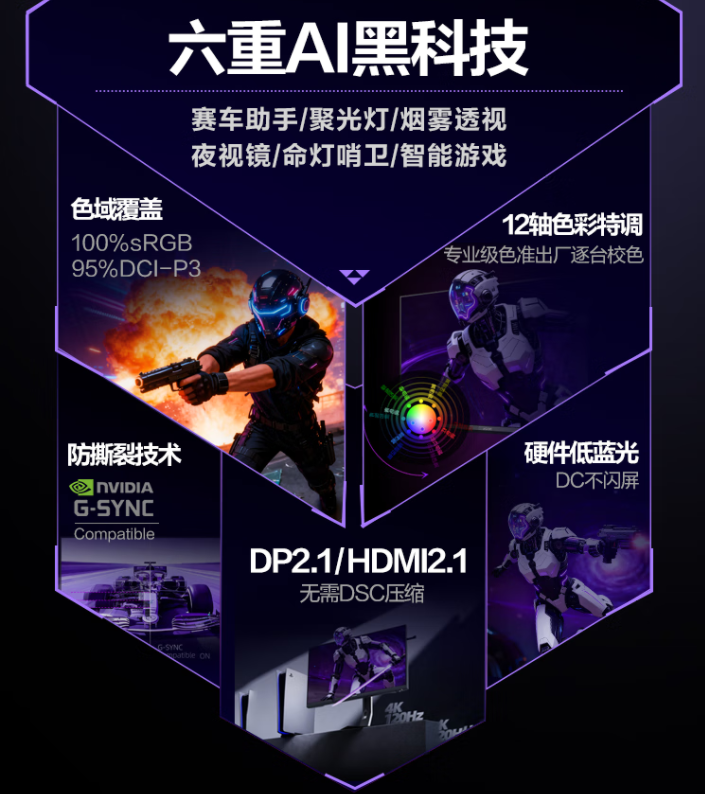
Despite controversy over undermining game fairness, many brands are still adopting this product design approach, using AI to analyze image signals for similar visual enhancement functions, thereby meeting consumer demands.
From the micro to the macro, examples like displays with autonomous visibility adjustment and washing machines that automatically dispense detergent illustrate that the integration of AI and home appliances is deepening, leading to more profound scenario understanding, natural interaction, detailed functionality, and enhanced user experiences.
From "Selling Home Appliances" to "Selling Scenarios"
With the incorporation of AI, the business models of home appliance brands are undergoing fundamental changes: shifting from selling individual functional products to providing user-demand-centered, cross-category intelligent living scenario solutions.
Historically, competition among home appliance brands focused on the performance, parameters, and cost-effectiveness of individual products. For example, if one brand's TV offered 4K resolution with a 165Hz refresh rate, while a competitor provided 4K resolution but only a mainstream 60Hz refresh rate, the former would deliver better picture fluidity. If the price of the 165Hz TV remained reasonable, consumers would naturally opt for the product with superior parameters, performance, and cost-effectiveness.
Today, more brands are emphasizing AI's ability to understand user habits and usage environments. Taking TVs as an example, while users previously demanded clearer and smoother picture displays, manufacturers now meet deeper user needs through features like visual enhancement and AI frame interpolation, which can be seen as proactive functional upgrades.
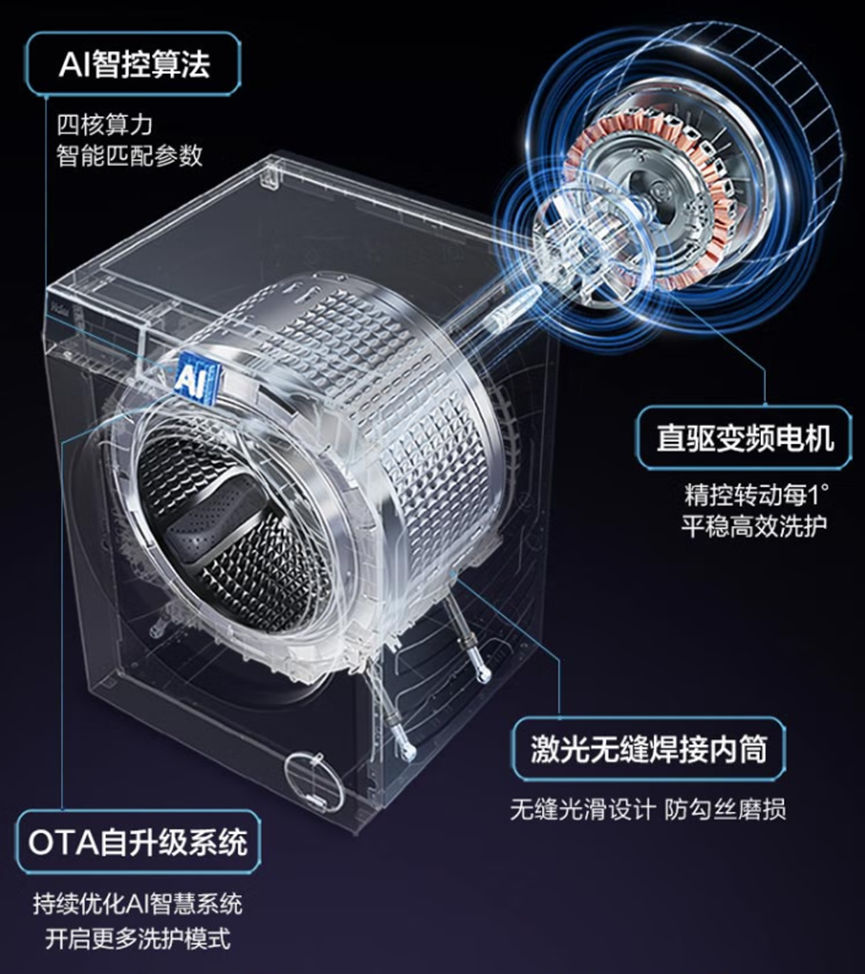
An increasing number of brands are enhancing product functionalities. For instance, Hisense has integrated DeepSeek with the Xinghai large model in washing machines, granting them deep thinking and reasoning capabilities. Users no longer need to manually adjust complex parameters; they simply need to indicate where heavy stains are on the clothing, and the washing machine can intelligently analyze and adjust parameters such as water temperature, rotation speed, and detergent dispensing.
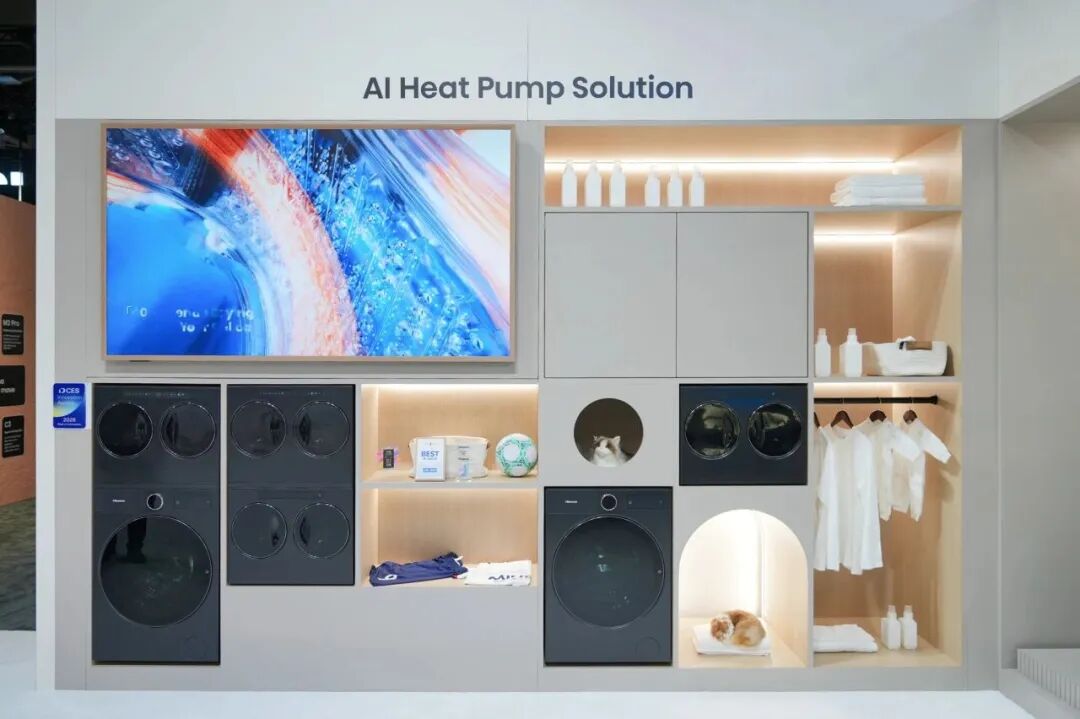
Some manufacturers are focusing on multi-device interoperability. For example, Haier Smart Home's "San Yi Niao" scenario brand and Huawei's HarmonyOS Smart Home provide one-stop solutions from design and products to services.
On one hand, users enjoy more convenient, personalized, and high-quality living experiences during the functional upgrade process of home appliance brands, while brands achieve new growth and build competitive barriers. A direct example is that a monitor capable of seeing through smoke screens will attract gaming enthusiasts, driving sales growth. Gamers' mindset is straightforward—debates within the community about whether "using this monitor counts as cheating" can be set aside for now; if others are using it, they should too—"if you can't beat them, join them."
On the other hand, for brands, there are opportunities to expand revenue sources, shifting from hardware sales to "hardware + services + data," with revenue streams extending to scenario design fees, AI value-added service subscription fees, and ecosystem partner revenue sharing. What users purchase is no longer a standalone home appliance but "continuously updated convenience management services."
Public data indicates that home appliances equipped with genuine AI functionality can command significant price premiums, ranging from 30% to 200%, providing home appliance brands with new profit growth points.
Will the price wars of basic-function home appliances subside due to the incorporation of AI?
In the short term, AI is reshaping competition logic: in the premium and intelligent segments, the core of competition is "value creation"; in the mainstream and basic-function markets, "price" remains a crucial factor.
After all, many consumers' demands for home appliances still revolve around "practicality and affordability," meaning traditional price competition will not disappear, while competition in the AI field is more of a "value war."
New Players Enter the Major Home Appliance Market
The incorporation of AI has also enabled another group of technology-focused players to enter the major home appliance market, particularly those in the cleaning sector, primarily producing robotic vacuum cleaners.
Thanks to AI technology advancements, core products in the cleaning sector have been enhanced. For example, MOVA's floor washer, equipped with AI intelligent wheels, analyzes and adjusts in real-time by sensing the operational status of the floor washer, floor conditions, and user operating habits, providing a more effortless floor washing experience for users of different ages, heights, and physical capabilities.

As traditional major home appliance market brands research AI, the cleaning sector, which already centers on AI capabilities, has found opportunities for technology replication. On one hand, they can collaborate with traditional home appliance manufacturers; on the other hand, they can apply their accumulated technological expertise to more product lines.
For instance, the intelligent sensing algorithms of robotic vacuum cleaners, which essentially detect dirt in rooms, share similarities with the usage scenarios of washing machines. Similarly, the motion control technology of robotic vacuum cleaners can be applied to air conditioning products, providing technological upgrades for automatic airflow.
Dreame Technology has announced its "Boundless Ecosystem" strategy, which, starting from robotic core technologies, breaks category and application boundaries to expand into full-house proactive intelligence scenarios. Leveraging core technologies such as high-speed digital motors, sensor fusion, and AI algorithms accumulated in robotic vacuum cleaners, it quickly entered fields like air purifiers and hair dryers. After 2025, it will systematically apply these robotic technologies to traditional major home appliances such as air conditioners, refrigerators, and washing machines.
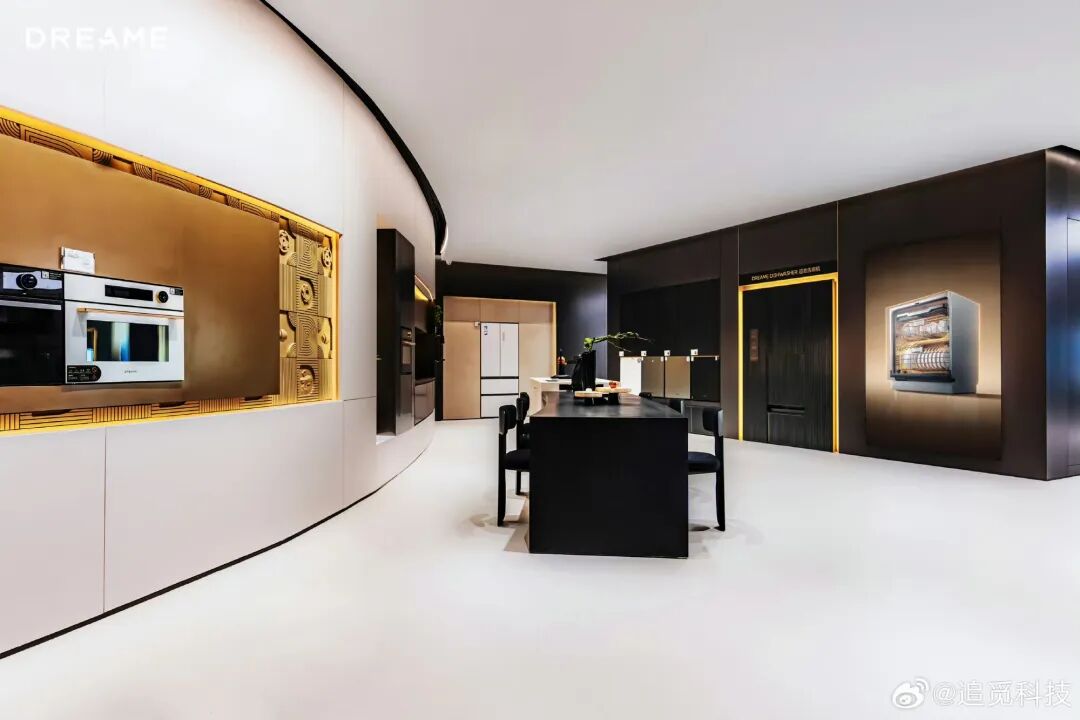
These technological advantages provide new players in the cleaning sector with opportunities to disrupt the traditional major home appliance market landscape. Compared to traditional home appliance brands, new players emphasize scenario-based and proactive intelligent experiences. Once they broaden their product categories, they can easily aim for a "full-house intelligent ecosystem."
New players represented by Dreame Technology, with their robotic gene's dimensional migration and internet-based user operations, have indeed injected vitality into the stagnant major home appliance market, driving the industry from "function stacking" to "proactive intelligence" and "ecosystem competition."
However, traditional home appliance brands have accumulated manufacturing capabilities and supply chain cost control in core white appliance components such as compressors, refrigeration, and motors over many years. In terms of after-sales service and consumer trust, leading companies like Midea and Gree possess tens of thousands of offline stores and comprehensive after-sales networks, which new players are unlikely to match in the short term.
Another key factor lies in changing consumer perceptions, such as the idea that "a company making robotic vacuum cleaners can also make refrigerators/washing machines." A well-known example is Gree's venture into smartphones; users recognize Gree's air conditioners but supporting Gree's smartphones is a different matter.
This is a contest between "intelligent innovation speed" and "industrial comprehensive depth." The future landscape is likely to involve integration rather than replacement: traditional brands accelerating their learning of internet and AI capabilities, while new players need to address shortcomings in manufacturing, supply chains, and channels.
Of course, during the integration process, it is essential to adhere to pragmatism, abandon "pseudo-needs," and avoid developing rarely used, flashy functions that deviate from the core and essential purposes of home appliances.
The future winners will not be those brands with the most AI functions but those that can seamlessly integrate AI technology with the essence of home appliances and user living scenarios, creating genuinely usable, user-friendly, and desirable experiences. This "pragmatism" competition will determine whether AI becomes a revolutionary engine for the home appliance industry or merely a fleeting marketing concept.
Finally, a quote from a netizen: The highest form of intelligence is making users unaware of complex technology's existence while naturally enjoying the convenient results it brings. (Image source: Internet)
-
![]()
Registered Capital Slashed to 372 Million Yuan! Yutong Optical Finalizes Industrial and Commercial Change Registration
-
![]()
Zhuque-3 Successfully Lands, and 'Time Traveler' Secures Another ¥100 Million in Funding: China's Commercial Space Industry Experiences a 'Dynamic August'
-
![]()
Autohome Faces a Shrinking Window of Opportunity
-
![]()
Even a Titan Like Musk Has Faced Setbacks in Fulfilling Promises
-
![]()
AI Office: The End of the Racing Era, Context Becomes the Key to Success
-
![]()
Domestic Vehicle Chassis Revolution ②: The Steering Wheel Remains, But Mechanical Connections in the Steering System Are Decreasing
-
![]()
Exploring MiniMax Design: Can Video Editing Be as Simple as Speaking?
-
![]()
Why Can SenseTime Achieve Profitability While CloudWalk Still Faces Challenges, Despite Both Adopting Large Models?