Auto Companies Plunge into 'Humanoid Manufacturing': A Pivotal Showdown Driven by Fierce Market Rivalry
 02/28 2026
 587
587
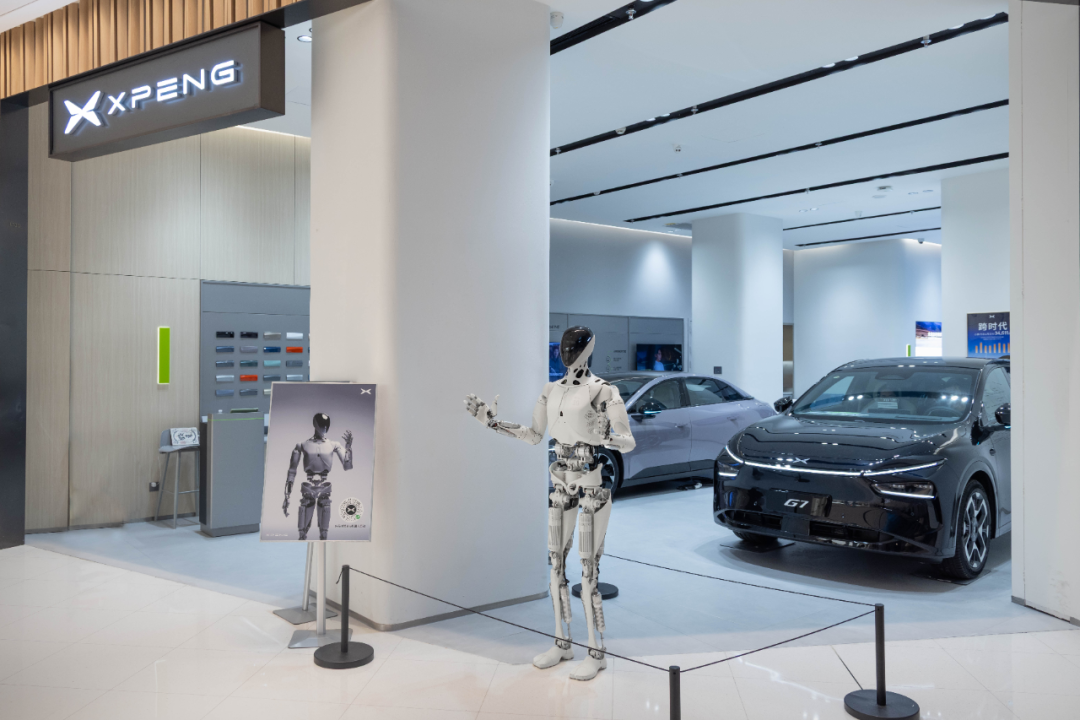
Image Source: XPENG Robotics Official Weibo
Selling Cars Isn't Profitable, So 'Humanoid Manufacturing' Stakes Its Claim on the Future
Written by/ Meng Huiyuan
Edited by/ Li Wenjie
Layout by/ Annalee
With high-difficulty martial arts routines, seamless human-robot interaction, and synchronized team operations, the robotics sector, as showcased by its dazzling performances at the Year of the Horse Spring Festival Gala, is clearly poised to become a hotbed of technological innovation in the years ahead.
Not only are established players like Unitree Robotics, Songyan Dynamics, Magic Atom, and Galaxy General making waves in robotics, but a slew of new energy vehicle (NEV) companies are also strategically positioning robotics as a cornerstone of their future growth.
When it comes to 'plunging into humanoid manufacturing,' automakers are leaving no stone unturned: He Xiaopeng noted in his 2026 back-to-work letter that the new generation of IRON robots will commence mass production by the end of 2026, with the ambition to become the world's first to mass-produce high-end humanoid robots; BYD has earmarked substantial funding for AI and robotics, targeting the deployment of 2,000 units in 2025 and scaling up to 20,000 units by 2026, while aiming for a humanoid robot unit price of 200,000 yuan (just one-third of the industry average of $100,000), thereby significantly lowering the entry barrier for widespread adoption; Tesla has even gone as far as halting production of several best-selling models to make room for robot production lines, transforming automotive assembly lines into robot manufacturing hubs...
As NEV companies collectively herald 2026 as the 'first year of mass production for humanoid robots,' this cross-industry trend is no mere coincidence—it represents both a natural progression of technological convergence and a strategic maneuver amid escalating competition within the NEV sector.
However, beneath the surface excitement, challenges such as mass production bottlenecks, profitability hurdles, and intensifying cross-industry competition loom large.
Automakers' Strategic Moves in 'Humanoid Manufacturing'
At this juncture, NEV companies are grappling with unprecedented pressures.
By 2025, the domestic penetration rate of NEVs in China is projected to exceed 50.8%, shifting the market dynamics from 'growth for all' to 'competition for market share.'
Moreover, the industry is grappling with triple cost pressures: First, the price of lithium carbonate has skyrocketed, surging by about 140% since the second half of 2025, with an average price exceeding 140,000 yuan per ton, squeezing profit margins for low-end models to near-zero levels; Second, supply shortages of automotive-grade chips have driven up prices, with DRAM prices in the automotive sector rising by 180% in three months and high-end automotive-grade DDR5 spot prices surging by 300%; Third, inventory pressures remain high, with the national passenger vehicle industry inventory reaching 3.57 million units and a 70-day inventory cycle by the end of January 2026, leaving NEV dealers facing the dilemma of 'market performance falling short of expectations.'
In essence, years of 'cutthroat' price wars have dragged the industry's average profit margin below the industrial average of 4.5%, leaving many companies at a crossroads between survival and failure. They must discover a 'second growth curve' to sustain themselves.
Against this backdrop, robotics has emerged as the top contender.

Image Source: Xiaohongshu
Shenyang, a professor at Tsinghua University, points out that embodied AI relies on 'VLA large models' (vision-language-action fusion), and smart vehicles happen to be the perfect platform for this logic—cameras/radar provide 'vision' input, smart cockpits enable 'language' interaction, and drive-by-wire chassis complete 'action' output.
Industry analysis reveals that the overlap in core components between humanoid robots and smart vehicles exceeds 60%, including motors, electronic control systems, battery systems, reducers, domain controllers, and high-computing-power chip platforms.
Furthermore, automakers' unique advantage in self-developing robots lies in their ability to create a closed-loop internal cycle of 'research-usage-iteration.' For instance, XPENG's IRON robots are already handling sorting, handling, and quality inspection on the P7+ production line, as well as providing guided tours and shopping assistance in stores; BYD plans to internally deploy 20,000 robots by 2026 for use in its own factories; Tesla's Optimus is modifying dedicated production lines at the Fremont factory, aiming to commence scaled production by the end of 2026... Automotive factories represent the most natural application scenario for robots, covering welding, assembly, logistics, and inspections. Self-developed robots by automakers can address production pain points while iterating technology, forming a virtuous cycle of 'usage-driven research.'
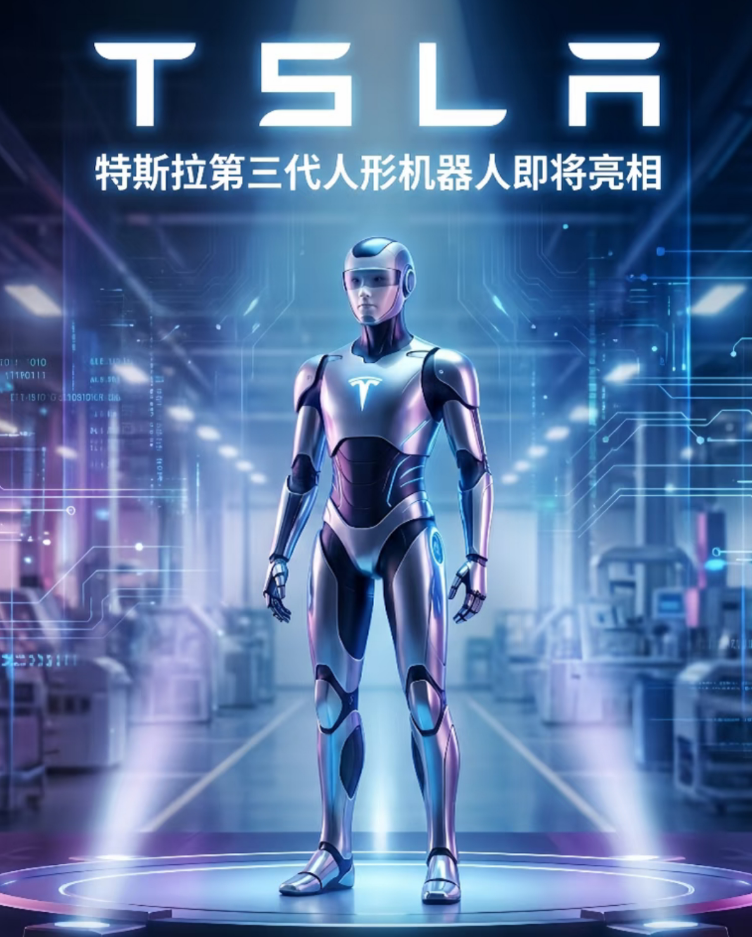
In fact, not only has 'plunging into humanoid manufacturing' become an industry consensus, but based on publicly announced timelines, automakers have also set a critical verification window: 2026–2028 may be the period when humanoid robots transition from 'prototypes' to 'mass production in the tens of thousands.'
Numerous related initiatives are underway: Tesla plans to achieve mass production by the end of 2026, with an initial annual capacity of 50,000–100,000 units; XPENG expects to start mass production by the end of 2026, with an initial annual capacity of 50,000 units; Chery Automobile will expand capacity and push for mass production in the tens of thousands by 2026, aiming for global commercialization by 2028; Li Auto plans to complete prototype verification by 2026 and prepare for mass production in the tens of thousands by 2027...
A profound industrial transformation integrating 'vehicles, humans, and machines' is unfolding, with implications that may reshape not only manufacturing but also societal life as a whole.
Everyone’s Talking About Mass Production, But Who Will Profit First?
Of course, before envisioning a rosy future, real-world challenges abound.
Mass production bottlenecks top the list.
From core components, humanoid robots heavily rely on high-power-density motors, high-precision reducers, force-control sensors, and integrated joints. These critical parts remain in small-batch customization, with high costs and low yield rates, far from forming a mature, stable, and low-cost scaled supply chain like that of automobiles.
A single robot may have dozens of joints, and any subpar precision or reliability in any component can directly halt mass production. In terms of manufacturing processes, robots still rely heavily on manual assembly, calibration, and debugging, lacking automotive-grade automated production lines and unified manufacturing standards, making it difficult to support the consistency and stability required for mass production in the tens of thousands.
Critically, just because robots can perform on stage doesn't mean they can operate stably in real-world scenarios. Issues like environmental generalization, fault tolerance, and safety redundancy remain unresolved, leaving a significant gap between 'ready-to-use upon delivery' and 'long-term reliability.'

Image Source: XPENG Robotics Official Weibo
Next comes the profitability challenge.
The industry is currently mired in a profitability dilemma characterized by high investment, low output, long cycles, and weak closed loops. Especially, the overall cost of robots remains prohibitively high, with material costs for high-end humanoid robots still in the hundreds of thousands of yuan range, and core components accounting for over 60% of the cost. Even with supply chain synergies from automakers, costs are still far from reaching the threshold for industrial or household affordability.
The mismatch between efficiency and value is another critical issue. Robots can only achieve about 30% of human productivity in comprehensive operations but must shoulder full-chain expenses for procurement, deployment, maintenance, and algorithm iteration. In most scenarios, the payback period exceeds five years, sometimes even surpassing the equipment's effective lifespan, making it difficult for companies to justify the economics and generate genuine repeat purchases.
Meanwhile, business models remain in the early exploration phase: Product sales suffer from high unit prices and difficulty in scaling; leasing and subscription services face volatile pricing and maintenance costs that erode profits; customized integration projects are fragmented and hard to replicate at scale; consumer-facing products offer limited functionality and are non-essential, failing to support stable cash flow.
More realistically, many companies still rely on financing to sustain R&D and pilot projects, with stage performances, exhibition demos, and small-batch POC orders being the norm. Truly commercialized scenarios capable of generating sustained revenue are few and far between.
Finally, there is the cross-industry competition with tech companies.
As automakers enter with mature supply chains, automotive-grade manufacturing systems, and scaled cost advantages, traditional robotics companies and tech startups face unprecedented survival pressure.
Automakers can directly transfer automotive-derived technologies like motors, reducers, controllers, batteries, and drive-by-wire chassis, leveraging their supply chains for millions of vehicles to reduce costs and improve reliability. This creates a 'dimensionality reduction' strike in terms of cost, mass production, and stability, often overwhelming traditional players reliant on lab-based R&D and small-batch customization.
Image Source: Weibo
Notably, the industry already faces significant risks of homogenization and overcapacity. In November 2025, the National Development and Reform Commission explicitly stated the need to guard against 'overcrowding' of highly repetitive products and curb low-level redundant construction, guiding the industry toward quality-driven growth instead of quantity expansion.
Goldman Sachs supply chain surveys reveal that annual capacity planning for key component companies in China already exceeds demand for the next decade by severalfold, with a capacity redundancy rate of about 25%. Many companies are aggressively expanding production without securing large, definitive orders, sowing the seeds of resource waste and price wars.
Considering all this, it's clear that 2026 will be a watershed year for the commercialization of humanoid robots. On one side, automakers are poised to rapidly capture market scenarios with their supply chain advantages; on the other, tightening policies and overcapacity highlight industry realities. While the sector may 'bloom with diversity,' it also ushers in a ruthless period of consolidation.
It's foreseeable that automakers' entry will be a major variable in the robotics sector, but in this industry, companies without core technologies, mass production capabilities, or closed business loops will be swiftly eliminated. Future competition will no longer be about 'who can build it,' but 'who can build it well, sell it, and survive long-term.'
-
![]()
Can Chinese Automakers Pose Such Fierce Competition? Mercedes-Benz Cancels Year-End Bonuses for 90,000 Staff, Volkswagen to Lay Off 100,000 Employees...
-
![]()
Anhui and Zhejiang Vie for the Crown in New Energy Vehicle Dominance: Who Will Prevail?
-
![]()
Tmall 618 Rankings Unveil Trends Transforming the Home Appliance Industry
-
![]()
This Week in Home Appliances: Overseas Boom! Midea, TCL, Dreame Break Through; Casarte, Fotile, Gree, Hisense, Ronshen Lay Foundations
-
![]()
Aiming to Be the Alphard of the Electric Era! After D99's Launch, Leapmotor Will Release All-New Technologies to Pave the Way for a High-End Brand | Mirrormedia Pro
-
![]()
Over 5,200 Orders Placed on First Day: Can the Qijing GT7, Priced from 209,900 Yuan, Compete with the Z7 and SU7? | Mingjing Pro
-
![]()
AI Predicting the World Cup? It’s Time to Stop Insulting AI
-
![]()
iPhone 18 Pro Memory Costs Soar Threefold! Apple Seeks Trump Administration Approval for CXMT Memory Chips