Domestic Humanoid Robots: Setting Sights on German Factories
 03/06 2026
 674
674
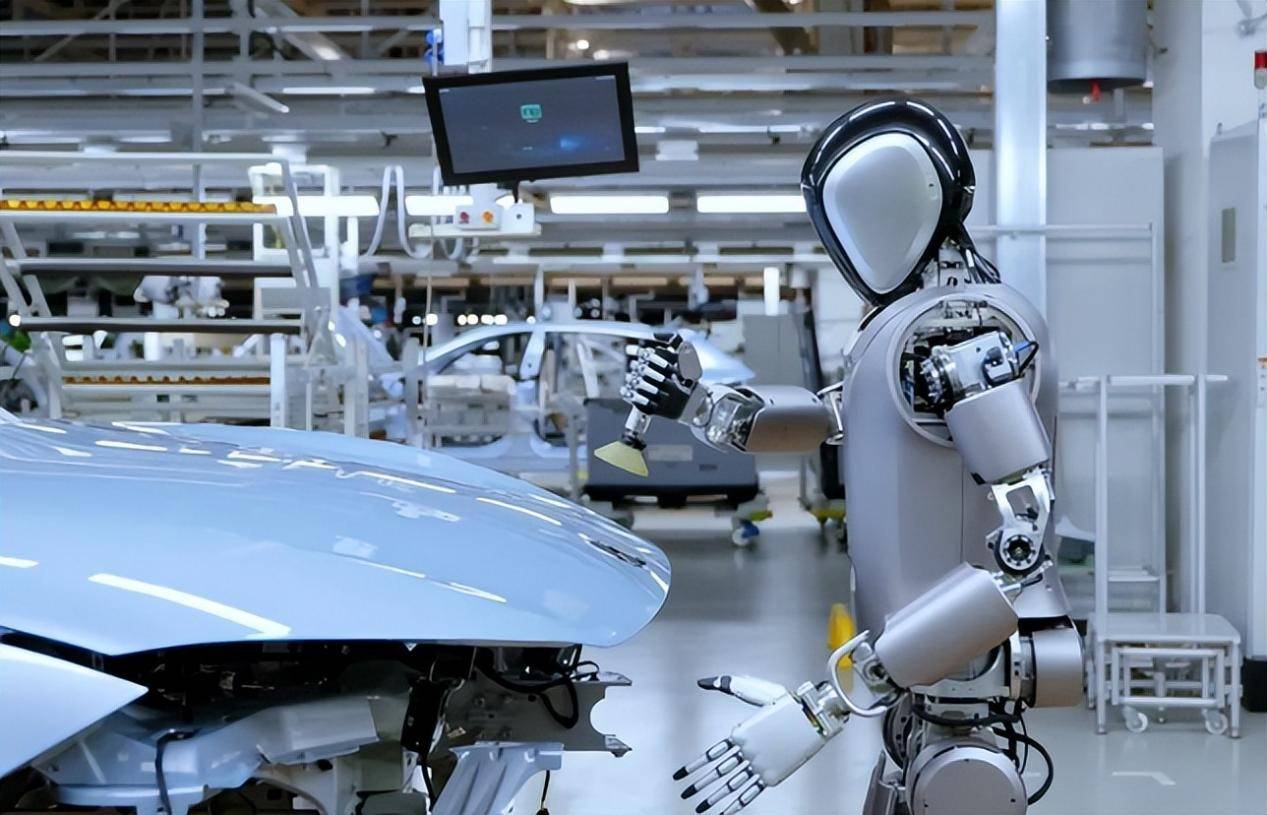
The impressive lineup of domestic humanoid robots has found their 'battlefield' not only on the stage of the Spring Festival Gala but also in the vast overseas markets.
On February 24, Zhiyuan Robotics hosted a launch event in Munich, Germany, officially announcing its foray into the German market. During the event, Zhiyuan not only showcased a comprehensive range of general-purpose embodied robot product matrices and system-level industry solutions tailored for the German market but also inked a strategic cooperation agreement with Minth Group to jointly explore the European market. This move marks Zhiyuan's third major overseas expansion in just over a month. Other robot companies are also actively seeking opportunities in overseas markets.
Germany is no ordinary market for robot companies. It serves as Europe's economic powerhouse and a global hub for intelligent manufacturing and industrial automation, providing a natural 'testing ground' for the application of humanoid robots.
However, can domestic humanoid robots, which dazzle with their agility and talent on stage, truly make a splash in the German market? This question echoes the controversy sparked by the proliferation of humanoid robots at this year's Spring Festival Gala. The rapid advancement of humanoid robots cannot be merely a 'show'.
Germany Doesn't Need Dancing Robots
Last year's Spring Festival Gala catapulted humanoid robots into the limelight with a groundbreaking performance. Subsequently, events such as marathons, boxing matches, and football games continuously generated buzz around humanoid robots, propelling the accelerated development of the humanoid robot industry.
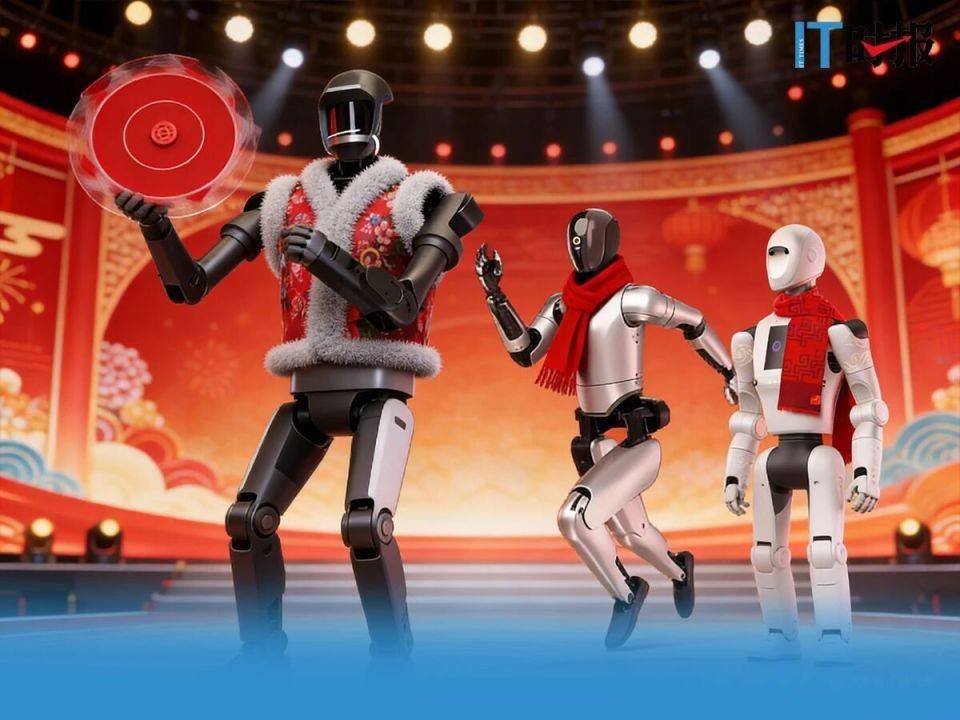
There's no denying that the transition of robots from laboratory demonstrations to the national stage of the Spring Festival Gala, a bold move leveraging marketing to spotlight cutting-edge technology, significantly aided China's humanoid robots in advancing towards commercial deployment. But can such a scenario be replicated in Germany?
Early last year, Neura Robotics, a German humanoid robot company, announced the completion of $120 million in financing, marking a strong start for the humanoid robot industry in Germany. However, netizens on social media humorously remarked that it was the only humanoid robot company in Germany. This bluntly exposes a fact: in this manufacturing powerhouse, there are few humanoid robot startups with genuine capabilities.
Why? Largely because this nation, deeply entrenched in industrial manufacturing, prioritizes practicality in robots. Thus, compared to traditional industrial robots that already deliver tangible value, they generally view humanoid robots with more skepticism than anticipation.
Take Neura Robotics, for example. Even as a newcomer, Neura Robotics did not dive directly into humanoid robots but, like all past German companies, started with collaborative robots.
This 'indifference' towards the booming humanoid robot trend is not unique to Germany but extends across Europe. Morgan Stanley's statistics on humanoid robot products from 2022 to February 4, 2025, reveal that China released 40 humanoid robots over three years, the United States 14, and Europe only 4. Moreover, public optimism about the application prospects of humanoid robots is also low in Europe. A survey report by ABB, a global leader in industrial robots, shows that 27% of Asian respondents believe the number of humanoid robots will significantly increase, compared to only 5% in Europe.
Manufacturing has long been the bedrock of Germany's economy. However, in recent years, the glory of German manufacturing has been waning, especially with the rapid rise of new energy vehicles in the market, which has dealt a severe blow to Germany's traditional automotive manufacturing industry. Mass layoffs at major companies and closures of smaller firms have led to widespread industry gloom, directly impacting the German economy.
According to forecast reports released by multiple economic research institutions, influenced by factors such as a significant decline in exports to the United States, Germany's economy is expected to grow by only 0.1% in 2025, with about a quarter of companies anticipating a deterioration in business in 2026.
Germany's robust manufacturing foundation provides it with competitive conditions to become a leader in robotics. Meanwhile, robot technology and industry may also become the 'new economic pillar' that Germany needs, carrying the hopes for the revival of German manufacturing. It is precisely against this backdrop that humanoid robots, which currently remain stuck in stage performances with technological gimmicks outweighing practical applications, clearly cannot shoulder this heavy responsibility.
A Showdown Between Humanoid and Traditional Robots
The entry of domestic humanoid robots into the German market aims to leverage Germany's developed and mature manufacturing industry to validate applications in real industrial scenarios, thereby thrusting them into a new battleground against the world's top humanoid robot companies.
For instance, Figure, a US star company that partnered with BMW as early as 2024, announced in November last year that its second-generation humanoid robot, Figure 02, had participated in the production of 30,000 cars at BMW's Spartanburg plant over the past six months, loading over 90,000 parts. Another example is Boston Dynamics' electric Atlas, which is transitioning from 'gymnastics performances' to commercialization in 'pallet handling'.
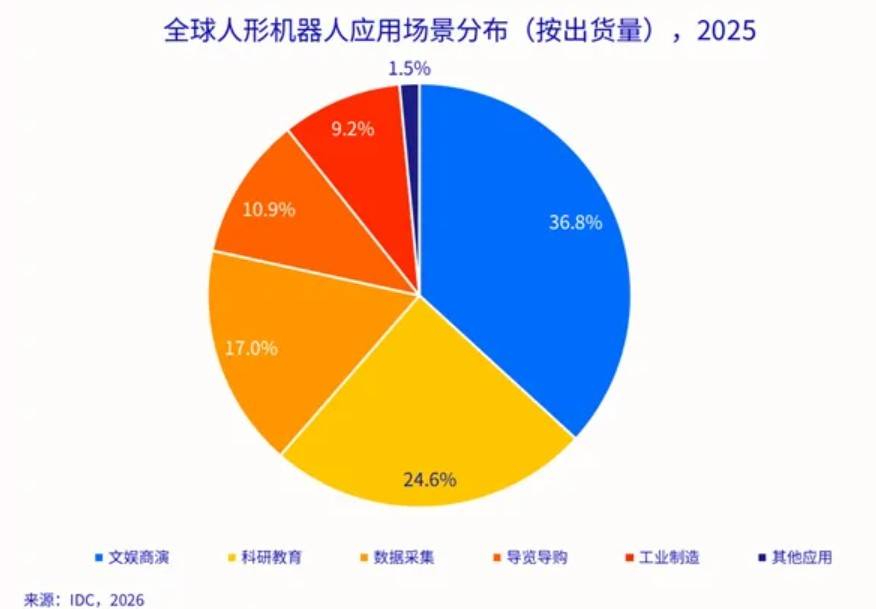
The current focus of domestic humanoid robot applications on commercial performance scenarios has created a certain gap with overseas companies that already have factory experience. However, their market volume, which accounts for over 70% of the global market, and the cost advantages they demonstrate provide them with ample confidence.
Nevertheless, in German factories, they may not be each other's biggest competitors but rather share a common 'enemy': traditional industrial robots, which already play a pivotal role in automated production.
For a long time, the automotive industry has been the core application area for industrial robots, and Germany's strong automotive manufacturing sector has naturally fostered a mature robot industry. According to the 'World Robotics 2025' report released by the International Federation of Robotics (IFR), the total number of operational industrial robots in Germany increased to 278,900 units in 2024, a 4% year-on-year increase. This means that about 40% of factory robots in the 27 EU countries are in Germany.
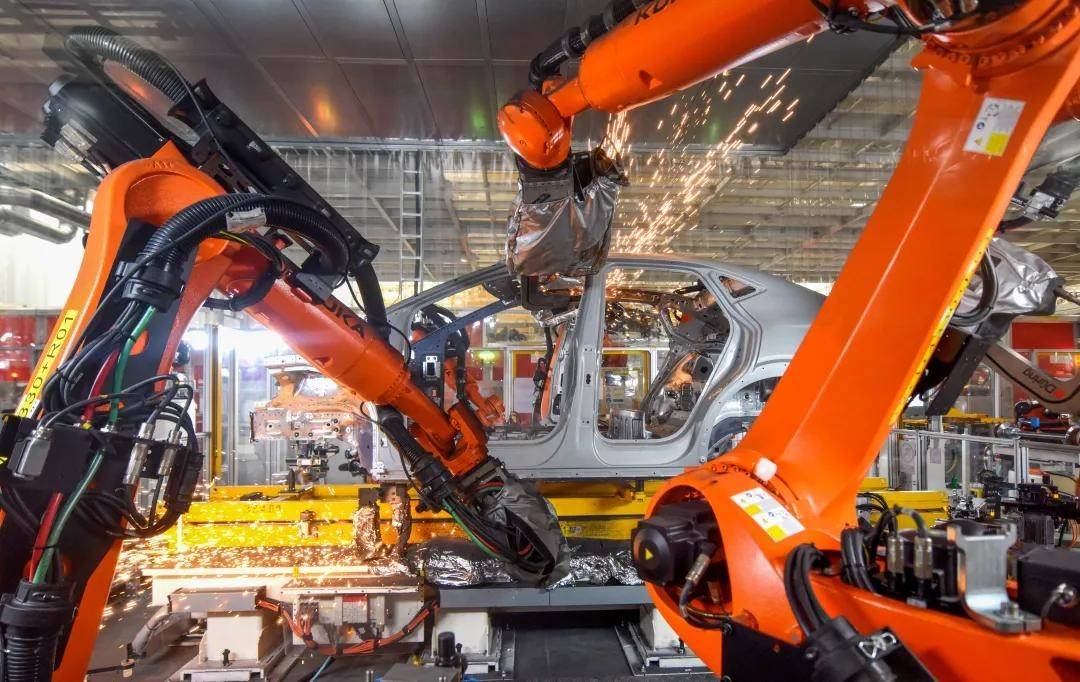
In Volkswagen's production workshops, industrial robots, with their highly precise operations, efficiently complete welding and assembly tasks for automotive parts, significantly enhancing production efficiency and product quality. For example, in the precise assembly of automotive engine components, KUKA robots can accurately install tiny parts into designated positions, ensuring engine performance and reliability.
In factories with highly controlled environments, such as automotive manufacturing, 3C electronics, and warehousing and logistics, humanoid robots are also attempting to transition from 'visitor attractions' to 'production labor,' but progress has been slow. Just recently, during Tesla's Q4 2025 earnings call, Elon Musk admitted that no Optimus humanoid robot currently performs 'useful work' in Tesla's factories.
This came as a surprise to many. With Musk's endorsement and hype, many believed Optimus was ready to 'start working in factories tomorrow,' but reality proved otherwise.
Similarly, at CES 2026, during a practical demonstration of moving items in a simulated factory, Boston Dynamics' Atlas initially handled the task methodically but then suddenly folded itself up and eventually 'laid flat' on the exhibition stand. This mishap exposed the true 'state' of humanoid robots working in factories.
In factories, the core indicators for measuring productivity value are efficiency, reliability, and cost. Currently, humanoid robots face significant obstacles in improving these aspects. Especially in terms of reliability, the more flexible humanoid robots aim to be, the more they lead to 'over-design.' Each additional rotating joint means more sensors, more complex control algorithms, and an exponentially increasing probability of failure, which contradicts the industrial scenario's demand for 'zero tolerance for errors.'
In contrast, the development path of industrial robots is entirely designed around single tasks. Through continuous repetition, streamlining, and error correction in fixed scenarios, they have become stable, predictable, and highly efficient execution tools.
Ultimately, factories only care about whether a tool can complete tasks faster, more stably, and more cheaply. Whether it 'resembles a human' is irrelevant.
Is the Factory Entry of Humanoid Robots a False Proposition?
The 'acclimatization' issues of humanoid robots in real industrial scenarios trace back to their pursuit of versatility.
From once-celebrated companies like Boston Dynamics to today's rising stars like Unitree and Zhiyuan, the industry's development philosophy for humanoid robots has been relatively consistent: first, make the robot resemble a human, and then attempt to have it enter different scenarios to perform various tasks. In future optimistic visions, the closer a robot resembles a human, the more scenarios it can adapt to.
However, from the current attempts of humanoid robots to work in factories, it is almost impossible to simultaneously achieve the pursuit of versatility and the factory's need for high efficiency, low cost, and faultlessness.
To pursue 'versatility,' humanoid robots need to possess various capabilities, including motion control, perception, hand dexterity, and fine manipulation, making their structure and control highly complex. Regardless of the maturity of these capabilities, the more complex the control, coordination, and perception, the greater the uncertainty humanoid robots face in real production environments, which cannot be resolved solely through data accumulation and repeated training.
Simply put, when a robot simultaneously handles multiple tasks such as material grasping, path planning, and environmental perception, any minor error can trigger a chain reaction, leading to failures.
Industry data shows that the average mean time between failures for global humanoid robot laboratory prototypes is only 120 minutes, while automotive production lines require equipment to operate continuously for 100,000 hours without failure.
Another key point is cost. While humanoid robots may become increasingly intelligent in the future, enhancing their environmental perception and adaptability in complex scenarios, cost issues still make them a less likely choice for factories.
General-purpose robots must retain a large amount of redundant degrees of freedom, sensors, and computing resources to adapt to multiple tasks, leading to cost waste in industrial settings. Moreover, for humanoid robots, the use of 'bipedal' locomotion to 'resemble humans' significantly increases the risk of falls, energy consumption, and the cost of complex balance control, without substantially improving efficiency—a form of cost waste in industrial scenarios.
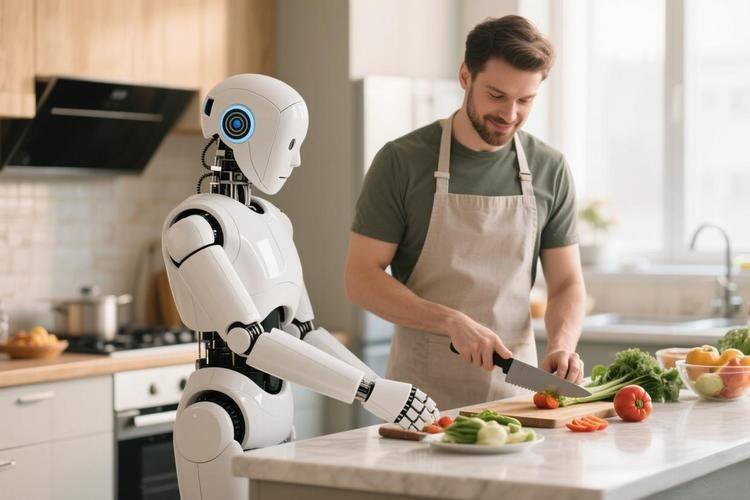
Why do humanoid robots need to 'resemble humans'? Besides complying with versatility, 'humanoid' forms can break through the 'cold' perception of robots, offering emotional value that traditional robots lack. This suggests that the application and adoption of humanoid robots may lean more towards scenarios requiring emotional value output rather than automated factories.
Recently, The Robot Report released the '2026 Robot Industry Outlook,' with its core judgment summed up in one sentence: 'In 2026, we don't want to see robots dancing or performing martial arts anymore. Show us them doing truly useful things.'
Entering factories is the most convincing way to prove the usefulness of humanoid robots, but this path is destined to be arduous.
Dao Zong You Li, formerly known as Wai Dao Dao, is a new media outlet covering the internet and tech circles. This is an original article, and any form of reprinting without retaining the author's relevant information is prohibited.
-
![]()
Doubao Work Unveiled! Domestic AI Leaders Fully Commit to the 'Work' Sector
-
![]()
Who’s Sounding the Alarm on ‘Rushed Vehicles’?
-
![]()
Over 5.3 Billion Yuan in Losses Over Three and a Half Years! Can Yonyou Reverse Its Fortunes Through Streamlining and AI Transformation?
-
![]()
Baidu AI Adopts Free Model: A Strategic Maneuver in Traffic and Monetization
-
![]()
Silicon-Based OLED Pioneer Unveils Financial Results: H1 Shipments Outpace Entire 2025 Volume
-
![]()
AI's First "Lost Summer"
-
![]()
Zeiss Makes Another €2.2 Million Bet: Will Eye Tracking Be the Next Big Thing in the Smart Glasses Industry?
-
![]()
RUNTO Ranking | Global Top TV ODM Factories' Shipment Figures for July 2026