Thousand AI Comic Dramas Produced Daily Are 'Infiltrating' Zhihu
 03/06 2026
 533
533
Content Plagiarism in 1 Minute, Rights Protection Takes 1.5 Years: How to Fight This Battle?
The AI storm is quietly reshaping the boundaries of the short drama industry.
Recently, in an interview with Huaxia Times, Zhou Yuan, founder and CEO of Zhihu, directly criticized the booming AI comic drama industry.
He stated that some platforms concentrate on acquiring IPs at low prices through self-built 'copyright centers' and form strong binding relationships through traffic distribution and monetization permissions. Non-signatories face restricted exposure or monetization, creating de facto platform dependency.
'The industry risks evolving toward 'monopolization' and 'excessive exploitation of original content,' which is detrimental to fair competition and the survival of small and medium-sized creators,' Zhou said.
To address this, he suggested that copyright authorities lead the establishment of a rapid infringement disposal mechanism and impose heavy penalties linked to revenues. Zhou also criticized leading platforms for forming de facto monopolies through low-cost IP acquisitions, traffic binding, and throttling non-signatories, calling for special reviews.
So, why do traditional rights protection mechanisms always fall behind technological advancements amid the chaos of thousand AI comic dramas produced daily? And what unavoidable business considerations lie behind Zhihu's stern call?
01
Plagiarism in Seconds, Rights Protection in Years
Technological empowerment is inevitably turning into one-sided exploitation.
Not long ago, Seedance 2.0 was officially released, slashing the threshold for video generation.
For those steeped in traditional film and television systems, this is visually shocking. With just a few simple prompts, large models can generate videos in minutes with strong physical consistency, cinematic camera work, and even highly realistic facial expressions.
These are no longer early half-baked, frame-skipping distortions but commercially viable content ready for C-end audiences.
Even more staggering is the cost: generating such blockbuster-quality videos can be compressed to an astonishing 'one yuan per second.'
However, when this miraculous productivity tool enters the red ocean of traffic chasing, things spiral out of control, with short dramas becoming the first industry hit by AI videos.
As visual production and post-editing costs plummet to a fraction through AI, the cost structure of the entire comic drama and micro-short drama industry has inverted. When production, artists, and dubbing no longer require significant investment, script and IP procurement naturally become the heaviest and most dominant costs in the chain.
For gray-area teams flooding major platforms with mass-produced content to earn traffic shares, spending hundreds of thousands on legitimate novel authorizations becomes the 'least cost-effective' deal.
If AI can do everything, why not let it 'steal' directly? Thus, a covert yet massive 'plagiarism' supply chain emerged.
Zhihu author Cao Linxiang (pseudonym) stated on social media that his written work was pirated into a short drama. To save on subscription fees, the pirates refused to pay even a few yuan to unlock subsequent chapters. They directly copied the free public chapters before the paywall, while the plot after the paywall was entirely low-cost AI-generated.
This 'hybrid' model of partial copying and AI generation not only brutally tramples on original creators' efforts but also creates significant ambiguity in 'plagiarism identification' during rights protection. 'Watching my painstakingly crafted opening being used to generate revenue while the subsequent story is distorted beyond recognition by large models is infuriating. Besides public appeals, I have little recourse,' he said.
What angers him more is that many AI comic drama companies 'board first and pay later.' They flood platforms with content, seeking authorizations only after hitting a hit. If traffic falters, they promptly remove it, making rights protection (rights protection) difficult.

Another author, Xiao Zhu, told Super Focus that an old work completed years ago was recently 'repurposed' by a black-market team using AI crawlers. Due to the highly decentralized and sink (low-tier) distribution channels of AI comic dramas, she remained unaware initially.
Not until loyal fans stumbled upon highly similar content in an obscure mini-program and messaged her did she realize her 'rejected draft' had been turned into dozens of episodes generating significant revenue.
Although Xiao Zhu eventually pursued accountability and forced a takedown after multiple appeals, she admitted that without proactive whistleblowing by enthusiastic readers, independent creators have no capacity to monitor and protect rights in an ecosystem producing thousand daily short dramas with extremely hidden entry points.
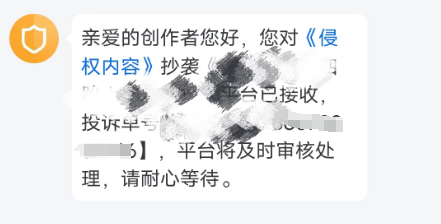
Scalable theft targeting platform-level content libraries has also surfaced. In early 2025, prosecutors in Taicang, Jiangsu, announced a landmark criminal case involving crawler-based theft.
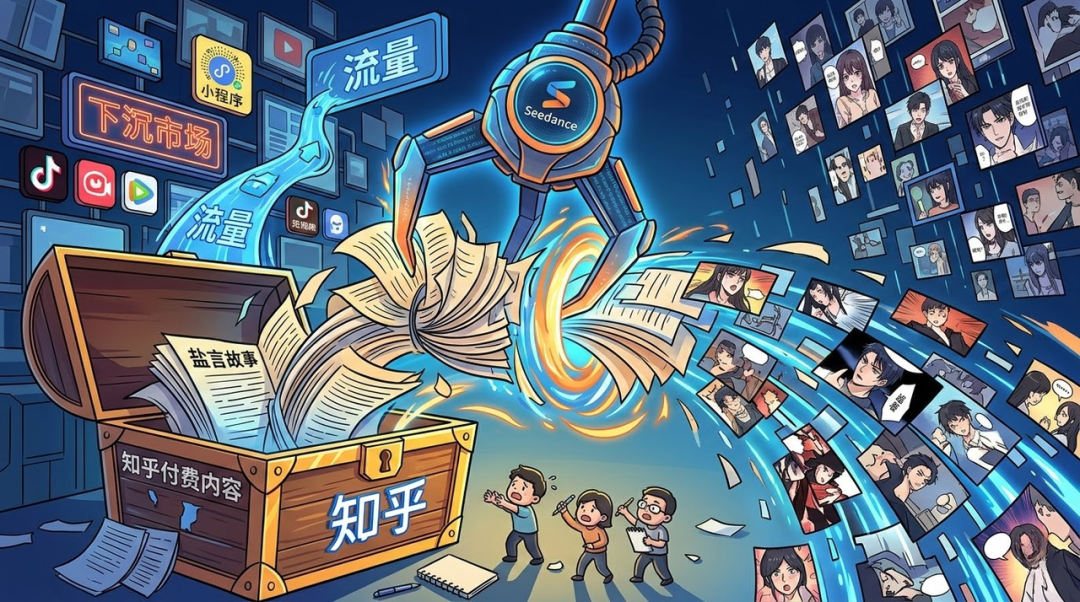
Two programmers used scripts to scrape over 32,000 paid articles from platforms like Zhihu's 'Yan Stories' in a month. These texts, infused with creators' efforts, were fed into large models for 'deduplication and rewriting' to evade detection. AI tools like Seedance then mass-produced comic dramas, rapidly flooding mini-programs and short video platforms across lower-tier markets.
Traditional legal rights protection mechanisms appear as futile as spears against machine guns in the face of AI-era infringement.
Take Zhihu's exclusive hit novel *Ruan Ruan* infringement case: after being targeted by black-market operators, the 15,000-word work was 'melded' and plagiarized by large models, quickly adapted into a short drama generating revenue across platforms.
Original creators face an arduous marathon to fight back. The judicial process—cross-platform evidence collection, electronic notarization, filing lawsuits, awaiting scheduling, and multiple hearings—took a year and a half.
Although the court ultimately ordered the infringer to pay 300,000 yuan, setting a record for short-form rights protection compensation, this sum pales compared to the massive traffic-sharing profits siphoned by black-market teams across networks.
More cruelly, during this 'rights protection vacuum' of 1.5 years, the infringing short drama had already exhausted its traffic dividends. Many hidden operators even dissolved shell companies and exited with profits.
This exemplifies the crux of Zhou Yuan's repeated criticism of 'lagging' rights protection. AI plagiarism and short drama generation operate in minutes, while traditional judicial rights protection takes years.
Without a 'verification-and-takedown' rapid response mechanism to cut off traffic at the point of black-market monetization, original creators receive only a meaningless IOU by the time judgments arrive.
02
Striking the Most Profitable 'Cash Cow'
No Wonder Zhihu Is Furious
When a company's CEO speaks out publicly, protecting core business interests has become urgent.
Zhihu's financial reports over the past two years reveal a decisive shift in its business model.
As Zhihu achieved quarterly profitability, its paid reading business centered on 'Yan Stories' became the lifeblood of operations. Since Q4 2024, when Zhihu achieved its first quarterly overall profit (86.4 million yuan net profit), this segment has been instrumental.
In 2025, paid reading fully shouldered the load: Q1 revenue reached 417.9 million yuan (57.3% of total revenue); Q2 contributed 402 million yuan (56.1%); by Q3, it hit 386 million yuan, accounting for 58.5% and nearing 60%.
Multiple quarters of over 50% revenue share prove paid reading is no longer a marginal offering but Zhihu's true 'cash cow.'
Vast reserves of high-quality short stories and millions of paying subscribers form Zhihu's strongest moat.
Allowing external black-market operators and downstream short video platforms to use large models and zero-cost 'wash' these paid stories into free AI comic dramas for widespread distribution would directly undermine Zhihu's membership foundation.
Thus, defending copyright is not a Face saving project (facade project) for Zhihu but a matter of survival.
Beyond cash flow anxieties on the defensive end, Zhihu faces immense ecological pressure offensively. In this AI-accelerated content revolution, a fierce battle for pricing power has erupted between 'community platforms' holding premium IP corpora and 'short video giants' controlling public traffic distribution.
Zhihu's strategic ambition extends beyond membership fees. It aims to become a core upstream IP incubator, earning higher premiums through formal copyright licensing and joint development with film, gaming, and short drama industries. Currently, Film and television licensing fee (film adaptation licensing fees) and revenue sharing from hit 'Yan Stories' represent Zhihu's most promising growth avenue.
However, short video giants controlling vast user attention spans refuse to remain passive distribution channels. This is the true target of Zhou Yuan's criticism of 'de facto copyright monopolies' and 'discriminatory distribution.'
To maximize profits and control the entire chain, traffic-dominant platforms attempt to build copyright centers and acquire IPs from small and medium-sized creators at rock-bottom prices, even through 'coercive' bulk purchases.
For creators and content institutions refusing to sell cheaply, retain derivative rights, or sign exclusive agreements, distribution platforms wield the ultimate weapon: algorithmic throttling.
In today's 'no traffic, no short drama' landscape, if a platform limits your content's reach in its algorithm pool, your dramas will never appear in users' recommendation feeds. This traffic hegemony, which slowly strangles non-compliant players, creates de facto industrial dependency.
This 'referee-and-player' monopoly deeply alarms Zhihu, the upstream copyright holder.
This is no negotiable commercial friction but an irreconcilable structural conflict.
Short drama distributors and short video giants operate on 'traffic dominance' logic. Whether officially sanctioned or not, they aim to use infinitely cheap AI computing power to plunder global premium content, crushing upstream IP procurement costs to zero and maximizing their ad and traffic revenues.
But for Zhihu, original IPs are the platform's lifeblood. If downstream giants use large models to drain its content or 'copyright centers' to force low-price buyouts, Zhihu's business ecosystem will collapse.
This is the AI war Zhihu must fight in 2026—yet remains uncertain how to win.
- END -
-
![]()
Doubao Work Unveiled! Domestic AI Leaders Fully Commit to the 'Work' Sector
-
![]()
Who’s Sounding the Alarm on ‘Rushed Vehicles’?
-
![]()
Over 5.3 Billion Yuan in Losses Over Three and a Half Years! Can Yonyou Reverse Its Fortunes Through Streamlining and AI Transformation?
-
![]()
Baidu AI Adopts Free Model: A Strategic Maneuver in Traffic and Monetization
-
![]()
Silicon-Based OLED Pioneer Unveils Financial Results: H1 Shipments Outpace Entire 2025 Volume
-
![]()
AI's First "Lost Summer"
-
![]()
Zeiss Makes Another €2.2 Million Bet: Will Eye Tracking Be the Next Big Thing in the Smart Glasses Industry?
-
![]()
RUNTO Ranking | Global Top TV ODM Factories' Shipment Figures for July 2026