Apple Unveils AI Glasses Design, Taking Aim at Meta, Google, and Huawei
 04/13 2026
 648
648
A pair of glasses is emerging as the fiercest battleground among global tech giants.
This isn't the first time someone has claimed, "AI glasses are the next computing interface." However, 2026 marks the inaugural year where this statement is backed by real firepower. Meta has been on this journey for two years, Google and Samsung are joining forces to fight back, Huawei is poised to launch its product this month, and Apple—the player everyone has been waiting for—has finally stepped out from behind the scenes to reveal its trump card.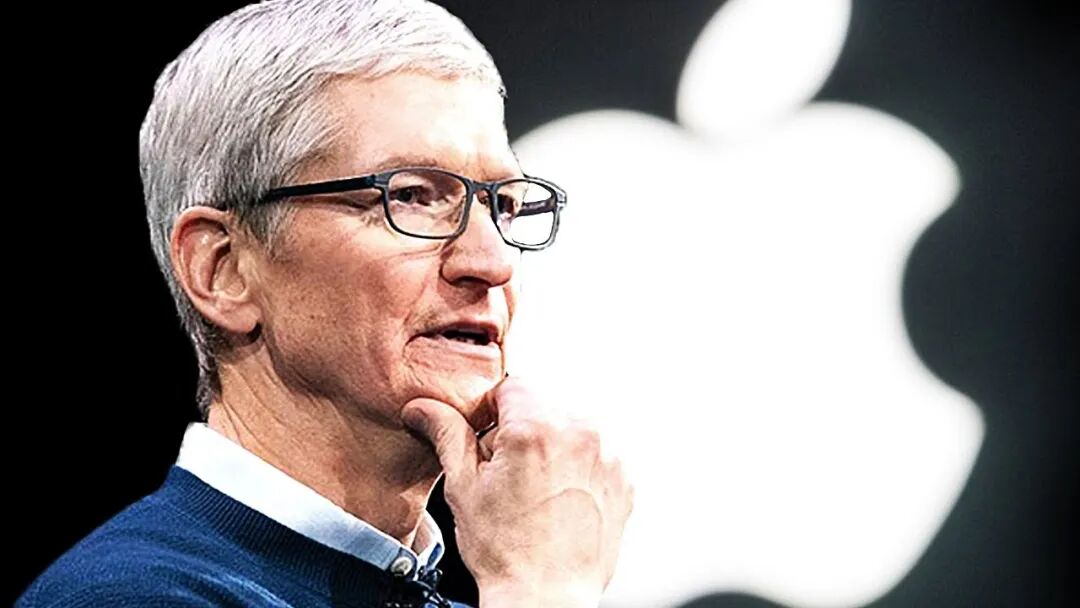
Cook, Photo Source: Asia Television News
01
Apple's Calculated Move: A Decade of Preparation for a Single Pair of Glasses
Apple never rushes, but it never misses an opportunity either.
A decade ago, Apple quietly established an internal team known as the "Vision Product Group," with plans for three distinct hardware paths: an AR headset requiring connection to an iPhone, a mixed-reality headset, and a lightweight pair of AR glasses. According to the ambitious timeline set back then, these three products should have hit the market between 2020 and 2022.
In the end, only one materialized—the Vision Pro, which made a stunning debut in 2024 at a price tag of $3,499, only to be followed by lackluster sales.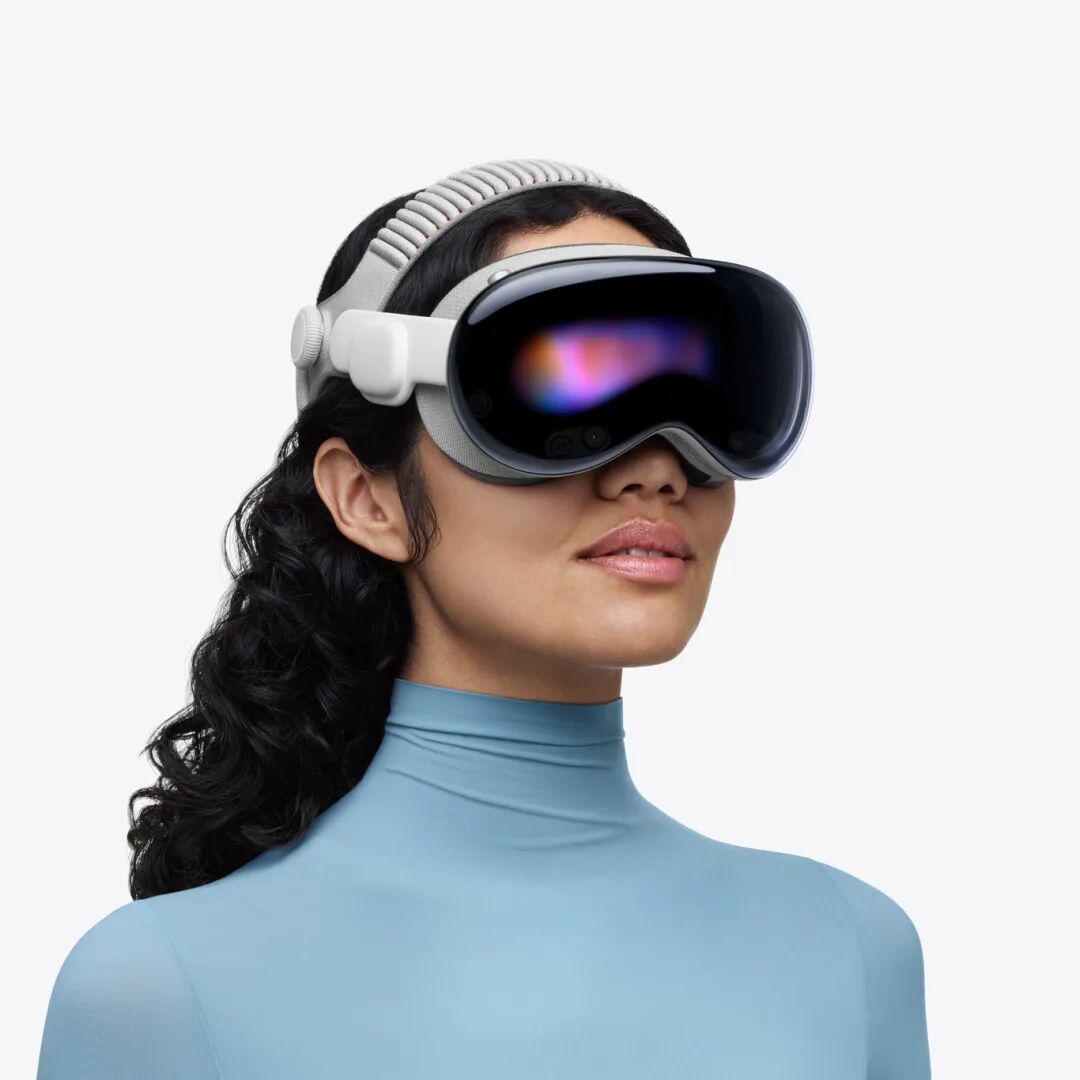
Apple Vision Pro, Photo Source: Apple
This isn't the first time Apple has missed its own timeline, but the stakes are higher this time around.
More intriguingly, it wasn't until around 2022 that an option previously absent from Apple's product lineup emerged: screenless AI smart glasses. The inspiration came from the market demand validated by Meta's Ray-Ban series.
According to internal information obtained by Bloomberg, the product codenamed N50 is currently slated to begin mass production by the end of 2026, with an official launch scheduled for late 2026 or 2027.
02
Oval Camera and Four Frame Styles: Apple's Design Philosophy
Apple's ambition isn't merely to "create another Ray-Ban."
Employees involved in the project revealed that Apple's strategy is to outshine competitors with two key elements: deep integration with the iPhone and impeccable craftsmanship.
In terms of design, Apple, as always, opts to go its own way, avoiding Meta's reliance on EssilorLuxottica for co-branded models and differing from Google's open collaboration model with Samsung and Warby Parker. Apple's design team has prototyped at least four distinct frame styles and plans to launch some or all of them, complemented by multiple color options:
Large rectangular wide frame—a nod to the classic Ray-Ban Wayfarer;
Sleek rectangular frame—reportedly similar to the style Tim Cook himself wears daily;
Large oval/round frame—bold proportions, making a statement;
Small oval/round frame—refined and understated, lightweight for all-day wear.
Color options include black, ocean blue, and light brown. In terms of materials, the latest test prototypes have adopted acetate, a high-end material that is more durable and has a heavier feel than the standard plastics commonly used in the industry.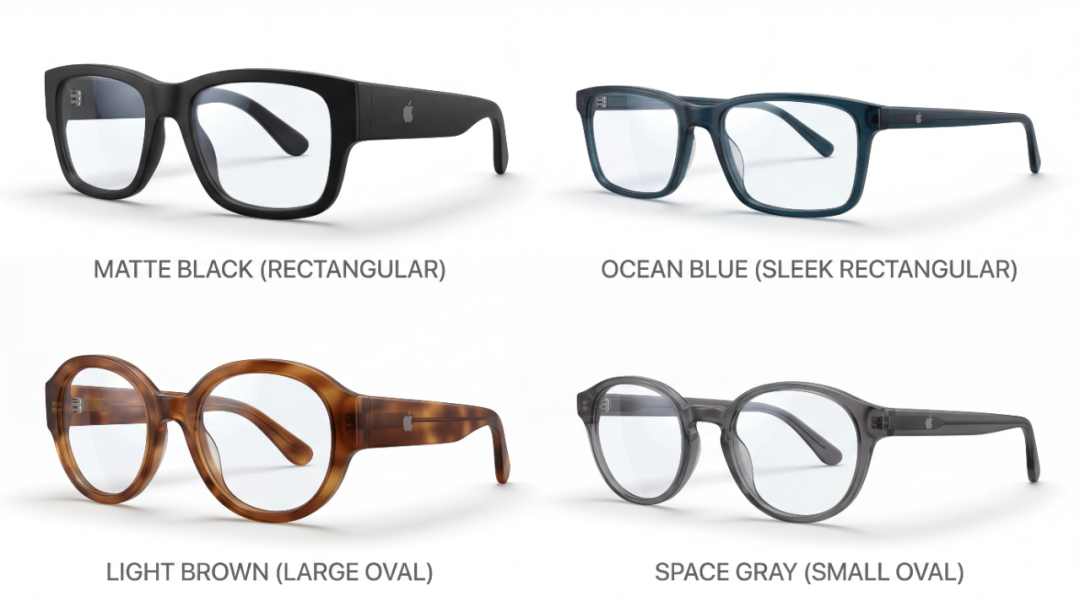
Apple's four frame designs, Photo Source: AR Circle
Internally, Apple refers to the design goal of these glasses as "iconic"—to be instantly recognizable as an Apple product. The most memorable detail is the camera's form: it will feature a vertically oval lens surrounded by a ring of light, deviating from Meta's circular camera convention. This design language may become a generational memory symbol, much like the iPhone's Home button or the MacBook's Apple logo.
In fact, Cook once said about Apple's wearable strategy, "We don't aim to be first; we aim to be the best." This statement remains true for AI glasses.
03
Beyond Glasses: Apple's "Trident AI Wearable Strategy"
These glasses aren't Apple's sole focus but a key piece in a larger puzzle.
Apple is constructing a comprehensive layout internally referred to as the "Trident AI Wearable Strategy": AI smart glasses, upgraded AirPods, and a pendant-style wearable device equipped with a camera. All three share the same underlying logic—continuously analyzing the user's surroundings through computer vision and injecting perceptual data in real-time into Siri and Apple Intelligence, enabling more precise turn-by-turn navigation, visual reminders, and even contextual awareness.
And all of this AI infrastructure will arrive alongside a significantly upgraded Siri with iOS 27. In other words, the soul of these glasses hasn't been born yet.
04
Huawei: Launching This Month, Powered by HarmonyOS, Xiao Yi Comes to Life
While Apple is still meticulously refining its product, Huawei has already fired the first shot.
On April 8, He Gang, CEO of Huawei's Consumer Business Group, shared a photo on social media with a watermark clearly indicating it was taken with the "HUAWEI AI Glasses," officially announcing the imminent arrival of Huawei's new AI glasses. The photo, with a resolution of 4096×3072, shows the photographer's hands in the frame without holding any device—a detail that serves as the best product advertisement: hands-free, with the glasses acting as the camera.
He Gang's caption read only eight words: "Find the highlights yourself. Stay tuned." Few words, but impactful. This restrained teaser is more tantalizing than any keynote at a launch event. Huawei's He Gang "teases," Photo Source: He Gang's Weibo
According to sources, Huawei's AI glasses are expected to be released alongside the Pura 90 series and the second-generation foldable phone in April, supporting features such as photography, video recording, audio playback, and simultaneous translation. The product will be available in three colors: flowing silver, titanium gray, and modern black, running on HarmonyOS with seamless cross-device collaboration and deep integration with the Xiao Yi AI assistant. The glasses will house three lithium batteries and are designed for lightweight all-day wear.
 Huawei AI Glasses design, Photo Source: AR Circle
This marks Huawei's first AI glasses to support photography, representing a significant leap in capability—from "ears" to "eyes," Huawei has finally opened its eyes in this category. Additionally, the product may be powered by HiSilicon's self-developed chip, further expanding its differentiation potential once this trump card is played.
Huawei's advantage is clear: the cross-device synergy of the HarmonyOS ecosystem, its unshakable brand appeal in the domestic market, and a complete collaborative network extending from phones, tablets, and PCs to automotive systems. Xiao Yi can do far more than just "take a photo for me"—when the camera becomes the perceptual entry point for AI, it begins to see everything you see and understand the context you're in.
One detail is particularly intriguing: according to supply chain sources, both Huawei and Meta have, as if by prior agreement, chosen the same supplier for both complete device manufacturing and hinge structural components. Two major players from East and West, taking divergent paths in product philosophy yet converging at the manufacturing end—this may be the most authentic footnote to China's smart manufacturing in this race: even opponents cannot bypass this network.
05
Google + Samsung: Ecosystem Alliance, Three-Step Strategy
Google's return is more systematic than anyone imagined.
Google has announced it is collaborating with partners such as Samsung, Gentle Monster, and Warby Parker to advance the development of two new types of AI smart glasses, planned for official market release in 2026. The new devices will deeply integrate the Gemini large model, allowing users to complete tasks such as photography, real-time navigation, call answering, and object recognition without manual operation.
The AR glasses prototype demonstrated by Google was actually jointly developed with Samsung, with Samsung handling hardware production and sales while Google oversees the software platform—a collaboration model mirroring their successful experience with Wear OS.
Google has planned a three-tier product lineup: audio-only AI glasses without a display, featuring built-in cameras and microphones and focusing on Gemini voice interaction; AI glasses with a monocular display capable of overlaying information such as navigation and translations; and Project Aura, an independent XR glasses collaboration with XREAL, adopting an optical prism solution with a 70-degree field of view, expected to launch in 2026.
Google CEO Sundar Pichai once said in an interview, "Search is not a product; search is a capability. When Gemini can see what you see, search happens in your field of view." AI glasses are the hardware carrier for this statement.
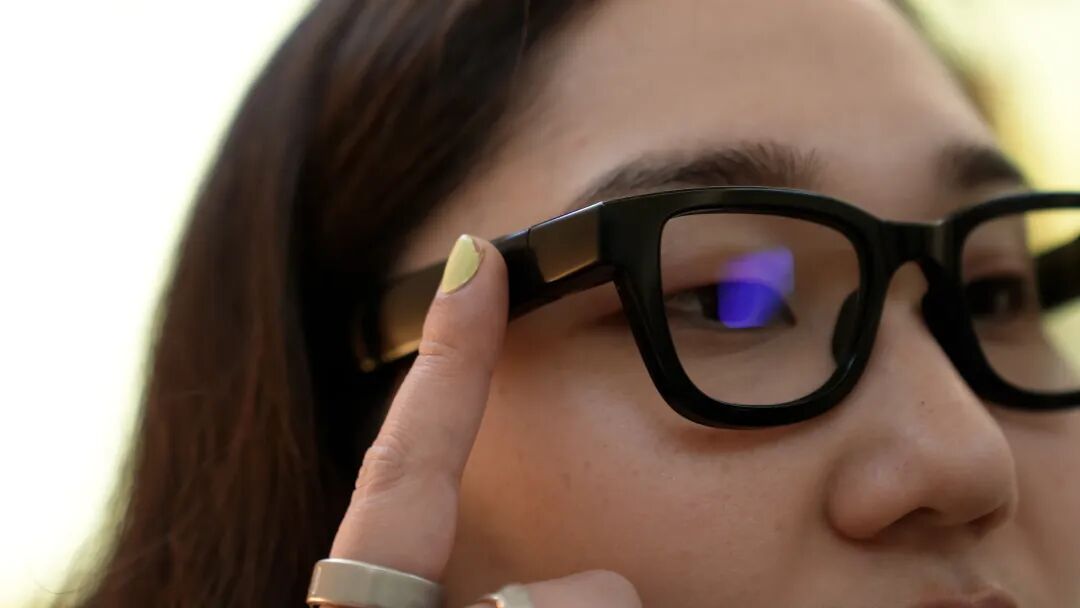 Google glasses prototype, Photo Source: The Verge
Google's approach differs fundamentally from Meta's—it eschews vertical integration and instead empowers the entire supply chain through the Android XR platform, partnering with hardware manufacturers such as Samsung, Qualcomm, and XREAL to replicate its ecosystem success in the smartphone realm. Android conquered phones; Android XR aims to conquer glasses.
06
The True Nature of the Battlefield
This four-way melee may seem like a race of product launches, but at its core, it is a battle for the next generation of human-computer interaction interfaces.
Meta's global shipments reached 7 million units in 2025, with ambitions far exceeding that—its internal goal is to double that figure to 15 million units in 2026. The Ray-Ban series has spoken with sales, validating the commercial viability of "wearables + AI" and erecting a cognitive barrier in consumer minds. The dividends of being first are always real.
But being first doesn't guarantee victory.
Zhu Dianrong, founder of XR Research Institute, said in an interview with AR Circle a statement that sounds like a truism yet strikes right at the heart of the matter: "The success of the AI glasses category ultimately depends not on who launches first but on who can get users to wear them every day. This sounds like a truism, but it is precisely the hardest problem for the entire industry to solve."
Apple may know the answer to this question better than anyone.
Its trajectory with the Apple Watch is strikingly similar—it was never the first to enter the market, yet it often ends up being the last one standing. Brand premium, self-developed chips, an ecosystem moat built by 1.6 billion iPhone users, and the irreplaceable immersive experience atmosphere of its offline retail stores—these variables cannot be replicated by Meta or Google with money alone in a short time.
Of course, the true ceiling for this category still hangs far in the distance.
Apple's internal prediction is that lightweight AR display technology will not mature until around 2030—eight years later than initially planned. In other words, all the products we see now are, at best, just the "prologue" to the AR era; the main course is still in the kitchen.
But prologues have their own appeal. 2026 is already exciting enough.
07
Epilogue: The Battle Has Begun, the Outcome Remains Undetermined
The AI glasses race in 2026 has a curious sense of historical déjà vu.
It resembles the eve of smartphones in 2007: Nokia was still selling feature phones, Motorola was still talking about "the flip phone era not ending," and then something called the iPhone appeared. No one knew what that moment signified until five years later, when everyone did.
Today, Meta is the market pioneer, Google is the ecosystem veteran, Huawei is the local powerhouse, and Apple remains the player who strikes latest yet is most adept at ending battles.
The N50, equipped with an oval camera, sets off with an upgraded Siri.
The end of 2026 is still far away. But the battle has already begun.
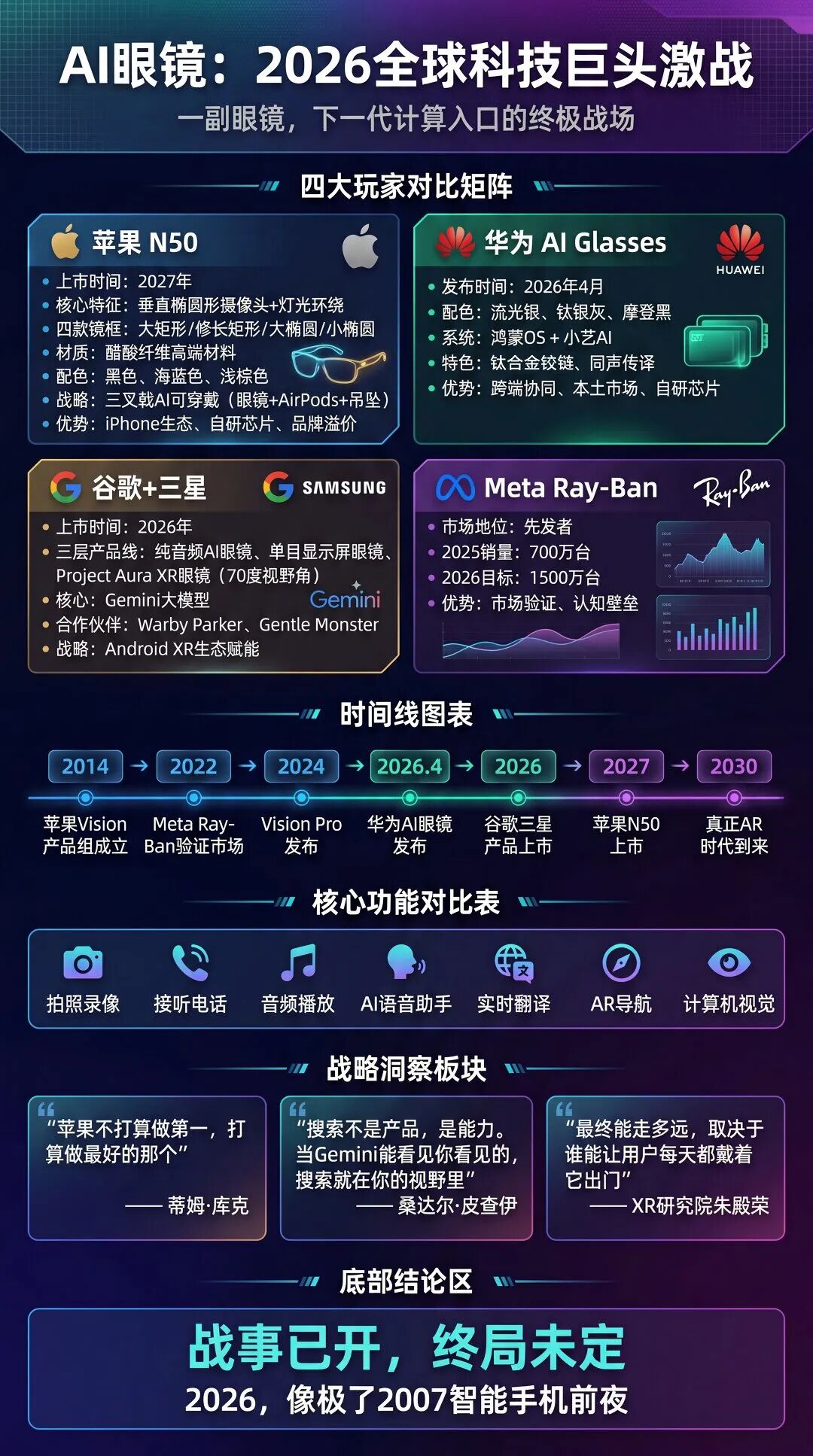
Photo Source: AR Circle
END
-
![]()
Wang Huiwen, Former Meituan Executive, Achieves 20-Fold ROI, Supports 24 AI Startups
-
![]()
Another AI Computing Power Unicorn Launches IPO! Founded by a Changjiang Scholar
-
![]()
OFILM Holdings Secures Zhongke Daojing, Marking a Significant Leap in the Optical Communication Industry!
-
What Will Be the Next Key Battleground for Large Models After AI Coding?
-
![]()
Leapmotor's Sales Soar, Yet Hidden Concerns Loom
-
![]()
China’s Action Camera Market Soars: 3.12 Million Units Sold in Six Months, DJI Secures 74% Dominance
-
![]()
Zhang Yiming: Strategic Retreat as a Path Forward
-
![]()
Exploring Charging for Some Features of QianWen App: Can It Follow the Path of Doubao?