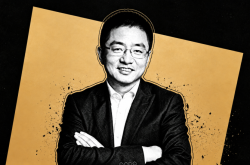
Yin Qi Sees a Reflection of His Past in Yang Zhilin
 04/13 2026
 596
596
PART 01
Spring Prelude
The beginnings of many stories are nestled in the arrival of spring.
Two decades ago, in March, Tsinghua University conducted a unique examination.
This marked the third year since Turing Award laureate Professor Yao Qizhi resigned from Princeton University to return to Tsinghua. His initial vision was to cultivate a group of Ph.D. students at China's premier institution, aiming to establish a research team capable of rivaling the world's best in computer science. However, he quickly realized that the foundational work needed to commence at the undergraduate level.
Thus, the concept for the Software Science Experimental Class (later known as the "Yao Class") was conceived. In the spring of 2006, the Yao Class held its inaugural selection for freshmen and sophomores across various science and engineering majors at the university, encompassing both written and oral examinations. Out of 147 applicants, 59 were ultimately selected, including Yin Qi, a freshman from the Department of Automation.
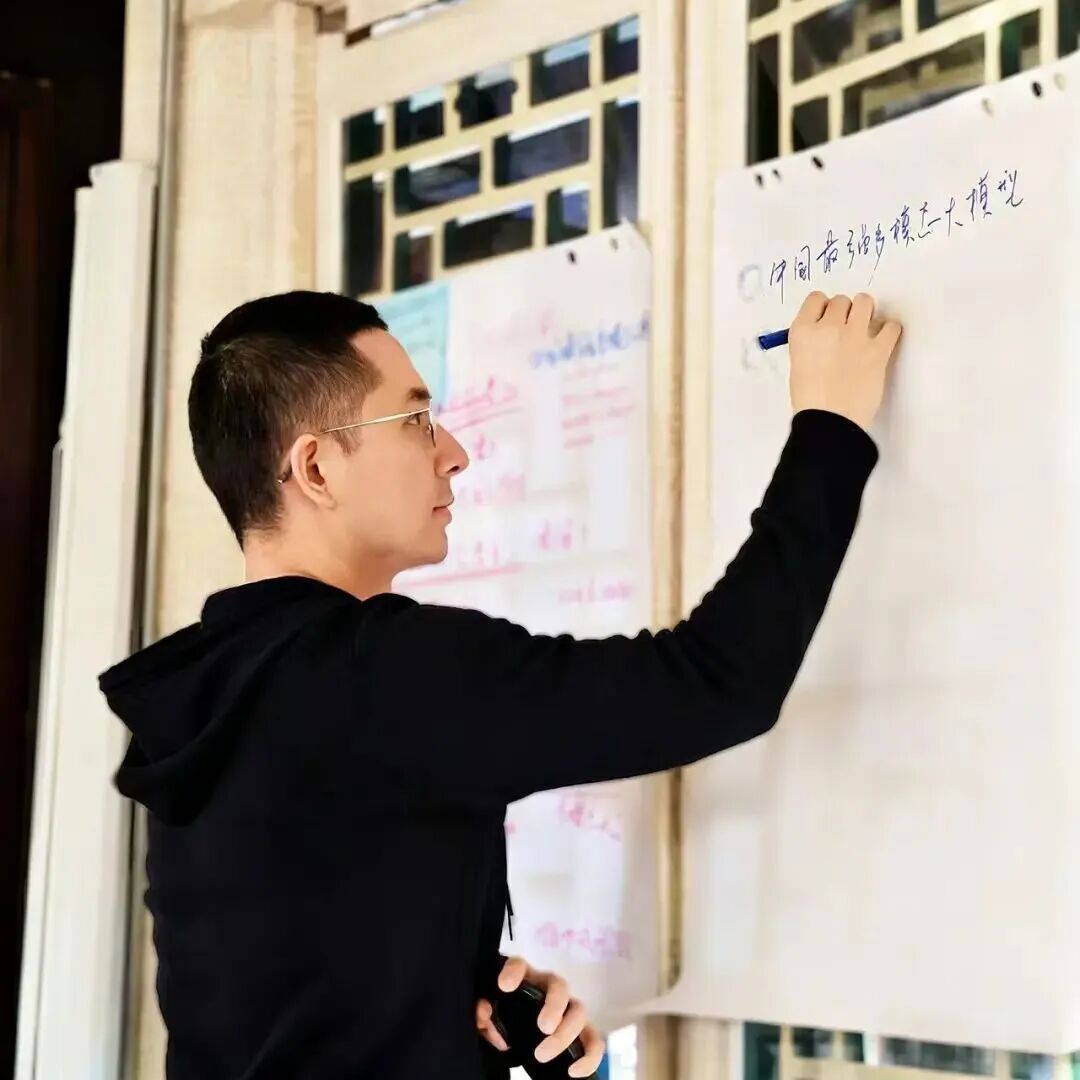
Yin Qi
Within this experimental class, predominantly composed of students from the Department of Computer Science, Mathematical Sciences, and Electronic Engineering, Yin Qi's major stood out as a rarity. It seemed as though fate had corrected its course. Since high school, he had aspired to study robotics and intelligent systems, and a Tsinghua admissions officer had suggested he opt for automation, as it closely aligned with his interests. The advent of the Yao Class turned his dream into reality.
He experienced a significant boost towards achieving his dream.
According to the admissions brochure, students in the Yao Class had the opportunity to intern at Microsoft Research Asia (MSRA) during their senior year. Yin Qi secured this opportunity in his sophomore year. At MSRA, a hub for computer vision (CV) experts, Yin Qi truly entered the field. He worked under the guidance of MSRA Principal Researcher Sun Jian, contributing to the development of Microsoft's core facial recognition system at the time, and even published a paper at CVPR 2009 as an intern—an impressive feat for an undergraduate.
In the spring of 2010, Yin Qi's Yao Class classmate, Tang Wenbin, after completing his internship at Google China, also joined MSRA. Tang, a tech prodigy who had been admitted to Tsinghua through competition awards in his second year of high school and later won the inaugural "Yao Award" gold medal at the Yao Class, became close friends with Yin Qi. They often chatted at a Japanese restaurant near the office, gradually forging a strong bond.
Steve Jobs emerged as a pivotal figure in their destinies.
In June 2010, the iPhone 4 was released. The last iPhone spearheaded by Jobs popularized front-facing cameras, enabling real-time facial tracking on mobile phones—a technical direction Yin Qi had been exploring during his MSRA internship. During the summer of 2011, Yin Qi and Tang Wenbin developed a facial tracking game called The Crows Are Coming for Tsinghua’s "Challenge Cup" competition. Yang Mu, a Yao Class junior, IOI gold medalist, and expert in data mining, later joined the project.

The Crows Are Coming was controlled via camera: users moved their heads left and right in front of the lens to sway a scarecrow and drive away crows.
The three young men swiftly experienced the joy of riding the wave of the times. Without any promotion, the game briefly ranked among the top three free apps on the Apple App Store China chart. Lenovo Capital discovered it and reached out to the trio, offering angel investment to support their entrepreneurship.
In October 2011, Megvii Technology was founded, with Yin Qi, Tang Wenbin, and Yang Mu serving as CEO, CTO, and engineering lead, respectively.
That year, Yin Qi was 23. He possessed the agility and optimism of youth, like-minded genius partners, and the favor of capital—he seemed to have the world at his feet.
Similar narratives have repeated throughout the history of internet and AI entrepreneurship. Zhang Chaoyang, a previous Tsinghua entrepreneurial icon, also caught the internet wave in his youth. Wherever he went, crowds gathered to hear him speak, including a young Pony Ma. From the internet to mobile internet to the AI era, these stories of intelligence and luck endure because they offer hope.
However, nearly all protagonists eventually exit or retreat behind the scenes—whether due to age, business decline, or a desire for simplicity. Like a flowing feast, people know new young faces will always emerge.
For instance, in this AI-restless spring of 2026, the names on everyone’s lips are Kimi, Yang Zhilin, Lin Junyang (who left Alibaba), and Yao Shunyu, Tencent’s chief AI scientist. All are in their late 20s or early 30s. Meanwhile, Yin Qi, the 38-year-old, self-deprecatingly refers to himself as a "has-been" in interviews. Compared to technology, he now talks more about business closed loops—
Which makes him seem less cool.
Yin Qi has left Megvii. His new roles include chairman of Qianli Technology, an AI-powered intelligent driving company, and Stepfun, a large model firm. Both companies have reportedly filed for Hong Kong IPOs. Around the same time, Yang Zhilin’s Moonshot AI was also evaluating the feasibility of a Hong Kong IPO—bringing these two Tsinghua alumni, five years apart in age, to the same entrepreneurial crossroads.

Yin Qi at Stepfun’s Ecosystem Open Day in February 2025
But the AI narratives they represent are starkly different. Essentially, they belong to two distinct AI eras:
The AI 1.0 era was defined by CV, NLP, and speech recognition. Yin Qi experienced its full cycle, tasting both the peak and the trough after the bubble burst. The AI 2.0 era revolves around LLMs, Transformers, and Agents, with young Yang Zhilin now riding the wave.
Of course, no one knows if this is merely a replay of Yin Qi’s story’s first act.
PART 02
The Smart Young Ones
In 2011, the year Yin Qi became an entrepreneur, Yang Zhilin arrived at Tsinghua.
He was "admitted" to Tsinghua three times: through competition qualifications, autonomous enrollment, and finally, by insisting on taking the gaokao (national college entrance exam), where he became the top science student in Shantou City.
In this playground for the brilliant, he freely explored his identity. Switching majors from thermal engineering to computer science in his sophomore year, he consistently ranked first in his class. After winning Tsinghua’s highest undergraduate honor—the Special Scholarship—in 2014, he declared during his defense: "This is the best era for computer science because it’s the age of data. This is the best era of my life because I chase dreams and let data change the world." He also formed a band and played rock music.
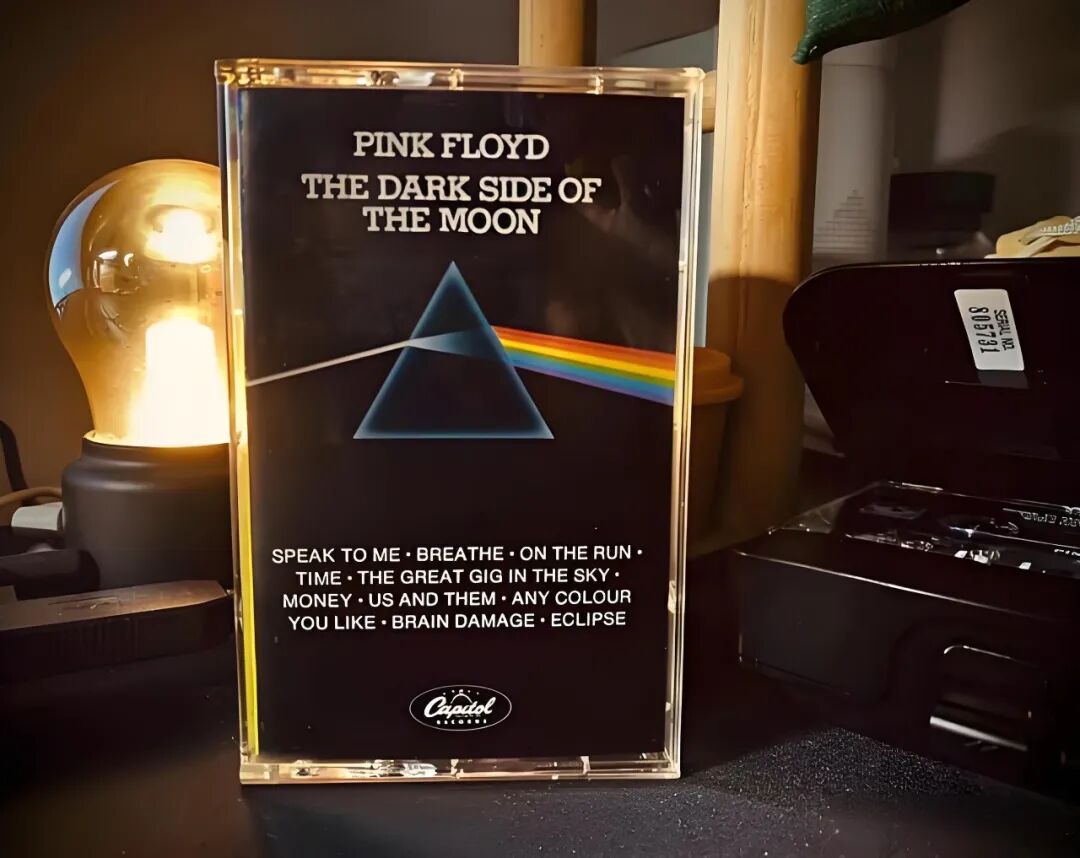
Moonshot AI’s name derives from a legendary rock album
Smart, ambitious, aesthetically driven, and unorthodox—these labels later became part of Yang Zhilin’s entrepreneurial aura, amplifying his charm as a young founder.
Capital always chases the brightest young minds. Thanks to this, both Yin Qi and Yang Zhilin enjoyed dreamlike entrepreneurial starts.
These are two highly similar origin stories.
Ant Group and Alibaba were Megvii’s largest and second-largest shareholders, respectively. Jack Ma’s demonstration of facial recognition payments at Hannover Messe in Germany in March 2015 catapulted Megvii to fame overnight.
The company became a talent magnet. Sun Jian left MSRA to join Megvii as chief scientist and research institute head in 2016. Under his leadership, Megvii Research Institute grew to over 500 members, attracting competition winners and prodigies from Yao Class and Zhejiang University’s Chu Kochen Honors College. From 2017 to 2019, the institute ranked first in China and third globally—behind only Google and Microsoft—in paper counts at the top three CV conferences. Multiple former employees said Megvii’s talent density once rivaled OpenAI’s.
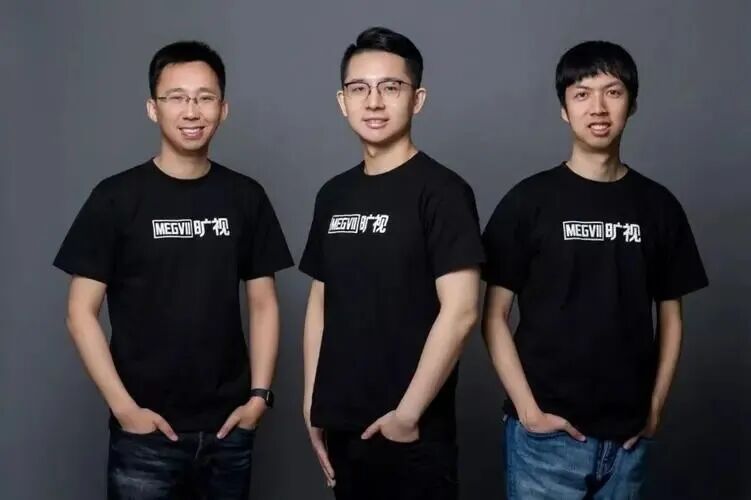
Tang Wenbin, Yin Qi, Yang Mu
That was also the golden age of CV. From 2015 to 2019, the "Four Little Dragons of AI" (including Megvii) raised approximately $4.5–5 billion in total, with Megvii alone securing $1.38 billion. When Megvii filed for a Hong Kong IPO in 2019, it was valued at $4 billion, becoming the world’s highest-valued AI vision company and the anticipated "first AI IPO."
Yang Zhilin’s start was even smoother. Founded in April 2023, Moonshot AI raised nearly ¥2 billion in its angel round two months later. In February 2024, it set a domestic record for large model funding with a $1 billion round. A year after founding, the company was valued at $2.5 billion—a speed few internet firms have matched.
As of March 2026, Moonshot AI was advancing a new funding round at a $18 billion valuation. This surpasses the pre-IPO valuations of Zhipu and MiniMax, likely boosted by the post-IPO surges of those companies.
But this era is a blend of fire and ice, bringing greater uncertainty.
On one hand, FOMO (fear of missing out) grips the investment world, with VCs afraid to skip the next star. On the other, AI’s rapid technical iteration has shifted sentiment toward large model firms—from initial hype to growing rationality. Globally, no large model company has yet turned a profit. Some investors prefer quick returns over distant AGI dreams.
Moonshot AI has also weathered ups and downs. From 2024 to mid-2025, it hit a low point. After DeepSeek R1 launched in January 2025, Kimi’s monthly active users briefly halved, prompting the company to abandon chasing downloads and return to its roots: foundational models. Kimi k2 released in July 2025 and Kimi 2.5 in January 2026. The real turning point came with the viral hit OpenClaw, for which Kimi 2.5 became the official primary model. This drove Moonshot AI’s cumulative revenue over 20 days in late January 2026 to exceed its 2025 total.
These numbers leave a strong impression: they reflect both today’s fervor and last year’s struggles.
Compared to Zhipu (founded 2019) and MiniMax (founded 2021), Moonshot AI, turning three in April 2026, is still young. Its organizational structure differs from most commercial firms: with around 300 employees, it has no departments, titles, or performance reviews. Internally, it’s described as truly AI-native.
Yang Zhilin, whose personal motto is "direct communication," shares similarities with Yin Qi in his early entrepreneurial days. Both prefer hiring genius-level talent and eschew rigid management systems.
The importance of smart young people in AI and tech is a global consensus. In a 1994 Wired interview, Steve Jobs said: "I used to think a great person was worth 10 average ones. Now I know they’re worth 50. Mediocrity just complicates things." DeepMind founder Demis Hassabis echoed: "To do truly revolutionary work, you must hire the world’s top minds. AI is a talent game. A handful of geniuses can outperform masses of ordinary people."
A decade ago, Yin Qi embodied this ethos. He practically wore his "aversion to stupidity" on his sleeve, repeatedly stressing: "An AI company’s ceiling is determined by talent density."
But a decade later, he argues that "smart people aren’t that crucial." In the Silicon-Based Perspectives podcast, he noted that smart people often seek shortcuts and optimal solutions, avoiding tedious, repetitive tasks with long-term payoffs. In his current field, "brilliance alone isn’t enough—it might even hurt you."
PART 03
Over the Hill
When Renwu magazine reporters "infiltrated" Moonshot AI, they noticed many employees kept a pair of slippers under their desks.
This detail, like the piano that symbolizes Moonshot AI’s ethos, reflects the young company’s defiance of traditional management. Yang Zhilin’s confidence stems from technology—a sufficiently powerful large model is the company’s lifeblood.
Yin Qi might see his former self in Yang Zhilin.
Around 2015, media portrayed Yin Qi as an "85-after post-85s geek entrepreneur." He gave smart people freedom, embraced flexible, clock-in-free work, and filled the office with whiteboards for impromptu problem-solving. This genius-driven, CV-boom-era persona fit the public’s image of a tech star.
Today’s Yin Qi has lost that edge. He emphasizes "business closed loops" in various settings and reordered his company’s values, prioritizing "value" over "technological faith."
The answer lies in his journey.
From 2019 to 2024, Yin Qi endured Megvii’s darkest hours: poor commercialization, an IPO blocked by black swan events, and stalled funding. He clung to traditional security business while watching intelligent driving and large model trends pass him by. By mid-2024, he decided to stop struggling, leave, and start anew.
He later described that moment as liberating rather than bitter. All the hardships had already been faced.
Globally, tech founders exiting is common. Jobs’ return to save Apple is Silicon Valley’s favorite narrative—a triumphant redemption. Anthropic’s founders leaving OpenAI also fits: a satisfying revenge.
In contrast, people seem to find it difficult to offer more than pragmatic and helpless comments on Yin Qi's departure. This is a narrative belonging to middle-aged people in reality, as their high degree of attachment to their livelihoods leaves little room for imagination and tension.
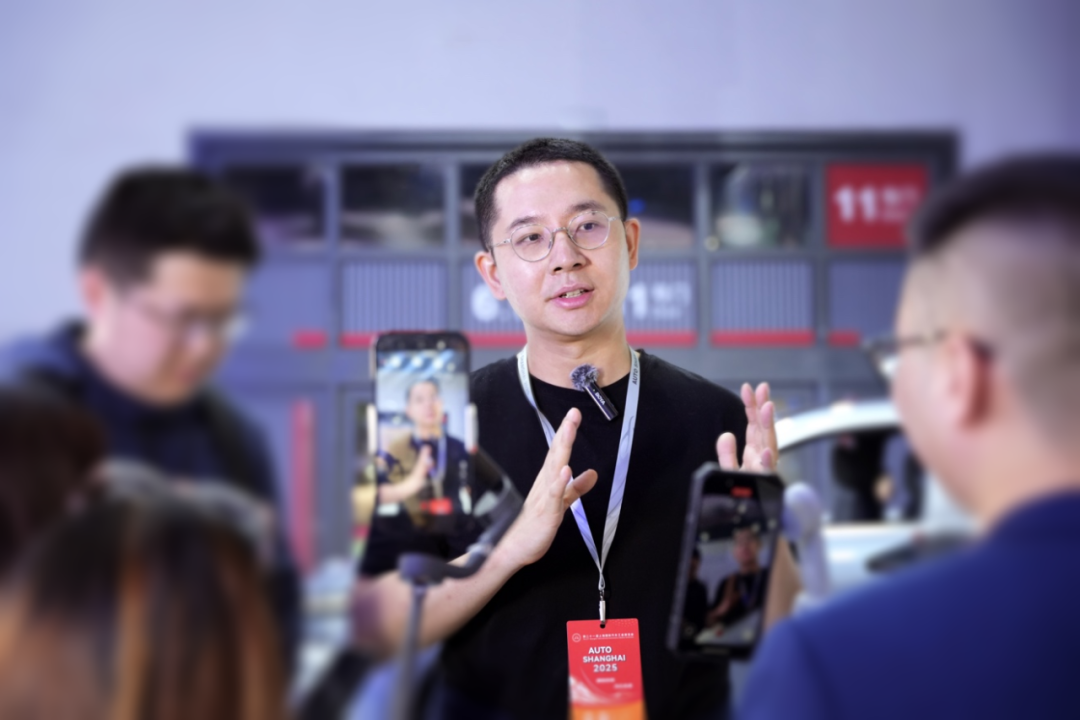
Yin Qi being interviewed by media at the Shanghai Auto Show
When Yin Qi reappeared in his new role, the aura of a genius from the Yao Class seemed to have faded. Instead, he exuded the air of a seasoned chairman, adept at organizational management and resource allocation.
Similar transformations have been noted in the founder of Dajiang, Wang Tao. After a decade of relative obscurity, this low-key entrepreneur recently granted an interview to LatePost. In it, he repeatedly referenced the Doctrine of the Mean and underscored the significance of collectivism and effective management.
Both have weathered the storms of growth. Wang Tao has grown 'tougher' amidst betrayals and corporate anti-corruption drives, while Yin Qi has embraced pragmatism in the wake of AI 1.0's failures. While technology undoubtedly remains a core competitive edge, it alone is insufficient for a company's sustained success. The old adage of 'looking for nails with a hammer' is fraught with high risks.
This time, Yin Qi first identified his 'nail': smart cars. More precisely, he sought alignment with Geely as a formidable partner.
Geely holds a major stake in Qianli Technology and is its largest customer. Meanwhile, the Li Shufu family has indirectly invested in the large model company StepFun through a holding entity. As chairman of both firms, Yin Qi can forge a closed-loop system akin to Tesla + xAI: Qianli Technology assumes the physical role of vehicle manufacturing and intelligent carriers, while StepFun supplies the underlying large models.
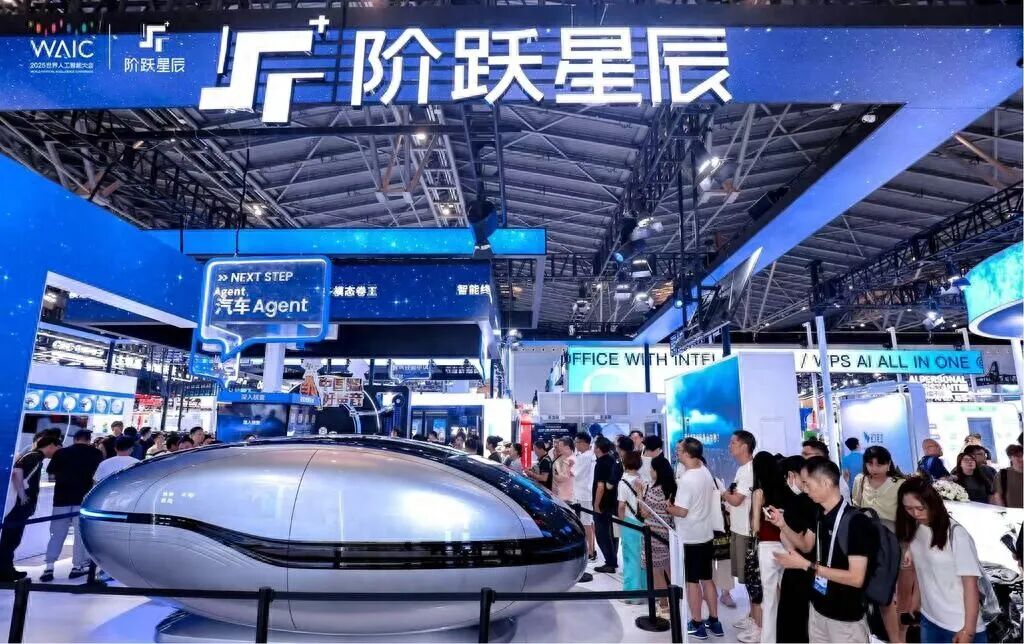
The next-generation smart cockpit showcased by StepFun, Geely Automobile, and Qianli Technology at the 2025 WAIC
However, this closed-loop system's Achilles' heel is its heavy reliance on Geely. Take Qianli Technology, for instance. Due to lower-than-anticipated sales and demand from Geely-affiliated enterprises, the planned transaction amount of 11.612 billion yuan for 2025 had only reached 5.142 billion yuan by November 30 of that year.
The large model company StepFun faces even stiffer competition.
Yin Qi has set a lofty goal for his team: to reclaim a spot in the world's top tier of foundational models by 2026—though he hasn't specified how many companies will constitute this 'top tier.' Going public is a clear key performance indicator (KPI). Yet, among China's 'AI Six Tigers,' Zhipu and MiniMax have already completed their Hong Kong Stock Exchange listings and raised substantial funds, leaving the less prominent StepFun grappling with greater uncertainty.
While the two cards in his hand may not seem overly strong, at least Yin Qi has returned to the new battlefield he yearns for and regained the right to compete anew.
PART 04
The Moon and Sixpence
As Yin Qi approaches his forties, his stance between idealism and pragmatism has become clearer.
The young Yang Zhilin continues to lead his genius team in pursuit of the path to Artificial General Intelligence (AGI), while middle-aged Yin Qi has discovered the 'fragrance' of manufacturing. Ultimately, AI must integrate into the physical world to unlock greater value. Jensen Huang also underscored the importance of physical AI this year.
But this is a gamble fraught with uncertainty. No one knows who will emerge as the last survivor. To date, no domestic AI company can provide a definitive timeline for profitability. Will this become another bubble that fizzles out after consuming trillions in funding and the ambitions of countless young geniuses?
Solving problems on the fly is the current lot of most AI companies.
During the low point in 2024-2025, the young Yang Zhilin repeatedly revisited David Deutsch's 'The Beginning of Infinity.' Two sentences resonated deeply with him: 'Problems are inevitable. Problems can be solved.' These gave him faith. After reverting to the foundational large model route, Moonshot AI finally bid farewell to its terrifying oscillations.
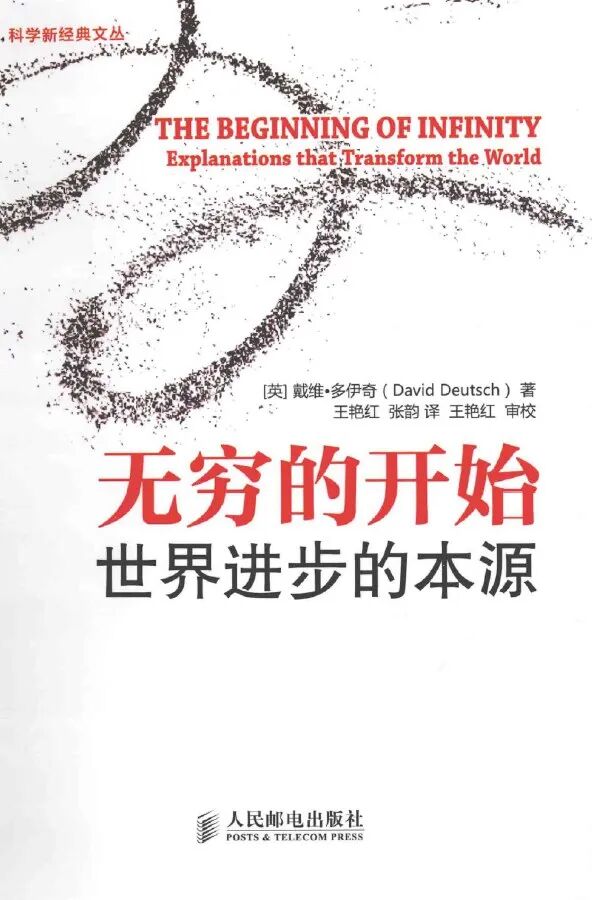
Chinese edition of 'The Beginning of Infinity': 'The Beginning of Infinity'
After feeling powerless to resolve Megvii's issues, Yin Qi chose to step away—this, too, was a form of problem-solving.
Today, Yin Qi may have developed a deeper reverence for the word 'fate.' From academic pursuits to entrepreneurship, he seems to consistently fall just short of the resounding victory he envisions. In high school, he attended the top experimental class at Wuhu No.1 High School and hoped to secure admission to Tsinghua University through a competition shortcut, but fell short and ultimately entered Tsinghua through the gaokao (national college entrance exam). The five years of obscurity at Megvii marked the toughest journey of his life.
These experiences have molded the steady and pragmatic middle-aged Yin Qi he is today. As Qian Zhongshu described middle age in 'Fortress Besieged': 'Previous follies and ambitions are like dust on clothes—a gentle pat, and it falls away.'
The transition from genius to ordinary person may evoke sighs from onlookers. But from a business perspective, this is not necessarily a negative development.
There are always those who gaze at the moon and those who pick up the sixpence on the ground, striving to effect change in this tangible world.
Entrepreneurship has never been a romantic endeavor. Wang Tao has learned to prohibit Dajiang employees from coming to work in bath slippers—individual freedom must sometimes yield to collective will. Yin Qi, too, has long mastered the management skills behind deadlines and return on investment (ROI). While a 300-person Moonshot AI can operate as a cool AI Native company, will everything remain the same if it truly goes public and scales up?
However, a comforting fact remains: Each era produces new passionate and intelligent young people.
Twenty years ago, one of Andrew Yao's aspirations in founding the Yao Class was to replicate the clustering effect seen in American computer science: At a certain time and place, a group of highly talented students would emerge, and a decade or so later, nearly all would become prominent figures in the field. A few years later, a similar scenario would unfold elsewhere. The tree he planted has already supported half of China's AI entrepreneurial landscape and continues to nurture talent for the AI industry.
As long as smart young people keep pouring in, the story of AI will always have a next chapter.
【Sources】
[1] Video podcast 'Silicon-Based Stance' Vol.19: Dialogue with Yin Qi: If 10 Lessons Were Learned in the AI 1.0 Era, 10 More Should Be Avoided in the AI 2.0 Era
[2] Podcast 'LateTalk' Episode 117: Yin Qi's 14 Years of AI Entrepreneurship: All Glory That Cannot Form a Closed Loop Is Temporary
[2] 'Renwu' Magazine, '100 Hours Undercover at Kimi'
*Cover image sourced from the poster of the film 'Genius Game'; some supporting images sourced from the internet and brand official websites, with rights reserved for removal upon claim.
-
![]()
Wang Huiwen, Former Meituan Executive, Achieves 20-Fold ROI, Supports 24 AI Startups
-
![]()
Another AI Computing Power Unicorn Launches IPO! Founded by a Changjiang Scholar
-
![]()
OFILM Holdings Secures Zhongke Daojing, Marking a Significant Leap in the Optical Communication Industry!
-
What Will Be the Next Key Battleground for Large Models After AI Coding?
-
![]()
Leapmotor's Sales Soar, Yet Hidden Concerns Loom
-
![]()
China’s Action Camera Market Soars: 3.12 Million Units Sold in Six Months, DJI Secures 74% Dominance
-
![]()
Zhang Yiming: Strategic Retreat as a Path Forward
-
![]()
Exploring Charging for Some Features of QianWen App: Can It Follow the Path of Doubao?