DJI at 20: From Product Legend to Organizational Mastery | WAVE
 04/13 2026
 616
616
By | Dong Erqian
Those acquainted with DJI are aware that Frank Wang has largely stepped back from the public eye over the past decade.
The prevailing image of DJI remains relatively straightforward yet favorable: a technologically sophisticated, product-centric, and globally dominant entity. Meanwhile, its founder is often stereotyped as a genius engineer and an authoritative leader.
As the visionary behind DJI, Frank Wang seldom grants interviews or openly shares his thoughts. However, after a long hiatus, he recently agreed to in-depth media interviews. This marks his first comprehensive discussion about himself and DJI in ten years.
This time, Frank Wang spoke less about technological advancements and more about organizational challenges, the difficulties of management, the company's transition from passion-driven to rule-based operations, and his reflections on corporate governance and personal boundaries after two decades of entrepreneurship.
The current interest in Frank Wang and DJI is closely tied to the industry's current status and role.
In 2006, Frank Wang established DJI while pursuing graduate studies at the Hong Kong University of Science and Technology, starting from a residential building in Lianhua North Village, Shenzhen. Two decades later, the company has evolved into one of China's most globally influential tech enterprises. According to Wang, the company's sales surpassed 80 billion yuan last year, with profits exceeding 20 billion yuan, and DJI's sales are projected to "exceed 100 billion yuan" this year.
As DJI stands at the crossroads of scaling from a hundred billion to a trillion and marks two decades of entrepreneurship, its challenges extend beyond creating superior products. The focus now is on becoming a truly mature company: not only innovative and growing but also adept at managing complex organizations, establishing stable structures, and resolving inevitable chaos and imbalances that come with expansion.
In this regard, Frank Wang and DJI together exemplify a rare and valuable transformation:
A company that once thrived on talent, judgment, and engineering prowess is now seriously addressing organizational, governance, and systemic capabilities. A long-dominant and sharp entrepreneur is, for the first time, more fully acknowledging that the truly difficult aspects of running a business lie not in products or competition but in understanding oneself, people, and establishing order.

The Transformation of Frank Wang
For years, the outside world's perception of Frank Wang has been somewhat one-dimensional: a tech genius, a product enthusiast, an authoritative leader, and a somewhat aloof individual.
Certainly, these labels are not entirely unfounded. In DJI's early days, with a small team and streamlined decision-making, many efforts converged on a single objective: creating products, maximizing performance, and outpacing competitors.
In such an environment, Frank Wang's leadership style was integral to DJI's rapid ascent: a belief in judgment, results, and the notion that many problems could ultimately be resolved through superior products.
To a certain extent, DJI's early success was indeed built on this highly centralized founder-driven logic: the company, much like its leader, was talented, fast-acting, and efficiency-oriented but lacked patience for ambiguity and compromise.
During the rapid growth phase, the sharper this focus, the more opportunities the company had for explosive growth. However, as the company expanded, the logic that worked for small teams became inadequate to support a complex organization's forward momentum.
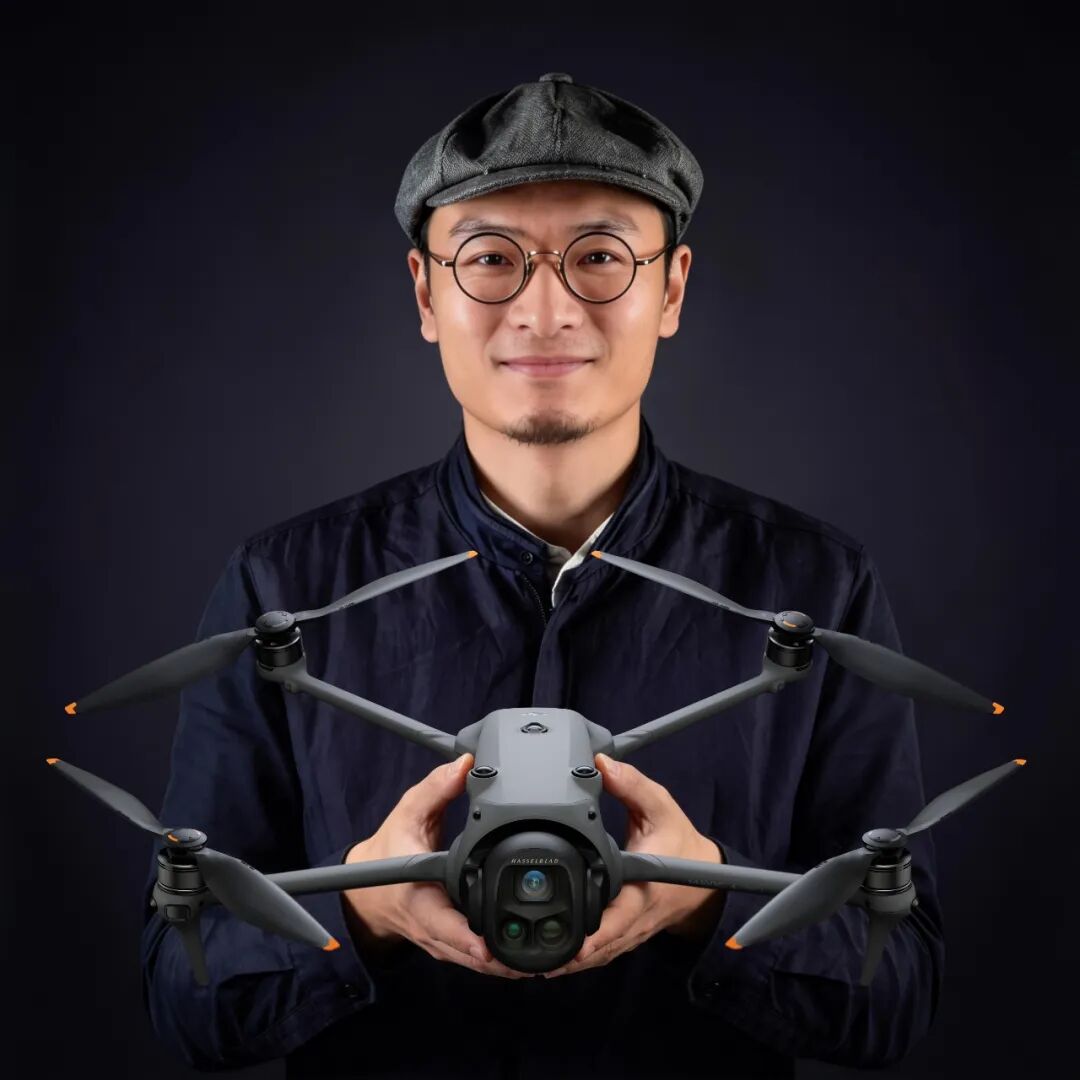
Reflecting on his journey, Frank Wang repeatedly emphasized the term "reflection" in his media interactions. He even stated that his greatest satisfaction in twenty years of entrepreneurship was not in building a world-class company but in learning to reflect.
In Frank Wang's view, the truly challenging aspect of running a business is not necessarily creating outstanding products but understanding organizations, people, and one's own limitations.
He candidly admitted that for him, "creating products is a difficulty of 1, while management is about 10." He also acknowledged that DJI had once experienced a "collapse of order" and that he often felt like "smashing problems with a stick, akin to Sun Wukong seeing demons."
Behind these expressions lies a rare form of founder self-correction: he no longer attributes all problems to poor execution or others' inadequacies but begins to recognize that many organizational dilemmas stem from the founder himself: over-reliance on intuition, over-belief in personal judgment, and over-indulgence in the certainty brought by product success.
This is precisely the core change Frank Wang is showcasing to the public this time.
In the past, he was more like an entrepreneur constantly pushing forward with talent, will, and passion. Today, he begins to see self-correction as equally important as achieving results, a change that comes only after deep introspection.
He still cares about products, innovation, and leading but acknowledges the necessity of processes, rules, order, and governance. This means he no longer places all hopes of the company's success on product strength or personal judgment of the industry and products.

The Transformation of DJI
This transformation is significant not just because it portrays Frank Wang as a more multidimensional figure but also because it provides a key to understanding today's DJI:
A company that once soared primarily on talent is now seriously addressing systemic capabilities, indicating that the company has entered a new phase.
Over the past twenty years, DJI has grown from a startup team in a residential building in Lianhua North Village, Shenzhen, breaking through with core technologies like flight control, gimbals, image transmission, and vision, transforming consumer drones into a globally leading smart hardware business.
For a long time, DJI's strongest label has been product strength. The company has almost single-handedly set industry standards and, for a considerable period, suppressed competitors with continuous innovation, engineering efficiency, and ultimate user experience. In this narrative, DJI is like a high-performance machine, where the most crucial aspect is to continuously launch superior products, capture larger markets, and establish higher technical barriers.
This logic has indeed propelled DJI forward. For many years, it relied on continuous product innovation, engineering efficiency, and technical judgment to reach a rare position among China's tech manufacturing enterprises.
But it is precisely at this stage that DJI must confront another reality: when a company reaches today's level of complexity, it can no longer define itself solely by product leadership.

Frank Wang spent considerable time discussing the organizational issues he encountered, including a "collapse of order," corruption, factions, and feudal-like fragmentation. These can be summarized as the loss of control over the enterprise management system after rapid growth.
These issues are not unfamiliar, but when they genuinely occur within a company, they become an unavoidable existential proposition for its managers. That is why the signals released by this interview are particularly clear: DJI aims to rebuild order at this new starting point, to reintegrate the founder's will, engineer culture, and complex organizational systems into a cohesive whole.
Furthermore, to transform DJI into a more stable, replicable, and resilient systemic enterprise.
This is perhaps the most core expression of this "DJI transformation."

The Transformation of the Business Model
From a broader perspective, the significance represented by Frank Wang in early 2026—transcending his personal image and corporate role—lies in providing a rare business model for China's new era of technology-driven enterprises.
For many years, the mainstream narratives of China's technology and manufacturing enterprises have often focused on two directions: either recounting startup legends from 0 to 1, emphasizing the founder's courage, judgment, and ability to seize opportunities; or discussing scale expansion and market victories, emphasizing strong corporate revenue, market share, valuation growth, and globalization—essentially the results of a new round of growth.
However, the information DJI released this time is more valuable than these traditional topics. It showcases not just a simple narrative of "how to succeed" but more of a complex control process of "how not to lose control after success, how not to lose order after scaling up."
In China's business environment, this is a long-ignored yet crucial issue for almost all growing companies: enterprises do not automatically mature once they reach a certain scale. On the contrary, the most dangerous moments for many companies often occur when they seem most successful.
Frank Wang has brought these issues to the forefront, allowing people to see more clearly: the gap between a company relying on a few key figures and product breakthroughs to move forward and one needing to rely on organization, governance, and system collaboration to sustain itself is profound.
In the early stages of development, companies can often rely more on the founder's judgment, efficient decision-making, strong products, and strong execution. But when the company enters a larger and more complex stage, what truly determines whether it can continue moving forward is often no longer just these capabilities themselves but whether it can handle organizational complexity, governance order, internal responsibility allocation, and system collaboration.
Looking deeper, the inspiration DJI provides this time is not just that "Chinese companies can also create world-class products" but another, more difficult question: when a company has already reached a very high position through technology, products, and efficiency, can it timely recognize the changes in its current stage and accordingly rebuild its organization, correct its management approach, and ultimately transform itself from a company into a more mature system?
For today's Chinese enterprises, such a model is especially precious, and such a summary of experiences is especially valuable.
Beyond rapid growth and external competition, more and more Chinese enterprises, especially those that are more cutting-edge and possess strong technological capabilities, are entering such a new stage. However, their leaders may not necessarily have sufficient experience or even the ability to handle such situations.
A comprehensive reference that can be clearly compared and is worth repeatedly pondering is now placed before these business leaders.
-
![]()
Breaking News | Core Chip Team Member Unexpectedly Changes Jobs! OpenAI Transforms into Anthropic's Talent Hub, with Over 15 Ex-OpenAI Core Members Now Holding Key Roles at Anthropic
-
![]()
When European Factories Face Idle Capacity, Chinese Brands Offer a ‘Traditional Chinese Remedy’
-
![]()
SEER Robotics Passes IPO Hearing: How Valuable Is the 'First Robot Brain Stock?'
-
![]()
5 Years, 170 Billion Yuan Wealth Vanishes: Where Did Wei Jianjun Go Wrong?
-
![]()
What Exactly Has Changed with the AI That Automatically Opens a Browser to Search Xiaohongshu?
-
![]()
Over 3,000 Heat-Related Deaths Daily, Yet India Imposes Ban on Chinese Air Conditioner Imports: Unraveling the Underlying Motives
-
![]()
Second-Hand Car Prices Plummet: Are Gasoline Vehicles on the Verge of Collapse?
-
![]()
800V vs. 48V: Which Reigns Supreme? Online Clash Between Executives Intensifies Debate Over Li Auto and NIO's Suspension Systems | MIRROR Pro