The Eight-Year 'Crossroads' for Electric Vehicles: Balancing Growth and Challenges in the NEV Market
 04/13 2026
 471
471
From early 2026 to the present, the concept of the "eight-year crossroads" for electric vehicles (EVs) has dominated discussions in the automotive industry. From owner complaints on social media to the implicit reluctance in the used-car market and heated debates in industry forums, the so-called "eight-year threshold" has become a focal point. This term doesn't refer to an absolute technical endpoint but rather a complex usage dilemma centered around the expiration of the 8-year/120,000-kilometer warranty for the three core electric systems (battery, motor, and controller). This is compounded by accelerated battery degradation, a sharp decline in residual value, and high maintenance costs.
By the end of 2025, China's new energy vehicle (NEV) stock had surged to 43.97 million units, accounting for 12.01% of the total vehicle population. The first wave of mass-market NEV models, released between 2016 and 2018, are now entering their eighth year of use. Over 3 million aging EVs are facing this "crossroads" test. When the fuel-saving advantages of EVs collide with the late-stage risks of high depreciation and maintenance costs, and when the industry's rapid growth contrasts sharply with obstacles in used-car circulation, this debate transcends individual vehicle usage. It reflects broader value contradictions across the entire lifecycle as China's NEV sector shifts from "quantitative expansion" to "qualitative improvement."
▍Origins of the 'Eight-Year Crossroads' Anxiety
The "eight-year crossroads" phenomenon is not arbitrary but stems from policy rules, technological advancements, and market dynamics. The most direct trigger is the expiration of mandatory national warranties, which shifts repair responsibilities from automakers to owners. Since 2016, China's Ministry of Industry and Information Technology has required that the warranty for the three core electric systems of NEVs must not be less than 8 years or 120,000 kilometers. This standard has inadvertently embedded the perception that "8 years is a critical cycle" in the market. By 2026, the first batch of models adhering to this standard began exiting their warranty periods, exposing owners to high maintenance costs for the core systems—the "Achilles' heel" of EVs.
Data reveals that replacing ternary lithium batteries costs approximately 1,200–1,800 yuan/kWh, while lithium iron phosphate batteries cost around 1,000–1,500 yuan/kWh. For an average family EV with a 60 kWh battery, a full replacement costs 60,000–100,000 yuan, yet the vehicle's residual value after 8 years is only about 50,000 yuan. This creates a dilemma: "repairing is worse than replacing, replacing is unaffordable, and selling is impossible." This reality for aging EV owners also instills fear in potential buyers.
Further amplifying this anxiety are the stringent restrictions attached to automakers' "lifetime warranties" for the three core systems. These often apply only to the first owner, require full official maintenance, and cap annual mileage at 30,000 kilometers. Once the vehicle is resold or these conditions are unmet, the warranty reverts to the basic 8-year/120,000-kilometer standard, leaving used-car buyers without long-term protection. This exacerbates market resistance to 8-year-old vehicles.
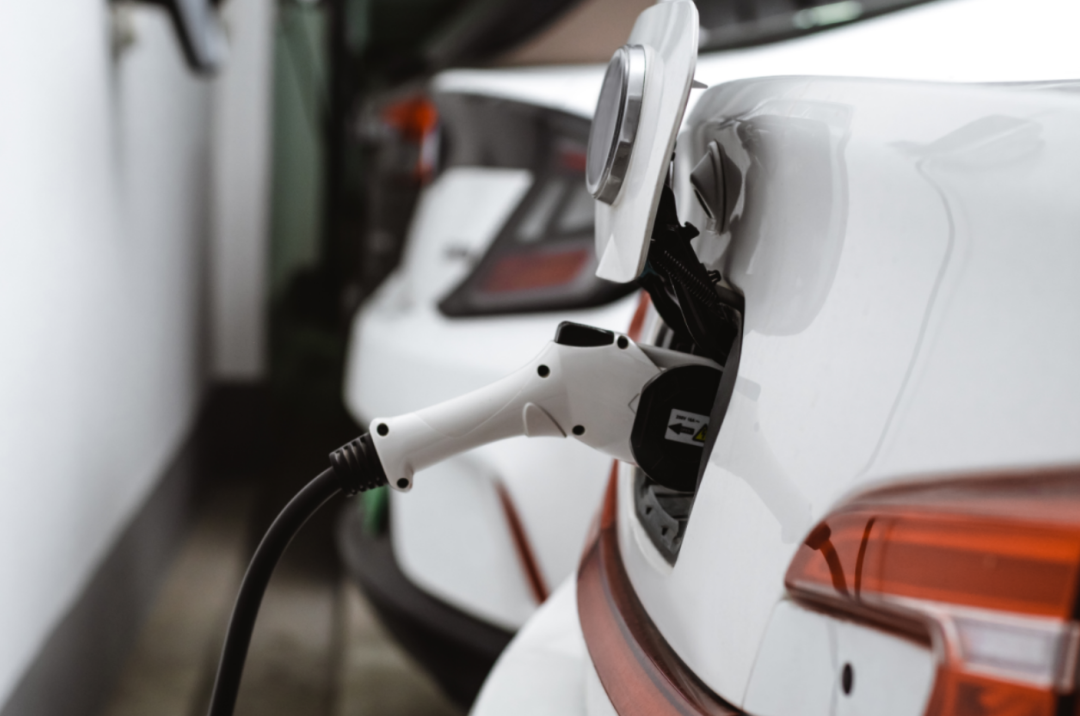
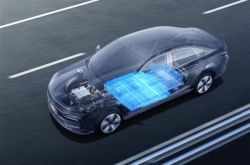
A deeper root lies in the discrepancy between battery degradation and market perceptions. Power batteries, the core component of EVs, naturally degrade over time—a technological reality underlying the "crossroads" controversy. Mainstream lithium iron phosphate batteries have a cycle life of 2,000–3,000 cycles, while ternary lithium batteries offer 1,000–2,000 cycles. Based on an average annual mileage of 15,000–20,000 kilometers and 100–150 charging cycles per year for family vehicles, their theoretical service life can reach 8–15 years.
Data from the China Automotive Engineering Research Institute in 2026, tracking 22,700 household pure EVs, shows that average annual battery degradation is only 2.3%, with an average health status exceeding 80% after 8 years. In other words, 8 years is not the "end of life" for batteries but a stage where degradation accelerates after a period of stable performance. Issues like reduced range and slower charging do exist, but they are manageable.
However, early NEV battery technologies were immature, and battery management systems (BMS) were outdated. Some models released before 2015 experienced over 30% degradation within 3 years, leaving the market with the impression that "EVs are not durable." Additionally, used-car dealers, seeking to avoid risks, exaggerated the risks at the 8-year mark, packaging "warranty expiration" as "vehicle scrapping." This created the misconception that "EVs become useless after 8 years," turning a normal aging process into a panicked "crossroads" topic among the public.
▍Prosperity and Obstacles: Breaking the Circulation Deadlock
The "eight-year crossroads" is primarily driven by circulation challenges in the used NEV market, which turn 8-year-old vehicles into a "dead end." The rapid growth of the NEV market contrasts sharply with the underdeveloped used-car sector, leaving aging EVs virtually "unwanted."
Data from the China Automotive Data Research Institute in 2026 shows that the average three-year retention rate for pure EV models is about 45%–50%, slightly higher for plug-in hybrids (including extended-range models) at 50%–60%. These figures are significantly lower than those for traditional fuel vehicles (generally exceeding 50%, with luxury brands reaching over 60%). From January to February 2026, vehicles over 8 years old accounted for less than 3% of used NEV transactions, with many dealers explicitly refusing to accept them.
This situation arises partly from rapid technological iteration. In 2018, mainstream EVs had a range of only 300–400 km, but by 2026, this had surpassed 700 km. Vehicles over 8 years old lag behind in range, intelligence, and energy efficiency, losing market competitiveness. Another factor is the lack of a battery evaluation system. China currently lacks unified standards for battery health detection and certification agencies, making it impossible to accurately assess battery conditions during used-car transactions. Buyers worry about purchasing "problematic batteries," while sellers cannot prove vehicle performance, leading to transaction stagnation due to information asymmetry.
Additionally, over 70 out of 286 cities still impose restrictions on the relocation of used NEVs, with varying inspection standards across regions, further hindering nationwide circulation of 8-year-old and older EVs. This transforms the "crossroads" from a market perception into a tangible trade barrier. The combination of policy, technological, and market factors has made the "eight-year crossroads" an implicit industry rule.
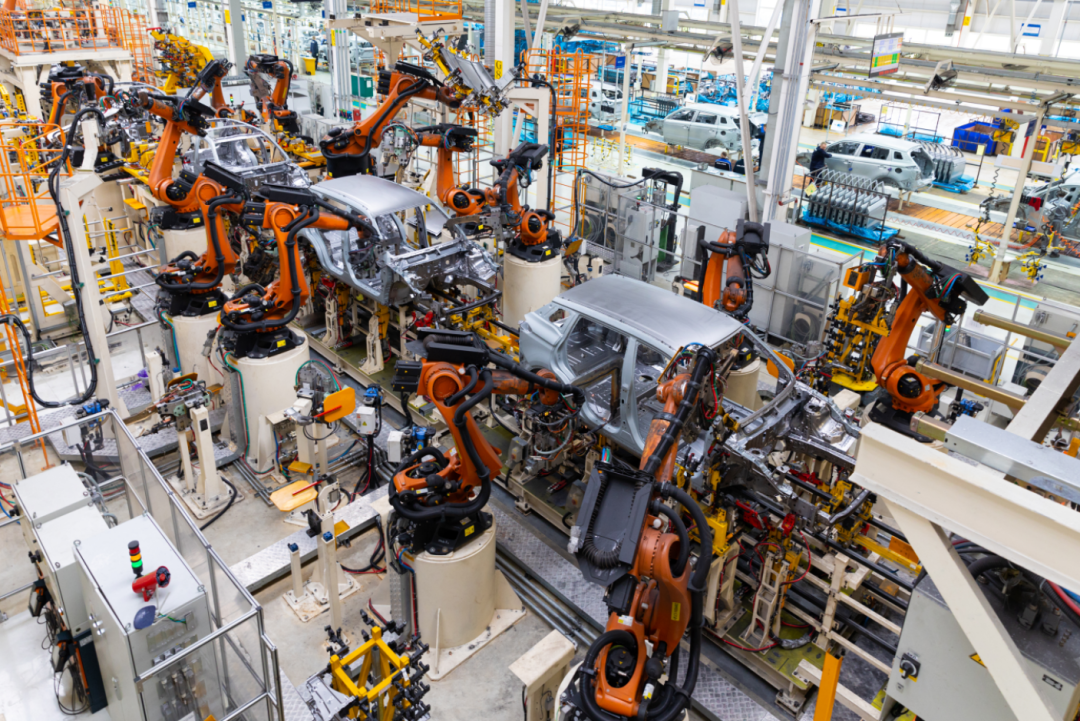
From an industrial scale perspective, NEVs have become the dominant force in China's auto market, entering a mature phase of steady growth. Data from the China Association of Automobile Manufacturers shows that in the first quarter of 2026, NEV sales reached 2.96 million units. Despite a slight year-on-year decline of 3.7%, the market penetration rate remained stable at a high 42%, with March alone surpassing 52.9%—marking the first time NEVs overtook fuel vehicles. By the end of 2025, China's NEV stock had reached 43.97 million units, including 30.22 million pure EVs, accounting for 68.74%. Penetration rates in first-tier cities like Beijing, Shanghai, and Shenzhen exceeded 60%, with second- and third-tier cities rapidly catching up. NEVs have fully transitioned from "policy-driven" to "market-driven."
This dual growth in sales and stock has been fueled by continuous product upgrades. New NEV models launched in 2026 generally feature 800V high-voltage platforms, large-capacity batteries, and advanced intelligent driving systems, with ranges exceeding 700 km becoming standard. Energy consumption and reliability have significantly improved, and consumers now choose EVs not just for license plate benefits but for their comprehensive product strength. Meanwhile, exports have become a new growth driver, with NEV exports expected to reach 3.5 million units in 2026, growing at a compound annual rate of over 65%. Leveraging technological and cost advantages, Chinese NEVs now hold a significant position in the global market.
However, behind this prosperity, the market has entered a phase of "stock competition." Since 2026, price wars have intensified, with average price reductions for models reaching 48,000 yuan in February. Frequent fluctuations in new car prices have directly compressed the residual value space for used cars, leading to an inversion where "used car prices exceed new car transaction prices," further exacerbating depreciation pressures for vehicles over 8 years old.
In terms of the three core electric systems, the industry has overcome early technological bottlenecks, with significant improvements in lifespan and reliability. However, the core contradiction of "mismatched lifespans between vehicle and battery" remains unresolved. As the focal point of the "crossroads" controversy, power battery technology has achieved qualitative leaps in recent years. Through structural innovations like blade batteries and magazine batteries, lithium iron phosphate batteries now have a cycle life of 3,000 cycles, maintaining over 80% health after 8 years. Ternary lithium batteries, through material improvements and thermal management optimization, have surpassed 2,000 cycles, with a calendar life extended to over 10 years.
Motor and controller systems are even more stable. Drive motors, with simple structures and no complex mechanical wear, are designed for 15–20 years or 2 million kilometers of service life. Cases of ride-hailing vehicles surpassing 1 million kilometers without major repairs are common. Controller systems, relying on OTA updates, maintain stable performance over long periods, with a failure rate of less than 5% after 8 years. At the national level, standards and safeguards continue to improve. In April 2026, China implemented the "Interim Measures for the Recycling and Comprehensive Utilization of Waste Power Batteries from New Energy Vehicles," prohibiting mandatory full-battery pack replacements and promoting "repair where possible," reducing maintenance costs by 80%. In July, the new national standard "Safety Requirements for Power Batteries Used in Electric Vehicles" will take effect, improving battery quality and lifespan from the source.
However, technological advancements have not fully eliminated "eight-year anxiety." The core issue lies in the structural contradiction of "mismatched lifespans between vehicle and battery"—the physical lifespan of a vehicle body can exceed 15 years, while battery warranties last only 8 years. Batteries account for 40%–60% of an EV's cost, and all risks and value losses associated with battery degradation after the warranty expires are borne by owners. This mismatch between asset value and lifespan is the fundamental issue behind the "crossroads" controversy.
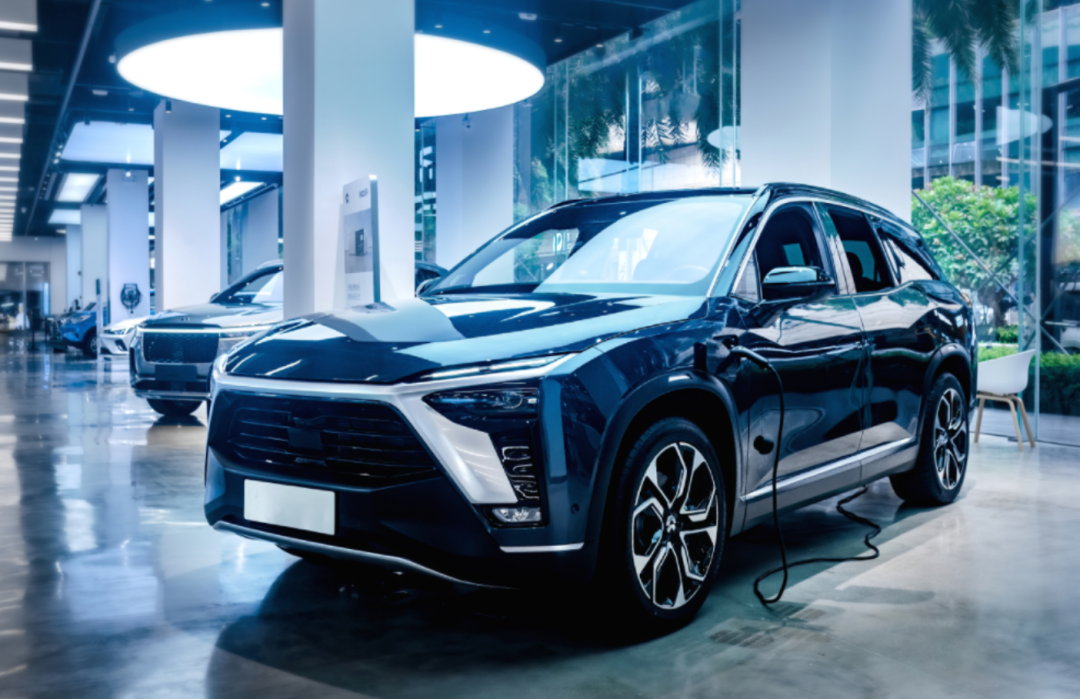
The imperfect aftermarket system exacerbates this problem. Currently, third-party maintenance institutions lack the qualifications and technical capabilities to repair the three core electric systems, leaving vehicles over 8 years old dependent on official after-sales services, where maintenance prices remain high. While the battery recycling system has been established, with over 800,000 tons of retired batteries recycled in 2026 at a rate of 85%, recycling prices are only 30–80 yuan/kWh. A 60 kWh battery has a recycling value of less than 5,000 yuan, far from covering replacement costs.
The heated discussion around the "eight-year crossroads" has exposed the hidden pain points behind the industry's rapid growth, bringing the market back to rationality: 8 years is not the "end of life" for EVs but rather a node in the warranty cycle, a turning point in performance degradation, and a bottleneck in market circulation. Today's NEV market is simultaneously experiencing a boom in penetration rates, continuous technological iteration, and accelerated globalization, with Chinese brands establishing global competitiveness in core areas such as the three core electric systems and intelligent cockpits. On the other hand, in the stock era, users' genuine demands for full-lifecycle costs, residual value, and long-term reliability are pushing the industry to shift from competing solely on sales volume and features to competing on durability, service, and full-lifecycle value.
For current consumers, the anxiety surrounding the "eight-year crossroads" reflects a structural issue in the NEV market. Only by accelerating the unification of battery testing standards, improving the used-car circulation system, extending warranties for the three core electric systems, and resolving the contradiction of "mismatched lifespans between vehicle and battery" can market anxiety be truly eliminated.
Layout | Yang Shuo
Image Source: Qianku.com
-
![]()
Jitian Xingzhou: A Pioneer in Optical Payloads Secures Hundreds of Millions in Series B Funding!
-
![]()
Orders Secured Through to the Second Half of the Year! The Rationale Behind the 'Surge' in Demand for This Company’s Optical-Grade Base Films
-
![]()
Beyond Patents: The Retail Rivalry of Insta360 and DJI Unfolds
-
![]()
180 Billion Market Cap Vanished! How Did Seres Fall So Far?
-
![]()
Blockbuster! Domestic storage takes the global double crown for the first time, from an AI company
-
![]()
China Spearheads Formulation! World's Pioneering Global Technical Regulation for Automated Driving Systems Greenlit and Unveiled
-
![]()
Farewell to Pulsed Support Policies: Three Major Auto Policy Directions from Multiple Departments Take Effect on the Same Day
-
![]()
Embercore AI’s Accelerated Funding: The Robot Industry’s Shift Toward ‘Learning Systems’