Mobile Phone Makers Eyeing 'Humanoid Robots' Must First Ditch the 'Assembly Plant' Stigma
 04/23 2026
 524
524
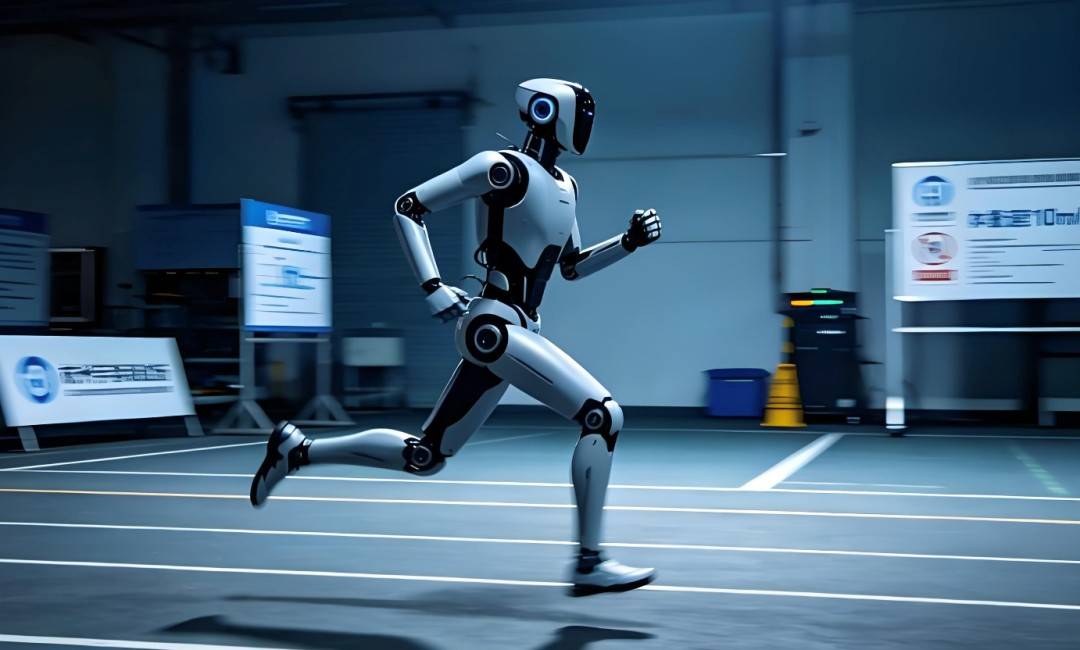
On April 19, the second Humanoid Robot Half Marathon kicked off in Yizhuang, marking a notable increase in difficulty from its inaugural edition. Surprisingly, the winner was not the much-anticipated Unitree H1 or last year's champion, TianGong Ultra, but the rising star, Honor's 'Lightning'.
Honor's trio of teams swept the podium, with 'Lightning' completing the race in 50 minutes and 26 seconds, eclipsing not only last year's champion TianGong Ultra's time of 2 hours, 40 minutes, and 42 seconds but also breaking the human half marathon world record of 57 minutes and 20 seconds.
Interviews revealed that the 'Lightning' robot was developed in just six months, with Honor having entered the field only around a year ago.
'Lightning's triumph propelled Honor into the limelight and inspired other mobile phone makers. From Xiaomi to Honor, Huawei, Vivo, and other domestic mobile phone giants, nearly all have been reported to be venturing into robotics.
Can the burgeoning humanoid robot sector become the second 'growth curve' that mobile phone makers are striving for? It may be premature to discuss this now, but a more pressing question arises: Are mobile phone makers, despite their robust capabilities, truly suited for humanoid robots, given the high technical complexity of this 'new frontier'? After all, domestic mobile phone makers have not been particularly renowned for technological breakthroughs.
Technology Transfer Proves Viable
Xiaomi was an early entrant in the humanoid robot arena. In 2021, it unveiled the robot dog CyberDog ('Iron Egg'), followed by the humanoid robot CyberOne ('Iron Big') in 2022. By the end of last year, reports surfaced that Lu Zeyu, a former member of Tesla's Optimus (Optimus Prime) dexterous hand team, had officially joined Xiaomi, fueling speculation about dexterous hand technology development.
Notably, Xiaomi has deep roots in Yizhuang, with Yizhuang State-owned Investment's investment center being a shareholder in Xiaomi Robotics.
Unlike Xiaomi Robotics, which targets industrial scenarios, Honor's robots are positioned as consumer-grade from the outset. Last March, Honor announced its 'Alpha Strategy,' proposing to invest $10 billion over the next five years to build an AI terminal ecosystem, with robotics as one of its core directions. Huawei also made frequent moves in the robotics sector last year, unveiling 'Kuafu,' the first robot in China equipped with the open-source HarmonyOS system.
It can be said that nearly all mobile phone makers, except Apple, are eager to try their hand in robotics, especially humanoid robots. However, compared to the logical progression of automakers venturing into robotics, mobile phone makers seem to lack sufficiently compelling conditions and experience for robot R&D.
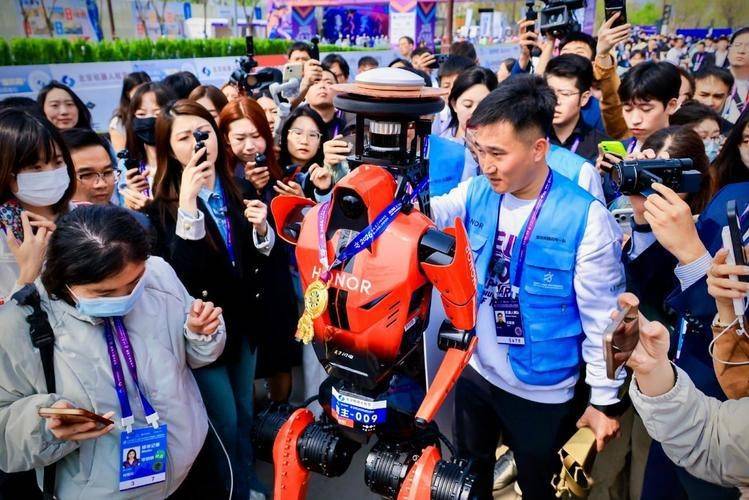
However, Honor's victory now directly demonstrates that the technological accumulations of the mobile phone industry can be transferred to robot motion control.
For instance, in terms of cooling technology, last year's participating robots mainly relied on air cooling solutions. After prolonged running, their core joints would rapidly heat up, causing a significant decline in running speed. This year, Honor applied its liquid cooling system capabilities from mobile phones to robots, successfully maintaining the robot's temperature close to normal throughout the run, enabling stable completion of the entire course.
Another example is the demand for long endurance and lightweight design. Whether a robot can run fast, steadily, and for extended periods in a marathon scenario depends not only on the power system but also on factors such as its own weight and leg explosiveness. The technological advantages accumulated by mobile phone makers in fast charging, high-density battery packaging, structural lightweighting, and algorithmic layers are undeniable.
There are not only numerous reusable technological modules between the mobile phone and robotics industries but also a high degree of overlap in their supply chains. This is one of the reasons why mobile phone makers have the confidence to venture into robotics. For instance, behind Honor's 'Lightning' robot stood well-known mobile phone manufacturing suppliers such as LY Technology, Lens Technology, and AAC Technologies. Among them, Lens Technology provided 132 core metal structural components for Honor's robots, covering nearly all key motion units, including the head, arms, hips, and legs.
While technology can be transferred and supply chain resources can be directly integrated, the question remains: Can Honor build a robot suitable for running, and what else can this robot do besides running?
This is also a critical issue facing other mobile phone makers. Although they can successfully overcome the 'manufacturing' threshold by integrating supply chain resources, can they overcome the technological barriers for humanoid robots to transition from performance to practical use? This undoubtedly points directly to the weaknesses of mobile phone makers in self-developed technology.
Major Mobile Phone Players Still Grapple with Technological 'Shortcomings'
The current humanoid robot sector bears some resemblance to the early days of new energy vehicle (NEV) manufacturing.
Over the past few years, as the NEV industry chain has become increasingly complete, mature suppliers can be found for everything from large components like batteries, motors, electronic control systems, and intelligent cockpits to various key parts. This has transformed the threshold for cross-industry NEV manufacturing from 'tackling technological challenges' to 'resource integration.' Therefore, mobile phone makers, who arguably possess the strongest supply chain integration capabilities globally, can now swiftly transition into the robotics industry.
Moreover, based on their technological accumulations, mobile phone makers have performed relatively well in the motion control of humanoid robots.
However, the biggest challenge in this industry is not the robot's motion capabilities but its operational capabilities in different scenarios. As a vivid saying in the industry goes, motion capabilities are the legs of embodied intelligence, while operational capabilities are the hands and brain. For these two crucial aspects, mobile phone makers may have to start from scratch, significantly testing their self-developed technological capabilities and forcing us to re-examine their technological 'shortcomings.'
In the development trajectory of China's smartphone industry, industrial manufacturing and mobile phone makers have mutually benefited each other. Without the foundry model, the rise of domestic mobile phones would have been difficult. However, when the development of domestic mobile phones was hindered by core technologies like chips, the outside world truly realized that China's mobile phone makers were 'large but not strong,' with doubts arising, especially targeting Xiaomi, which was heavily criticized for its marketing-oriented approach and directly labeled as an 'assembly plant.'
Whether it's Xiaomi or other mobile phone brands, the term 'assembly plant' is somewhat biased. No leading mobile phone brand that has survived to this day could be merely an 'assembly plant.' However, it must be admitted that, except for Huawei, domestic mobile phones have yet to establish technology as a brand moat, whether in self-developed chips or tackling key problems in operating systems, truly shedding the 'assembly plant' label.
Take chips as an example. During the initial chip crisis, domestic mobile phone makers one after another claimed to develop their own chips. Today, ZEKU, the chip design company under OPPO, has already shut down, while Vivo has developed image chips. Xiaomi's chip business has gone through several twists and turns but has persisted the longest. However, the sudden emergence of 'Xiaomi Xuanjie O1' last year, while sparking widespread online discussion, raised questions about how to prove its pure self-development, which has trapped Xiaomi.
Upon verification, the CPU architecture of 'Xiaomi Xuanjie O1' indeed uses ARM's public version, but its scheduling strategy and cache design (10.5MB L2 + 16MB L3) do show traces of Xiaomi's 'self-development.' However, the chip has been confirmed to have a MediaTek T800 baseband attached externally.
Clearly, Xiaomi's chips still require more stable iterations to gain market recognition.
The competitiveness of technology is already reflected in the high-end mobile phone market landscape. In recent years, domestic mobile phone brands have forcibly positioned their high-priced products as high-end, using high-end positioning to increase product premiums and expand profits. However, to this day, the high-end market remains largely stagnant, with Apple and Huawei's positions remaining unshaken. While brand perception plays a role, the fundamental issue lies in the unsuccessful technological routes.
For a long time, most domestic mobile phone brands have been accustomed to following giants like Apple, acting as followers or even 'imitators' to reduce market risks for new products, forming a dependency on innovation. This dependency is undoubtedly unsuitable in the new track of humanoid robots and cannot bring about true technological breakthroughs.
Building Castles in the Air for Others?
Behind mobile phone makers' venture into humanoid robots lies widespread anxiety caused by the stagnant growth of the smartphone market.
Take Honor as an example. Last year, after the resignation of its former CEO Zhao Ming, Honor's management team underwent significant changes, with multiple core executives leaving and mid-level reshuffles and adjustments. According to statistics released by three mainstream market research institutions—IDC, Omdia, and Counterpoint—Honor fell out of China's top five smartphone makers in 2025, joining the 'Others' category. This marked the first time since its independence that Honor failed to rank among China's top five.
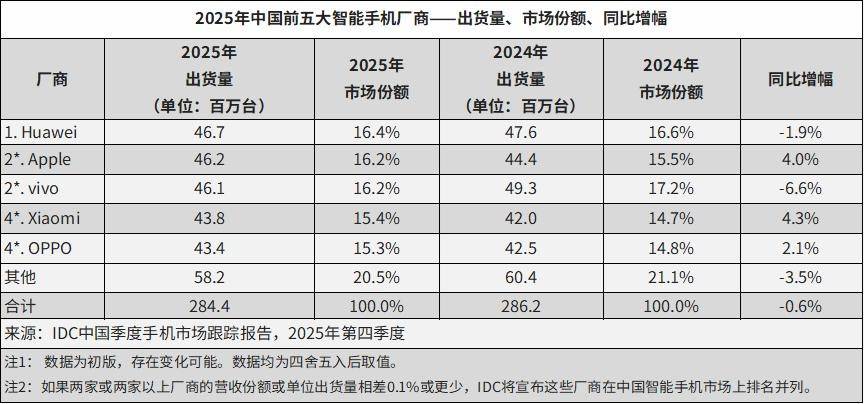
Moreover, for Honor, Huawei's return seems like a 'disaster,' as many users who once considered Honor a substitute for Huawei have now returned to Huawei's fold.
Venturing into humanoid robots is a common bet for mobile phone makers like Honor. The dominant performance of the 'Lightning' robot in the half marathon has successfully sounded the 'first gun' for Honor's entry into this competition. Crucially, as Honor aims for an IPO, humanoid robots also offer a more imaginative new narrative, adding fuel to Honor's valuation surge.
However, whether humanoid robots represent irreplaceable strategic and commercial value for mobile phone makers, helping them gain new growth momentum, remains uncertain. The journey from laboratories to factories and households for humanoid robots involves a vast technological gap. Whether true 'general intelligence' capable of handling complex and unknown environments can be achieved is still unknown. Therefore, this technological trend carries the risk of a 'bubble' bursting.
Nevertheless, due to Honor robot's unexpected victory, we have seen its suppliers 'take off,' and they may be the biggest winners.
On April 20, Luxshare Precision, a blue-chip stock, rose nearly 10%, while SMIC and Montage Technology rose over 2%. Foxconn Industrial Internet and BOE A also followed suit. These leading electronic industry players all play core roles in Honor robot's core supply chain. For example, Luxshare Precision is a long-term partner of Honor in high-end manufacturing, capable of quickly adapting to robot production needs. Lens Technology and LY Technology directly participated in the intelligent manufacturing of the robots for this competition, covering most core metal structural components.
As a leading manufacturer on the 'Apple supply chain,' companies like Lens Technology have been trying to reduce their over-reliance on Apple in recent years. Moreover, the near-stagnant smartphone market has forced them to consider new development directions. The boom in humanoid robots has given them hope. In fact, they began focusing on the robotics sector and extensively laying out their presence years ago. Now, with Honor, they have successfully demonstrated to the outside world that they can provide highly mature technological and component support. This event is likely to open up a broader market for them.
According to reports, Morgan Stanley has directly doubled its sales forecast for Chinese humanoid robots in 2026, expecting them to reach 28,000 units, with the potential to increase to 2.6 million units by 2035. This continuously rising figure hides opportunities for top mobile phone makers to shift towards the robotics track.
However, for mobile phone makers seeking greater benefits from this track, the path ahead will be more arduous.
-
![]()
Wang Huiwen, Former Meituan Executive, Achieves 20-Fold ROI, Supports 24 AI Startups
-
![]()
Another AI Computing Power Unicorn Launches IPO! Founded by a Changjiang Scholar
-
![]()
OFILM Holdings Secures Zhongke Daojing, Marking a Significant Leap in the Optical Communication Industry!
-
What Will Be the Next Key Battleground for Large Models After AI Coding?
-
![]()
Leapmotor's Sales Soar, Yet Hidden Concerns Loom
-
![]()
China’s Action Camera Market Soars: 3.12 Million Units Sold in Six Months, DJI Secures 74% Dominance
-
![]()
Zhang Yiming: Strategic Retreat as a Path Forward
-
![]()
Exploring Charging for Some Features of QianWen App: Can It Follow the Path of Doubao?