DeepSeek-TUI Takes GitHub by Storm! Testing Shows: Even Novices Can Build Apps for Less Than 10 RMB
 05/08 2026
 474
474
This is surprisingly cost-effective.
Recently, an open-source project called DeepSeek-TUI has suddenly become a sensation on GitHub, with its Star count skyrocketing from 8.7k to 16.3k in just one day.
DeepSeek-TUI is not an official DeepSeek product but rather a terminal-based programming agent developed by an individual using DeepSeek V4. Its rapid growth in Stars has caught the attention of numerous AI developers both in China and abroad, propelling it to the top of GitHub Trending in a matter of days. Many developers have affectionately dubbed it "DeepSeek's version of Claude Code," "Domestic Codex CLI," or the more colloquial "Whale."
Developer Hunter Bown even embraced local culture by referring to DeepSeek-TUI users as "whale bros."
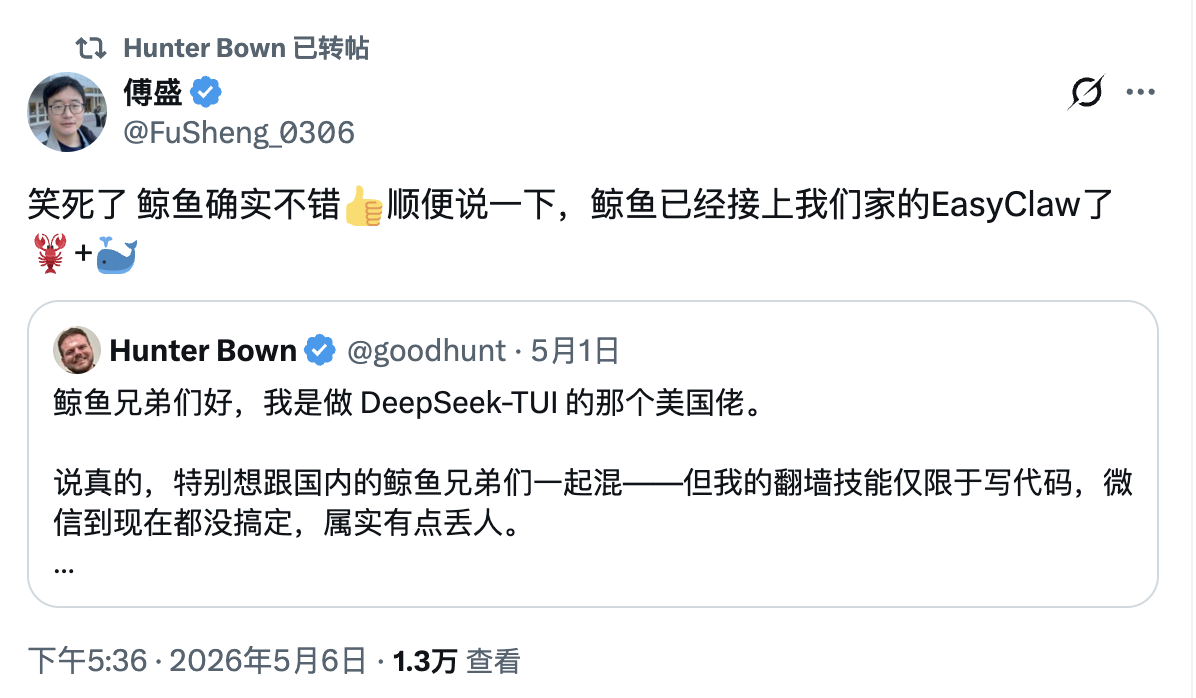
Image Source: X
But we already have DeepSeek V4's web version, app, and API—why do we need a TUI?
This question is crucial. Over the past year, one of the most significant shifts in the large model industry has been the rise of Agent frameworks built on top of these models. While GPT-5.5 is powerful, what truly revolutionized developers' workflows was GPT-5.5+Codex. Similarly, what cemented Anthropic's dominance among developers was Claude Code, built on the Claude model.
This is the true context behind DeepSeek-TUI's popularity. While DeepSeek V4 has significantly improved in code generation, reasoning, long-context understanding, and multi-turn comprehension, it has always lacked a dedicated Agent framework built on its model.
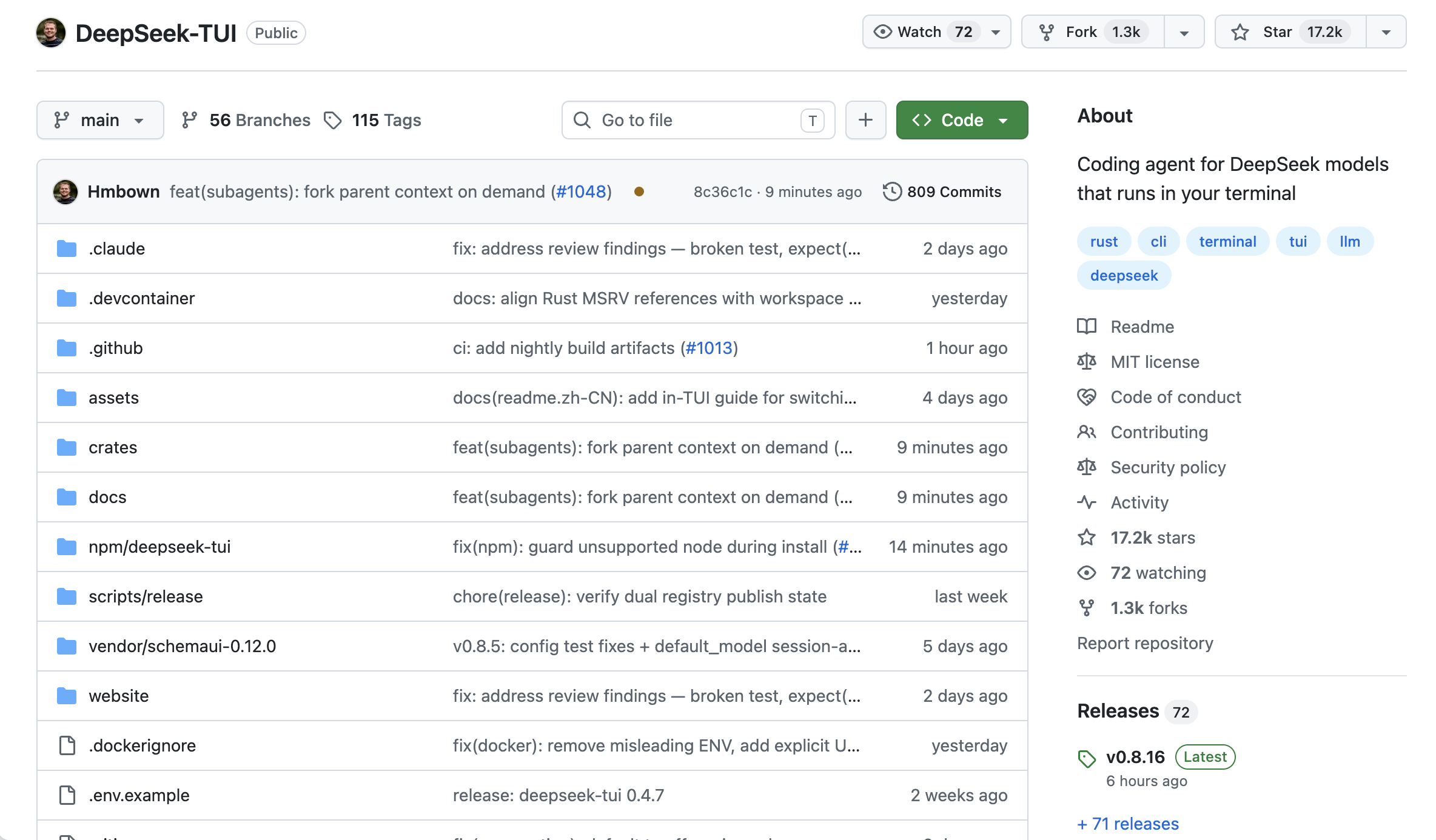
Image Source: Github
Not to mention, Codex and Claude Code have better understanding and support for their respective models. Codex's recent upgrade, which fully switched its reasoning interface from the "chat/completions API" to the "Responses API," rendered V4 completely ineffective in Codex.
DeepSeek V4 needs its own Codex, but the question remains: Can DeepSeek-TUI, a third-party, open-source project, truly live up to expectations?
For Less Than 10 RMB, Even Beginners Can Develop macOS Apps and Fix Bugs
I deployed and tested DeepSeek-TUI on macOS. Frankly, as a developer-oriented tool, DeepSeek-TUI lacks graphical guidance or "user-friendly" packaging for ordinary users, remaining deeply rooted in command-line interfaces, environmental dependencies, and toolchains.
Compared to Codex's fully graphical download and installation experience, it's clearly more complex—though not as complicated as OpenClaw (Longxia).
In reality, DeepSeek-TUI offers four installation methods: npm, Cargo, Homebrew, and direct binary download. I installed it via Homebrew but encountered a system error at first: "Your Command Line Tools are too outdated."
No big deal—updating to the latest version via Apple's official website and rerunning the brew command allowed me to install DeepSeek-TUI in just two lines. After completion, entering "deepseek-tui" launched the guided configuration, and after confirming and inputting the DeepSeek API, I entered the chat interface.
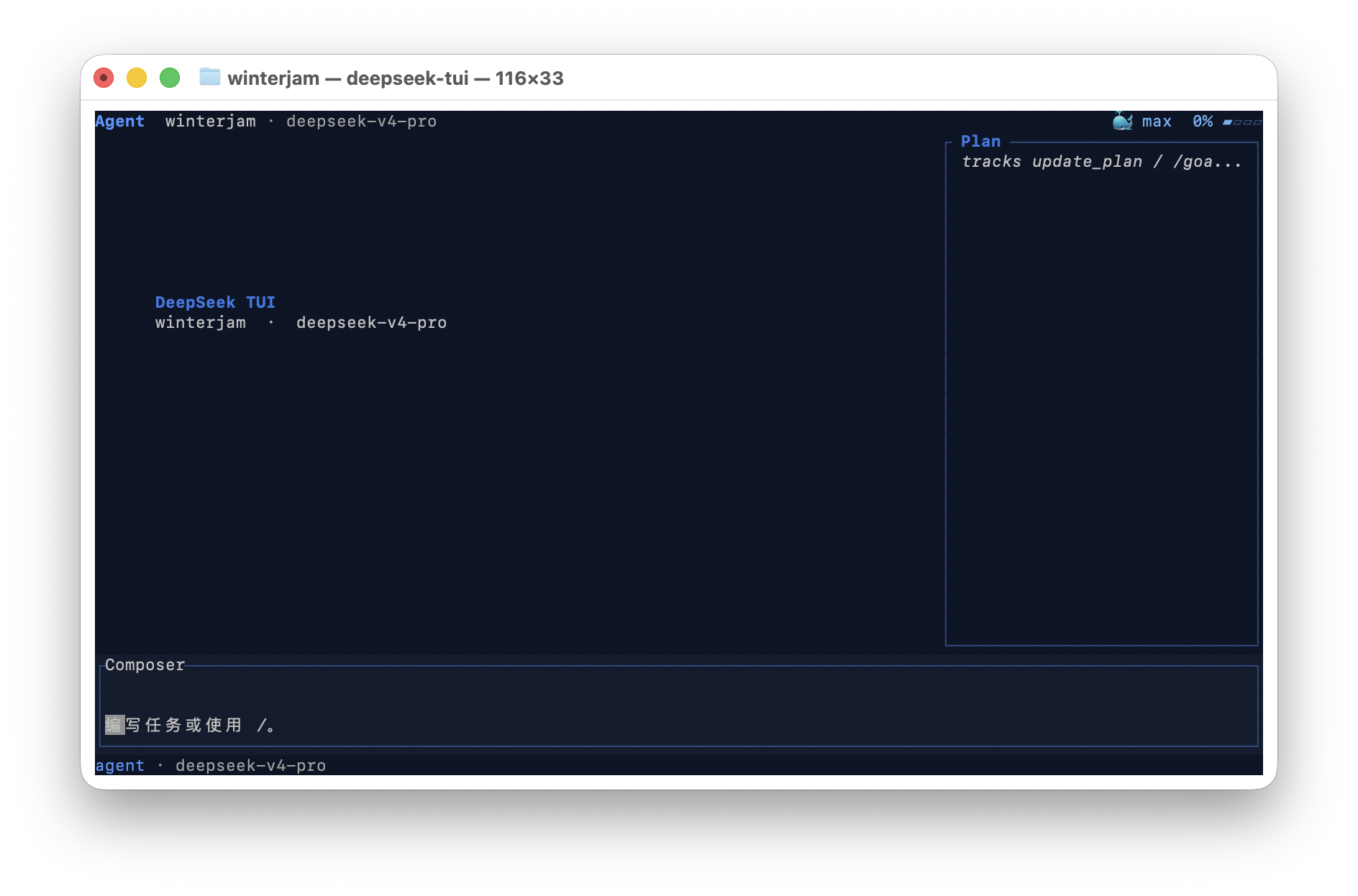
Image Source: Leikeji
It's worth mentioning that DeepSeek-TUI defaults to three modes: Plan, Agent, and YOLO. Plan mode is more observational—it analyzes the project, generates a plan, and lists Todos but doesn't execute modifications. Agent mode begins invoking tools like reading files, modifying code, and executing shell commands, though it still requires user confirmation for many critical steps. YOLO mode is the most aggressive, essentially a "delegation mode" that allows AI to automatically advance the entire task chain.
This mode design is very reminiscent of Claude Code.
What truly made me realize DeepSeek-TUI had potential was during subsequent testing. I attempted to develop a macOS clipboard app tailored to my personal needs using DeepSeek-TUI, emphasizing pinning, iCloud local sync, and menu bar support. The process took considerable time, including final compilation and packaging.
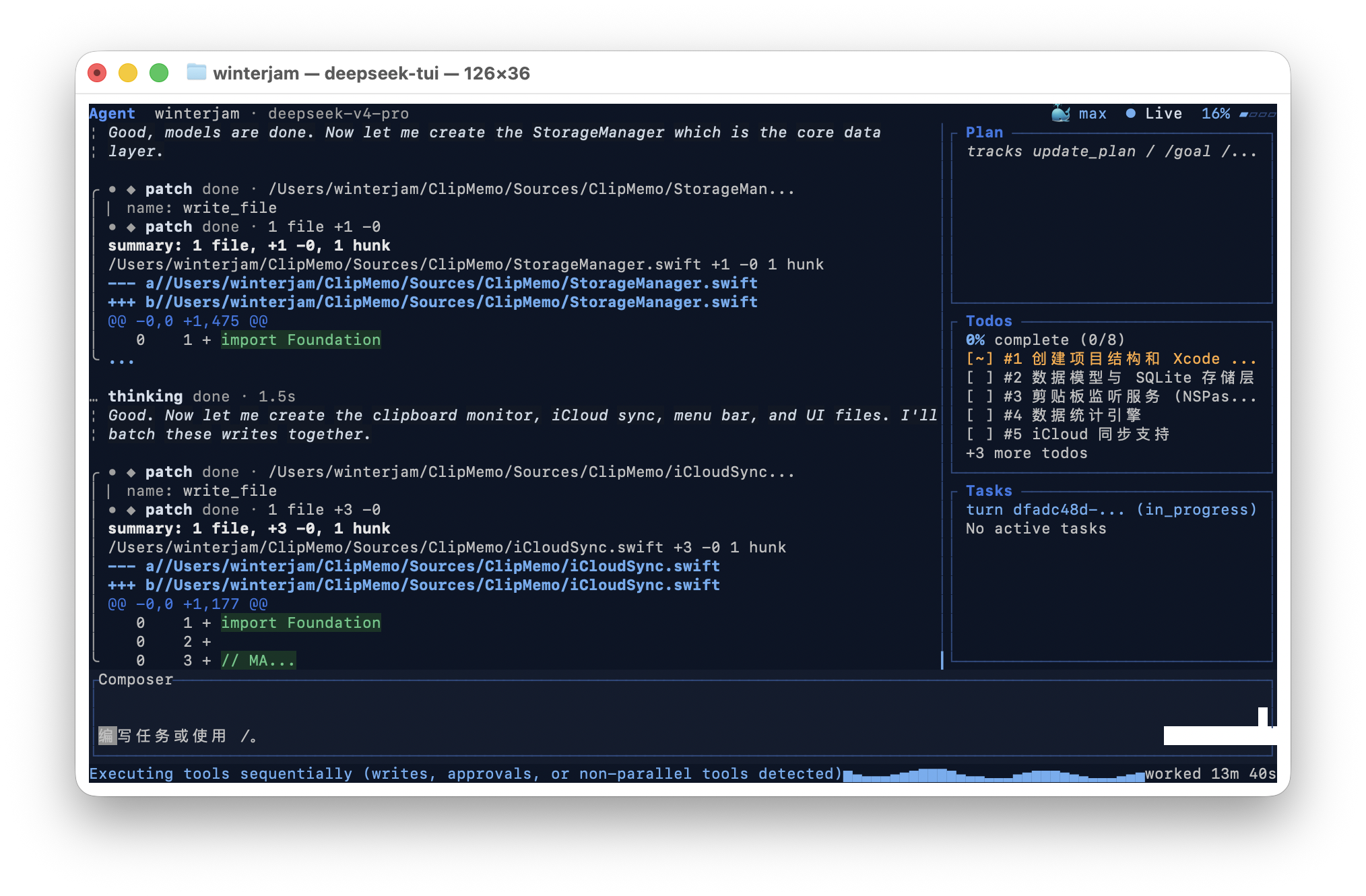
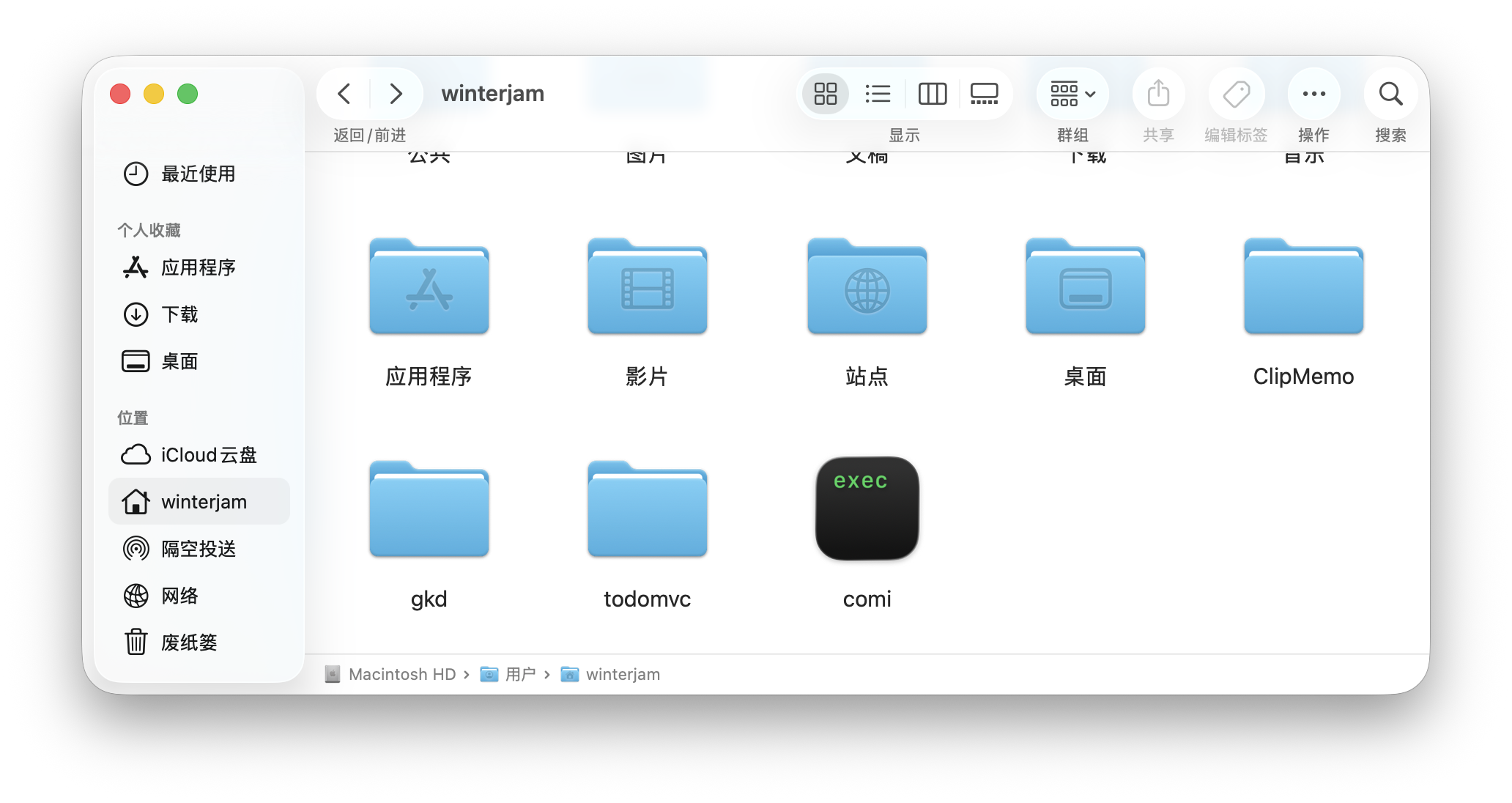
Image Source: Leikeji
From the actual results, the ClipMemo developed by DeepSeek-TUI was fully functional—all the features I requested worked normally, and it even added some important functionalities I hadn't mentioned, such as periodic cleanup and deduplication. Additionally, while its UX/UI design wasn't particularly stunning, it fully met standard requirements.
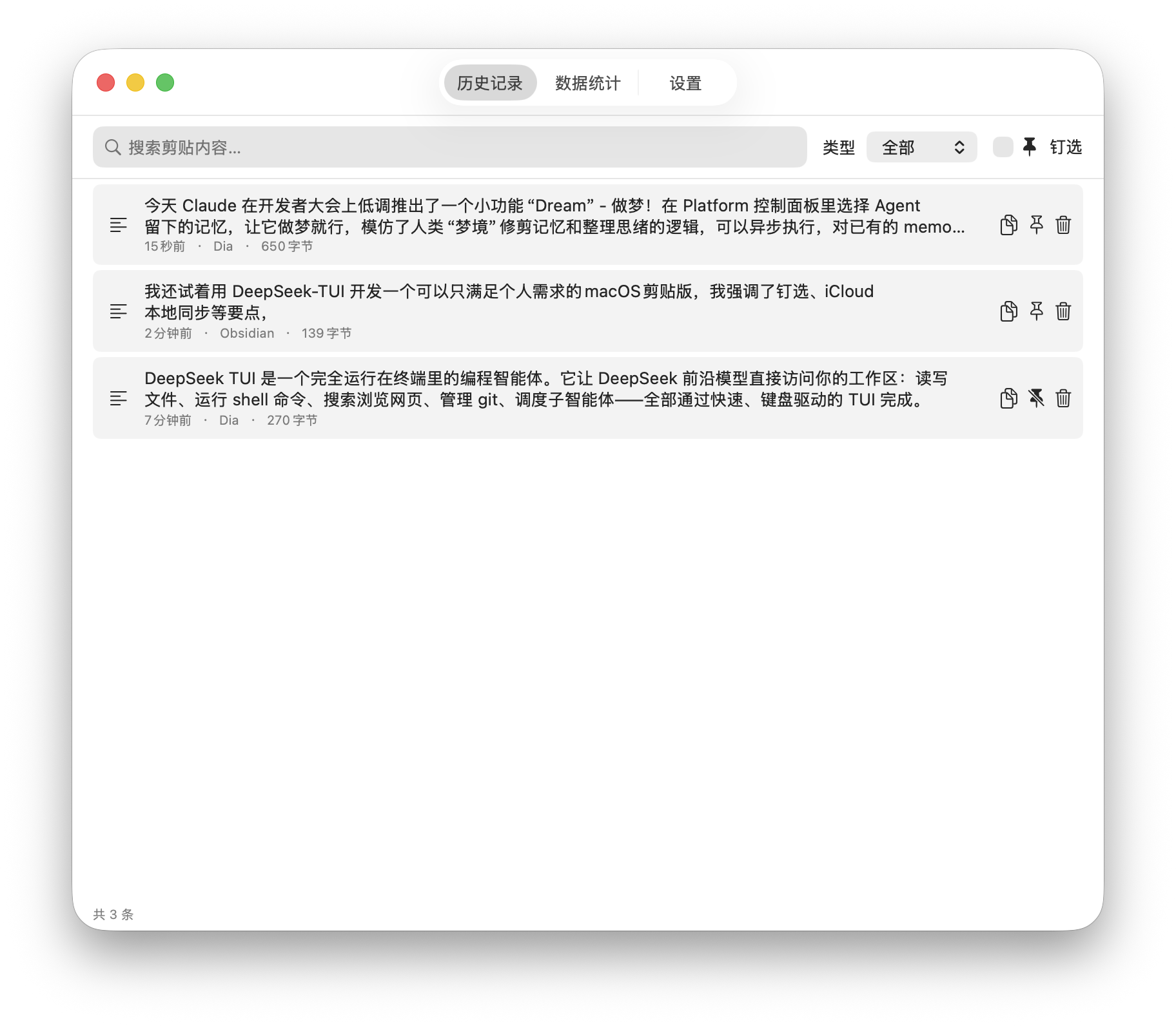
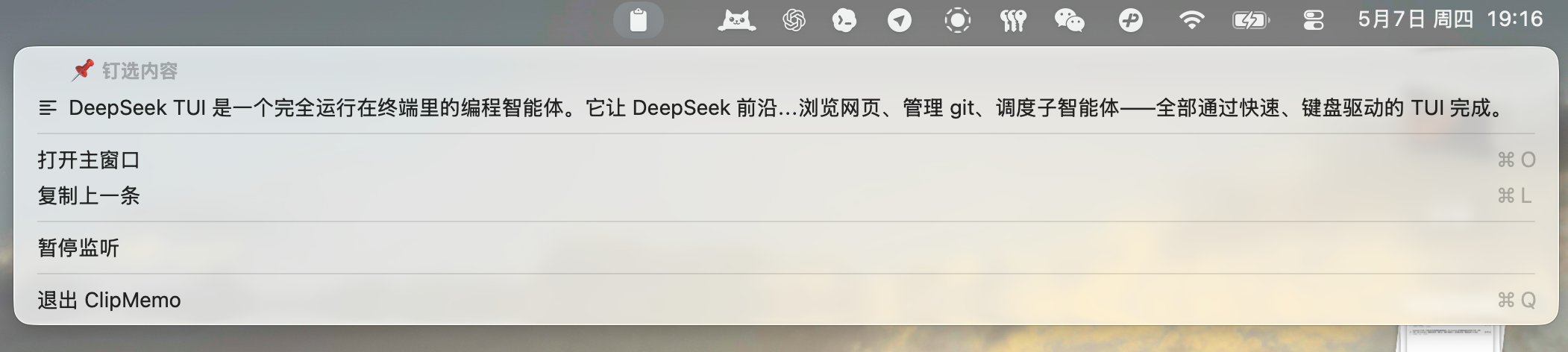
Initial version of ClipMemo, Image Source: Leikeji
The main issue was that despite having an iCloud sync toggle, it couldn't actually generate a clipboard file to save copied content under iCloud.
I also selected an existing open-source project, GKD (gkd-kit/gkd), for bug-fixing tests. This Android automation-related open-source project is structured with Kotlin + Android Framework, has a substantial codebase, and involves low-level logic like AccessibilityNodeInfo, cache depth, and event services.
GKD's last version update was at the end of 2025, though Git records show the developer upgraded Android 17 support for GKD at least two weeks ago.
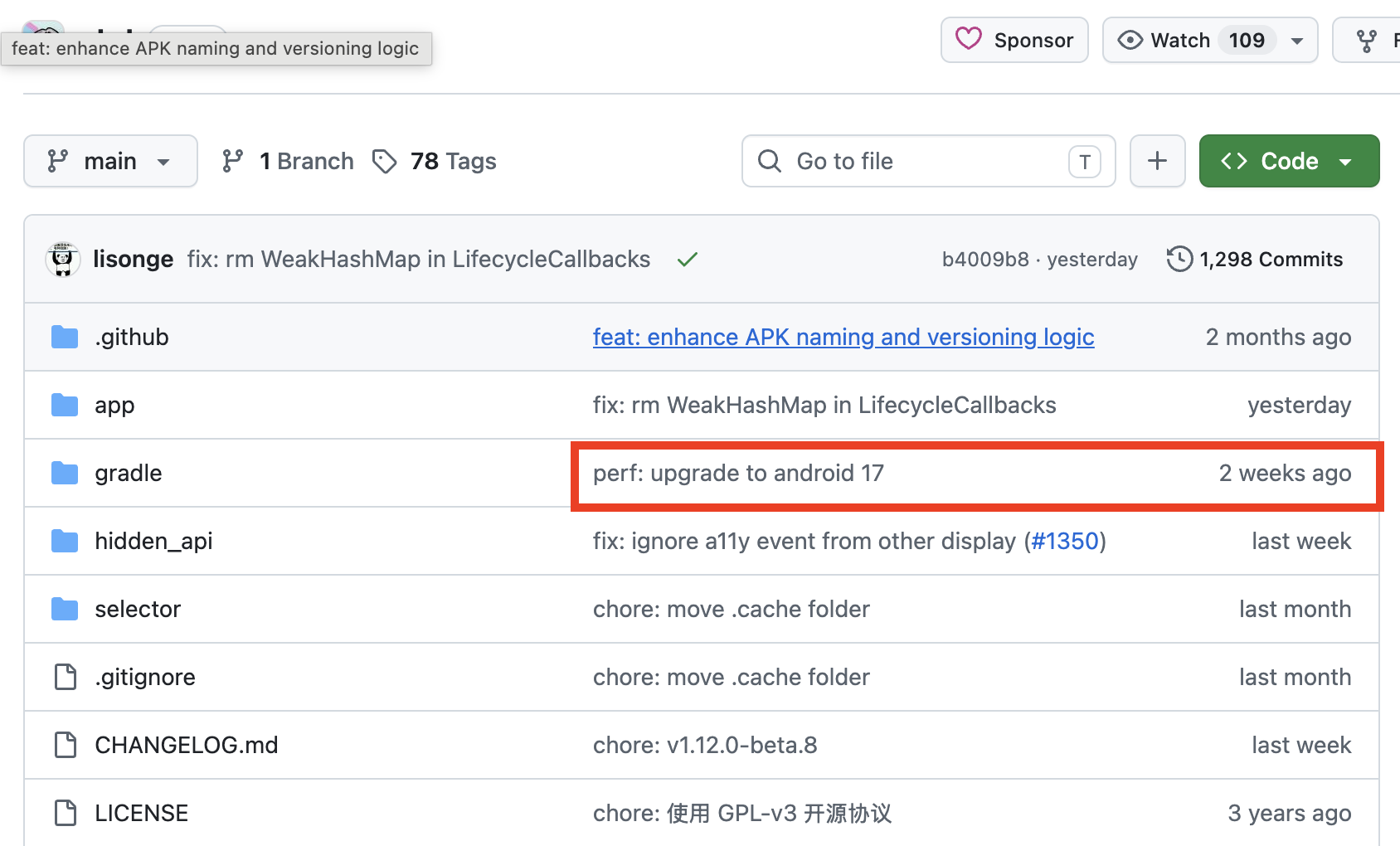
Image Source: Github
Back to DeepSeek-TUI—I not only had it clone the project locally but also assigned it a non-trivial task: inspect the project for potential bugs and attempt fixes. DeepSeek-TUI then proceeded to clone the repository, read the project structure, analyze Kotlin files, examine function call relationships, generate patches, run git diff, and verify modifications—a process lasting over 13 minutes.
During this time, it formed its own debugging loop: reading code, modifying it, running it, reviewing results, and continuing modifications. The constantly changing Todos on the right were very reminiscent of a "workflow": first clone the project, then understand the codebase, inspect bugs, and finally fix issues.
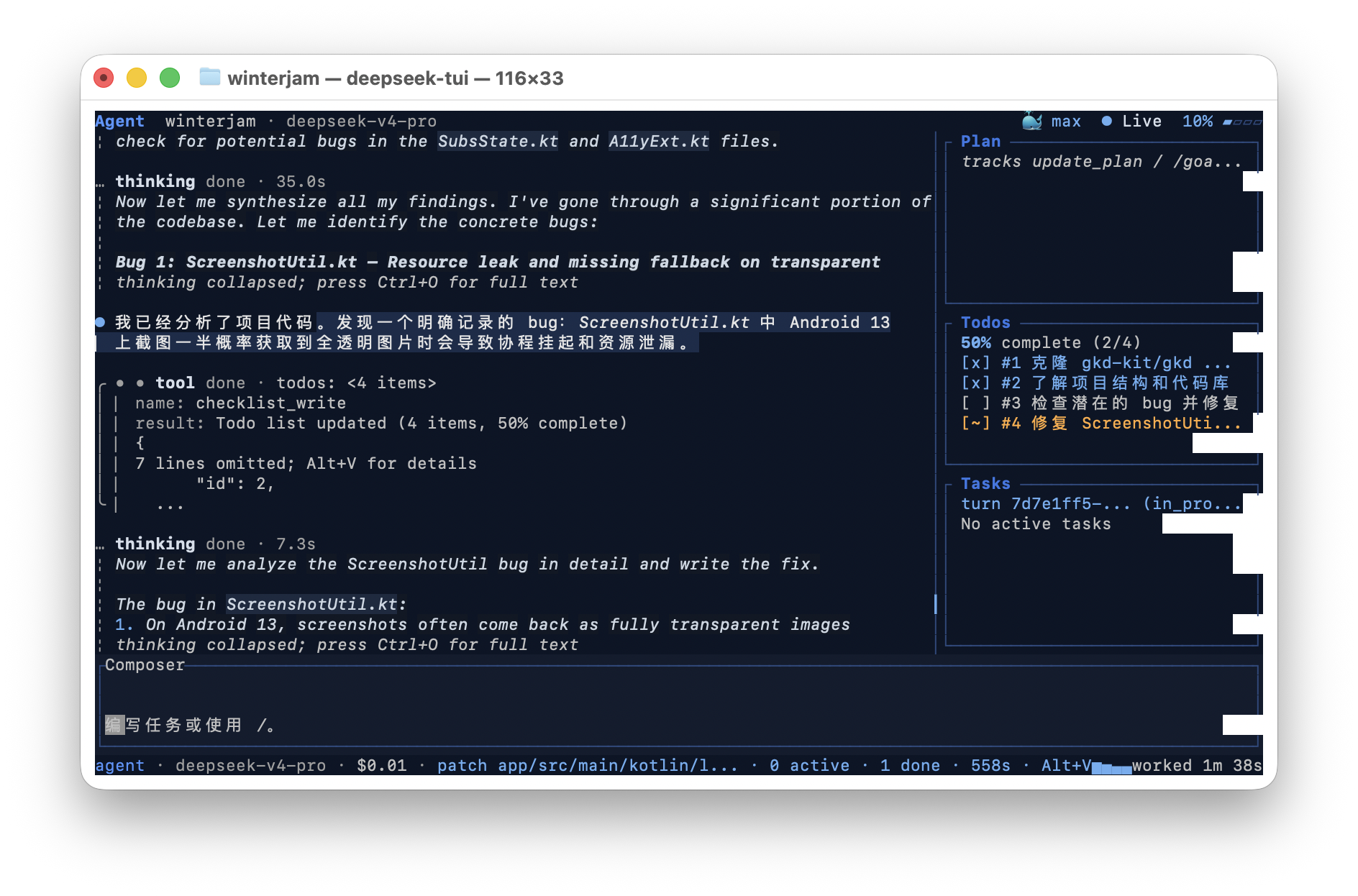
Image Source: Leikeji
This is the biggest difference between DeepSeek-TUI and the web version of DeepSeek. The web version is essentially still a "chat"—even if you upload code or logs, it only offers "suggestions." However, DeepSeek-TUI has started reading files, running commands, maintaining task states, verifying patches, and continuously advancing tasks on its own. AI is no longer just telling you "what to do" but actually doing it.
It's also worth mentioning that many now perceive Agents as "smarter large models," but actual experience reveals that the truly important changes revolve around the engineering built around the model, including boundary constraints, context engineering, and tool invocation. Additionally, DeepSeek-TUI natively supports MCP and skills, allowing custom workflows to be encapsulated as skills.
Considering this is still a relatively small project, DeepSeek-TUI's bug-fixing time wasn't short—it identified and "fixed" three bugs.
I also had Codex (GPT-5.5 High) audit the terminal conversation via Computer Use, which pointed out six issues, including DeepSeek-TUI missing a clear logical bug it had observed.
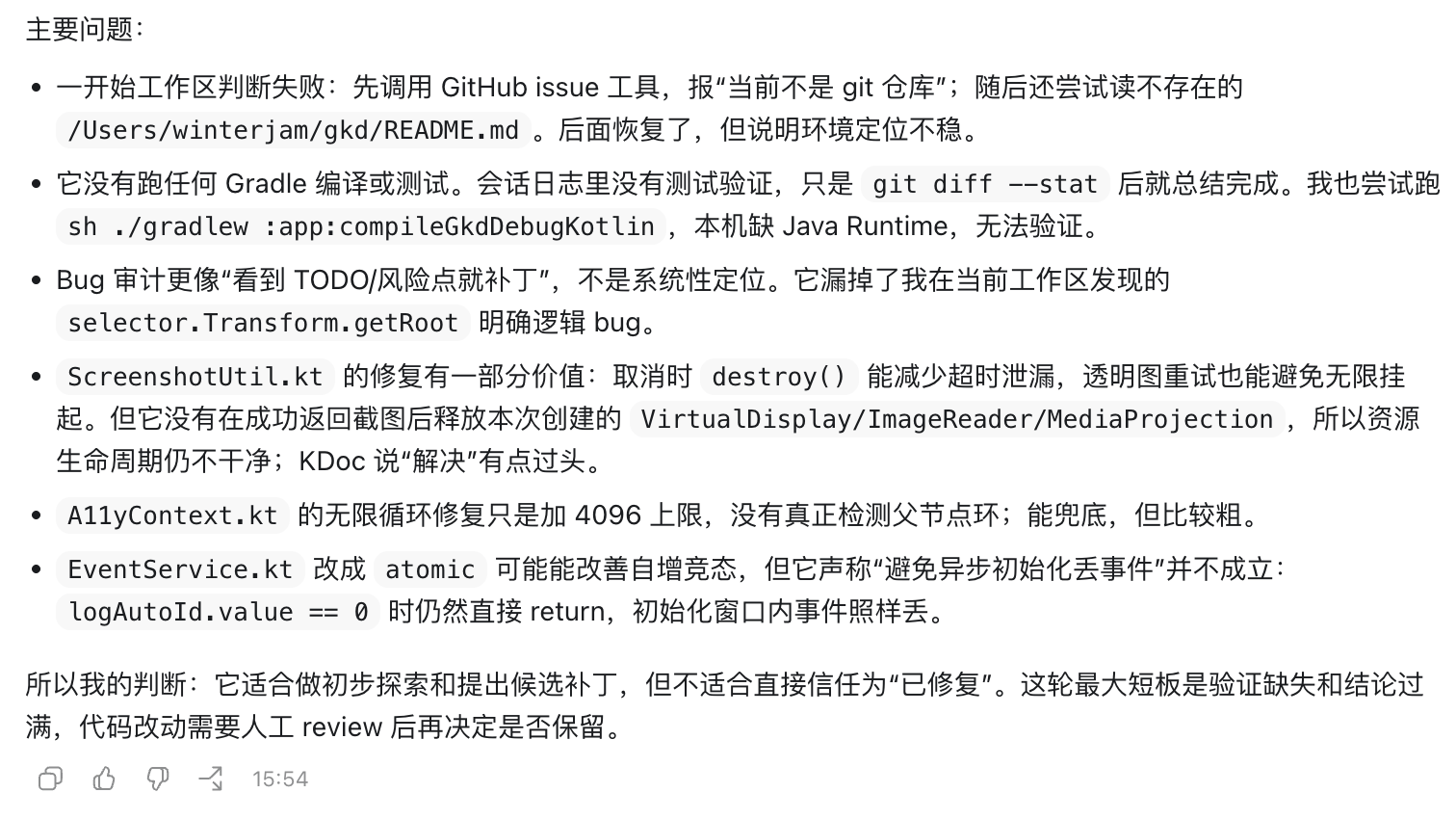
Codex's audit assessment, Image Source: Leikeji
It must be said that in terms of interface design, while Codex "folds" many specific details, DeepSeek-TUI tends to display all details, creating some information overload. In AI Coding scenarios, this might still be acceptable, but if DeepSeek-TUI aims to become a versatile Agent like Claude Code or Codex, this design would be hard to accept.
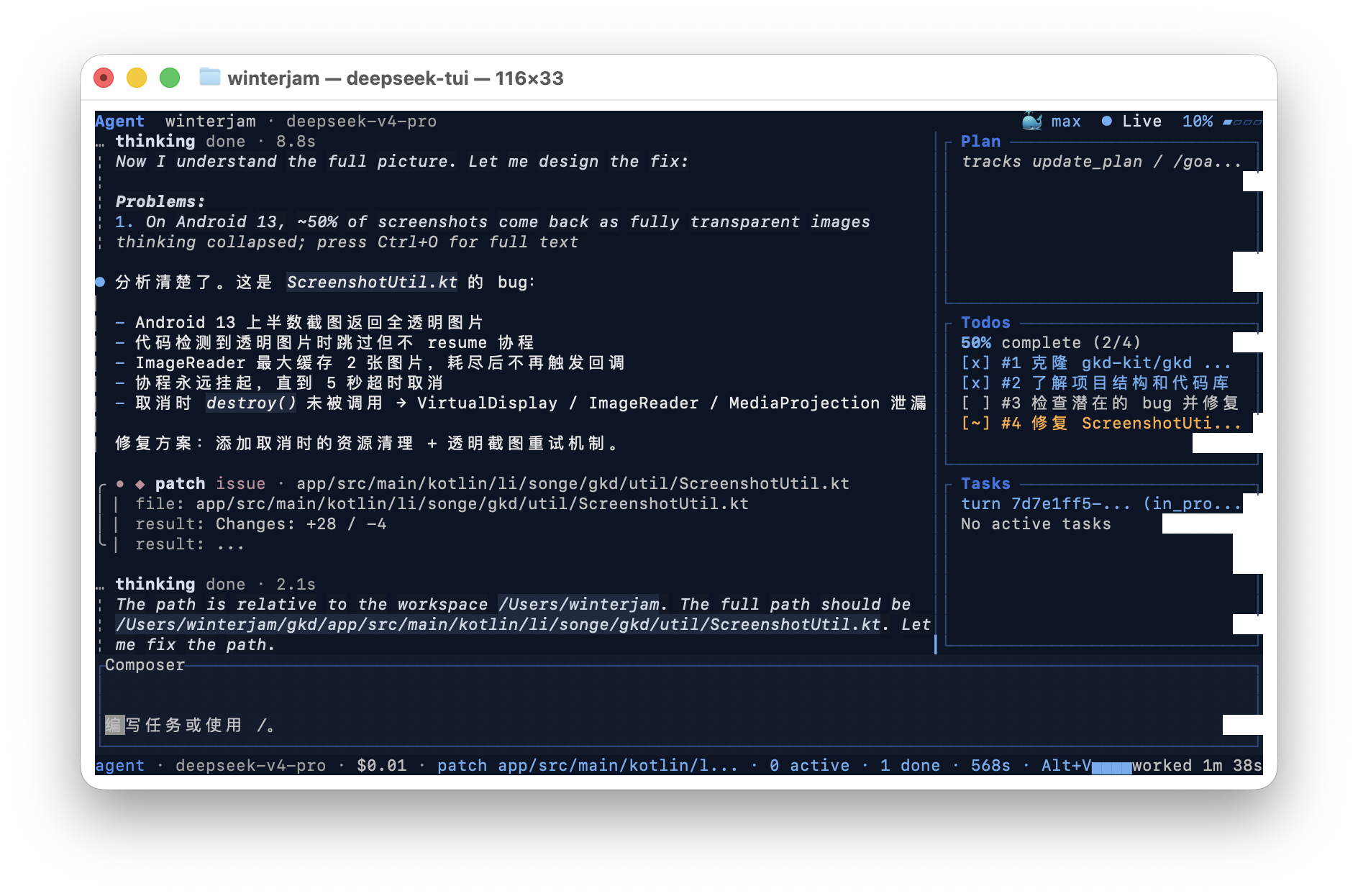
Image Source: Leikeji
From the results, a clear gap remains between DeepSeek-TUI and Codex—not just at the model level but also in Agent engineering maturity.
However, DeepSeek-TUI's current Auto Mode is quite interesting: it first uses deepseek-v4-flash to determine whether the current task should use the cheaper deepseek-v4-flash or the stronger deepseek-v4-pro, saving costs for simple tasks and reserving stronger models for complex ones.
This design is very practical because one of the biggest issues with all Agents today is token cost—especially in continuous work modes, where token consumption can skyrocket. DeepSeek V4's most striking impression from this upgrade is its exceptional cost-effectiveness, and combined with DeepSeek-TUI's architecture and Auto Mode design, it's truly affordable.
A single 13-minute bug-fixing test, plus ClipMemo's development, cost only 9.47 RMB in total.
Of course, in practice, more tokens would be needed for optimization and iteration, but this already sufficiently demonstrates the advantage of using DeepSeek V4 (primarily Pro) with DeepSeek-TUI.
Epilogue
Looking back at DeepSeek-TUI now, its most significant meaning may not be "an open-source TUI." What truly matters is that the DeepSeek ecosystem has finally begun to develop a genuine Agent shell—and DeepSeek's official team has already taken notice, adding DeepSeek-TUI to awesome-deepseek-agent.
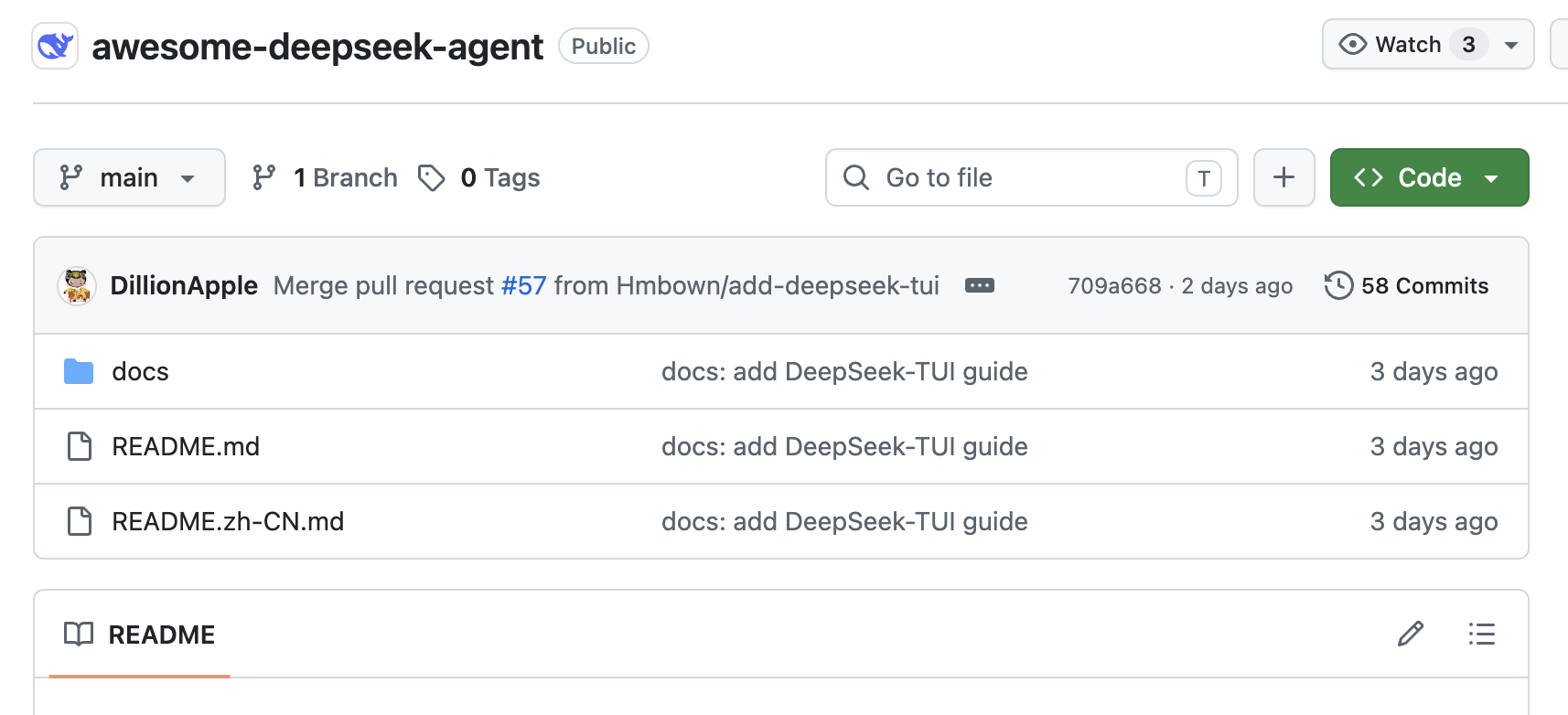
Image source: Github
The core issue is that today's competition among large models is shifting from 'model capabilities' to 'Agent workflows'. Codex was developed by OpenAI itself, and Claude Code was created by Anthropic. Their greatest advantage does not actually lie in their 'functions' but rather in the vertical integration between the model teams and the Agent engineering teams. The models understand what the toolchain needs, and the toolchain knows what the models excel at. This kind of synergy will become increasingly important.
However, DeepSeek's current issue is the continued absence of an official Agent framework. DeepSeek-TUI may demonstrate the significant advantages of DeepSeek V4 once it truly enters the coding agent workflow, but we still look forward to seeing when DeepSeek will officially step in.
DeepSeekAgentLarge ModelCodex
Source: Leikeji
Images in this article are from the 123RF royalty-free image library.
-
![]()
Tesla Restructures Its Balance Sheet
-
![]()
Accelerating the High-Speed Interconnection Upgrade of AI Computing Clusters! JONHON Releases ELSFP External Light Source Optical Connectors
-
![]()
Breaking the overseas blockade of volumetric holographic materials, this optical enterprise secures nearly 100 million yuan in financing!
-
![]()
Why Does Jensen Huang So Openly Praise China’s AI?
-
![]()
"Wudang" Unveiled: Arm China's Next-Gen AI VPU Redefines Video Encoding
-
![]()
From Energy Conservation and Carbon Reduction to AI Decision-Making: GECON East Intelligence and Chery Group Explore a New Green and Smart Paradigm for Automobile Manufacturing
-
![]()
WAIC 2026 Observation | AI Accelerates Towards the Core of Industries, Industrial AI Enters a Critical Phase
-
![]()
Volkswagen China Fires the First Shot in Foreign-Funded 'White Box Delivery'!