The Turning Point of AI: Hongguo
 05/08 2026
 509
509

Author | Wen Yehao
Editor | Wu Xianzhi
Spring has arrived earlier in Hengdian this year, but the short drama base is far less bustling than before.
At this time last year, dozens of short drama crews were shooting here simultaneously. Workers pushing tracks were busy from morning to night, and food stalls lined the street.
Since March this year, most crews have temporarily halted operations. Costume, makeup, and prop masters who once earned over 10,000 yuan a month have either moved to photo studios or returned home to open Hanfu shops.
Almost overnight, the booming industry has suddenly changed.
The architect of this transformation is undoubtedly AI.
Faced with the disruption of content production logic, no one can remain isolated. Even Hongguo, with 300 million monthly active users and a reputation for spending lavishly on content, is not sitting on the sidelines. Instead, it is attempting to guide the direction of the short drama business.
Navigating the AI-Driven Short Drama Industry
If AI short dramas were previously limited to comic adaptations or supplemental special effects, this year's most enticing—and alarming—development is their direct replacement of traditional film and television production pipelines.
“AI no longer needs costumes, makeup, or props,” a makeup artist wrote on her WeChat Moments in late March, accompanied by a photo of her last touch-up on an actor.
Previously, creating a work required collaboration among writers, directors, actors, cinematographers, lighting technicians, costume designers, and more. In the AI era, the person deciding which final image to present to the audience is primarily the “card drawer.”
However, from a creative standpoint, AI short drama production is far from seamless at this stage.
Card drawer Liu Ning (pseudonym) told Photon Planet that existing AI models are unstable. No matter how detailed the prompts, issues like jump cuts, continuity errors, or inconsistent compositions and character positioning can occur.
“You might get an SSR (Super Super Rare) on your first try, or you might not get usable material after ten attempts. Especially for complex fight scenes or shots with more than two people, if you waste too many credits, the company will scold you. You can only select fragments and piece them together through editing.”
Thus, card drawing is a game of probability. More than creation, it resembles sifting—extracting barely usable material or fragments from a sea of waste.
In the past, many traditional film and television professionals turned to AI, believing their aesthetic sense and eye for visuals would give them an edge over card drawers. For example, they might draw storyboards as references before drawing cards.
However, at Liu Ning’s company, almost none of the card drawers have experience in the film and television industry, and more than half are college students. “The company hires ten people at a time, requiring each to produce at least two episodes a day. It’s like ‘cyber screwing’—if you don’t meet the target in three days, you’re replaced. Those who last three months are considered veterans here,” Liu admitted.
In the view of AI short drama practitioner Jiang Zhong (pseudonym), card drawers at this stage are mostly “cleaning up after” immature AI. But as model capabilities improve, the task of simply selecting usable footage may no longer require dedicated human effort.
Indeed, AI is not only generating increasingly natural and fluid visuals but also improving other aspects of the production process.
In March this year, ByteDance’s Lark AI launched a short drama agent, claiming to support one-click video generation from scripts up to 100,000 characters long.
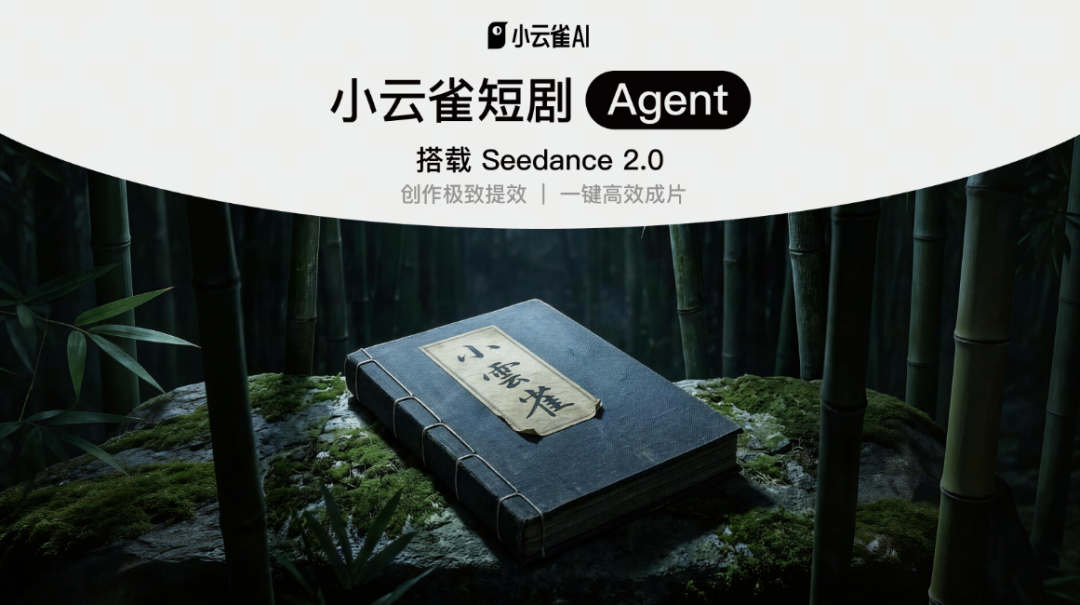
However, some practitioners point out that the current Lark short drama agent is far from perfect. It often omits characters or plot points, confuses character relationships, and generates disjointed visuals. “Every time we point this out, they apologize profusely, but regenerating requires credits.”
From a user experience perspective, short drama creators seem to prefer third-party platforms like Jurilu and Kunlun Tiangong over Lark AI. For example, with Jurilu’s agent capabilities, a single person can create a complete AI short drama in just one to three days.
This content revolution has not only dramatically increased short drama production efficiency but also significantly reduced labor costs in the AI short drama supply chain, leading to a surge in supply.
Ultimately, as short drama agents mature, the card drawing industry will inevitably face decline. However, for short drama platforms, the battle over content governance may just be beginning.
With tens of thousands of new dramas flooding into content pools daily, platforms must establish rules to balance efficiency and quality and ensure technology truly serves content creation.
From Quantity to Quality
Hongguo has never been just a short drama app.
While other short drama platforms can only make choices at the content level, Hongguo, as the undisputed leader in the industry, bears the scrutiny of the entire sector while controlling the dials of content supply, creation, and distribution rules.
The short drama industry is highly sensitive. Any shift in platform policies is immediately felt on set, prompting quick adjustments. Since this year, Hongguo has repeatedly influenced industry trends by updating its rules.
In February, amid the rise of Seedance 2.0, Hongguo announced new incentives for comic adaptations, lowering revenue-sharing coefficients for 2D animated dramas and introducing more detailed genre tiers, ending the “one-size-fits-all” approach for low-quality AI comic dramas. After the adjustment, AI simulated human short dramas maintained the highest coefficient of 60; 3D and 2D animations were set at 50 and 40, respectively; while rougher meme-based dramas and static commentary comics remained in the 1–10 range.

In March, Hongguo eliminated guaranteed revenue-sharing for small and medium-sized live-action short drama producers (200,000–350,000 yuan per installment), switching to a pure revenue-sharing model.
As outlined in *Platform Revolution*, successful platforms evolve through three stages: first, attracting users with subsidies to solve the “chicken-and-egg” problem; second, optimizing mechanisms to facilitate efficient interaction between both sides of the market; and finally, establishing a robust governance system to ensure the ecosystem’s overall health.
For Hongguo, this shift is particularly clear.
If Hongguo previously “bought off” nearly the entire short drama industry with guarantees to flood users’ time with content, now, with the explosion of AI live-action short drama supply, it no longer needs to pay for mediocre live-action dramas. Instead, it is ruthlessly reforming the industry’s supply side.
However, the flood of AI short dramas seems to have arrived too forcefully.
On one hand, the perceived “cheapness” of AI short dramas in the past was not without cost.
An industry insider told Photon Planet that many complained about price hikes by Jimeng (an AI tool), accusing ByteDance of greed. But from a model business perspective, the hikes were necessary. “They initially priced it too low, not anticipating the volume of daily usage. The cost pressure was unbearable.”
Recent commercialization efforts by Doubao may also stem from cost considerations.
For AI short dramas, the low-cost window was a result of major players operating at a loss to gain market share. Frequent price adjustments signal the end of the “good times.” In the long run, declining labor costs and rising model expenses will likely become the industry’s dominant trend.
On the other hand, as AI disrupts short drama production efficiency, supply prosperity may spiral into supply chaos. AI short dramas flooding platforms vary in quality, potentially polluting content pools and introducing unpredictable risks.
Earlier, Hongguo faced backlash for “face theft” issues. Subsequently, it launched crackdowns on low-quality AI dramas, portrait infringement, and plagiarism while allocating 500 million yuan to support live-action short dramas.
“Live-action short dramas are warmer now than in late March to early April,” a makeup artist told Photon Planet. She joined only three crews in March but is fully booked in May. The entire industry awaits Hongguo’s next moves on live-action short dramas.
Recently, media reported that Douyin’s short drama copyright center further reduced revenue-sharing coefficients for comic adaptations, lowering both AI simulated human and 3D animated dramas to 40, aligning them with 2D animated dramas. This change roughly reduces revenue for AI simulated human short dramas by one-third.
Hongguo’s move is not about suppression or endorsement but a rebalancing of content ecology from “quantity” to “quality.” It resembles how e-commerce platforms initially tolerated generic suppliers but later had to combat counterfeits and support branded goods.
In other words, faced with the AI short drama wave, Hongguo’s role is neither to cater to (pander) nor to prevent (block) but to decide which works deserve center stage.
AI Short Dramas: Not a One-Man Show
At this stage, ByteDance is undoubtedly the biggest winner in AI short dramas’ first half.
From a industrial niche (industrial ecosystem niche) perspective, ByteDance has built an unbreakable closed loop (closed loop) around AI short dramas—spanning from Fanqie Novel’s IP library to AI models, tools, and Hongguo. It both sells “shovels” and owns the “mine,” while controlling access to it.
However, in the long run, AI short dramas will not become ByteDance’s solo act. This closed loop may gradually be torn open by multiple forces.
The first force may come from the diversification of video model suppliers.
In early April, Alibaba’s “HappyHorse” debuted, opening API access by late April.
While HappyHorse’s overall performance slightly lags behind Seedance 2.0, its API pricing is lower for both 720p and 1080p videos, with even more pronounced differences for Pro members.
Jiang Zhong noted that while Seedance 2.0 is currently strong, technological convergence among large models will narrow the lead window for any single model. Models like Kling, Vidu, HappyHorse, and PixVerse will increasingly compress the advantage of a solitary leader.
In other words, as players gradually submit their answers, the average quality of AI videos will eventually surpass the “usable” threshold. At that point, multiple viable suppliers will emerge on the model side. For ByteDance, this poses no Deadly threat (fatal threat) but will alter the industry’s bargaining structure.
Another force comes from other short drama platforms.
Despite Hongguo’s intensified crackdown on low-quality AI dramas, the allure of AI short dramas is too strong to halt their wild growth through The call of the top platform (calls from leading platforms).

Jiang Zhong told Photon Planet that low-quality AI dramas now rarely pass Hongguo’s review but have not disappeared. Instead, they overflow to platforms like iQiyi, Bilibili, and Zhihu. Even under stricter regulation, overseas platforms like ReelShort and DramaBox can absorb them.
This means Hongguo will increasingly resemble a “supermarket,” with high entry barriers and content standards, retaining a foundation of high-quality live-action short dramas. Meanwhile, large volumes of low-quality AI dramas will flow to “markets” with looser rules and edgier content, where they can still thrive.
Thus, the industry’s endgame will not see AI dramas entirely displace live-action ones, nor will live-action dramas reclaim territory from AI. More likely, leading platforms like Hongguo will continue raising barriers, pushing both live-action and AI dramas toward refinement. Low-end AI dramas will flow to longer-tail, overseas, and rougher markets, growing under a different cost logic.
As Tim Wu explains in *The Master Switch*, information industries follow a recurring cycle: when new technologies emerge, the industry is open, chaotic, and full of opportunity. After giants consolidate, it becomes closed and rule-bound. Later, new technological breakthroughs, regulation, user demand, or external competition tear open the iron curtain again.
Radio, telephony, film, television, and the internet have all undergone similar cycles. AI short dramas now seem to follow the same pattern.
-
![]()
Tesla Restructures Its Balance Sheet
-
![]()
Accelerating the High-Speed Interconnection Upgrade of AI Computing Clusters! JONHON Releases ELSFP External Light Source Optical Connectors
-
![]()
Breaking the overseas blockade of volumetric holographic materials, this optical enterprise secures nearly 100 million yuan in financing!
-
![]()
Why Does Jensen Huang So Openly Praise China’s AI?
-
![]()
"Wudang" Unveiled: Arm China's Next-Gen AI VPU Redefines Video Encoding
-
![]()
From Energy Conservation and Carbon Reduction to AI Decision-Making: GECON East Intelligence and Chery Group Explore a New Green and Smart Paradigm for Automobile Manufacturing
-
![]()
WAIC 2026 Observation | AI Accelerates Towards the Core of Industries, Industrial AI Enters a Critical Phase
-
![]()
Volkswagen China Fires the First Shot in Foreign-Funded 'White Box Delivery'!