AI Toys: No Moat
 05/08 2026
 421
421

Written by | Hao Xin
Edited by | Wu Xianzhi
AI toys are no longer a 'cottage industry.'
ByteDance's large model capabilities are becoming the technical foundation for an increasing number of AI toy companies. JD's self-developed AI plush toys sold out and subsequently launched the JoyInside solution, empowering over 40 brands. Huawei teamed up with Luobo Intelligence to create 'Smart Hanhan,' equipped with HarmonyOS 5.0 and the Xiaoyi model.
Relevant data shows that from last year to now, there have been over 50 financing rounds in the AI toy sector, with the total amount exceeding 20 billion yuan. Projects such as Keyi Technology, Natural Selection, and Yueran Innovation have successively received substantial investments from Alibaba and Ant Group.
However, when we delve into the inner workings of frontline AI toy manufacturers, a different picture emerges.
A product manager at an AI toy company revealed the true cost breakdown of their products: 'The hardware and packaging cost less than 80 yuan for a doll sold at 699 yuan, yielding a net profit exceeding 500 yuan and a profit margin of over 70%.'
The product lifecycle is precisely designed to last around a year. Once the IP license expires, the next wave of products is introduced, with no consideration for repurchases. Once activated, users find it difficult to return the products. The industry's core competitiveness lies not in model capabilities but in the speed of securing popular IPs and the precision of targeting 'sophisticated mothers' on platforms like Douyin and Xiaohongshu.
An investor confided privately, 'When we evaluate AI toy projects now, the first question isn't how smart the AI is but which top IP they can secure and what ROI they can achieve with Douyin advertising.'
An AI toy boss even bluntly stated at an internal meeting, 'To put it bluntly, we're a 'scam company.' Everything is for show, relying on PPTs to secure financing.'
Profits Dwarf Large Models
If we dissect most AI toys on the market today, they consist of three parts: software, hardware, and IP.
Most AI toys come with a dedicated app. An insider at an AI toy company told us that if users don't pay for a subscription, their interactions with the AI are limited to basic Q&A, without access to precise answers or built-in resources like music and stories.
This generates the first revenue stream—subscription fees, roughly 100-150 yuan per year, which are almost pure profit. On one hand, AI toy manufacturers collaborate with ByteDance's Volcano Engine to obtain some discounts. On the other hand, AI toy users are young, with Jumping thinking (jumping thoughts) when asking questions, generally not triggering the reasoning capabilities that consume tokens. Therefore, in the eyes of AI toy manufacturers, token-related expenses are negligible.
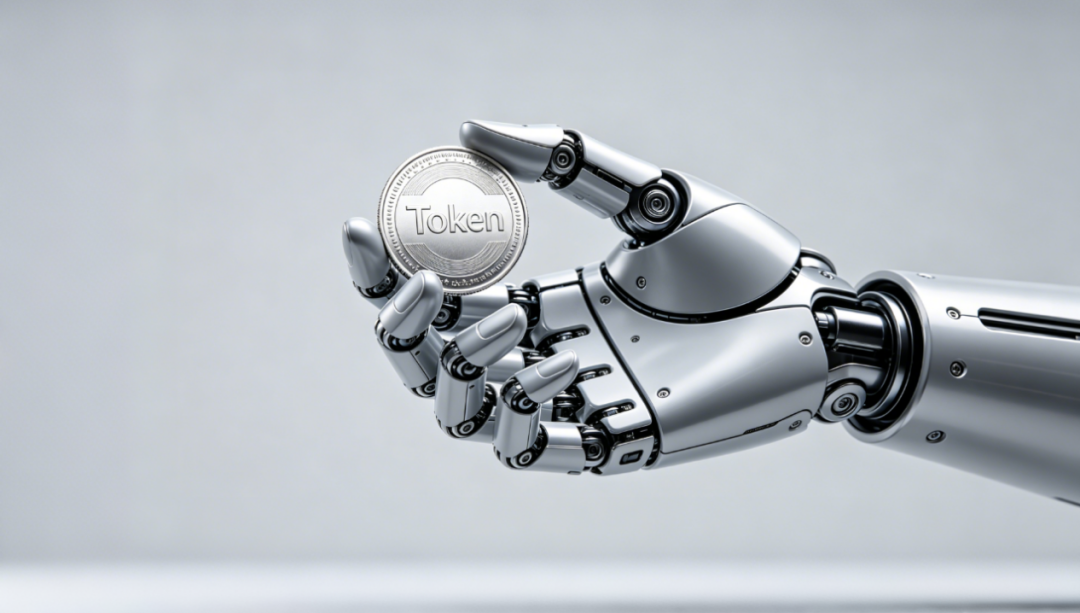
The lion's share of AI toy profits comes from hardware. Currently, AI toy manufacturers are racking their brains to stack profits onto hardware. There are endless forms of this, such as a plush doll being more expensive with embedded AI than with external attachments; users must order two walkie-talkies at once; additionally, any features involving emotional value, such as memory, touch, and interaction, can further drive up prices.
'AI toys priced between 300-400 yuan on the market have hardware and packaging costs not exceeding 50 yuan. For products priced above 600 yuan, their costs do not exceed 80 yuan, translating to hardware gross profit margins of 80%-88%.'
For AI toy manufacturers, their largest costs come from IP licensing and marketing.
An insider at an AI toy company told us that the current differentiator and competitiveness of AI toys lie in IP, which is divided into licensed IP and self-developed IP. 'If it's licensed IP, it's generally signed on an annual basis according to R&D and marketing rhythms. The good thing is that licensed IP only takes effect after the product is officially launched and commercialization begins, and it can be reused across different products.'
However, as the saying goes, 'the wool comes from the sheep,' and ultimately, these costs are passed on to users. The selling price of AI toys already includes IP fees. Taking a certain AI toy product as an example, the self-developed IP version is priced at 599 yuan, while the licensed IP version costs an additional 100 yuan on top of that price.
Since the sales volume of AI toys relies heavily on online e-commerce channels, another significant portion of manufacturers' expenses goes toward influencer marketing. Commissions for influencers vary from thousands to tens of thousands of yuan per post, depending on their follower count. However, the conversion rates are quite impressive, with some AI toy companies achieving over 200,000 yuan in monthly sales through influencer collaborations.
After deducting IP licensing, marketing, and labor costs, the comprehensive net profit margin of the AI toy industry remains elusive for the large model sector.
AI toys are essentially 'consumer electronics + fast-moving consumer goods,' characterized by strong cash flow, rapid turnover, and ease of profitability. Targeting C-end users, especially children, their pricing is based on emotional value and IP premiums rather than technological costs, with parents willing to pay for the concept of 'AI companionship' for their children.
In contrast, large models target B-end developers or C-end ordinary users, with prices suppressed by market competition. Large model companies are still in the technological investment phase, with most burning money to gain market share and unable to achieve short-term profitability.
One-Time Purchase, No Emphasis on Repurchases
In the AI toy industry, technological content has proven to be the biggest lie.
'We use Doubao API; the underlying technology is the same. R&D focuses on appearance and emotional value,' said an AI toy product manager. 'Our spending goes mainly to appearance and plush design.' The core work of the R&D team is not optimizing models or training data but figuring out 'how to make the appearance more attractive and textured to sell at a higher price.'
The so-called 'AI capabilities' merely involve connecting to a large model's voice interaction interface. From our understanding, many AI toy companies use similar underlying technologies, differing only in hardware innovation. The main work of relevant technicians focuses on software-hardware adaptation, prompt tuning, and privacy protection.
If high gross profit margins are the 'facade' of the AI toy industry, then 'one-time purchases' are its 'essence.'
In the internal description of a leading company, the industry's rules are simple and crude: no emphasis on repurchases, no user engagement, and no long-term planning.
IPs are signed annually, changing every year or even every marketing cycle. Thus, the product's market rhythm is also designed to last a year, with rapid scaling, rapid sales, rapid clearance, and then moving on to the next IP.
Marketing targets 'sophisticated, high-spending' mothers, leveraging AI hype to create anxiety and sell products.

At this point, the true nature of the AI toy industry becomes clear: this is not a story of changing the world with technology but a quick-money business built on information gaps, emotional anxiety, and capital games.
On the other side of the industry, major companies like ByteDance, JD, and Huawei are entering the fray. Volcano Engine provides Doubao large model capabilities to companies like Yueran Innovation and Jixian Technology. JD released the JoyInside solution, while Huawei offers HarmonyOS + Xiaoyi, essentially providing out-of-the-box products or interfaces.
For toy manufacturers, there's no need to fine-tune models themselves; they can rely on large companies for TTS and directly call APIs/SDKs. Large companies provide standardized solutions, reducing development costs but, to some extent, exacerbating the homogenization of AI toys. This is also the deep-seated reason why players can only differentiate themselves through IP and marketing.
When Doubao, Xiaoyi, and JoyInside package AI capabilities into plug-and-play modules, the barrier to creating an 'AI toy' is lowered to its minimum. Any company with IP licensing and supply chain resources can launch a product touting 'AI companionship' within weeks. Competition will increasingly focus on IP, design, channels, and marketing—areas where the 'quick-money model' excels.
In other words, while large companies' technical foundations may amplify the AI toy market's scale in the short term, they do not necessarily lead to quality upgrades. They fail to address the homogenization issue in AI toys and may even exacerbate it.
The True Game in the AI Toy Market
The current AI toy market is not a single track but a complex battleground where several forces intertwine and compete.
Large model capabilities are the 'soul' of AI toys, with ByteDance, JD, iFLYTEK, and other major companies occupying the technological high ground.
They prefer to be 'shovel sellers'—outputting APIs/SDKs and providing holistic solutions rather than making toys themselves. While toy margins are high, the scale is too small relative to the size of major companies, which also need to handle complex supply chains, IPs, and channels—not aligning with their paths.
Huawei, Honor, TCL, and others possess mature hardware R&D, supply chain management, and global channel capabilities, enabling them to make AI toys 'look the part.' Their weakness lies in their expertise in 'functional hardware' rather than emotional design, IP operations, or content ecosystems. Huawei's 'Smart Hanhan,' while selling out instantly, remains uncertain in its ability to sustain user attraction and repurchases.
IP holding companies possess the 'soul' but are the weakest in technological integration. IPs like Alpha Group's 'Pleasant Goat' and 'Super Wings' and Golden Tomato's 'Talking Tom,' all market-validated and deeply connected with children, are assets The most difficult to replicate (the hardest to replicate) by other camps. However, their reality is that these traditional content/IP companies generally have weak technological capabilities, resulting in intelligent early education robots that are often 'IP shells + public templates,' with intelligent experiences lagging behind startups.
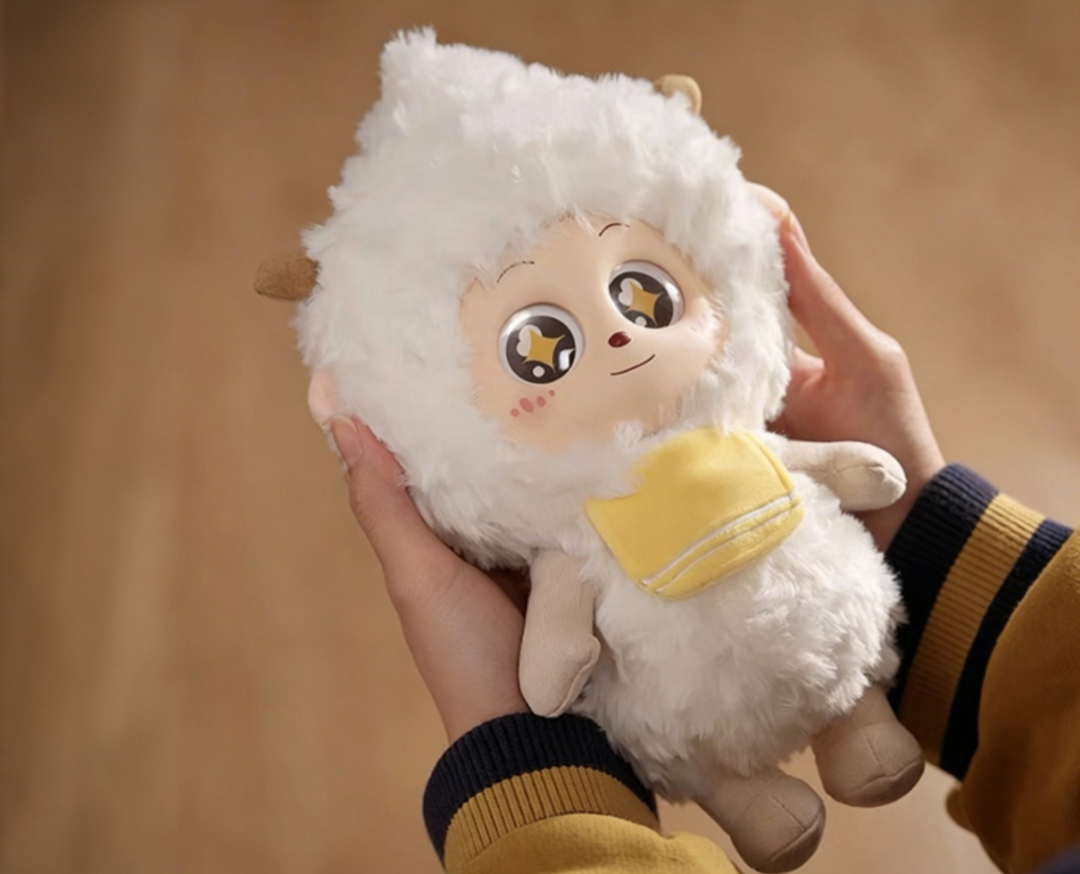
Traditional toy manufacturers possess low-cost manufacturing capabilities, a A comprehensive compliance system (well-established compliance system), and a mature distribution network. However, their DNA is 'manufacturing + sales,' and their transition to AI toys often stops at adding a voice module to traditional toys, making it difficult to create truly differentiated products.
AI startups are the most flexible yet the most fragile, with high technological acuity, rapid product iteration, and the courage to try new scenarios. However, their real situation cannot be ignored: lacking capital and ecological resources, they must quickly generate cash flow to survive, and the fastest way is through 'IP + traffic + high margins.'""Division of labor is the source of efficiency improvement, but in the AI toy industry, it has become an unsolvable integration challenge. Any camp attempting to independently navigate the complete chain from technology, product, IP, channels, to user retention faces a capability gap.
A deeper issue is that the definitions of 'success' vary entirely among collaborating parties.
Major companies seek ecological market share; product sales volume is secondary, with API connections being key. Consumer electronics giants aim for single-product explosions to fill channels and prove brand strength. IP holders seek licensing fees and influence monetization. Startups chase financing stories and next-round valuations.
When goals are misaligned, collaboration becomes a zero-sum game. Each party seeks to maximize its interests rather than grow the pie.
This may be the true reason why AI toys have yet to experience a comprehensive breakthrough. It's not that the technology isn't strong enough, the IPs aren't hot enough, or capital isn't interested—but rather that no player can currently piece together all the puzzle pieces.
-
![]()
Tesla Restructures Its Balance Sheet
-
![]()
Accelerating the High-Speed Interconnection Upgrade of AI Computing Clusters! JONHON Releases ELSFP External Light Source Optical Connectors
-
![]()
Breaking the overseas blockade of volumetric holographic materials, this optical enterprise secures nearly 100 million yuan in financing!
-
![]()
Why Does Jensen Huang So Openly Praise China’s AI?
-
![]()
"Wudang" Unveiled: Arm China's Next-Gen AI VPU Redefines Video Encoding
-
![]()
From Energy Conservation and Carbon Reduction to AI Decision-Making: GECON East Intelligence and Chery Group Explore a New Green and Smart Paradigm for Automobile Manufacturing
-
![]()
WAIC 2026 Observation | AI Accelerates Towards the Core of Industries, Industrial AI Enters a Critical Phase
-
![]()
Volkswagen China Fires the First Shot in Foreign-Funded 'White Box Delivery'!