Kunlunxin Aims for A+H Dual Listing: How Will Li Yanhong Navigate This Challenging Journey?
 05/09 2026
 456
456
Author | Zhang Lianyi
The domestic computing power landscape is not merely a narrative—it's a formidable battleground.
On May 7, the China Securities Regulatory Commission (CSRC) announced on its official website that Baidu's AI chip subsidiary, Kunlunxin (Beijing) Technology Co., Ltd., had officially initiated guidance for listing on the STAR Market, with CICC acting as the lead underwriter (sponsor).
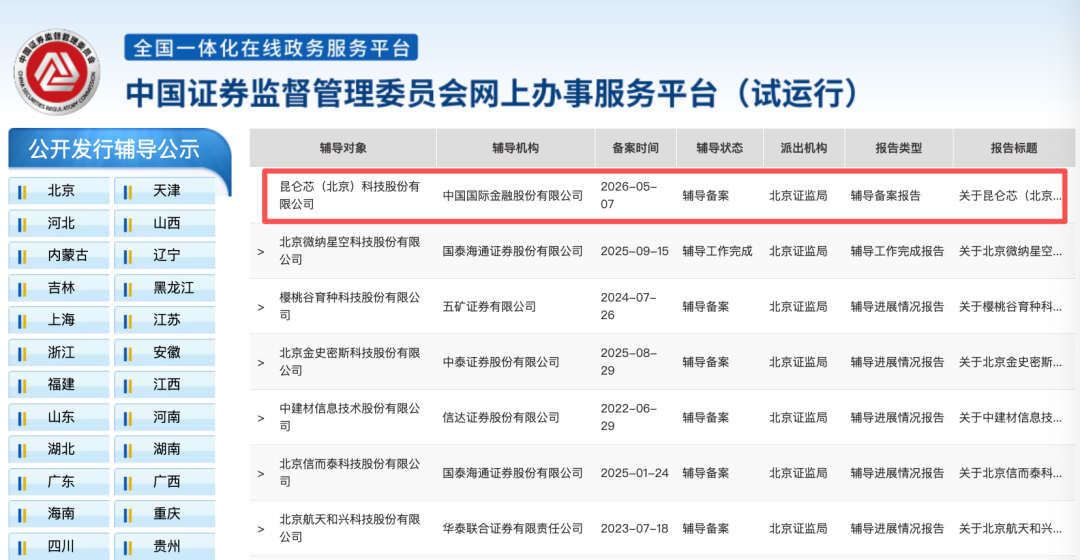 Kunlunxin Initiates Guidance for STAR Market Listing
Just four months prior, in January 2026, Kunlunxin confidentially filed an application with the Hong Kong Stock Exchange (HKEX) for a mainboard listing, a process that is still underway.
This "A+H" dual-listing approach signals that the chip giant, with Baidu's technological heritage, is striving to establish a presence on two key fronts of China's capital markets simultaneously.
From being a cost center within Baidu to a unicorn valued at 21 billion yuan, and now on the brink of becoming a publicly traded entity facing the capital markets... Kunlunxin must demonstrate to the world that it can triumph in fierce competition against NVIDIA and Huawei, even beyond Baidu's protective umbrella. Li Yanhong no longer wishes to "rise early but arrive late"; he cannot afford to miss this grand opportunity in China's computing power surge.
01
A Chip Dream Spurred by NVIDIA's High Prices
The story of Kunlunxin epitomizes China's internet giants' foray into chip manufacturing.
The journey began in 2011. At that time, large-scale AI models were non-existent, and the mobile internet was just beginning to unleash its dividends. Baidu launched its FPGA AI accelerator project, marking its initial foray into accelerated computing.
FPGA is a type of chip whose logical structure can be reconfigured via software, serving as a bridge between general-purpose CPUs and dedicated ASICs. It eliminates the need for one-time tape-out, reduces R&D risks, shortens design cycles, and offers high flexibility.
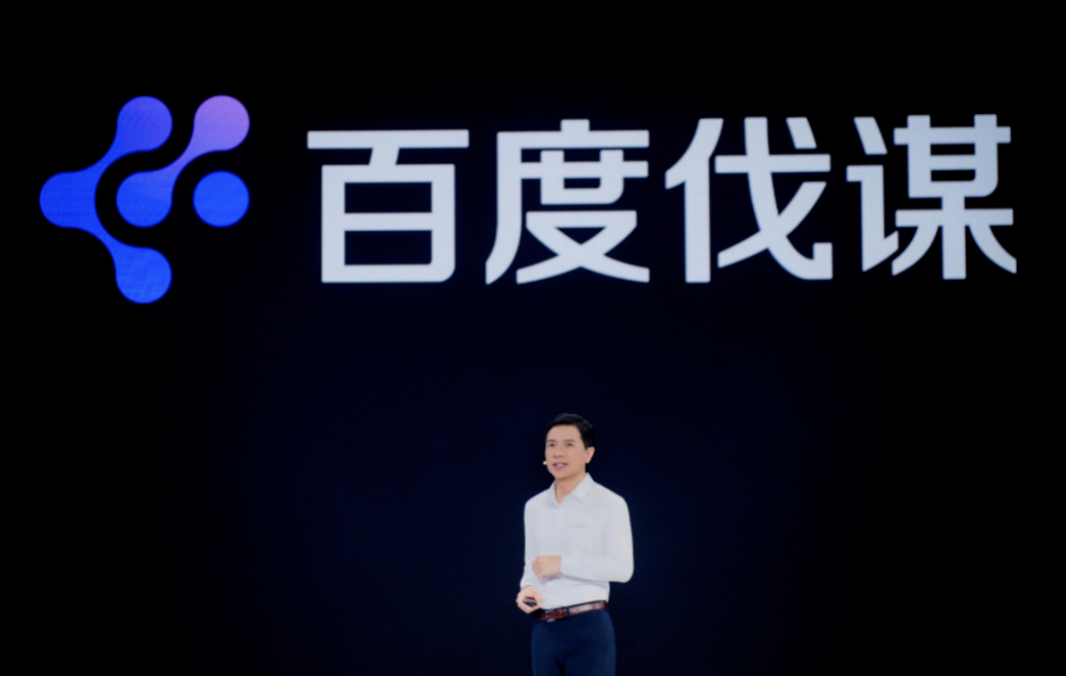 Baidu Founder Li Yanhong
In 2023, at the China Entrepreneurs Forum in Yabuli, Li Yanhong revealed the initial motivation behind Baidu's chip-making endeavors: the procured NVIDIA GPUs were prohibitively expensive, costing up to $10,000 per unit. "By developing our own, we could achieve the same performance for 20,000 yuan, prompting us to push forward with chip development," he explained.
In 2018, Kunlun's first-generation chip was released, manufactured using Samsung's 14nm process, delivering 256 TOPS@INT8 and 64 TFLOPS@FP16, with mass production commencing in 2020.
In 2021, a decade after Baidu embarked on its chip-making journey, it decided to spin off its chip business. Ouyang Jian, Baidu's chief chip architect, was appointed CEO of Kunlunxin. The initial funding round valued the company at 13 billion yuan, led by CPE Source Peak with participation from IDG Capital and Meridian Capital. At the time, Baidu held over 70% ownership.
According to public records, Ouyang Jian graduated from Beihang University (B.S.) and the University of Science and Technology of China (M.S.). He previously served as Baidu's chief chip architect and chair of the Basic Technology System Technical Committee, leading projects such as ARM servers, software-defined Flash, and smart NICs.
In August of the same year, Kunlun's second-generation chip entered mass production, featuring a self-developed XPU-R architecture with performance 2-3 times higher than the first generation.
For two years following its independence, Kunlunxin maintained a low profile in the market. It wasn't until the 2023 large model boom swept across the globe, creating a scarcity of NVIDIA GPUs and shifting international dynamics, that the window for domestic alternatives truly opened.
In 2025, Kunlunxin capitalized on the trend by launching its third-generation chip, the P800, featuring a self-developed XPU-P architecture supporting deployment in 10,000-card clusters, which has been successfully implemented. With 8 cards per server, the P800 achieves a throughput of 2,437 tokens/s, becoming its current flagship product.
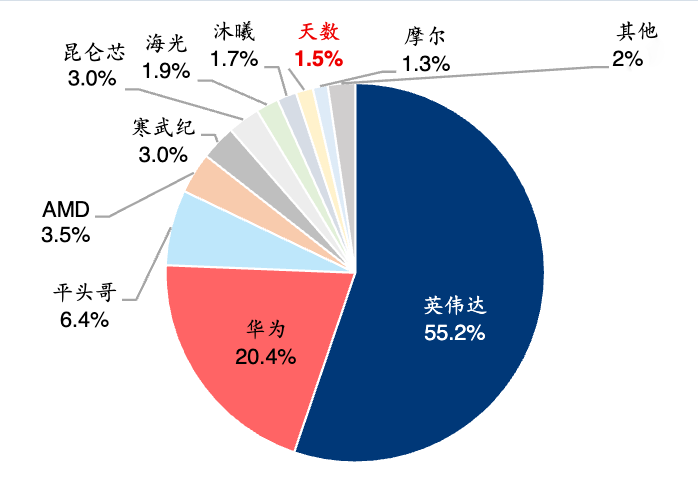 2025 China AI Accelerator Chip Market Competition Landscape (by shipments). Data Source: IDC
According to IDC's latest report, in the 2025 Chinese cloud AI accelerator market, domestic chip vendors captured approximately 41% of the market share. While NVIDIA remained the market leader, its advantage was narrowing.
The report indicated that total AI accelerator card shipments in China reached about 4 million units in 2025. Among domestic vendors, Huawei shipped approximately 812,000 units (20% market share), ranking first locally and second only to NVIDIA; Alibaba's T-Head shipped approximately 256,000 units; Kunlunxin and Cambricon each shipped 118,000 units (3% market share), tying for third place domestically.
02
Transitioning from "Blood Transfusions" to External Markets
While shipment growth is crucial, the pivotal question remains: Do these orders still rely solely on Baidu?
The answer is no.
Since 2025, Kunlunxin has secured multiple major external contracts: in March, it won China Merchants Bank's AI chip resource project; in August, it secured a contract worth over 1 billion yuan in China Mobile's centralized procurement.
Shen Dou, Baidu Group's Executive Vice President and President of Baidu Smart Cloud, stated that Kunlunxin has been deployed across various industries, including internet, finance, energy manufacturing, transportation, and education, serving over 100 clients such as China Merchants Bank, China Southern Power Grid, Geely Automobile, vivo, a major internet company, and a top-tier operator. Delivery scales range from dozens to over 10,000 cards.
According to research reports from Goldman Sachs and other institutions, Kunlunxin's 2025 annual revenue is expected to reach approximately 3.5 billion yuan, up over 70% from 2 billion yuan in 2024, with 2026 revenue projected to jump to 6.5 billion yuan.
While shipments continue to grow steadily, Kunlunxin is also accelerating the launch of new products.
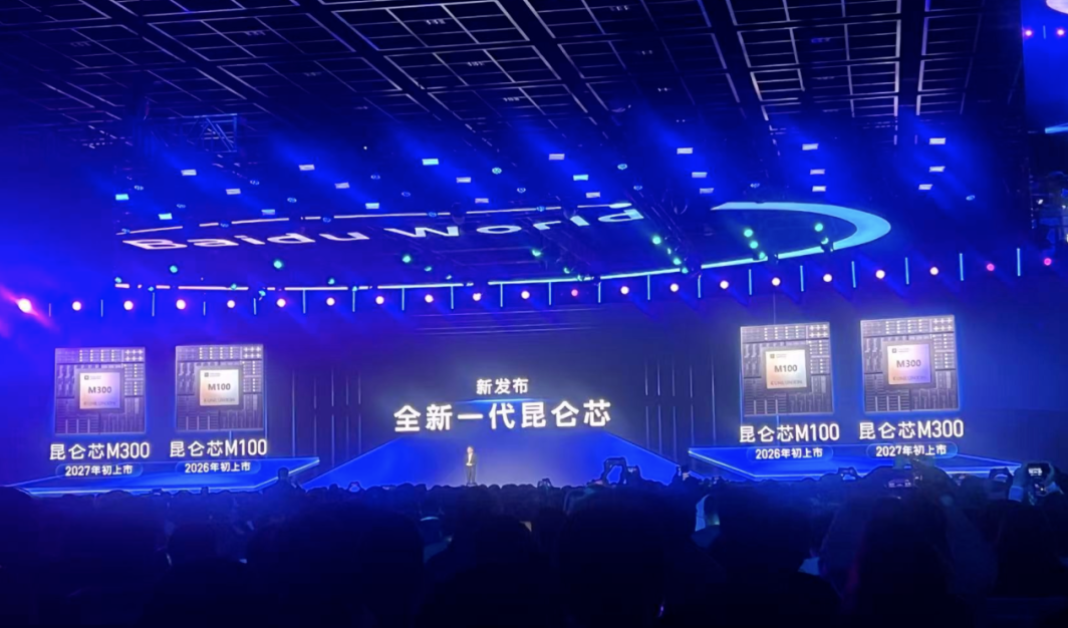 Two New Kunlunxin Products
At Baidu World 2025, Shen Dou unveiled two new products: Kunlunxin M100 and M300. The M100, optimized for large-scale inference scenarios, is expected to launch in early 2026; the M300, designed for ultra-large-scale multimodal training and inference, is planned for early 2027. However, specific parameters for both chips have not been disclosed.
Training and inference for large models cannot be accomplished by a single chip; efficient multi-chip collaboration is essential. Shen Dou pointed out that under today's popular Mixture-of-Experts (MoE) architectures, inter-card communication volumes have surged, creating bottlenecks in traditional 8-card nodes. The solution is to integrate dozens to hundreds of cards into a "super node" that operates as cohesively as a single super-chip.
Based on this, Baidu officially released two super node products:
Tianchi 256 Super Node: Launching in H1 2026, it supports up to 256 cards with ultra-fast interconnectivity. Compared to the previous-gen super node released in April 2025, its total inter-card bandwidth has increased fourfold, performance has improved by over 50%, and per-card token throughput for mainstream large model inference tasks has risen 3.5 times.
Tianchi 512 Super Node: Launching in H2 2026, it supports up to 512 cards with ultra-fast interconnectivity. Compared to Tianchi 256, its total inter-card bandwidth doubles again, enabling single-node training of trillion-parameter models.
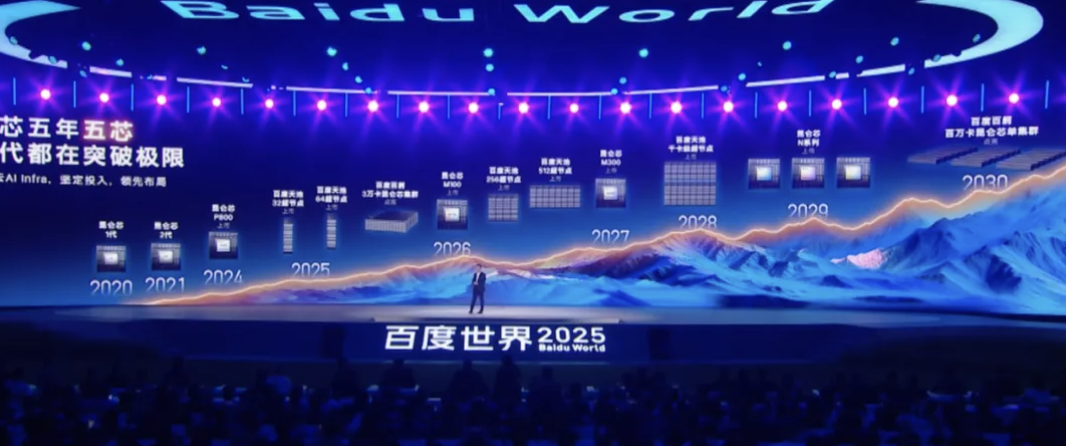 Kunlunxin Development Roadmap
Additionally, Baidu is developing a 1,000-card-class super node based on its new M-series chips. According to Shen Dou: "In 2028, the Tianchi 1,000-card super node will launch; in 2029, the Kunlunxin N-series will debut; by 2030, Baidu's Baige 1-million-card Kunlunxin single cluster will be officially lit up."
As products continue to be deployed, Kunlunxin is also replenishing its resources. Since becoming independent in 2021, it has completed at least 6 funding rounds, with 57 institutional investors on its shareholder list.
Baidu remains the largest shareholder with a 57.67% stake. Kunlunxin's impressive "friend circle" of investors also includes industrial capital (BYD), operators (China Mobile), national-level funds (China Internet Investment Fund, National Social Security Fund), and local state-owned capital (Beijing AI Industry Investment Fund).
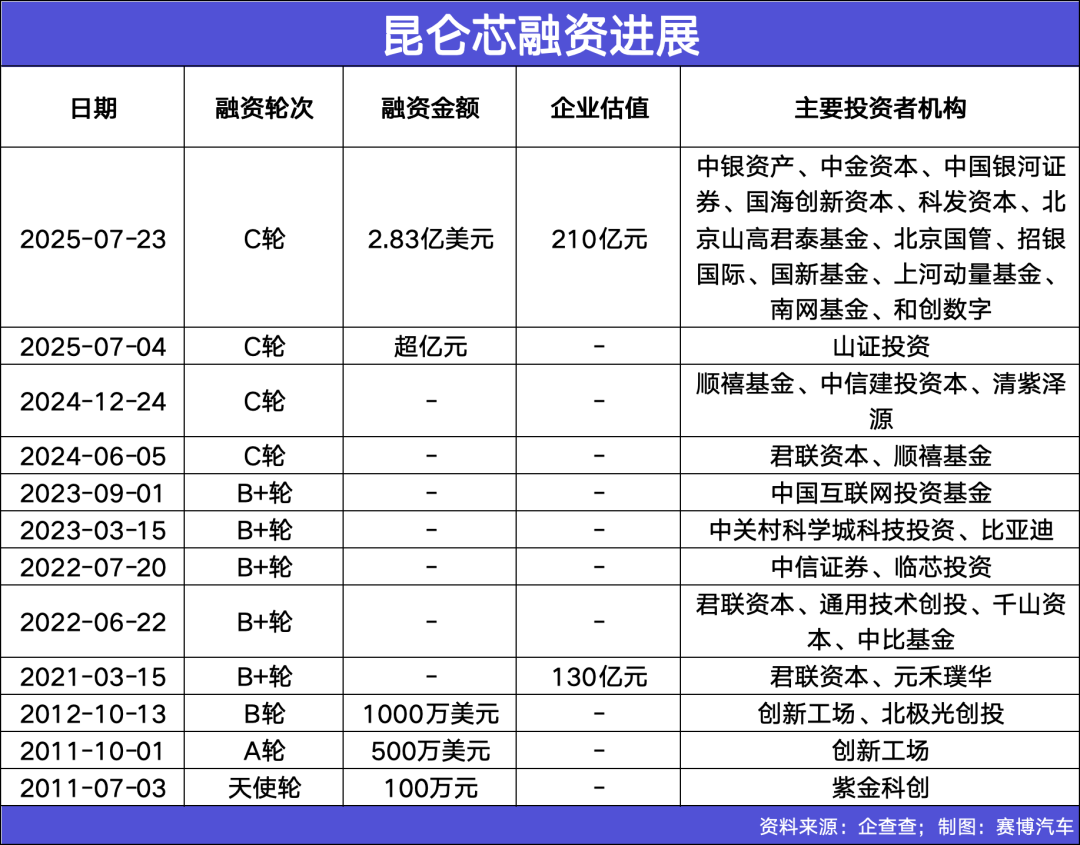
This shareholder structure not only brings Kunlunxin capital but also orders and scenarios. After completing its latest funding round in 2025, Kunlunxin's valuation soared to approximately 21 billion yuan.
03
The Capital Strategy Behind A+H Listing
When a company reaches a certain stage, going public becomes almost inevitable.
In January 2026, Baidu announced that its AI chip subsidiary, Kunlunxin, had submitted a confidential listing application (A1 form) to the Hong Kong Stock Exchange via joint sponsors on January 1, seeking approval for a mainboard listing and trading.
The current plan calls for a proposed spin-off via a global offering of Kunlunxin shares, including a public offering in Hong Kong for retail investors and placement of shares with institutional and professional investors.
However, details of the proposed spin-off, including the scale and structure of the global offering and the extent of Baidu's reduced stake in Kunlunxin, have not been finalized.
Baidu believes the proposed spin-off is commercially beneficial for both Baidu and Kunlunxin and aligns with the overall interests of shareholders.
Why pursue a dual "A+H" listing? This reflects a major strategic move by Baidu.
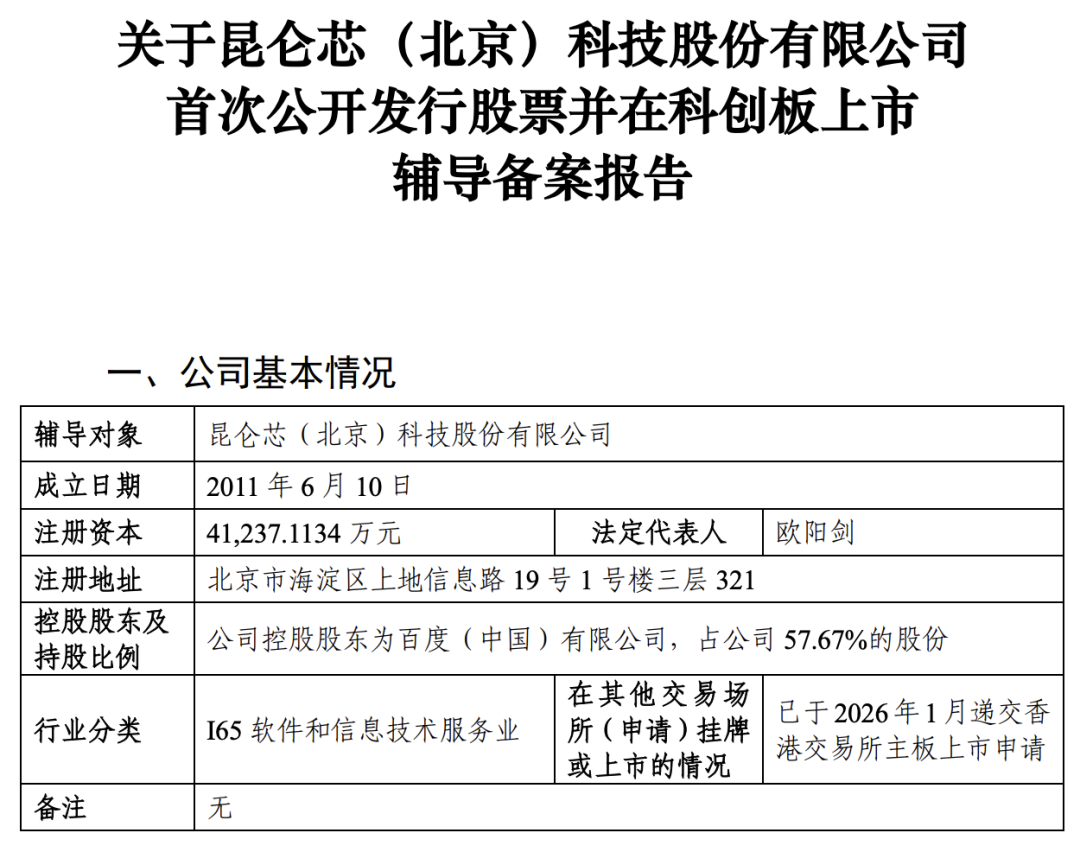 Kunlunxin Applies for STAR Market Listing
For Kunlunxin itself, a Hong Kong listing means access to international capital liquidity and global reputation; a STAR Market listing means higher valuation premiums and exposure to domestic investors who better understand "hard tech," as seen in the initial surges of Moore Threads and MetaX upon their listings.
For parent company Baidu, its valuation has long been labeled as that of an "advertising company," with its tens of billions in AI investments not fully reflected in its stock price. By spinning off Kunlunxin, Baidu's "AI content" is separately priced, highlighting its hard tech attributes.
But the real challenges begin on the road to IPO.
The 2026 chip war has evolved from a pure computing power contest into a comprehensive battle of capital strength and real-world deployment scenarios.
For Kunlunxin, despite frequent positive news, the IPO journey still faces severe challenges.
First, there remains a significant gap in market share. Although ranked highly, Kunlunxin still trails NVIDIA and Huawei by a wide margin.
Second, its strengths lie mainly in inference, with a window of opportunity in training. As large models enter an application explosion phase, the inference market is indeed vast. However, when it comes to supercomputing tasks like "large model training," the industry's recognized leaders remain NVIDIA and Huawei Ascend. Kunlunxin's M300 chip for ultra-large-scale multimodal training won't launch until 2027, leaving a clear time window.
Third, ecological barriers cannot be underestimated. NVIDIA's dominance stems from its CUDA ecosystem. While domestic chip vendors all claim compatibility, customers face significant costs when migrating from NVIDIA. Kunlunxin performs well in compatibility but still has a long road ahead in building its software ecosystem.
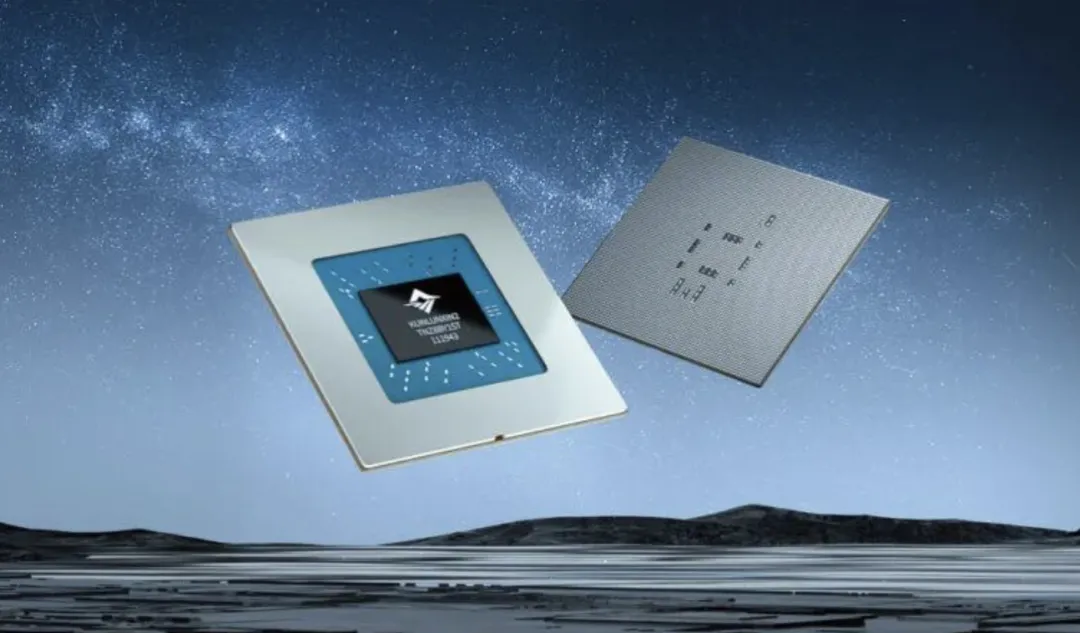 Kunlunxin Products
Clearly, for Kunlunxin, this challenging journey requires a three-pronged approach: 1) seize the time to close the training-side window; 2) expand the ecosystem to reduce customer migration costs; 3) shed the "Baidu chip" label and transform into a "China chip" representative.
Going public is just the beginning. The true test lies in whether it can deliver on its 2026 M100 and 2027 M300 technical commitments, and whether the "Baidu-affiliated" label can truly be replaced by the essence of a "national team chip," ushering in its moment of glory.
-END-
-
![]()
Tesla Restructures Its Balance Sheet
-
![]()
Accelerating the High-Speed Interconnection Upgrade of AI Computing Clusters! JONHON Releases ELSFP External Light Source Optical Connectors
-
![]()
Breaking the overseas blockade of volumetric holographic materials, this optical enterprise secures nearly 100 million yuan in financing!
-
![]()
Why Does Jensen Huang So Openly Praise China’s AI?
-
![]()
"Wudang" Unveiled: Arm China's Next-Gen AI VPU Redefines Video Encoding
-
![]()
From Energy Conservation and Carbon Reduction to AI Decision-Making: GECON East Intelligence and Chery Group Explore a New Green and Smart Paradigm for Automobile Manufacturing
-
![]()
WAIC 2026 Observation | AI Accelerates Towards the Core of Industries, Industrial AI Enters a Critical Phase
-
![]()
Volkswagen China Fires the First Shot in Foreign-Funded 'White Box Delivery'!