Why Are Automakers Flocking to Embodied AI?
 06/29 2026
 405
405
As 2026 progresses, a curious phenomenon has emerged in the automotive industry: an increasing number of automakers are venturing into embodied AI and humanoid robots. BYD, XPENG, GAC, Chery, Changan, Li Auto, SAIC, along with overseas players like Tesla, BMW, Hyundai, and Mercedes-Benz, have nearly 20 mainstream automakers entering this track (track) through self-research, investment, and incubation. Seres showcased its first humanoid robot "Xiao Sai" in June; XPENG Chairman He Xiaopeng announced in an internal letter on June 10 that he would personally serve as CEO of the robotics business; BYD Executive Vice President Li Ke also publicly stated that the company is developing humanoid robots. This wave has come swiftly and collectively, prompting the question: Why are automakers doing this? 
Why Are They Sprinting into Embodied AI?
The direct driver for so many automakers entering the embodied AI space is the survival pressure within the vehicle manufacturing industry. Data from the China Passenger Car Association shows that the profit margin of China's automotive industry dropped to 4.1% in 2025, reaching a new low since 2015. By 2026, the situation had not improved, with the industry's profit margin further declining to 2.9% in the first two months. Meanwhile, 177 vehicle models saw official price reductions, with the average price of new energy vehicles dropping by 11%. Faced with both market saturation and price wars, automakers urgently need to find new growth points.
The embodied AI robot market presents an excellent opportunity. According to IDC forecasts, China's user spending on embodied AI robots will exceed $1.4 billion in 2025 and soar to $77 billion by 2030, with a compound annual growth rate (CAGR) of 94%. Another industry report states that China's humanoid robot market size reached 3.5 billion yuan in 2025 and is expected to surpass 100 billion yuan by 2030. Currently, China has over 140 humanoid robot manufacturers, with annual shipments of 14,400 units, accounting for 84.7% globally. Such market prospects are highly attractive to any automaker facing profit pressures.
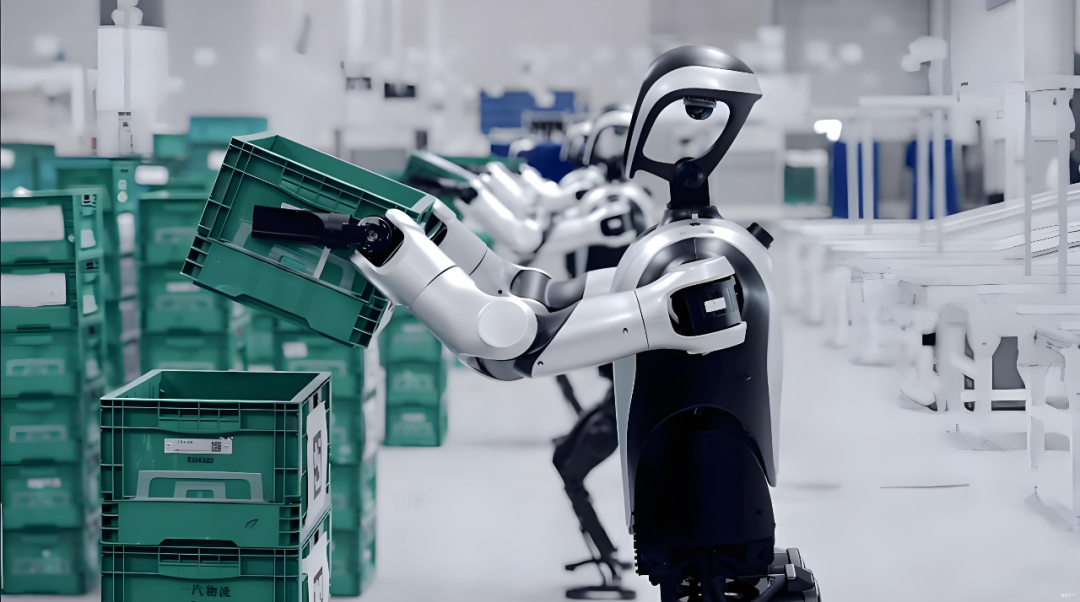
Image Source: Internet
However, market attractiveness alone is insufficient. What truly emboldens automakers to cross over is the high degree of technological overlap between vehicles and embodied AI. Zhang Yongwei, Secretary-General of the China Electric Vehicle 100 People's Forum, made a vivid analogy: "An intelligent car, when stood upright, becomes an embodied AI humanoid robot." This statement holds merit, as humanoid robots and intelligent vehicles share core technological frameworks for perception, decision-making, and execution.
At the perception layer, the LiDAR, cameras, and millimeter-wave radars required for humanoid robots can be seamlessly transferred from automotive autonomous driving perception systems. At the decision-making layer, both rely on environmental perception, path planning, and real-time decision-making algorithms. At the execution layer, the core hardware of humanoid robots, such as joint drives, power supply, and perception control, is highly interchangeable with key components of intelligent vehicles. Research indicates that approximately 70% of automotive and robotic technologies can be reused, meaning automakers' years of technological accumulation and R&D investment in intelligent driving can be directly applied to humanoid robots, with marginal costs far lower than starting from scratch.

Where Exactly Does Technological Overlap Lie?
At the chip level, the local inference demands of humanoid robots are highly similar to those of intelligent driving. The XPENG IRON is equipped with three self-developed Turring AI chips, delivering a total computing power of 2250 TOPS. These chips share the same computing platform as the intelligent driving system. With approximately 82 active degrees of freedom throughout its body, combined with XPlanner motion planning and cerebellar control, the IRON achieves natural gait and complex operations. He Xiaopeng explicitly stated in an internal letter that the supply chain, manufacturing, and quality capabilities accumulated in the automotive business would be unreservedly replicated in the robotics business.
Li Auto unveiled its self-developed AI chip, Mach M100, in June 2026. Built on a 5nm automotive-grade process, it delivers 1280 TOPS of computing power per chip, with a total of 2560 TOPS for dual chips. Li Auto claims it as the world's first dynamic dataflow AI chip, with its architectural paper selected for ISCA 2026, a top international computer architecture conference. Unlike traditional instruction set architectures, the dataflow architecture drives computation through data movement, achieving over 82% operational efficiency—a more than 20 percentage point improvement over the 40-60% efficiency of traditional instruction-driven architectures. Li Auto CTO Xie Yan explained that AI computing is inherently parallel, with data as tensors, deterministic relationships, and clear flow paths, making the dataflow architecture tailor-made for this computational model.
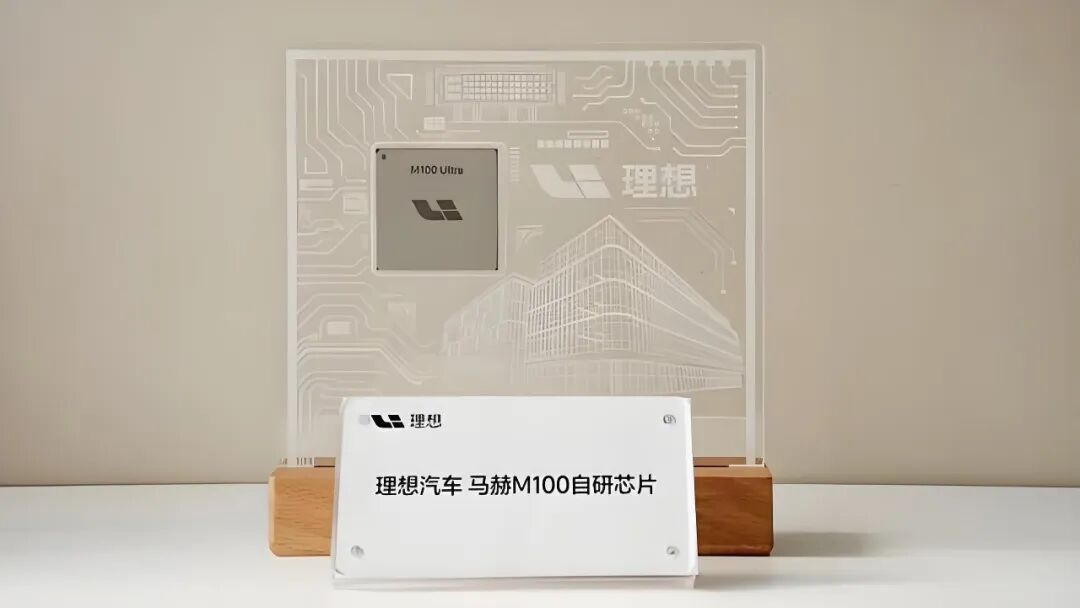
Image Source: Internet
Tesla is also advancing the development of its AI5 and AI6 chips. AI5 completed tape-out in April 2026 and is expected to enter mass production in 2027 for use in humanoid robots and data centers. The AI6 chip, manufactured by Samsung's new Texas facility, will debut in the Optimus robot and supercomputing clusters. In terms of computing power, the industry is shifting from mere accumulation to efficiency prioritization. Research indicates that robotic computing power demands are gradually increasing from the current 200-500 TOPS to 500-1000 TOPS, but algorithmic optimizations make efficiency a more critical metric.
The end-to-end large models accumulated by automakers in intelligent driving can also be directly transferred. XPENG unveiled its second-generation VLA (Vision-Language-Action) large model at its 2025 Tech Day, a universal physical world model capable of driving not only AI vehicles but also robots and flying cars. The IRON debuted with XPENG's first-generation physical world model, achieving three high-level intelligence capabilities—operation, locomotion, and interaction—through a combination of advanced cerebellar and cerebral abilities (VLT+VLA+VLM). The second-generation VLA model enables end-to-end autonomous decision-making from visual perception to action control.
Li Auto's technological roadmap is equally clear. In 2025, it unified spatial understanding, language comprehension, and action decision-making into a single model framework, constructing the VLA Driver large model based on three technological stacks: VLA, world models, and reinforcement learning. In March 2026, Li Auto unveiled its next-generation autonomous driving foundation model, MindVLA-o1, at the NVIDIA GTC conference. The company conceptualized its technological system as a complete robotic architecture: the Mach VLA large model as the brain, the 3D ViT perception model as the eyes, the Mach M100 chip as the heart, the XingHuan OS as the nervous system, and the full-line-control chassis as the limbs. At CVPR 2026, Li Auto had 12 papers selected, covering end-to-end planning, world models, reinforcement learning, and other fields. Four papers focused on world models, addressing depth estimation, 3D reconstruction, cognitive assessment, and safety anticipation.
As technology evolves, world models have emerged as an industry focal point. Recent frequent technological releases include Geely's WAM (World Behavior Model), XPENG's X-World, Xiaomi Auto's Xiaomi Auto World Model, and Dongfeng Motor's Taiji large model-centric intelligent technology system. The Taiji model is the industry's first self-developed large model by an automaker to pass China's generative AI service filing (filing), featuring multimodal fusion, high-precision interaction, and full-scenario collaboration, supported by Dongfeng's Qingtian computing platform and high-quality datasets. World models are considered by academia as a key piece for achieving artificial general intelligence (AGI) and by industry as a breakthrough technology for overcoming generalization bottlenecks in embodied AI.
Geely Automotive CTO Li Chuanhai, when releasing WAM, pointed out three limitations of VLA: its inability to go beyond matching standard answers to develop pattern recognition, its reliance on limited driving operation data rather than vast internet video datasets, and its difficulty in modeling physical world patterns. This indicates that world model technologies have not yet converged, with automakers still exploring their paths. However, the commonality lies in large models becoming the unified intelligent foundation driving both vehicles and robots.
Intelligent vehicles' by-wire chassis, electric drive systems, and precision control technologies can also be reused in robotics. GAC leads in motion control, with its third-generation embodied AI humanoid robot, GoMate, featuring an industry-first reconfigurable wheel-leg configuration. It operates in both two-wheel and four-wheel modes, adapting to flat surfaces, stairs, and slopes while reducing energy consumption by over 80% compared to similar products and achieving six hours of endurance.
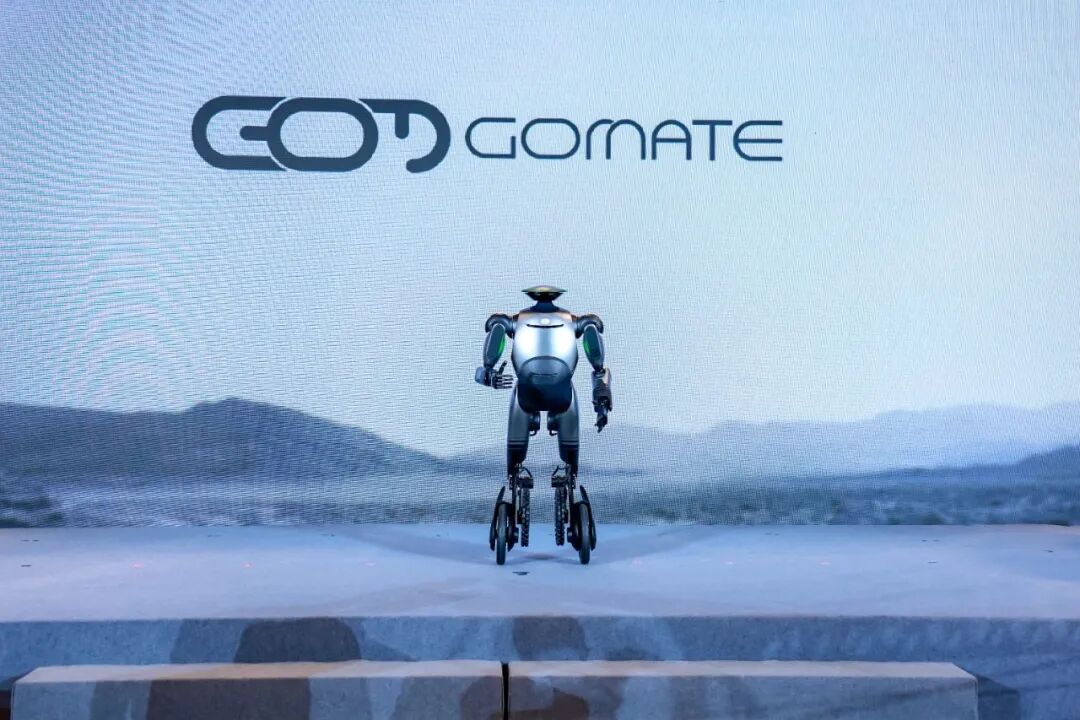
Image Source: Internet
GAC's self-developed actuator weighs only 40 grams, 80% smaller than the industry average, and its dexterous hand integrates visual and tactile sensors for precise grasping. The GoMate also incorporates self-developed pure vision autonomous driving algorithms, FIGS-SLAM algorithm architecture, cloud-based multimodal large models, and AI perception technologies, enabling millisecond-level responses to complex instructions.
In February 2026, GAC officially incubated Guangdong Huilun Technology Co., Ltd. to fully undertake its embodied AI business. The company has established full-stack self-development capabilities for the entire machine, including structural design, system platforms, cerebellar motion control algorithms, and cerebral intelligent perception and decision-making algorithms. It has also achieved self-developed breakthroughs in core components such as axial flux motors, integrated joint modules, actuators, and dexterous hands.
The XPENG IRON adopts bionic design, with approximately 82 active degrees of freedom throughout its body, combined with XPlanner motion planning and cerebellar control. Its motion control system shares underlying logical similarities with the intelligent driving's planning and control algorithms. Path planning, obstacle avoidance, and dynamic adjustments—all validated in automotive applications—can be reused in robots by simply adjusting the execution targets.
SAIC's Nengzai 1 has been deployed on Buick's Zhijing E7 battery production line, handling tasks such as cell grasping and feeding. It possesses human-like characteristics, including visual perception, dual-arm coordination, and force-controlled grasping, enabling autonomous cell material identification and intelligent grasping path planning without relying on fixed programming or precise material positioning. Its navigation-guided trajectory cumulative positioning accuracy reaches ±0.1mm, occupying less than 15% of the space of traditional automated workstations.
Chery's Mojia robot has taken a different commercialization path. Its first mass-produced humanoid robot, Moyin, is the world's first to pass dual CE certifications for hardware and software from the European Union. It has achieved commercial deployment in over 100 scenarios across more than 30 countries and regions, with the Mojia Smart Police robot completing 1,000 unit signings and 100 unit Centralized delivery (centralized deliveries).

How Do Automakers' Technological Paths Differ?
While all automakers are venturing into embodied AI, their technological paths and focuses vary. Tesla is the earliest and most aggressive player, with its Optimus advancing to the third generation and officially launching mass production in Q2 2026. Its strategy involves reusing about 60% of the core algorithms from its FSD autonomous driving system, pursuing maximum algorithm reuse.
XPENG Motors has elevated humanoid robots to its top corporate strategy, comparing the current moment to eight years ago, just before the mass production of the XPENG G3. The IRON already handles sorting, handling, and quality inspection on Guangzhou Factory's P+ production line. XPENG's uniqueness lies in incorporating humanoid robots into its overall framework of physical AI, alongside Robotaxi and flying cars as its three major embodied AI products.
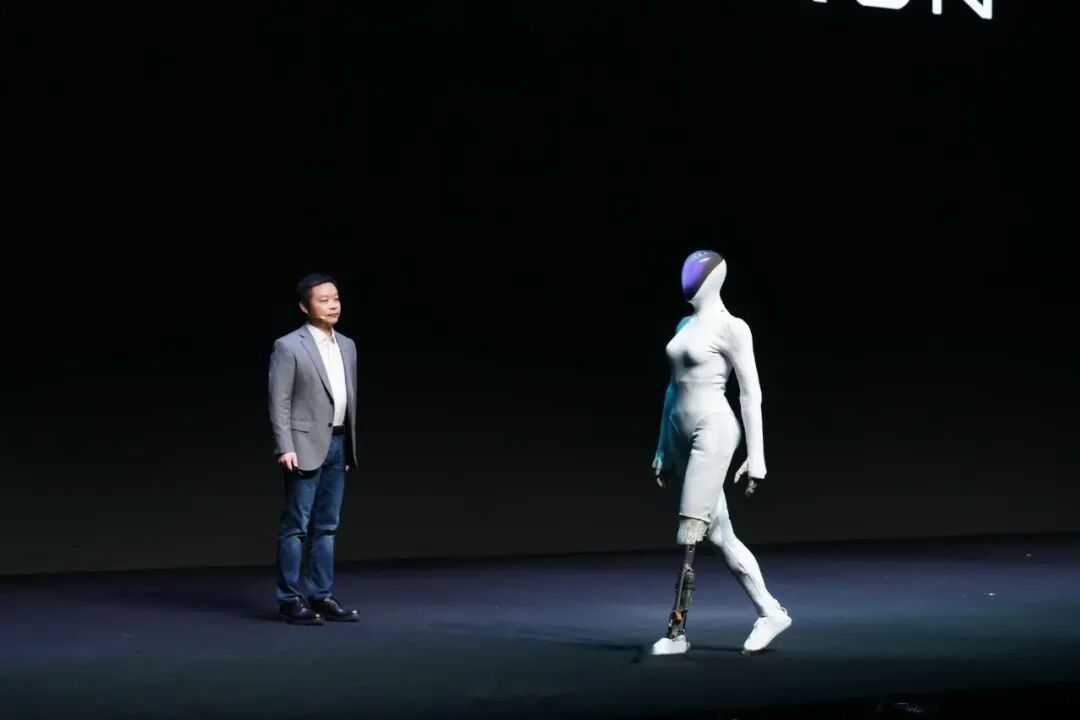
Image Source: Internet
GAC follows a product matrix strategy, having launched the second-generation manned wheel-leg robot GoMove, service robot GoSide, third-generation humanoid robot GoMate, and fourth-generation humanoid robot GoMate Mini. The GoMate Mini features a full-size design, standing 1.70 meters tall on two legs with 27 degrees of freedom throughout its body. GAC also announced the incubation of Guangdong Huilun Technology Co., Ltd. to fully undertake its embodied AI business.
Li Auto approaches from an organizational perspective, recently adding three secondary departments under its foundation model department—Embodied Engineering, Embodied Interaction, and Embodied Behavior—all related to embodied AI. Li Auto's 2025 R&D investment is expected to reach 12 billion yuan, with over 6 billion yuan allocated to AI. The company defines cars as the largest robots in the physical world and is building a complete embodied AI technology system around this definition.
As a representative of central state-owned enterprises, Dongfeng Motor opts for top-level design. In 2025, it led the establishment of the Hubei Provincial Key Laboratory for Automotive Embodied AI Technology and launched the Tianyuan Intelligent Technology brand. At the Beijing Auto Show in May 2026, it further unveiled the Dongfeng Fengqi 2030 plan, aiming to evolve cars from tools that execute instructions into embodied AI partners capable of perception, thinking, and autonomous action.
BYD emphasizes industry-academia-research collaboration. In July 2025, it established the Hong Kong University of Science and Technology-BYD Embodied AI Joint Laboratory with HKUST, planning to invest tens of millions of Hong Kong dollars over several years to support operations. The lab focuses on data-driven embodied AI research, covering efficient data acquisition methods and training technologies for operation and navigation large models.

The value of data and scenarios cannot be overlooked either.
In addition to technology reuse, automotive companies possess another irreplaceable advantage in the field of embodied intelligence: data and scenarios. The massive amounts of driving data accumulated by intelligent vehicles in real-world road environments serve as crucial materials for training embodied intelligence models. These data encompass a rich variety of physical interaction scenarios, extreme operating conditions, and long-tail cases that cannot be replicated in any laboratory environment. The operational data generated by XPENG's warehousing robots is feeding back into the optimization of its intelligent driving simulation system. This bidirectional data flow constitutes a unique barrier for automotive companies in the field of embodied intelligence.
In terms of application scenarios, automotive companies also enjoy natural advantages. For example, their own factories serve as the most direct deployment scenarios. SAIC's Nengzai No.1 has been deployed on battery production lines, XPENG's IRON handles sorting and transportation tasks in factories, and Xiaomi's humanoid robot is interned in automotive factories, performing tasks such as self-tapping nut assembly and bin transportation. Store sales guidance represents a second scenario, with XPENG planning to introduce IRON into offline stores for sales guidance work in the first quarter of 2027. Chery's Mojia robot has already been deployed in its 4S stores, museums, government service halls, and other locations. Further application scenarios include public services such as traffic police duty assistance and hospital guidance. The commonality of these scenarios is that they are areas where automotive companies already possess channels and customer resources, eliminating the need to start from scratch in market development.
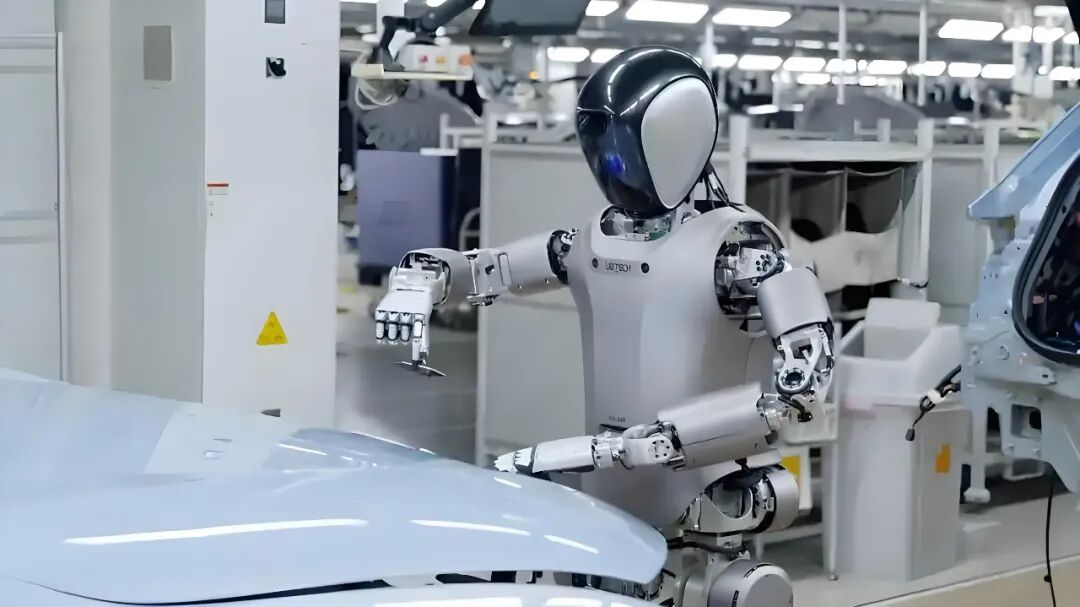
Image source: Internet
In fact, automotive companies are currently in a phase of staking claims and then validating their positions in the field of embodied intelligence. The 2025 annual reports of some A-share automotive component companies reveal that the contribution of humanoid robot businesses to revenue is negligible, with most companies still in the ramp-up phase from sample delivery to mass production. However, the technological commonalities lower the barriers to entry, the advantages in data and scenarios offer possibilities for differentiated competition, and the rapid market growth provides a sufficient time window. This is perhaps the real reason why nearly 20 automotive companies are collectively flocking to embodied intelligence—a strategic extension based on their own technological accumulations amid the persistent pressure of declining industry profits.
-- END --
-
![]()
Depreciation Rate on Par with Mobile Phones: Just 40% Value Retention After Three Years—Why Do Battery Electric Vehicles Lose Their Worth?
-
![]()
Clearing Bugatti Stock Worth 7 Billion: Why is Porsche 'Cutting Ties'?
-
![]()
Don’t Dismiss Huawei’s Potential in Sedans Just Because the Shangjie Hasn’t Hit It Big Yet
-
![]()
Unsold Cars in China Find Success Overseas
-
![]()
Ghosn: Only I Can Save Nissan, Shareholders Beg Me to Return
-
![]()
Expanding Automobile Consumption: It's Time to Address the High Cost of Electric Vehicle Repairs
-
![]()
Luna Ultra Entangled in 'National Subsidy Fraud' Controversy, Insta360 Pushed to the Brink by DJI
-
![]()
People have long suffered from splash ads. Will the 'temporarily disappeared' traffic behemoth make a comeback?