Clearing Bugatti Stock Worth 7 Billion: Why is Porsche 'Cutting Ties'?
 06/29 2026
 365
365
Abandoning Bugatti essentially means sacrificing prestige for a more robust profit structure, a clearer brand positioning, and more substantial funds for transformation.
The most unexpected deal in the automotive world for 2026 has been finalized.
Recently, Porsche officially announced the one-time transfer of its 45% stake in Bugatti Rimac and 20.6% stake in Rimac Group to an international consortium led by HOF Capital, with a transaction value of approximately 7 billion yuan. The entire deal is expected to be completed by the end of this year. Upon completion, Rimac Group will gain full operational control of the Bugatti brand, while Porsche will completely exit Bugatti's ownership structure.
Once the news broke, various interpretations flooded the internet, with one of the most common claims being that Porsche's plummeting sales in China and declining revenue prompted this move as a desperate bid for survival.
On the surface, this logic seems flawless. In fiscal year 2025, Porsche's revenue fell by 9.5% year-on-year, and its operating profit plummeted by 92.7%. Sales in the Chinese market dropped to 41,900 units, a 26% year-on-year decline and nearly a 60% drop from the peak of 95,700 units in 2021. Its return on investment fell from 14.1% in 2024 to 1.1%. Combined with sustained investments in its electrification strategy, selling Bugatti—a perennially unprofitable brand with extremely low production volumes—seemed like the simplest and most straightforward survival tactic for Porsche.
However, if one only sees this as a 'fire sale' due to financial strain, they would completely underestimate the depth of Porsche, a century-old automaker.
From a 'Golden Brand' to a 'Financial Burden'
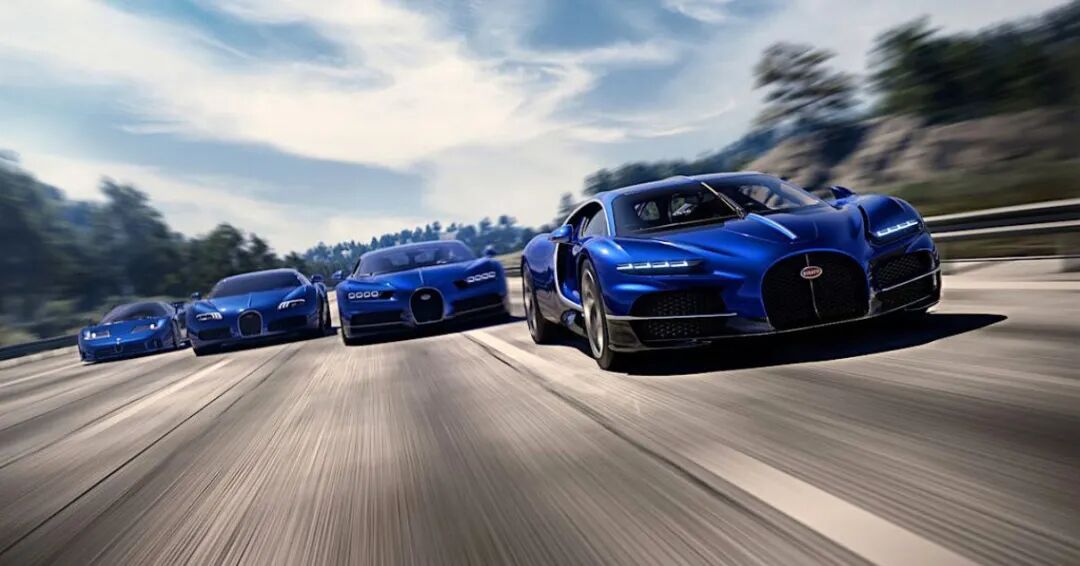
For many, Bugatti represents the pinnacle of hypercars—a symbol of speed and automotive glory. With its W16 quad-turbocharged engine, 0-100 km/h acceleration in 2.5 seconds, and a top speed exceeding 490 km/h, every aspect embodies the zenith of automotive engineering.
Despite being Volkswagen Group's 'crown jewel' for the past two decades, Bugatti has long been a financial drain in Porsche's books.
Firstly, its niche, ultra-luxury positioning destined (zhìdìng, 'doomed') it to be a perpetual money pit. Public records show that Bugatti consistently maintains an annual production capacity of fewer than 100 units, with R&D costs for a single new model reaching as high as 300 to 500 million euros. Under such high cost allocation, the production cost per unit often runs into the tens of millions of yuan.
Yet, despite its exorbitant pricing, Bugatti has struggled to escape losses. Relevant data indicates that in the 28 years since Volkswagen acquired Bugatti in 1998, total production has remained below 10,000 units. From 1998 to 2013 alone, Bugatti accumulated losses of $2 billion (approximately 14 billion yuan at the time). Subsequent investments in R&D for new models like the Chiron and production line maintenance further drained resources. Industry estimates suggest that by the 2026 sale, Bugatti's cumulative losses under Volkswagen and Porsche's management had surpassed 10 billion euros, making it a veritable financial burden.
A Failed Bet on Electrification
In fact, until 2021, Bugatti remained under Volkswagen Group. That year marked a pivotal turning point involving Porsche, Bugatti, and Rimac.
At the time, Europe's carbon neutrality regulations tightened, explicitly proposing a ban on internal combustion engine vehicles by 2035. For Bugatti, a brand deeply rooted in high-displacement fuel-powered vehicles with virtually no electric technology, adapting to these new regulations and achieving electrification would require overhauling its product lineup and developing electric models from scratch—a cost that would be astronomical.
To revitalize Bugatti, Volkswagen had no choice but to seek partnerships. Led by Porsche, a union was formed between Bugatti and Croatian electric hypercar company Rimac, resulting in the establishment of the current Bugatti Rimac joint venture. Notably, Rimac possessed numerous core patents in high-performance electric powertrains and premium battery management systems—a tantalizing prospect for Porsche, which was still in the early stages of electrification.
Porsche's initial plan was clear: leverage technological synergies between the two parties to retain Bugatti's brand halo as a top-tier hypercar while rapidly advancing its own electrification layout (bùjú, 'layout') at minimal cost. However, the global automotive industry's electrification wave swept in far faster than anticipated. In just five years, the industry landscape had been completely rewritten. Bugatti's once-celebrated W16 engine was no longer a technological badge of honor but a burden that inflated the group's average carbon emissions and dragged down its ESG ratings.
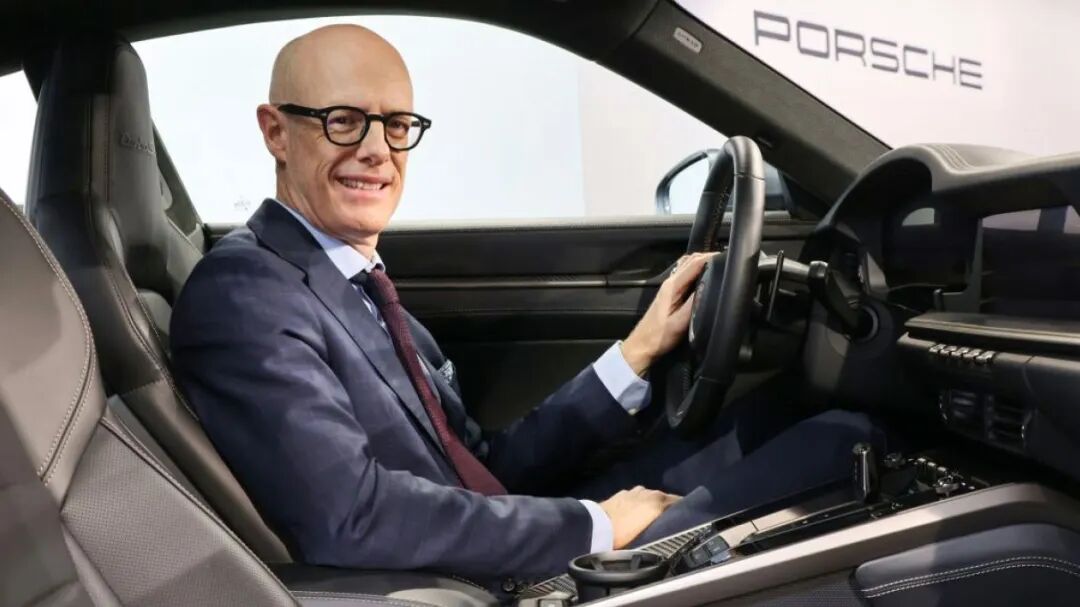
As Porsche's current CEO, Michael Leiters, stated, 'We must free up capital to address challenges in our core business.' Today, Bugatti neither contributes stable revenue and profits nor provides technological feedback for civilian vehicle iterations. Instead, it continues to consume R&D funds, engineering resources, and compliance emissions quotas. 'It's a shame to abandon, yet there's nothing to gain'—this may well be the fundamental reason Porsche ultimately chose to fully divest.
Who Will Take Over Bugatti?
Given Bugatti's prolonged losses and weak profit-generating capabilities, why would any capital still be willing to invest heavily in acquiring it? This is a common question. Clarifying this point is crucial to understanding the deal.
The lead acquirer, HOF Capital, is a New York-based venture capital fund founded in 2016 by three Egyptian entrepreneurs. It currently manages over $7 billion in assets and focuses on TMT (Technology, Media, Telecom), deep technology, and growth-stage venture capital. Its investment portfolio includes tech companies such as SpaceX, OpenAI, Anthropic, Relativity Space, and ConsenSys, making it a highly regarded capital institution in Silicon Valley. This acquisition marks HOF Capital's first foray into high-end automotive manufacturing, representing a strategic cross-industry layout (bùjú, 'layout').
What HOF Capital likely sees in Bugatti is its 'prestige' effect. During the first two decades under Volkswagen, Bugatti's relentless R&D investments and cutting-edge fuel-powered hypercar technology bolstered Volkswagen's industry reputation. By leveraging Bugatti's brand aura, HOF Capital can swiftly fill gaps in its high-end luxury manufacturing portfolio and enhance its global capital market visibility.
Among the investors, UAE-based BlueFive Capital contributed the largest share and was a key driver of the deal. This consortium maintains a long-term optimistic view of China's massive market and innovative vitality, with a business focus on investment links between the Gulf region and Asia, particularly China. This has sparked market speculation that under Middle Eastern ownership, Bugatti's commercialization efforts may shift toward Asia, even China.
In the author's view, two highly imaginative collaboration paths lie ahead: First, leveraging China's mature supply chain to help Bugatti reduce R&D and production costs for electric hypercars, avoiding Europe's exorbitant manufacturing expenses. This is currently the most widely recognized and feasible approach in the industry. Second, repackaging this 'hot potato' for flexible asset rotation and seeking suitable capital partners to take over. Middle Eastern capital is known for its enthusiasm for capital operations and flexible equity rotations, leaving open the possibility of releasing minority stakes in Bugatti later. By forgoing brand control and settling for financial investment, new entrants can secure strategic alliances, technological exchanges, brand co-branding opportunities, and regional exclusive operating rights—a lower-risk, higher-return entry strategy.
No More All-In on Electrification
While Bugatti's ownership change reshapes capital dynamics, the equity sale also reflects a significant strategic shift for Porsche. First, with 7 billion yuan in cash recouped, Porsche's capital allocation is clear: it will no longer go all-in on electrification but instead adopt a multi-powertrain collaboration (xiétóng, 'synergistic') layout (bùjú, 'layout') to meet diverse global market demands.
On one hand, Porsche will continue refining technologies for profitable models like the all-electric Macan and Cayenne, addressing shortcomings in intelligent cockpits and autonomous driving to reverse declining trends in mainstream markets like China. On the other hand, it will retain internal combustion engines as long as possible, reinforcing the importance of fuel-powered models like the 911 and Panamera while offering more drivetrain options to defend its final fuel (rányóu, 'fuel-powered') stronghold.
Overall, Porsche now prioritizes cash flow stability and per-unit profitability over sales volume. With this strategic pivot, Porsche has begun shutting down non-core businesses to further cut costs and focus on its main operations. Shortly after announcing the Bugatti equity sale, Porsche announced the closure of three non-core subsidiaries and the cancellation of redundant R&D pipelines to optimize group resource allocation.
The three shuttered companies each had distinct roles but no longer aligned with Porsche's current priorities. Cellforce Group GmbH, once Porsche's core vehicle for battery self-reliance, was established in 2021 as a joint venture with a German specialty battery manufacturer to develop high-performance power batteries for premium electric sports cars. However, slower-than-expected global electrification demand and soaring battery R&D costs made commercialization increasingly difficult. Combined with a sharp decline in group profits, Cellforce began contracting in 2025, abandoning plans for self-built production lines and mass production. By its closure, only 50 employees remained.
Porsche eBike Performance GmbH, formerly Rimac's high-end e-bike brand Greyp Bikes, aimed to develop high-performance electric bicycle drivetrains and expand into civilian mobility. However, intensifying competition and shifting market supply-demand dynamics eroded profit margins, forcing a complete halt to operations. Cetitec GmbH, which developed proprietary data communication software for internal group use, became increasingly marginalized amid Volkswagen's broader R&D restructuring, rendering it virtually obsolete. These streamlining moves represent not only a correction of Porsche's past aggressive electrification strategy but also a rational compromise for a luxury automaker navigating a downturn.
Collateral Damage from Strategic Retrenchment
Notably, the brand headquarters' strategic contraction and product profitability pressures have also triggered classic 'collateral damage.'
As Porsche's core business logic shifts from 'pursuing scale' to 'preserving profits,' its channel reforms in China have landed simultaneously. Plans indicate that Porsche will optimize its domestic dealer network, reducing stores from 150 to 80 by the end of 2026 to slash inefficient channels. Relevant data shows that by 2025, 46 Porsche dealers in China had already exited the network, with industry reshuffling becoming increasingly visible. This year, survival pressures on Porsche's dealerships are expected to intensify further.
Additionally, rumors of Chinese automakers acquiring Bugatti swirled before and after the deal's closure. In terms of financial capacity, the 7 billion yuan transaction value poses no barrier to mainstream domestic automakers. From a branding perspective, Bugatti seems like a perfect fit, as Chinese automakers generally lack global top-tier hypercar brands. Yet, no Chinese automaker participated, leading industry observers to speculate that this absence was likely a deliberate choice.
Bugatti's decades of sustained losses, minuscule production volumes, and technologies difficult to adapt for civilian use make it more akin to a long-term negative asset for profit-focused, cost-conscious Chinese automakers. Outsiders surmise that after early overseas acquisition missteps, leading Chinese automakers now prefer pragmatism and conservatism, unwilling to inherit hundred-billion-yuan historical losses for mere brand prestige.
Another market conjecture points to policy and operational fit as deterrents for potential buyers. Bugatti's high-displacement fuel engines clash with China's environmental goals, while high consumption taxes, strict road restrictions, and exorbitant maintenance costs severely limit its circulation in China. Outsiders predict that no automaker would pay a premium for a 'luxury ornament' usable only for collection and display, not scalable operations.
Regardless of the outcome, Bugatti remains the speed deity of hypercars, but its trajectory has quietly shifted. Under Middle Eastern capital, where will Bugatti head next? Can a streamlined Porsche return to growth? This cross-continental capital deal continues to provoke industry reflection, warranting long-term observation.
Note: This article was first published in the 'Hot Topics' column of the June 2026 issue of *Auto Review* magazine. Please stay tuned.
Image: Sourced from the internet
Article: Auto Review
Layout: Auto Review
-
![]()
Depreciation Rate on Par with Mobile Phones: Just 40% Value Retention After Three Years—Why Do Battery Electric Vehicles Lose Their Worth?
-
![]()
Clearing Bugatti Stock Worth 7 Billion: Why is Porsche 'Cutting Ties'?
-
![]()
Don’t Dismiss Huawei’s Potential in Sedans Just Because the Shangjie Hasn’t Hit It Big Yet
-
![]()
Unsold Cars in China Find Success Overseas
-
![]()
Ghosn: Only I Can Save Nissan, Shareholders Beg Me to Return
-
![]()
Expanding Automobile Consumption: It's Time to Address the High Cost of Electric Vehicle Repairs
-
![]()
Luna Ultra Entangled in 'National Subsidy Fraud' Controversy, Insta360 Pushed to the Brink by DJI
-
![]()
People have long suffered from splash ads. Will the 'temporarily disappeared' traffic behemoth make a comeback?