Ghosn: Only I Can Save Nissan, Shareholders Beg Me to Return
 06/29 2026
 347
347
Lead
Introduction
He also warned that if Nissan does not change, it could be acquired by a Chinese company.
If there's any job no one wants right now, it's the position of CEO at Nissan Motor.
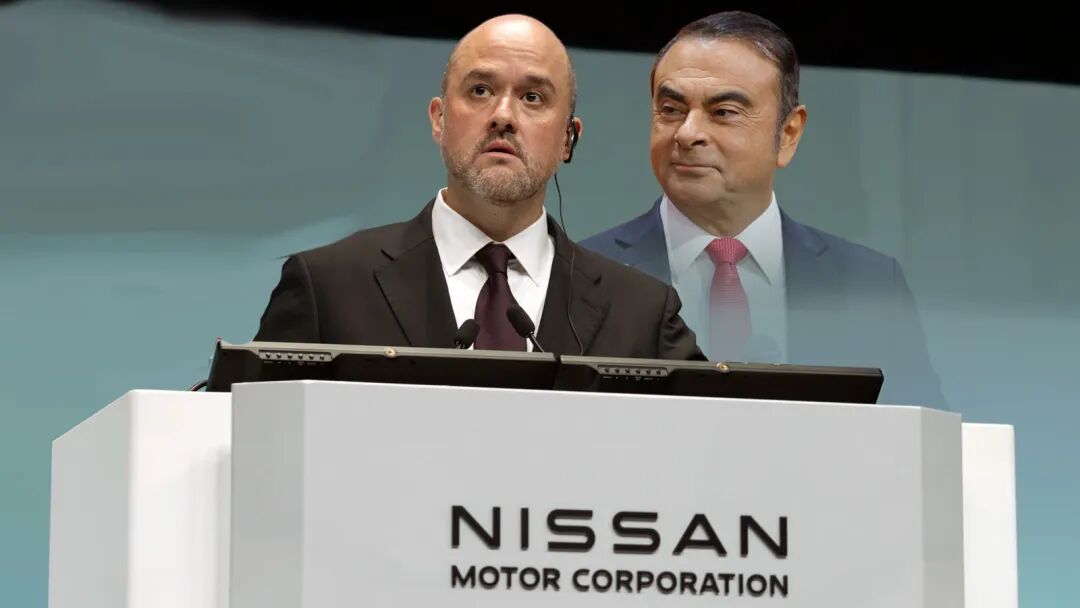
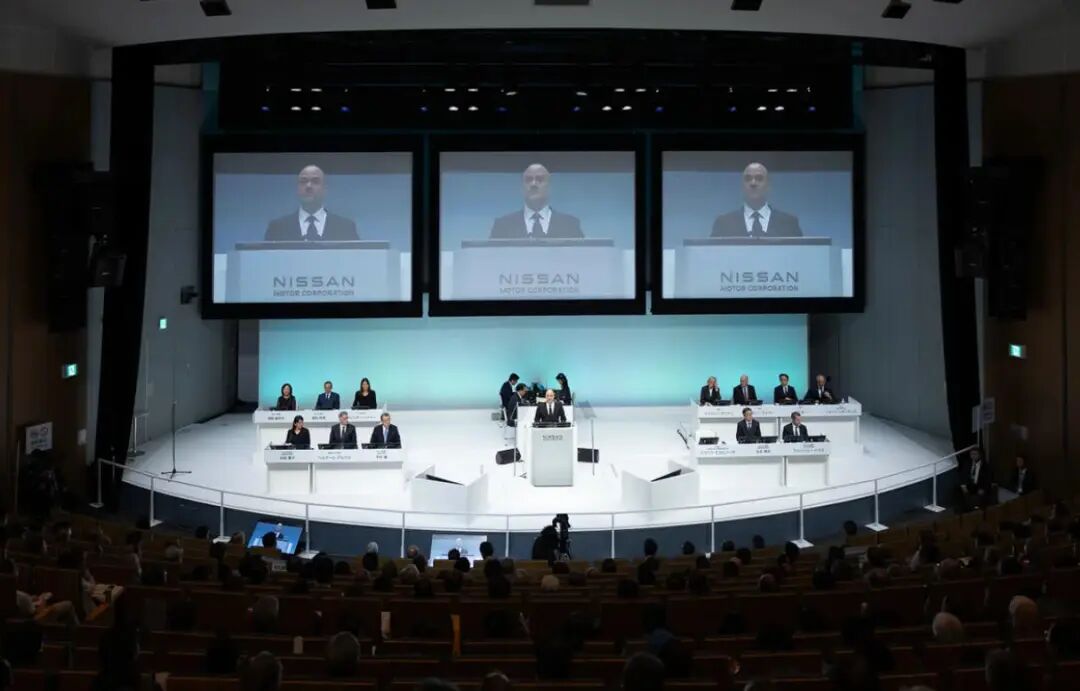
At the recent 127th Shareholders' Meeting, Ivan Espinoza, CEO of Nissan Motor, became acutely aware of this. During the meeting, executives and the board reported on the past year's performance and outlined future plans. However, the problem was that Nissan's top brass had few notable achievements to boast about, and the outlook for the coming year remained challenging.
Perhaps no one could have anticipated that, during Nissan's time of adversity, shareholders would attempt to oust the CEO and suggest seeking advice from a fugitive. This was precisely the situation Ivan Espinoza found himself in, with the chaos at the shareholders' meeting that day undoubtedly etched deeply in his memory.
Generally, annual shareholders' meetings are routine affairs, filled with financial jargon and a series of proposals for shareholders to vote on. Rarely does anything truly out of the ordinary occur, but Nissan's difficult situation in recent years has prompted investors to speak out.
Before Espinoza officially began, a shareholder initiated a vote of no confidence, directly targeting Espinoza. Subsequently, criticism poured in, with people endlessly discussing the voting method, complaining about the stock price, expressing concerns about proposals, and opposing board nominees...
Indeed, Nissan's stock has performed poorly in recent years, even before Espinoza took power. Moreover, it was reported that one investor stated, "We need someone like Carlos Ghosn. He has flaws, but he also has strengths. We need a leader like that."
Nissan's stock price has fallen by 43% over the past five years and by 66% from before Ghosn's arrest. Over the past year, the stock has fallen by about 9% after rising and is down by a third from the high reached in February this year. This is undoubtedly a significant amount, and as Espinoza attempts to turn the situation around, the stock price continues to decline.
Frankly speaking, the shareholders' anxiety is understandable.
01 Current CEO Repeatedly Targeted
It has been more than eight years since Carlos Ghosn, the former CEO of Nissan Motor, was dismissed and arrested in 2018 on suspicion of financial misconduct. He has maintained his innocence and claimed that the charges were an attempt by other Nissan executives and Japanese officials to oust him from the company. He famously escaped house arrest by hiding in a musical instrument case and was secretly transported to Lebanon.
Prior to this, Nissan Motor was indeed operating well. But all of this, coupled with Ghosn's several high-profile interviews in 2020 discussing his experiences within the Japanese judicial system, and France issuing an arrest warrant for him in 2022, made it seem unlikely that he would return to a leadership position at Nissan or any other automaker.
Interestingly, a few days later, Ghosn responded to the matter, stating that Nissan Motor's decision-making speed had slowed down, adopting an overly conservative strategy and choosing to exit markets rather than face increasing competition head-on. The only way to save Nissan was to appoint a new CEO, someone who could truly make decisions.
"If there's one person or trait that can do this today, it's me," he said. "I'm not saying this out of arrogance but based on facts. I've succeeded once before. I know this company inside out." Ghosn warned that if Nissan does not change, it could be acquired by a Chinese company.
In fact, the fact that Nissan shareholders want to bring back Ghosn reflects that they would rather trust a fugitive accused of financial crimes to help Nissan resolve its financial distress than believe in the current CEO, Espinoza, indicating that Nissan's situation is far worse than anyone imagined.
Influenced by Ghosn, Nissan Motor shareholders also rejected the nomination of Motoo Nagai for re-election as a director, ending the tenure of this influential external director. Nagai was first appointed in 2019 after working for many years at Mizuho Trust & Banking Co., Ltd., Nissan's largest creditor, and serving as Nissan's statutory auditor during the Ghosn scandal.
Ghosn's supporters accused Nagai of being one of the insiders who conspired against Ghosn, partly to prevent a full merger between Nissan and its alliance partner, Renault. After Ghosn was ousted, Nagai was the driving force behind Nissan's corporate governance reforms and a supporter of last year's failed merger plan between Nissan and Honda Motor Co., Ltd.
As we all know, after taking office, Espinoza launched a recovery plan called "Re:Nissan," which includes plans to close seven factories, lay off about 20,000 employees, and more. A shareholder accused the board of trying to shift blame to frontline employees through layoffs while retaining their own positions. The board should also be reorganized; otherwise, it risks losing the trust of shareholders and employees.
Nissan Motor's controversial shareholders' meeting stood in stark contrast to the calm meeting of rival Toyota Motor Corporation last week, highlighting shareholders' ongoing dissatisfaction. During the meeting, Espinoza stated that Nissan is focused on revitalizing its business and making steady progress amid challenges, expecting to restore profitability by the end of fiscal year 2026 (i.e., next March).
However, shareholders were not convinced. They expressed strong dissatisfaction with management through the plummeting stock price, which also reflected the company's poor sales performance. Most importantly, a significant portion of Nissan's stock is held by elderly Japanese shareholders, many of whom rely on the company's dividends to support their retirement. However, Nissan has stopped paying dividends to shareholders.
Although investors are more focused on the stock market, it cannot be denied that Nissan Motor's financial situation is improving. In May of this year, Espinoza declared that the company had "emerged from the recovery phase" and "entered the growth phase." To support this claim, he announced an operating profit of $367 million by the end of fiscal year 2025. Although this figure is not enormous, it is still a profit.
Nevertheless, Nissan's sales remain volatile. In the United States, Nissan's annual sales increased only slightly by less than 1%. If the Infiniti brand is included, sales barely stagnated, growing by only 0.2% compared to last year. As of the first quarter of 2026, Nissan's sales are expected to decline by 7.7%.
Since the later stages of the Ghosn era, Nissan Motor has been struggling. Today, their models struggle to compete in the market against rivals. Even in the general trend of transitioning to electric vehicles, they find themselves lagging behind numerous Chinese brands offering more features at lower prices.
BYD and other Chinese automakers have erased Nissan's early lead in the affordable electric vehicle sector, while Toyota Motor's hybrid strategy has left Nissan and its competitor Honda far behind. These two smaller automakers nearly merged last year but terminated negotiations due to a failure to agree on the merger structure.
Now, the biggest question is whether weary Nissan investors will give Espinoza enough time to implement the necessary changes.
02 New Products Determine Nissan's Fate
The good news is that Nissan Motor is fully studying the successful experiences of the Chinese automotive industry. Espinoza admitted that Chinese cars are setting industry benchmarks and that Nissan needs to learn from China. Nissan will halve its vehicle development cycle, aiming to set 30 months as the new standard. In comparison, the development cycle for some of its recent models was about 55 months.
The next-generation Skyline will be launched before the end of 2026, with a development cycle of only 26 months, and will become the first global model delivered using the new method; Nissan plans to apply this process to 90% of its vehicle projects within fiscal year 2026. In other words, he is shifting to a system that can roughly halve the production time of almost all new cars.
In an interview, Espinoza stated that his company's joint venture project with Dongfeng Motor provided a template. The Dongfeng Nissan N7, launched in April 2025, was developed in just two years. He described the Chinese automotive industry as "setting the future industry benchmark in terms of technology, cost competitiveness, and R&D cycles."
Over the past 12 months, Nissan Motor and Dongfeng Motor have launched three new all-electric mid-size models in China. The latest addition is the NX8 SUV, which offers both pure electric and extended-range electric versions. Meanwhile, Nissan will begin exporting Chinese models to markets such as Southeast Asia, Latin America, and the Middle East, starting with the N7 sedan.
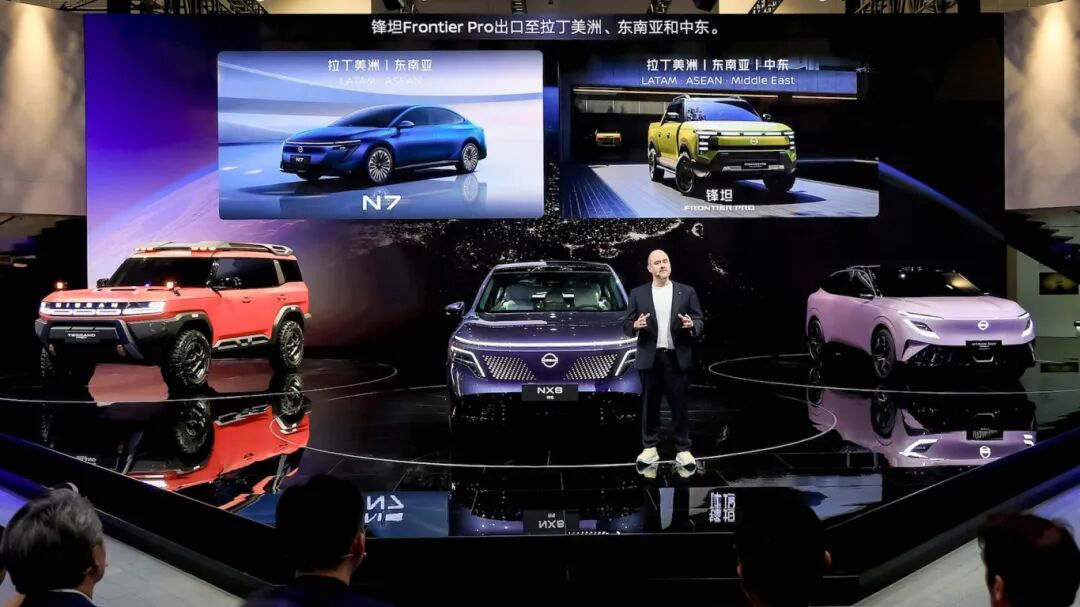
It is claimed that the shortened development cycle benefits from the comprehensive application of artificial intelligence in the design, testing, and manufacturing stages, replacing traditional physical prototyping processes with high-fidelity digital simulations. In addition to artificial intelligence, this also means establishing closer cooperative relationships with China.
For a long time, the benchmarks for learning in the automotive industry have been traditional Japanese and German automakers. Exquisite technology, superior quality, and durability have made Japanese cars popular worldwide. Against this backdrop, China has long been seen as a recipient of technology rather than a learning partner.
However, this trend is reversing. Chinese automakers can develop new models in about two years and gradually bring them to market. In comparison, traditional Japanese and Western manufacturers typically take 48 to 60 months, while Chinese manufacturers' development speed is less than half of that.
Nissan is not the only one aware of China's speed; automakers worldwide are beginning to move towards shortening R&D cycles. In other words, becoming more Chinese. It is reported that during a visit, the president of Honda also deeply felt that Chinese suppliers have a system for mass-producing a variety of products in a short time and realized that the current system cannot compete with it.
In short, Nissan's statement about "learning from China" does not stem from a special situation of a single automaker but rather a significant transformation occurring in the entire automotive industry. Historically, the Japanese home appliance industry was once renowned for its quality but was later surpassed in terms of speed and cost. To avoid repeating this mistake, the Japanese automotive industry is now attempting to change its learning object (translated as "source" or "partner" in this context).
Nissan is not the only company that views R&D speed as crucial for survival. Stellantis is also focusing on platform integration and striving to reduce costs by 20% through modular design and new battery options. The core of Volkswagen's plan is a software-defined vehicle architecture, aiming to shorten the R&D cycle from 50 months to 36 months.
It can be said that all major traditional automakers are trying to compress their four-to-five-year development cycles into two-to-three years because a car that takes five years to develop will have an outdated software stack in the market, while Chinese competitors release feature updates every quarter.
In comparison, Nissan Motor's severe financial distress exacerbates the urgency of the problem. In fiscal year 2025, Nissan's global sales totaled 3.15 million units, a 6% year-on-year decrease. However, Nissan has set a goal of achieving annual sales of 1 million units in both the Chinese and U.S. markets and 550,000 units in the Japanese market by fiscal year 2030. This is highly challenging.
Undoubtedly, Nissan Motor has a long way to go. However, Espinoza has consistently emphasized the importance of developing attractive models, saying, "Some of my predecessors always only talked about finances." But as Nissan's cost-cutting plan nears its end, public acceptance of its new models may determine the automaker's revival.
Editor-in-Charge: Du Yuxin Editor: Wang Yue

THE END
-
![]()
Depreciation Rate on Par with Mobile Phones: Just 40% Value Retention After Three Years—Why Do Battery Electric Vehicles Lose Their Worth?
-
![]()
Clearing Bugatti Stock Worth 7 Billion: Why is Porsche 'Cutting Ties'?
-
![]()
Don’t Dismiss Huawei’s Potential in Sedans Just Because the Shangjie Hasn’t Hit It Big Yet
-
![]()
Unsold Cars in China Find Success Overseas
-
![]()
Ghosn: Only I Can Save Nissan, Shareholders Beg Me to Return
-
![]()
Expanding Automobile Consumption: It's Time to Address the High Cost of Electric Vehicle Repairs
-
![]()
Luna Ultra Entangled in 'National Subsidy Fraud' Controversy, Insta360 Pushed to the Brink by DJI
-
![]()
People have long suffered from splash ads. Will the 'temporarily disappeared' traffic behemoth make a comeback?