Expanding Automobile Consumption: It's Time to Address the High Cost of Electric Vehicle Repairs
 06/29 2026
 502
502
Lead
Introduction
The money saved on fuel for electric vehicles is fully subsidized to the after-sales services of 4S stores and insurance companies.
"A small dent in the chassis of a new car forces a total loss claim, and replacing a broken headlight costs thousands or even tens of thousands for a new assembly."
"The insurance premiums are too expensive, much more so than for gasoline vehicles."
"The money saved on buying the car is all spent on a single repair."
"I dare not drive it carelessly or scrape it; maintaining an electric vehicle is much more expensive than a gasoline vehicle."
Group complaints from electric vehicle owners have brought great joy to gasoline vehicle owners, who have long been 'ridiculed.' And this is not just baseless fabrication by gasoline vehicle enthusiasts distorting the truth; these are real 'accusations' happening in the comment sections of communal articles and in our daily lives.
By the end of 2025, the number of new energy vehicles in China had exceeded 43.97 million, and the penetration rate of new vehicles reached 62.5% by May 2026. Behind this rapidly expanding market, electric vehicle owners have long suffered from difficult and expensive repairs, high insurance costs, and low residual values.
According to data from the China Insurance Automotive Safety Index (CIASI) in January 2026, the maintenance burden index for new energy vehicles is 27.66, nearly 30% higher than the 20.86 for fuel vehicles. The high and non-transparent maintenance costs are becoming a core stumbling block to expanding automobile consumption.
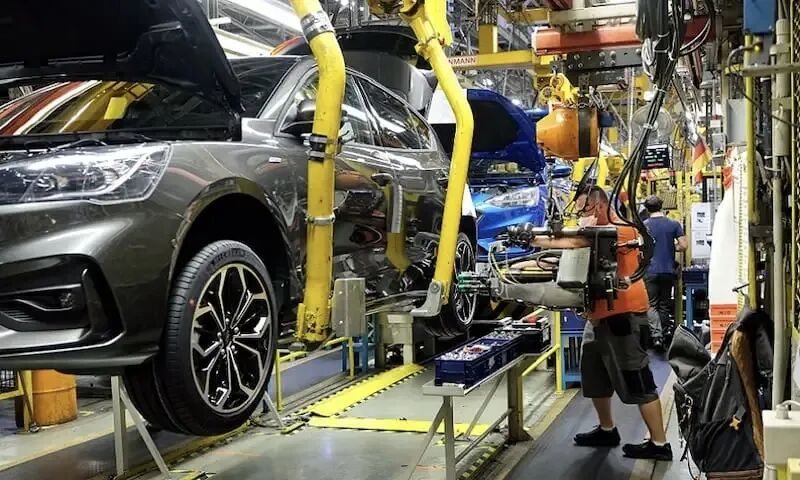
It is no exaggeration to say that almost all electric vehicle owners have been 'stung' by the high cost of repairs. Even if you drive extremely cautiously and have never had a major accident requiring insurance claims, you will inevitably bear the ripple costs of expensive repairs. The significantly higher insurance premiums for electric vehicles compared to gasoline vehicles are the most intuitive (zhíguān, 'intuitive') manifestation of maintenance costs being passed on to consumers.
Data released jointly by the China Banking and Insurance Information Technology Management Co., Ltd. and the China Association of Actuaries in March 2026 shows that the average annual insurance premium for pure electric vehicles in the same class is 15%-20% higher than that for fuel vehicles. For mainstream family electric vehicles priced between 100,000 and 200,000 yuan, the annual insurance premium is consistently 1,200-2,000 yuan more expensive. For high-end pure electric vehicle models priced above 300,000 yuan, the annual premium difference generally exceeds 3,000 yuan.
From the perspective of specific insurance types, the price difference in compulsory traffic insurance and third-party liability insurance between electric and fuel vehicles is less than 100 yuan, with most of the difference concentrated in the vehicle damage insurance sector.
According to statistics, the average risk of claims per new energy vehicle is 2.2 times that of fuel vehicles. In 2025, the entire industry incurred a loss of 5.6 billion yuan in underwriting new energy vehicle insurance, with 143 mainstream electric vehicle models having a claims ratio exceeding 100%. With no profit to be made, insurance companies can only offset the pressure of high maintenance claims by raising vehicle damage insurance premiums, with the final costs ultimately borne by the vehicle owners.
Don't panic. To solve this problem, we only need to identify the root causes of the high maintenance costs for electric vehicles. This will allow us to prescribe the right medicine, alleviate everyone's concerns, and truly achieve a full-link expansion of automobile consumption.
01 Why Are Electric Vehicle Repairs So Expensive? Is the Money Saved on Fuel Completely Wasted?
Why are electric vehicle repairs so expensive that even insurance giants are troubled? The author believes that the main reasons are concentrated in the following four aspects:
First, there is severe monopoly on spare parts. The three electric systems (battery, motor, and electronic control), integrated die-cast bodies, LiDAR, and integrated headlights of new energy vehicles are all exclusive custom parts for automakers. These parts are not interchangeable or available externally, resulting in extremely high ratios of the cost of parts to the cost of the entire vehicle (zero-to-whole ratio), with automakers holding exclusive pricing power.
According to the 20th CIASI Zero-to-Whole Ratio Report, the average zero-to-whole ratio for power batteries in new energy vehicles is 49.59%, with some 100,000-yuan-level electric commuter vehicles having a battery zero-to-whole ratio as high as 88.93%. Replacing a battery pack can sometimes exceed half the price of the entire vehicle. The average zero-to-whole ratio for integrated die-cast models exceeds 500%, while the overall zero-to-whole ratio for ordinary fuel vehicles is only 391.07%.
Not only that, but even the premium on a single exterior part is astonishing. The average zero-to-whole ratio for integrated taillights in new energy vehicles is 9.02%, with high-end models having a zero-to-whole ratio for a single headlight as high as 22.78%. The replacement cost can easily reach 5,000-6,000 yuan, while replacing a single taillight on a comparable fuel vehicle costs only a few hundred yuan.
Second, repair permissions are closed. Most automakers have closed maintenance systems, preventing third-party repair shops from detecting issues, performing repairs, or obtaining compatible parts. Vehicle owners can only passively accept high-priced repairs at 4S stores.
Industry data shows that the current repair rate for new energy vehicles at third-party independent repair shops is only 8%, with 92% of repair business monopolized by brand 4S stores. Most automakers encrypt the underlying diagnostic programs for the three electric systems and lock down firmware flashing permissions. Third-party shops lack the keys and authorization to detect and repair issues. Unauthorized repairs to the battery management system can even carry criminal risks for damaging computer information systems, with cases of repair practitioners being ordered to pay high compensation and face criminal charges.
Even if roadside repair shops are willing to undertake bodywork repairs, they generally dare not touch the core components of electric vehicles. On the one hand, they lack specialized equipment for high-voltage repairs, with the procurement cost of a full set of detection equipment for a single brand exceeding 150,000 yuan. On the other hand, they lack special high-voltage liability insurance. In the event of a battery fire or high-voltage electric shock, claims in the tens of thousands of yuan can easily overwhelm small shops.
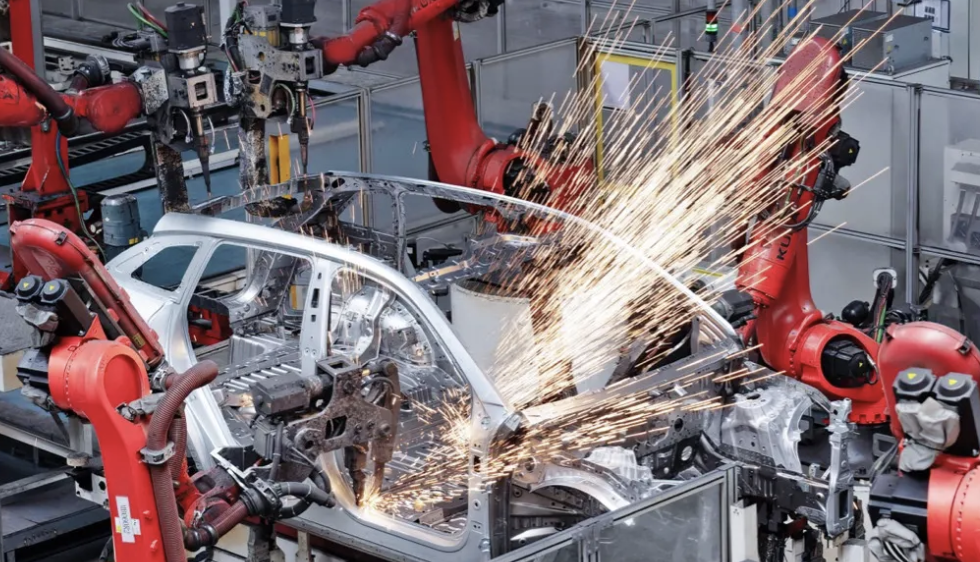
Third, loss assessment standards are non-transparent. Electric vehicles have many intelligent parts, and premium pricing for loss assessment is common. Small problems are often judged as major faults, and repairable parts are directly replaced, further raising maintenance costs.
A few years ago, there was a typical case where a Tesla Model Y had a minor rear-end collision, resulting only in a dent in the rear floor panel and no injuries. The loss assessment quote was nearly 200,000 yuan, with the vehicle's repair economic efficiency rated as the lowest P grade by CIASI. In contrast, a comparable fuel vehicle involved in a similar rear-end collision would have repair costs of less than 10,000 yuan.
Everyday minor scratches also see exaggerated loss assessments. For a slight scratch on a pure battery skid plate, some brands directly judge it as damage to the battery pack and quote tens of thousands of yuan for a full replacement. For a broken rearview mirror shell, they uniformly require replacing the entire rearview mirror assembly, with a quote of over 5,000 yuan.
Fourth, the aftermarket system is lagging. New energy vehicles are rapidly becoming popular, but the supporting maintenance market, affordable repair system, and standardized services have not yet taken shape and cannot keep up with the pace of consumption expansion.
As of 2026, there are over 400,000 auto repair shops nationwide, but only 20,000-30,000 specialized new energy vehicle repair shops have in-depth maintenance capabilities for the three electric systems, accounting for less than 3%. The number of new energy vehicles has increased 10-fold in four years, but standardized repair processes, affordable parts distribution channels, third-party loss assessment institutions, and the supply of professional repair technicians have completely failed to keep up with the expansion speed.
After decades of development, fuel vehicles have formed a highly competitive market for auto parts cities, recycled parts, and chain-brand specialized repairs, with transparent part prices and significantly lower repair labor costs. However, the new energy vehicle aftermarket is still in the stage of closed-loop monopoly by automakers, with a complete lack of market competition mechanisms.
Moreover, the more contradictory reality is that if owners choose a third-party shop for simple bodywork repairs, they face pressure from automakers threatening to void the warranty for the three electric systems due to 'unauthorized disassembly.' Even if third-party shops are willing to perform low-cost partial repairs on battery cells, owners dare not choose this option out of fear of losing the lifetime warranty.
On one hand, there are the exorbitant assembly replacement costs at 4S stores; on the other hand, there is the warranty risk of third-party repairs. Owners are caught in a double bind. While insurance may seem to cover repair expenses, under industry floating premium rules, the increase in premiums the following year after a large claim is almost equivalent to the total repair cost, meaning owners ultimately have to pay twice for the high maintenance costs.
02 Irregularities Must Be Addressed for Consumption Expansion to Proceed Smoothly
Spending 130,000 yuan to replace a battery, 5,700 yuan to replace a rearview mirror, and 200,000 yuan to repair a 280,000-yuan electric vehicle—'affordable to buy but unaffordable to repair or replace' has become a core pain point restricting the popularization of new energy vehicles.
The dividends of the new energy industry cannot solely favor the manufacturing side; the costs on the usage side must be evenly distributed. However, automakers' reliance on technological closures to monopolize the aftermarket directly squeezes the trillion-yuan aftermarket space. High maintenance costs drive up insurance premiums and lower residual values, offsetting the effectiveness of policies to expand consumption.
The good news is that the state has recently introduced 17 measures in the 'Several Measures to Cultivate and Expand Aftermarket Consumption in the Automobile Industry' to comprehensively expand automobile consumption across the entire chain. Among them, three major items specifically require optimizing the supply of automobile repair and insurance services and comprehensively addressing the irregularities of expensive repairs, difficult maintenance, and high insurance premiums.
First, improve the policy and standard system for automobile repairs. Unify and refine industry standards for automobile repairs, strictly implement repair filing systems, and mandate the public disclosure of repair technical information to make repair processes and fee structures more transparent and thoroughly address industry irregularities.
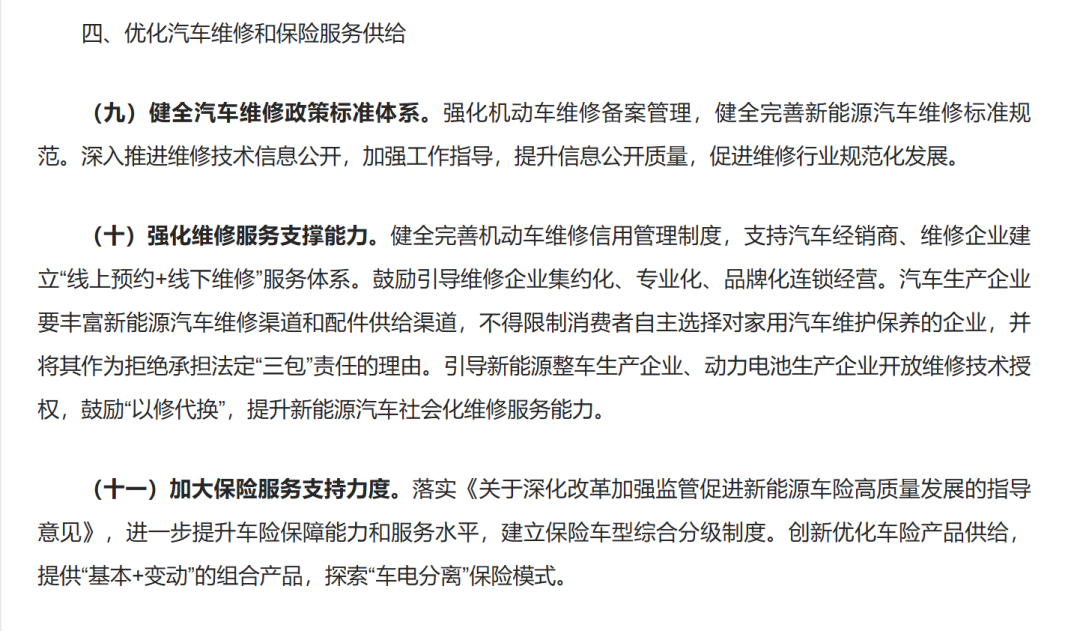
Second, strengthen the support capabilities for repair services.
Specifically targeting new energy vehicles, urge automakers to open up repair permissions and parts channels, and guide new energy vehicle manufacturers and power battery producers to authorize repair technologies. Prohibit automakers from bundling maintenance services, restrict owners' choices of repair shops, or use statutory 'three guarantees' responsibilities to threaten consumers. Promote 'repair over replacement' and encourage the development of chain-brand repair services to lower repair costs.
Furthermore, increase support for insurance services. Require upgrades to new energy vehicle insurance reforms, establish a vehicle model grading system, innovate insurance product models, and explore new schemes such as insuring the vehicle and battery separately to make electric vehicle insurance premiums more reasonable and coverage more aligned with actual usage needs.
The new policies specifically mention 'cultivating the automobile aftermarket, promoting circulation reforms, and optimizing the maintenance environment,' precisely confirming that expensive repairs and maintenance irregularities are core targets for rectification.
Expanding consumption cannot rely solely on 'lowering the threshold for vehicle purchases'; it must also 'reduce usage risks.' With the introduction of these powerful policies, electric vehicle repairs will become more transparent, affordable, and convenient in the future, putting an end to the dilemma of being 'unable to afford repairs.'
In the short term, opening up repair permissions may bring about supporting issues such as safety control for high-voltage battery repairs and technical training for third-party technicians. However, the long-term value of market-oriented competition far outweighs these short-term challenges.
The high-quality development of the new energy industry cannot rely solely on pursuing technological leadership in manufacturing; it must also build an open, inclusive, and transparent full-lifecycle service system.
Only by addressing bottlenecks across the entire chain of repairs, insurance, and used vehicle circulation can consumers have peace of mind and truly achieve the transformation goals of electrification and popularization of China's automobile industry.
Editor-in-Chief: Du Yuxin Editor: Wang Yue

THE END
-
![]()
Depreciation Rate on Par with Mobile Phones: Just 40% Value Retention After Three Years—Why Do Battery Electric Vehicles Lose Their Worth?
-
![]()
Clearing Bugatti Stock Worth 7 Billion: Why is Porsche 'Cutting Ties'?
-
![]()
Don’t Dismiss Huawei’s Potential in Sedans Just Because the Shangjie Hasn’t Hit It Big Yet
-
![]()
Unsold Cars in China Find Success Overseas
-
![]()
Ghosn: Only I Can Save Nissan, Shareholders Beg Me to Return
-
![]()
Expanding Automobile Consumption: It's Time to Address the High Cost of Electric Vehicle Repairs
-
![]()
Luna Ultra Entangled in 'National Subsidy Fraud' Controversy, Insta360 Pushed to the Brink by DJI
-
![]()
People have long suffered from splash ads. Will the 'temporarily disappeared' traffic behemoth make a comeback?