Unsold Cars in China Find Success Overseas
 06/29 2026
 565
565
Lead
Introduction
Overcapacity is prompting automakers to seek global opportunities.
On June 17, at the Tashkent International Forum, Volkswagen China unveiled an overseas expansion plan: Volkswagen and Jetta models are set to enter the Uzbekistan market. This marks Volkswagen China's inaugural large-scale overseas export initiative.
Significantly, this move is not a one-off experiment but part of a comprehensive overseas strategy. Initially, Volkswagen will concentrate on exporting complete vehicles, including models such as the Tiguan L Pro and Passat Pro. Subsequently, it will collaborate with local automaker Alyans to initiate SKD (Semi-Knocked-Down) assembly production, aiming for an annual capacity of 20,000 units.
Volkswagen's determined foray into Central Asia is driven not only by market expansion aspirations but also by its current challenges in China.
In May 2026, Volkswagen's retail sales in China reached approximately 97,000 units, securing the second position among brands. However, this represented a substantial year-on-year decline, with a nearly 70,000-unit gap compared to the leader, BYD.
Contrasting sharply with the sales figures is the production capacity. According to incomplete statistics, Volkswagen's planned annual capacity in China exceeds 5 million units. Although structural production cuts and assembly line optimizations are underway due to adjustments in global and Chinese market sales, leading to fluctuating capacity utilization, overcapacity remains a pressing issue.
Volkswagen is not alone in facing these challenges. Amidst a mature market, growth across the entire automotive sector has become increasingly arduous.
Data from the China Passenger Car Association (CPCA) reveals that from January to May 2026, domestic passenger vehicle retail sales totaled 7.099 million units, a 19.5% year-on-year decrease. The Chinese auto market has clearly entered a mature phase, exacerbating long-standing overcapacity concerns.
By the end of 2025, China's total automotive production capacity reached approximately 47.5 million units annually, while actual output remained below 35 million units, with domestic demand even lower. Many models faced sluggish sales domestically, making excess capacity and production-sales imbalances widespread challenges for automakers.
Against this backdrop, companies that can forge new growth paths have a better chance of breaking through. Exporting has emerged as a vital option—going overseas is no longer a luxury but a necessity for survival.
01 Joint Ventures "Go Global" En Masse, But Not Just to Offload Unsold Inventory
The models entering Uzbekistan include SAIC Volkswagen's Tiguan L Pro, Passat Pro, Teramont series, Tharu X, and Lavida X, along with Jetta's VS5 and VS7—all mainstream fuel-powered vehicles.
Most of these models are mature products tailored by SAIC Volkswagen for the Chinese market. While they cater to mainstream household needs in terms of space and features, they have struggled amidst shifting market dynamics in China.
From April to May 2026, the domestic auto market continued to cool, intensifying competition in the fuel vehicle segment. Sales of several key SAIC Volkswagen models declined significantly year-on-year, capacity utilization dropped, and inventory turnover pressures mounted.
Faced with domestic headwinds, SAIC Volkswagen moved beyond passive measures like price cuts and promotions, targeting overseas exports as a new growth engine.
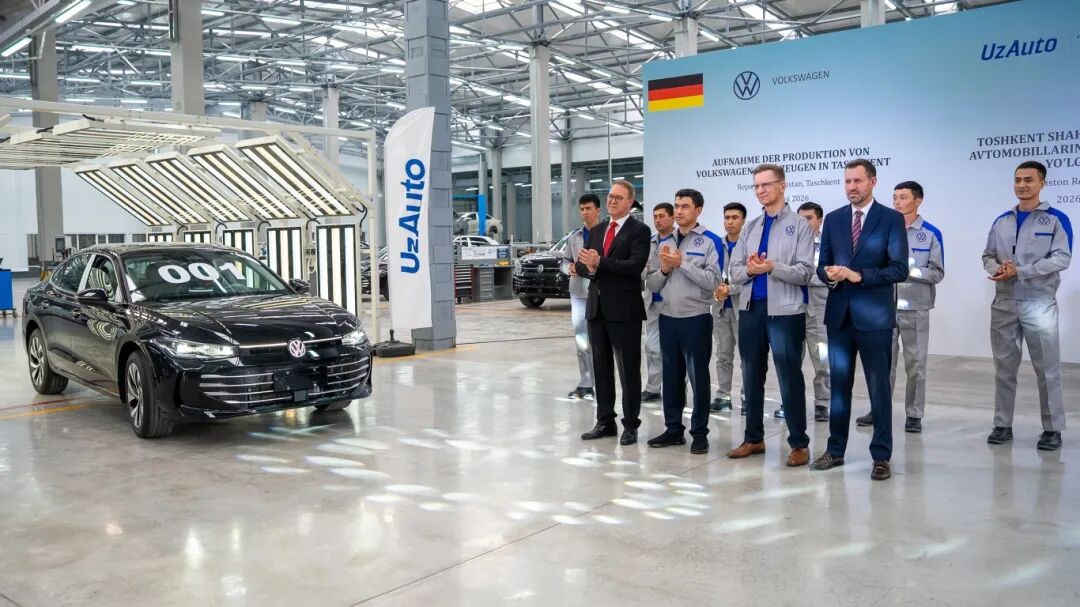
The brand had already established a foothold in Southeast Asian markets like the Philippines and Vietnam. Entering Uzbekistan marked its first breakthrough in Central Asia, proving that Chinese-made joint venture models can compete globally.
In fact, Volkswagen China's overseas expansion reflects a broader trend among domestic joint venture brands. Many once-dominant joint ventures are now transforming their Chinese bases into global export hubs, leveraging production capacity and supply chain advantages to tap into overseas markets.
For instance, Yueda Kia's Yancheng plant, once struggling with a less than 1% domestic market share, now serves as Kia's global export base. Since launching vehicle exports in 2018, it had shipped 537,000 units by the end of 2025. Mainstay models like the Sportage (KX5) are exported to Mexico and Southeast Asia, with overseas markets becoming its primary revenue source.
Ford's two Chinese production bases have also undergone strategic transformations. Its Chongqing and Hangzhou plants now exclusively produce Ford's global B- and C-segment sedans. Discontinued models like the Mondeo and Taurus in China are rebadged and sell well in Middle Eastern markets such as Saudi Arabia and the UAE.
JMC Ford's Equator SUV, renamed Territory Sport, targets Middle Eastern demand, opening new overseas sales channels. Dongfeng Peugeot Citroën (DPCA) has also achieved remarkable export results. Models like the Peugeot 2008 produced at its Chengdu base are rebadged for Latin American markets, fetching 30% higher prices than domestically. In November 2024, exports surged 472% year-on-year, with profitability far exceeding domestic sales.
GAC Honda has even reversed the traditional flow, exporting the Odyssey MPV—discontinued in Japan—back to its home market in a Chinese-made version. It also exports the ZR-V e:HEV to Europe, breaking the old paradigm of "overseas-made vehicles entering China."
Importantly, these exports are not merely about offloading domestic inventory. Models are optimized for overseas climates, road conditions, and driving habits, with upgrades like enhanced air conditioning, sand/dust protection, and chassis reinforcement. Export destinations focus on fuel vehicle-dependent markets in the Middle East, Latin America, and Southeast Asia.
From another perspective, this represents a strategic capacity transfer. Automakers are leveraging China's low-cost, high-efficiency, and robust supply chain advantages to proactively布局 (layout) global markets—a long-term strategy rather than a short-term inventory clearance tactic.
02 Independent Brands Follow Suit, Fueling China's Auto Export Boom
This wave of capacity relocation and global sales is not confined to joint ventures. Chinese independent brands are also making significant strides.
Unlike joint ventures relying on existing overseas channels, independent brands often adopt rebadged localization strategies to enter regional markets, achieving differentiated competition and enabling affordable domestic models to succeed in premium overseas segments.
For example, JAC Motors' T6 pickup was adapted for the Russian market, rebranded as SOLLERS ST6 to dominate its niche. Chery's Tiggo 5X was rebadged as DR5 for sale in Italy, capturing Europe's niche compact SUV market. Geely's Xingyue L was rebadged as Renault's Grand Koleos for launch in South Korea.
These cases share a common logic: domestic overcapacity and intense competition make it difficult for high-value-for-money models to stand out in China. However, overseas, where European and American automakers often deploy outdated platforms and stripped-down models, Chinese vehicles offer superior configurations, reliability, and affordability, creating a competitive edge through "dimensionality reduction strikes."
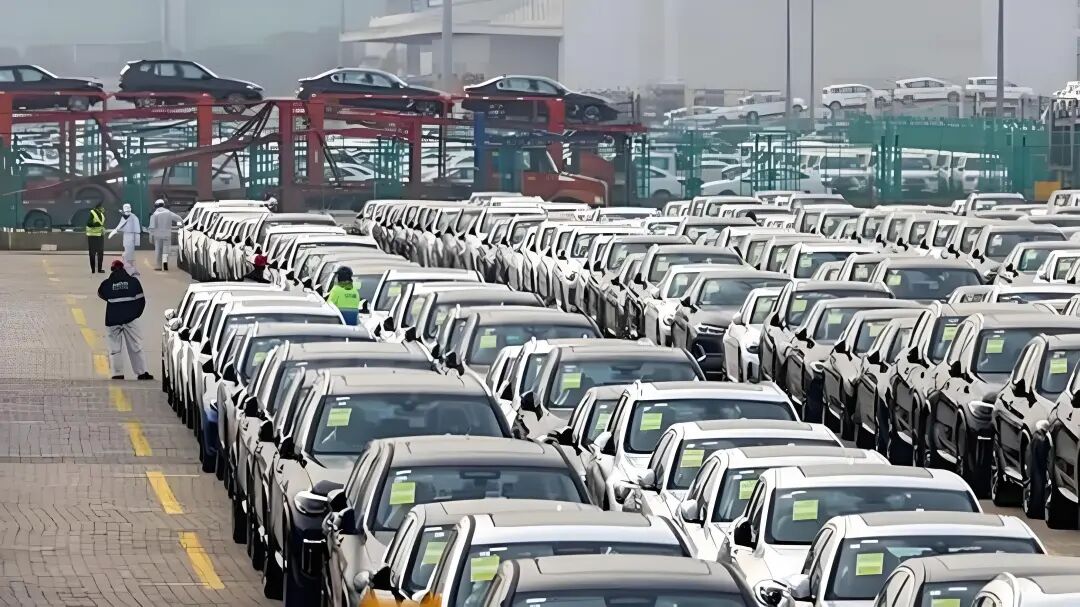
Meanwhile, China's well-developed automotive supply chain, lower manufacturing costs, and shorter delivery cycles further amplify its global competitiveness, making Chinese-made models popular worldwide.
The fruits of this global push are evident in export data.
In May 2026, China exported 930,000 vehicles, a 68.7% year-on-year increase, marking the second consecutive month of exports exceeding 900,000 units. From January to May, cumulative exports reached 4.059 million units, surging 63% year-on-year. At this pace, industry experts predict total exports could hit 10 million units in 2026, a historic milestone.
Rising exports are reshaping China's auto industry landscape.
Previously, domestic market growth relied on local consumption. Now, global markets drive new incremental growth. From independent brands testing overseas waters with low-priced models to today's scenario where both joint ventures and independents go global—evolving from simple vehicle exports to overseas factory construction and localized operations—China's auto industry is undergoing profound transformation.
Conversely, this globalization wave has partially alleviated domestic overcapacity and sales declines.
Idle production capacity has found new purpose, automakers have broadened profit avenues, and brand global influence has risen. By leveraging both domestic and overseas markets, China's auto industry aims to escape internal competition and solidify its global standing through manufacturing prowess.
Editor-in-Charge: Du Yuxin Editor: Wang Yue

THE END
-
![]()
Depreciation Rate on Par with Mobile Phones: Just 40% Value Retention After Three Years—Why Do Battery Electric Vehicles Lose Their Worth?
-
![]()
Clearing Bugatti Stock Worth 7 Billion: Why is Porsche 'Cutting Ties'?
-
![]()
Don’t Dismiss Huawei’s Potential in Sedans Just Because the Shangjie Hasn’t Hit It Big Yet
-
![]()
Unsold Cars in China Find Success Overseas
-
![]()
Ghosn: Only I Can Save Nissan, Shareholders Beg Me to Return
-
![]()
Expanding Automobile Consumption: It's Time to Address the High Cost of Electric Vehicle Repairs
-
![]()
Luna Ultra Entangled in 'National Subsidy Fraud' Controversy, Insta360 Pushed to the Brink by DJI
-
![]()
People have long suffered from splash ads. Will the 'temporarily disappeared' traffic behemoth make a comeback?