UBTECH Launches AI Companion Robot Priced at 990,000 Yuan, Exclusively for Adults, Setting a New Challenge
 07/03 2026
 476
476
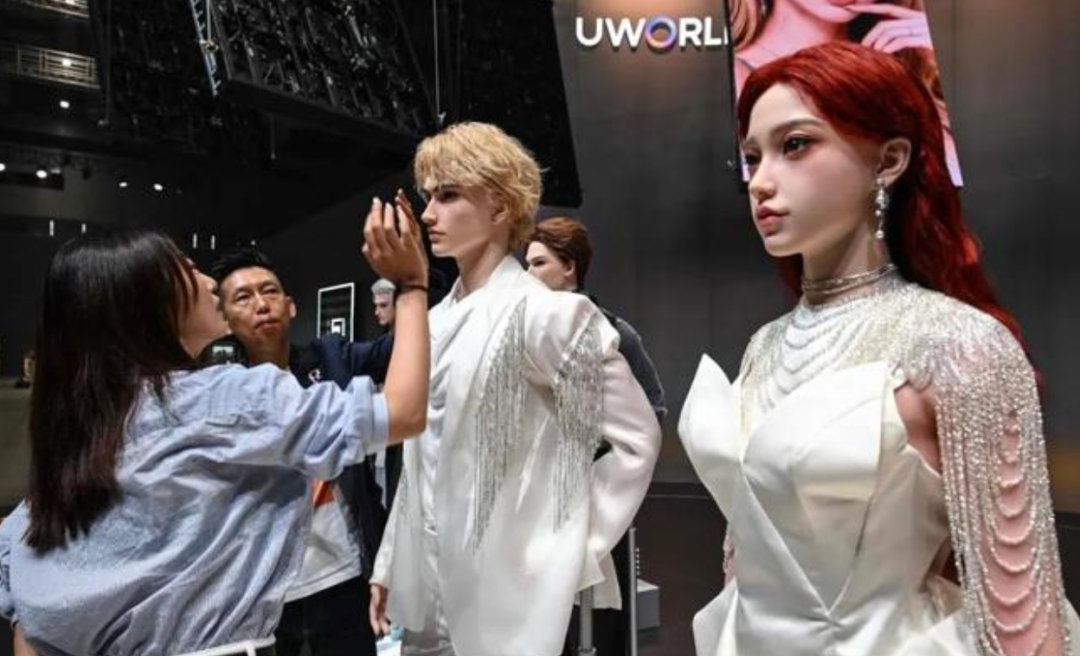
The AI companion robot, priced at a hefty 990,000 yuan, is exclusively available to adults.
This marks the first significant move by UBTECH, dubbed the "pioneer in humanoid robot stocks," as it ventures into the consumer (C-end) market and taps into the burgeoning family companion economy.
On June 30, its subsidiary brand "YouWorld" unveiled its inaugural full-size hyper-bionic humanoid robot series, the U1, meticulously categorized into male and female versions based on secular standards. Prices span from 19,800 yuan for the half-body Lite version to a staggering 990,000 yuan for the top-tier Ultra male version, marking an eightfold price difference and shifting the price benchmark for consumer-grade humanoid robots from industrial equipment to the luxury car segment.
Some netizens humorously remarked that this price tag far surpasses the bride price standards in most regions of China. Even in Jiangxi, a province notorious for high bride prices, the budget for a top-tier male U1 Ultra would leave ample room for other expenses.
From "screwing bolts" to "romance": The U1 embodies human form but lacks human warmth
While competitors are still vying for supremacy in factories based on payload capacity and operational efficiency—seeing who can screw bolts or move boxes more efficiently—UBTECH has chosen to embark on the companion economy track with its "AI companions," setting itself a formidable challenge.
Previously, UBTECH was primarily known for its industrial humanoid robots, with business-to-business (B2B) operations at its core.
Zhou Jian, the founder, chairman, and CEO of UBTECH, has recalibrated the company's focus. He stated that UBTECH is not merely a manufacturer of humanoid robot equipment but a platform enterprise positioning itself for future productivity, aiming to transition from B2B to B2C in its second decade of operation.
The U1 serves as the starting point for this transition, focusing solely on companionship rather than household chores. With this move, UBTECH has successfully covered industrial, commercial, and family scenarios.
Zhou emphasized that humanity has transcended mere subsistence, making emotional value increasingly scarce. He plans to dedicate 50% of his future efforts to the companion robot sector, believing it will determine the company's long-term success.
In essence, UBTECH's bold bet on hyper-bionic humanoid robots is an attempt to ride the waves of the "companion economy" and "otome game economy" to reshape its business landscape for the next decade.
Tan Min, the general manager of YouWorld, predicted, "The human-machine companion economy represents the first rigid-demand scenario in human history with unlimited emotional value, boundaryless companionship, and full lifecycle coverage. China's hyper-bionic robot market is expected to skyrocket from the 10-billion-yuan level to the trillion-yuan level between 2026 and 2036."
From a hardware perspective, the U1's specifications place it at the pinnacle of realism in the current consumer market. For instance, it adopts a full-size design close to human proportions, with the male version standing approximately 1.83 meters tall, featuring a well-defined, handsome face. The female version stands about 1.68 meters tall, adhering to Eastern aesthetic standards of facial proportions and bone structure.
The robot is equipped with 88 degrees of freedom, covering 14 core human joints, enabling it to perform 90% of basic human movements, such as sitting, leaning, lying down, and hugging.
Additionally, its hyper-bionic soft-feel skin replicates human texture, paired with over 30 facial micro-expressions and a dedicated emotional AI model capable of recognizing over 20 fine-grained emotions. It also features a memory system, claiming to become increasingly "attuned" to users over time.
However, this remains an immature consumer product. Huxiu (a media outlet) evaluated it as "having human form but lacking human warmth"—meaning it achieves "hyper-realistic human form" but falls short in capturing the essence of human likeness.
For instance, in a front-desk reception scenario, the U1, acting as a receptionist, can introduce itself and answer questions about UBTECH's development and product lineup. However, significant delays were observed in on-site interactions, with voice and lip movements not fully synchronized.
Meanwhile, most exhibits at the launch event could only slightly turn their heads, with limited limb movement, interacting with the audience primarily through facial micro-expressions.
Huxiu also noted that one of the U1's core selling points is its "skin that reveals capillaries." The robot displayed at the event featured silicone skin, but it felt cold to the touch, with occasional delays in facial expressions and stuttering in dialogue.
From multiple perspectives, this launch event was not a direct announcement of mass production and delivery but rather an offline crowdfunding-style launch.
A greater disconnect lies in functional boundaries. The public imagines family humanoid robots as all-in-one assistants capable of both practical tasks and companionship. However, the U1 directly discards practical attributes like cooking, cleaning, and organization, selling only emotional value.
In reality, the programmed emotional recognition and scripted feedback provided by large AI models can also be achieved by ordinary electronic pets—without the "uncanny valley" effect. Will consumers pay a premium for such a half-baked product?
Zhou remains confident, stating that UBTECH's U1 has three major competitive moats: software, hardware, and ecosystem.
For example, its hardware advantages are built on bionics, realism, and product customization. Traditional manufacturers of highly realistic robots face extreme difficulty in achieving waxwork-level appearance and mass production. Some factories can produce at most a few hundred waxworks annually, whereas YouWorld's U1 series has received over 10,000 pre-orders.
UBTECH aims to achieve standardized mass production on assembly lines, using equipment to simulate manual processes for customizing eyelashes, hair, and eyebrows. Users can later apply makeup or modifications, but factory-default states must remain uniform.
For UBTECH, the U1's core value lies in validating its leap in business scope and future strategy. However, the actual product remains at the "form-like" stage: it has human form but lacks human warmth; it has parameters but lacks emotional depth.
UBTECH Sets Four Challenges for Itself
Many view UBTECH's push into family scenarios as following the trend of the companion economy.
In my opinion, this results from a combination of business bottlenecks, technological limitations, competitive dynamics, and capital pressure. The most direct impetus is that the B2B market has hit a ceiling. Financial data shows that UBTECH's total revenue reached 2.001 billion yuan in 2025, up 53.3% year-on-year.
Among this, sales of full-size embodied intelligent humanoid robots reached 1,079 units, generating 821 million yuan in revenue, accounting for 41.1% of total revenue and becoming its largest revenue source for the first time.
Although revenue continued to grow and losses narrowed significantly, UBTECH still reported a net loss exceeding 780 million yuan in 2025 and had not yet reached profitability. In contrast, Unitree Technology's prospectus revealed a net profit of 288 million yuan in 2025, with Non-GAAP net profit (non-recurring net profit) reaching 600 million yuan, crossing the breakeven line.
It should be noted that UBTECH's financial improvement does not stem from a profitable business model but from changes in revenue structure and declines in some expense ratios. For example, in 2025, selling expenses were 471 million yuan (23.5% of revenue), and administrative expenses were 336 million yuan (16.8%), both decreasing from the previous year.
UBTECH's asset quality also raises concerns. For instance, as of the end of 2025, the company's accounts receivable stood at 1.842 billion yuan, up 40% year-on-year and nearing total annual revenue. While its cash holdings have grown in recent years, much of this comes from financing, with operating cash flow still negative, indicating insufficient self-sufficiency. This prolonged reliance on external funding may further delay its path to profitability.
Meanwhile, competition in the industrial humanoid robot sector is rapidly intensifying. Players like Tesla and Unitree are doubling down, and UBTECH holds no absolute advantage in heavy-duty operations or high-precision flexible manipulation, with its first-mover advantage narrowing.
Recent news reveals that Chunshuitang nearly directly targeted UBTECH's U1 by releasing a simulated humanoid companion robot. This product emphasizes physical companionship and emotional interaction, priced in the 15,000-yuan range, with plans to begin mass deliveries on August 1.
UBTECH's heavy investment in C-end consumer scenarios is not just about finding a second growth curve but also about preemptively carving out new survival space before the B2B market becomes a red ocean.
As a continuously loss-making listed company, the valuation ceiling for industrial robots under the high-end equipment category is clear. In contrast, consumer-grade bionic robots, tied to the valuation logic of "embodied intelligence + AI companions," can indeed open up imagination space. After news of 13,000 U1 pre-orders broke, the company's stock price surged nearly 19% intra-day, with its total market cap exceeding 50 billion Hong Kong dollars.
However, this also places heavy valuation expectations on the U1 from birth. If deliveries fall short or reputation suffers, negative feedback could be equally severe. C-end consumers are far more discerning than B-end clients. Figure | U1 companion robot product line · Huxiu
Zhou declared in media interviews, "The direction I propose will always have followers." While the direction is correct and the timing has logical merit, the U1 also presents UBTECH with four challenges.
The first challenge: the contradiction between mass demand and premium pricing. The U1 targets the companionship needs of 400-500 million people and a trillion-yuan market, but its pricing—ranging from 119,800 to 990,000 yuan—positions emotional companionship as a top-tier luxury good.
Currently, buyers are primarily high-income individuals and tech enthusiasts. The 13,000 pre-orders represent a concentrated burst of niche enthusiasm but cannot sustain a mass-market foundation. High premiums may temporarily elevate brand prestige, but if the product fails to penetrate broader markets, claims of becoming a family AI gateway or ecosystem closed loop will remain empty.
The second challenge: the gap between impressive specifications and mass production feasibility. The U1's material costs concentrate on its hyper-bionic head module, with its ultra-realistic skin, micro-servos, and emotional sensors requiring far stricter workmanship (craftsmanship) and quality control (quality control) standards than ordinary consumer electronics. UBTECH, however, has historically focused on small-batch, customized industrial products, with a supply chain optimized for high-end customization rather than consumer-grade mass production.
Consumers spending tens of thousands on a "companion" have extremely low tolerance for subpar experiences. If the first batch of deliveries suffers from texture inconsistencies or interaction lag, high expectations will quickly turn into negative reviews, undermining the premium brand image. Mass production and delivery represent the U1's most immediate existential test.
The third challenge: the contradiction between differentiated positioning and inadequate competitive moats. Hardware features like degrees of freedom and bionic skin are ultimately replicable engineering feats. Once consumer electronics giants enter the field, they can quickly catch up using their supply chain and R&D capabilities. The core emotional algorithms are also not irreplaceable; leading large model companies hold significant advantages in computational power and data over UBTECH.
The so-called "emotional moat" is more a temporary first-mover advantage than an insurmountable technical barrier. Relying solely on bionic appearance is unlikely to foster long-term user loyalty.
The fourth challenge: balancing technological advancement with social ethics. The U1, which remains in households 24/7, captures user voice, expressions, and lifestyle preferences with far greater data granularity than traditional smart devices, exponentially raising privacy risks.
A deeper concern lies at the psychological level: the "perfect companion" that is always obedient and frictionless essentially creates an emotional greenhouse. Prolonged dependence may lead users to avoid real-world social interactions, weakening their ability to navigate intimate relationships.
Even with adult-only purchasing restrictions, the risks of deep emotional dependency persist. Balancing product experience with social ethics remains an open-ended, long-term challenge.
Undeniably, the U1's launch holds industry milestone significance. It transforms humanoid robots from laboratory demos or factory tools into consumer-facing, emotionally resonant end products.
However, this is merely a new starting point for UBTECH, not the "iPhone moment" for embodied intelligence. The U1's true test lies post-delivery: Can it break free from premium pricing constraints? Can it overcome mass production quality control challenges? Can it solidify interaction barriers? Can it uphold technological ethics?
Human-machine symbiosis is an inevitable trend. UBTECH has chosen the right path, but it will be difficult. The key lies in whether it can solve the four challenges posed by the U1 and avoid losing reverence for product, technology, users, and society amidst marketing hype.
References:
Huxiu, "The 990,000-Yuan U1 Companion Robot: Human Form, But No Human Warmth"
21st Century Business Herald, "Half-Body Model Sells for 120,000 Yuan: UBTECH Targets Gen Z's 'White Moonlight'"
-
![]()
Rokid's Ambition and Embarrassment: 300,000 Sales Can't Support Its Ecosystem Dream
-
Are Gaming Ventures No Longer in Vogue Among Tech Titans?
-
![]()
Kuaishou’s Keling AI, Valued at $18 Billion with a Five-Year IPO Pledge, Faces a Make-or-Break Challenge
-
![]()
Valued at $18 Billion with a Five-Year IPO Plan: Kuaishou’s Kling AI Takes a Bold Leap
-
![]()
NVIDIA Launches 'Computing Power Financing'
-
![]()
Following Up on the 'Safety Net' for Intelligent Driving: Is Huawei's Strategy Astute or Perilous?
-
![]()
ICML 2026 | One Model to Unify Humans, Objects, Sounds, and Actions: OmniShow Revolutionizes Multimodal Controllable Video Generation as a Systematic Engineering Feat!
-
![]()
Mid-Year Sales Analysis: Leapmotor Faces Challenges Alone, NIO Breaks Free from the 'NIO 30K' Stigma