Rokid's Ambition and Embarrassment: 300,000 Sales Can't Support Its Ecosystem Dream
 07/03 2026
 558
558

"Small companies struggle to build large ecosystems."
Author | Jian An
Editor | Lu Xucheng
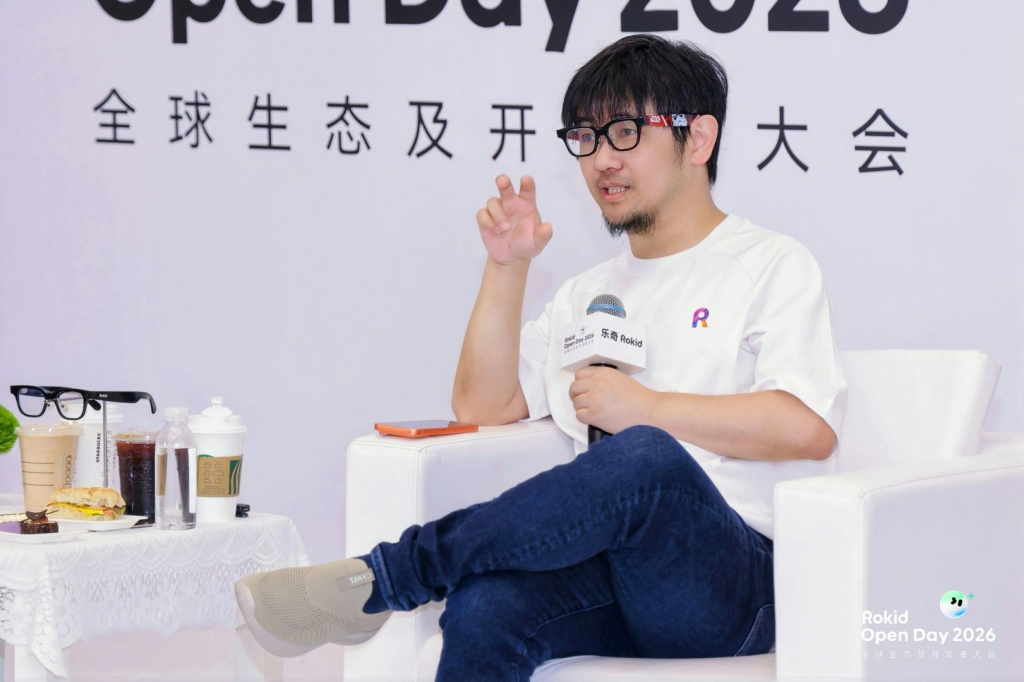
On June 26, at the Academic Exchange Center of Hangzhou Future Sci-Tech City, the Rokid Open Day 2026 Ecosystem and Developer Conference was held as scheduled. Founder Zhu Mingming rode a motorcycle onto the main stage, and the moment he took off his helmet, the entire venue erupted in applause.
This highly ceremonial opening was like a carefully designed metaphor: he aimed to propel the AI glasses industry into a new stage with an unconventional approach.
At the conference, Zhu Mingming unveiled YodaOS, the world's first native AIOS operating system for smart glasses. It abandons the concept of apps and reconstructs a new generation of human-computer interaction with Agents at its core. He compared the current smart glasses industry to the "BlackBerry era before the iPhone" and declared, "The rocket has ignited and taken off. Don't doubt whether it will fly anymore."
Such statements are inspiring, but an objective review of the entire AI glasses industry reveals that building an ecosystem requires strength, deeply tied to scale, resources, and branding. A player with annual shipments still in the hundreds of thousands is attempting to support a complete industrial ecosystem, which is inherently challenging. Declaring "the rocket has taken off" now might be a bit premature.

Impressive "Firsts" and an Embarrassing Scale
At the conference, Zhu Mingming announced a set of impressive market achievements: multiple "firsts."
In 2025, for global AI glasses with displays (note the qualifier), Rokid ranked first in both overall shipments and shipment growth rate; on the Japanese crowdfunding platform Makuake, Rokid AI glasses achieved a funding record of 630 million yen (25.3497 billion yuan), the highest in all categories historically; during the 6·18 promotion, Rokid ranked first in sales across three platforms—Douyin, Tmall, and JD.com (data statistical time from May 15 to June 18)...
Additionally, Rokid's user base covers 166 countries and regions and 1,127 cities worldwide, reaching 71% of the world's countries and regions. In Zhu Mingming's words, "Rokid is almost everywhere there is land."
If viewed solely from growth rates and niche segments, Rokid's achievements are indeed noteworthy. However, a closer look at the absolute scale reveals a less optimistic picture.
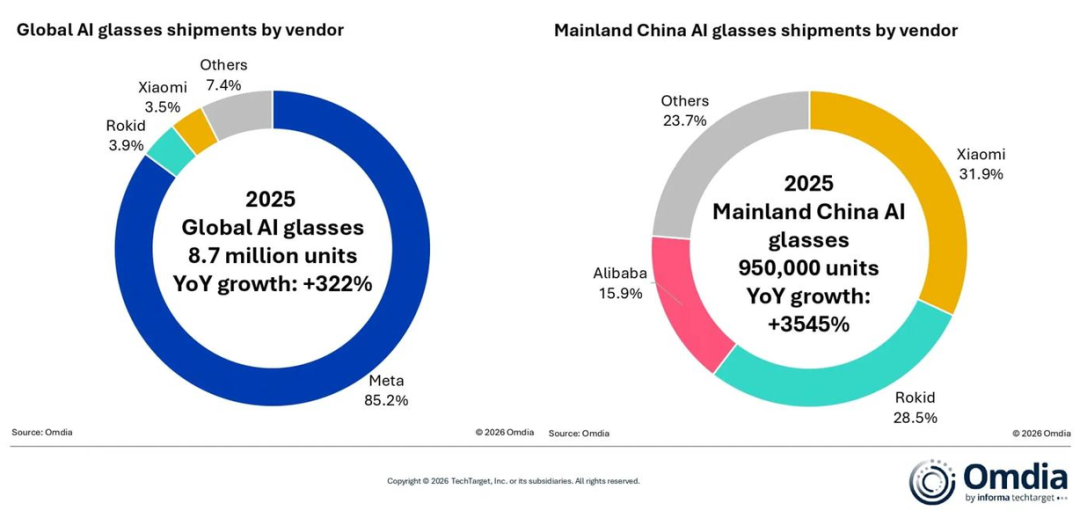
According to Omdia data, global AI glasses shipments in 2025 reached 8.7 million units, with Meta alone accounting for 7.4 million units, exceeding 85% market share. Zhu Mingming revealed that Rokid's global sales surpassed 300,000 units in 2025, ranking second globally after Meta.
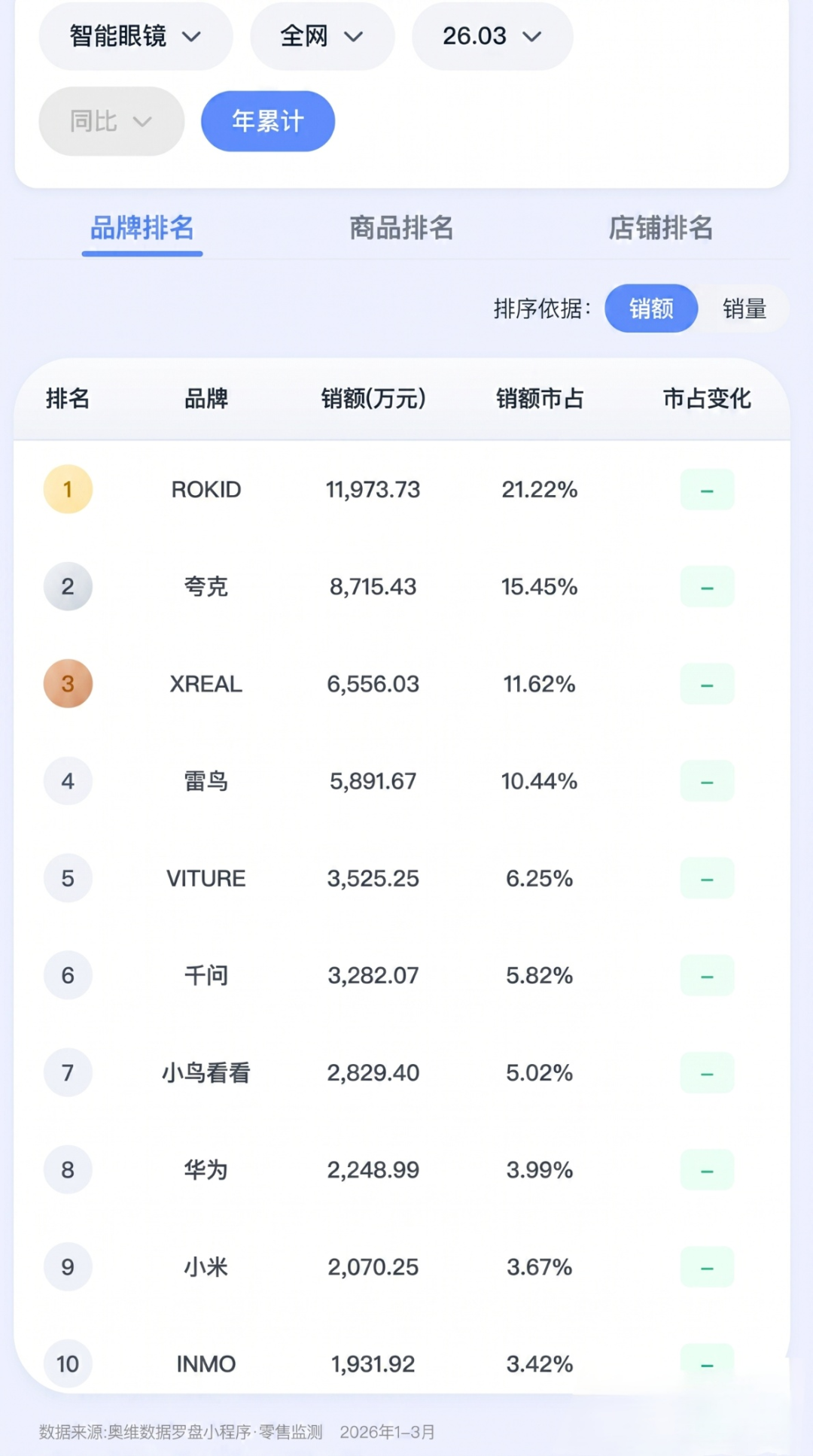
Now, let's look at the domestic market. According to AVC data, in Q1 2026, China's smart glasses retail revenue was 560 million yuan, with retail volume at 282,000 units. Among them, Rokid's retail revenue was nearly 120 million yuan, with a market share of 21.22%, ranking first. By this calculation, Rokid's retail volume in Q1 was close to 60,000 units. Despite being "second globally and first nationally," Rokid's scale remains limited.
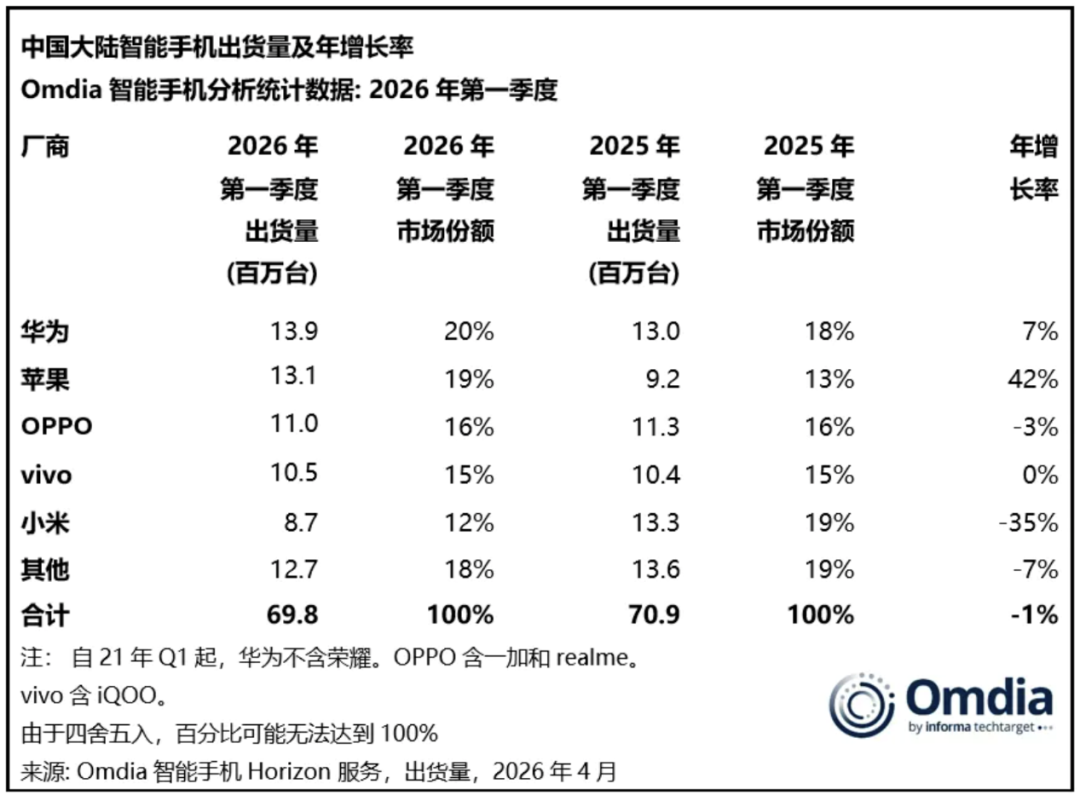
Comparing with the smartphone industry makes it clearer. Brands like Huawei, Xiaomi, OPPO, and VIVO each ship tens of millions of smartphones per quarter—Rokid's annual sales of 300,000 units would take these brands just three days to achieve. When Huawei or Xiaomi build ecosystems, developers are willing to follow because the logic is simple: accessing their platforms reaches a massive user base, yielding tangible commercial returns. What about Rokid? What can developers gain from a few hundred thousand annual shipments?
Zhu Mingming did not shy away from this issue. In a post-conference interview, he admitted that current AI glasses installations cannot sustain independent developers focusing solely on consumer-end products. He provided a benchmark: 2 million units. "When Meta Quest reached 2 million sales, the industry felt it was worth entering. When Rokid's active users reach 2 million, I will definitely say it's time to develop profitably for Rokid." He also promised this would not take long and would happen next year.
However, even if Rokid achieves its 2026 target of 1 million shipments, it will still fall short of the 2 million-unit ecosystem threshold. Zhu Mingming said this is the stage of "keeping the fire alive." An ecosystem still in the "fire-keeping" stage will struggle to attract large numbers of developers proactively.
Currently, Rokid developers primarily survive on B2B projects, serving vertical sectors like industry, cultural heritage, and enterprise services. Others participate in developer contests to win prizes. Rokid's annual prize pool doubles each year and will exceed 10 million yuan next year. With 10 million yuan distributed among ten teams, each team of three to four people can sustain themselves for a year.
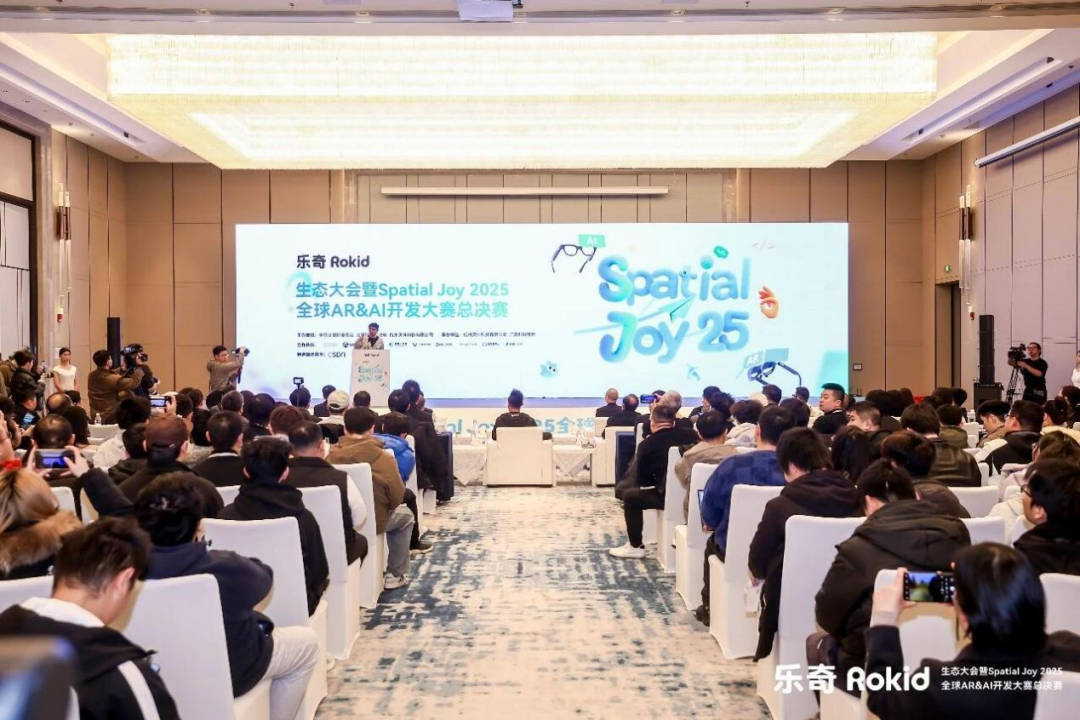
However, relying on prizes and B2B projects to support developers does not constitute a true ecosystem. A genuine ecosystem operates autonomously: more users attract developers; more developers enrich apps, drawing in more users. Once this flywheel starts spinning, it becomes unstoppable. But to set it in motion, a few hundred thousand users are insufficient.

"Weight Reduction" Is Easy, But Finding Essential Needs Is Hard
The foundation of an ecosystem is the product itself. If the product experience is subpar and users refuse to buy, the ecosystem cannot exist. The fundamental reason AI glasses have not taken off is their inherent flaws.
Integrating voice interaction, photography, projection, navigation, information prompts, and other functions into a single pair of glasses requires cramming chips, sensors, batteries, cameras, microphones, display modules, touchpads, and more into two thin temples. Balancing heat dissipation, battery life, weight, and performance in such a small space is challenging.
Thus, "weight reduction" has become a focal point of competition in the smart glasses industry: Rokid Glasses weigh 49 grams, iFLYTEK 40 grams, RayNeo V4 38 grams, Sharge loomos S1 29 grams, and JieHuan AI audio glasses even achieve 26 grams (without lenses)... All position smart glasses as ordinary glasses, claiming "no difference from regular glasses" in their marketing.
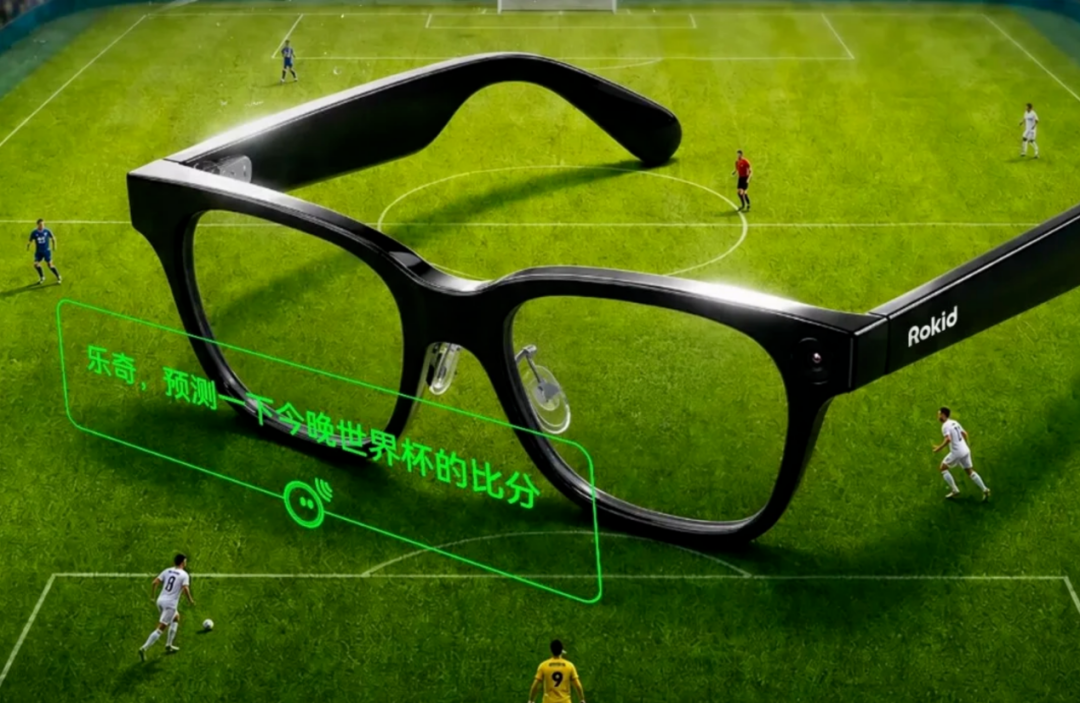
Comfort is important, but AI glasses must also be useful. Currently, the so-called functions of smart glasses are not high-frequency needs for users. Translation, navigation, meeting minutes, tourist attraction explanations—each function seems cool on glasses, but users won't need them daily, and their functionality is not irreplaceable. When a pair of AI glasses' core functions can be replaced by other products like smartphones or earphones, it loses its reason to exist independently.
Source: Rokid
Industry data shows that over 200 AI functions have been launched for AI glasses in the past two years, but less than 6% are used long-term by users, while 94% are never actively opened. Zhu Mingming himself admitted that smart glasses have not yet found a scenario that is both essential and high-frequency, lacking a killer app like "Fruit Ninja" during the iPhone era.
For a product category that has not fully validated its core scenarios, supporting a complete ecosystem independently is incredibly difficult: without a killer app, user retention suffers; without user retention, the ecosystem fails; without a thriving ecosystem, killer apps are unlikely to emerge. It's a vicious cycle.
Moreover, small companies lack the brand influence, financial resources, and technical capabilities of industry giants. Building an ecosystem requires not just a large user base and robust products but also strong brand appeal. Huawei's HarmonyOS ecosystem, Tencent's WeChat Mini Program ecosystem, and ByteDance's content creator ecosystem all succeeded because these companies possess immense brand momentum, mature technical platforms, and substantial financial reserves. Partners join these ecosystems not just for short-term gains but long-term development.
Meanwhile, major players are accelerating their entry. Alibaba launched QianWen AI glasses, integrating ecosystem services like Taobao, Alipay, Gaode, and Kuaike to enable voice-based food ordering, package tracking, and scan-to-pay scenarios. According to AVC data, in March-April 2026, QianWen AI glasses (including Kuaike AI glasses) captured 30.4% of the online market revenue. Xiaomi also maintains its lead in shipments through an ecosystem strategy. According to Counterpoint data, Xiaomi ranked first in domestic smart glasses shipments in Q1 2026 with a 28% market share.
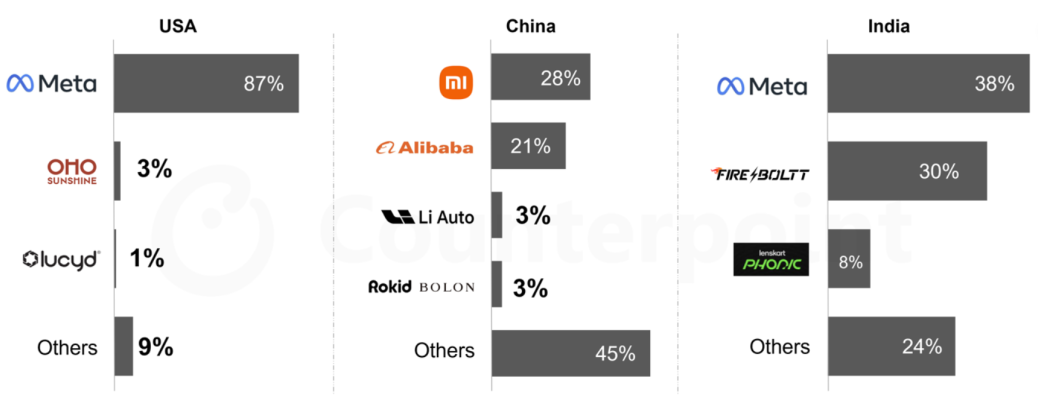
Huawei, Baidu, ByteDance, OPPO, and others are also active in the smart glasses space, though they treat it as a secondary project rather than a top priority, giving startups a developmental window. However, the collective entry of major players means intensified competition. IDC predicts that global AI glasses shipments will reach 22.671 million units in 2026, up 56.3% year-over-year, with China's shipments growing 77.7% to 4.508 million units.

Glasses You Dare Not Wear Outside
A bigger issue lies in the privacy and security risks and ethical dilemmas of AI glasses. In early June, Rokid faced controversy over "AI glasses secretly filming flight attendants." Users discovered videos on Rokid's official community "ROKID AI" showing individuals wearing Rokid smart glasses secretly filming flight attendants, accompanied by uncivilized captions.

Source: Rokid Community
Subsequent investigations revealed numerous similar posts on "ROKID AI," targeting not just flight attendants but also beachgoers, food delivery riders, park runners, and subway passengers—with most videos clearly showing subjects' facial features.
This incident brought AI glasses' privacy and security risks to the public's attention, amplifying fears that smart glasses could become "secret filming tools." Rokid was swiftly thrust into the spotlight of public criticism.
In reality, Rokid's smart glasses incorporate privacy protections, such as a recording status indicator light that activates when the camera is in use to alert subjects. However, this protection is too simplistic—a cheap "light-blocking sticker" costing just a few yuan can easily bypass it. On e-commerce platforms, numerous sellers openly offer stickers designed to block the recording indicator, even advertising them as "not affecting photos or triggering alarms," with some stores selling over 6,000 units. Many generic AI glasses even include programmable functions to disable the indicator with a single button press.
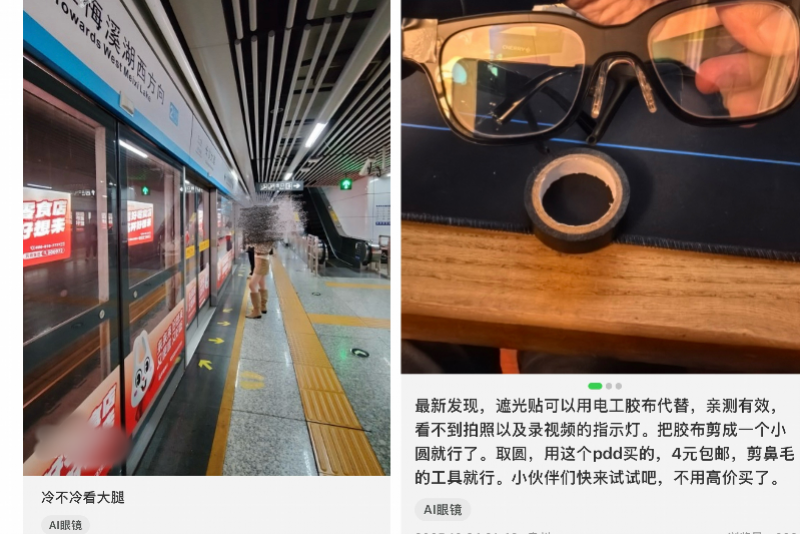
Source: Rokid Community
Despite Rokid's swift response—pledging to overhaul the community, remove violation content , ban involved accounts, upgrade content review algorithms and monitoring mechanisms, report light-blocking sticker sellers to e-commerce platforms, and commit to enhancing sensing components and Bottom protection algorithms in future R&D—public concerns over smart glasses' privacy risks persist.
The dilemma of privacy and security lies in the fact that one of AI glasses' core selling points is "first-person shooting," whose underlying business model relies on "covert filming." During the early smartphone era, cameras sparked social debates, but smartphone filming left relatively obvious traces. AI glasses, however, operate faster and more discreetly than smartphones, perfectly fitting the criteria for high-quality secret filming devices: small size, strong concealability, and cloud storage capabilities. Their privacy infringement risks far exceed ordinary casual photography.
Hardware itself is neutral, but when exploited by malicious actors, the extremely low bar for secret filming can "stigmatize" the entire product category, subjecting users to constant suspicion and embarrassment, ultimately affecting purchasing decisions. If people see someone wearing AI glasses and immediately suspect them of secret filming, even the best product will struggle to gain widespread adoption.
Some brands have chosen to eliminate cameras, positioning smart glasses as functional hardware that only receives but does not record, such as the Jiehuan AI Audio Glasses launched by Hive Technology. However, relatively few companies have taken this approach. According to IDC data, in 2025, China's smart glasses market will see shipments of 1.726 million units of audio and audio-recording glasses, accounting for over 70%, with pure audio products making up only a small portion.
The fundamental reason is that restricting the use of cameras would impair the core functionality of the product and significantly degrade the user experience, such as the inability to create first-person content, and would also lower the ceiling for commercial value. However, adding cameras raises privacy concerns, and if not handled properly, it could erode brand image and social trust. This contradiction is unlikely to find a perfect solution in the short term.
The Ministry of Education has included smart glasses on the list of prohibited items for the college entrance examination, explicitly stating that carrying them will be treated as cheating. Some state education departments in the United States are also considering adding smart glasses to campus electronic device bans. After incidents of secret filming, some European music venues have explicitly refused entry to audiences wearing smart glasses... These constraints from social ethics and laws and regulations have also set more obstacles on the path to the widespread adoption of AI glasses.

Players Exit, Industry Cools Down
It is worth noting that changes are also taking place within the industry. During the peak of AI glasses from the second half of 2024 to the first half of 2025, almost every tech company was talking about them, eager to get a piece of the pie. However, by 2026, the winds had clearly shifted. The most symbolic event was the departure of Hive Technology founder Xia Yongfeng.
Xia Yongfeng was previously a key figure in Xiaomi's early ecosystem. He left Xiaomi in 2020 to found Hive Technology, dedicating six years to refining AI glasses and launching the Jiehuan AI Audio Glasses. However, after the 2026 Spring Festival, he made a surprising decision that shocked the entire industry: suspending all new AI glasses product plans for the year. In an interview, he explained, 'From an AI perspective, glasses will not be the first choice for hardware that carries it.' He even actively turned down OEM orders from major companies because of this.
Then there's Xiaomi. Xiaomi was once one of the most enthusiastic promoters of AI glasses. When Xiaomi's AI glasses were released in June last year, Lei Jun personally endorsed them. At the time, many believed that Xiaomi's entry would lead to an explosion in the AI glasses market. However, by 2026, Xiaomi's attitude toward AI glasses had noticeably cooled. In February, there were reports that Xiaomi had suspended the development of AI glasses with displays, focusing instead on AI glasses with recording capabilities. At Xiaomi's Human-Car-Home Ecosystem launch event in late June, AI glasses were no longer the main focus but were merely mentioned as one of many products.
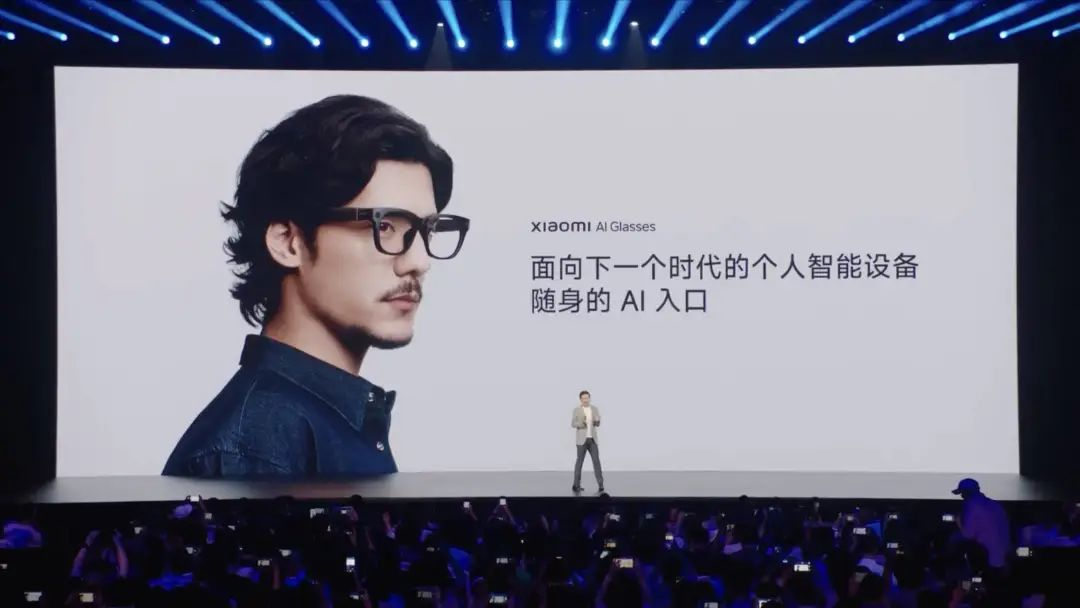
Source: Xiaomi AI Glasses Launch Event
These signals collectively point to the same conclusion: AI glasses are still in their early exploratory stage. While market enthusiasm continues to rise, there is still a long way to go before true maturity. Xu Chi, founder and CEO of XREAL, once stated in an interview, 'The true 'Hundred Glasses War' in this industry will begin when Lei Jun personally commits 70% to 80% of his time to AI glasses.' However, based on the current situation, this is unlikely to happen in the short term.
Why is Rokid so eager to build its ecosystem? Besides commercial considerations, there may be another important practical factor: In January 2024, Rokid signed an investment cooperation agreement with the Hefei Municipal Government. Led by the Hefei government, Rokid completed a nearly 500 million RMB Series C+ financing round. In return, Rokid signed an agreement with the Hefei Xinzhan High-Tech Zone, committing to establish three major projects: an industrial metaverse headquarters, an ecosystem center, and a research and development center.
Hefei is a renowned 'venture capital city' in China with an extremely high investment success rate. Its investment in Rokid was not purely financial; it hoped that Rokid would bring the AI glasses industrial ecosystem to Hefei. As a leading company in the chain, Rokid also needed to fulfill its commitment to the Hefei government by attracting upstream and downstream partners and driving the development of the industrial chain. This may also be one of the key driving forces behind its accelerated ecosystem development.

Summary
AI glasses carry the imagination of being the 'next-generation computing terminal,' a direction few would doubt. As one of the pioneers in this field, Rokid has indeed made significant contributions to product definition and market expansion. However, a healthy ecosystem requires sufficient user scale, strong brand appeal, mature product experiences, and sustainable commercial returns to support it. From the current state of the industry, none of these four pillars are particularly solid.
Zhu Mingming also said that the current smart glasses industry is in the 'BlackBerry era before the iPhone.' The problem is that the winners of the BlackBerry era never saw the arrival of the iPhone era. For Rokid, the question after 'liftoff' is whether it can enter the intended orbit and deliver its 'satellite' to the designated location. The test is not just about the courage to ignite the engines.
-
![]()
Rokid's Ambition and Embarrassment: 300,000 Sales Can't Support Its Ecosystem Dream
-
Are Gaming Ventures No Longer in Vogue Among Tech Titans?
-
![]()
Kuaishou’s Keling AI, Valued at $18 Billion with a Five-Year IPO Pledge, Faces a Make-or-Break Challenge
-
![]()
Valued at $18 Billion with a Five-Year IPO Plan: Kuaishou’s Kling AI Takes a Bold Leap
-
![]()
NVIDIA Launches 'Computing Power Financing'
-
![]()
Following Up on the 'Safety Net' for Intelligent Driving: Is Huawei's Strategy Astute or Perilous?
-
![]()
ICML 2026 | One Model to Unify Humans, Objects, Sounds, and Actions: OmniShow Revolutionizes Multimodal Controllable Video Generation as a Systematic Engineering Feat!
-
![]()
Mid-Year Sales Analysis: Leapmotor Faces Challenges Alone, NIO Breaks Free from the 'NIO 30K' Stigma