After Missing Independent Listing, Will Zhang Di Forge a Kling-like Success at Alibaba?
 07/17 2026
 509
509
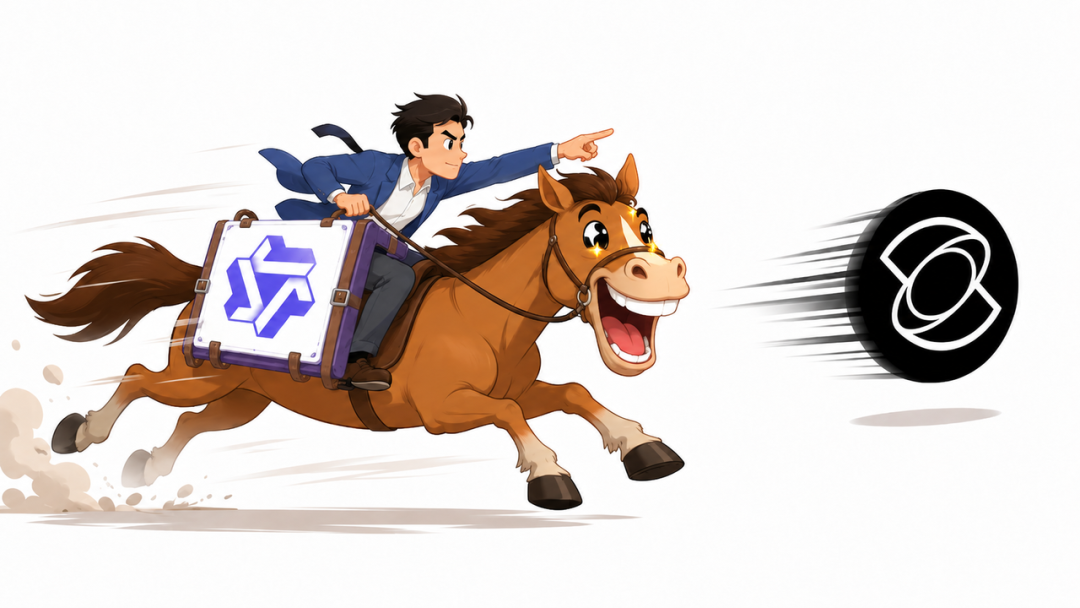
The Architect of Kling Sets Sights on Crafting an Even More Formidable Model
Alibaba AI Consolidates Three Models, Aiming for a Grand Slam
On July 16th, according to a social media post by Shen Ma, Alibaba's ATH Business Group's Token Foundry division underwent significant changes. The Tongyi Wanxiang team was officially merged into the Future Living Lab, which is led by Alibaba Vice President Zhang Di.
With this reorganization, all three of Alibaba Group's multimodal models—Wanxiang (latest iteration Wan2.7) for text-to-image and video generation, HappyHorse for video generation, and HappyOyster for world modeling—now fall under Zhang Di's purview.
This adjustment comes just over a month after Alibaba announced on June 8th the consolidation of its Tongyi Large Model Division and the Future Living Lab into the Token Foundry division. The establishment of Token Foundry marks Alibaba's third organizational reshuffle for its AI business, following the formation of the ATH Business Group on March 16th and the Group Technology Committee on April 8th.
In just four months, Alibaba has undergone three structural overhauls. This rapid pace underscores Wu Yongming's message to the outside world: AI is not merely another business line for Alibaba but the strategic linchpin of the entire group.
01 The Culmination of Alibaba AI's Visual Track 'Race'
Zhang Di's background uniquely positions him for this round of integration.
In 2024, Kuaishou introduced Kling, an AI video generation model, with Zhang Di at its helm. At the time, the domestic video generation sector was still nascent, with OpenAI's Sora yet to be commercialized and most domestic players still at the technical demonstration stage. Kling quickly emerged as one of the most globally recognized domestic video generation models, owing to its realistic video quality, fluid motion, and rapid commercialization.
Kling's triumph demonstrated to Kuaishou another viable path for AI application commercialization. Unlike many products stuck at demonstrating model capabilities, Kling swiftly entered the consumer market and explored commercial closed loops through membership subscriptions and enterprise services. To date, Kling has become Kuaishou's most recognizable AI brand and is on track for a separate listing.
However, after Kling's successful launch, Zhang Di, formerly Kuaishou's Vice President and core founder of the Kling project, joined Alibaba at the end of last year as the head of Taobao & Tmall Group's Future Living Lab. Zhang Di's arrival at Alibaba, bringing his experience in creating a globally scalable video generation model, signals Alibaba's ambition to address its shortcomings in video generation and multimodal fields.
In April 2026, the Future Living Lab led by Zhang Di delivered its first significant achievement. HappyHorse made its anonymous debut on the global AI blind testing platform ArtificialAnalysis, topping both text-to-video and image-to-video categories. This product was perceived by outsiders as 'Alibaba's version of Kling,' showcasing its ability to compete head-on with Kling in multiple evaluations.
A month later, the team launched the world model HappyOyster 1.0, enabling users to generate interactive, explorable, and real-time alterable AI digital worlds with just a sentence or an image.
HappyHorse and HappyOyster's accomplishments rapidly elevated Zhang Di's influence within Alibaba. However, questions arose: Alibaba already had another multimodal team, Tongyi Wanxiang, which also operated in the image and video generation space. The latest version, Wan2.7, performed well in visual fidelity, lighting logic, and semantic adherence.
With two teams having similar positioning and overlapping resources operating in parallel under the same ATH Business Group—a scenario less tolerated outside ByteDance's 'horse race' culture—the establishment of the Token Foundry division essentially marked a crucial step in Alibaba's AI strategy shifting from 'decentralized operations' to 'unified command.' On June 8th, Alibaba announced the merger of the Tongyi Large Model Division and the Future Living Lab into the Token Foundry division, directly overseen by Group CEO Wu Yongming.
Under this new structure, the Tongyi Large Model Division provides the foundational capabilities, while the Future Living Lab offers application and generation-side product lines. After the merger, integrating the similarly positioned image large model teams of Wanxiang and HappyHorse became a natural progression.
Whether as the 'Architect of Kling' or Alibaba's Group Vice President, Zhang Di's title and seniority surpass those of Wanxiang's former leader, Liu Yu, giving him an edge in the competition. Ultimately, the Wanxiang team was integrated into the Future Living Lab.
02 Alibaba's 'E-commerce + AI' Ventures into Uncharted Territory
Behind this integration lies not just the 'merging of lanes' for image large model teams but a cornerstone of Alibaba's redefinition of the relationship between its AI business and core commercial scenarios.
In recent years, Alibaba's strategic AI initiatives have focused more on foundational models, cloud computing, and technical capabilities. However, as large models enter the application phase, a new question arises: How can model capabilities be translated into real business value?
For Alibaba, the answer is straightforward. As a core scenario generating $25 billion in free cash flow annually for the group, e-commerce is undoubtedly one of the best arenas for AI implementation.
In their May shareholder letter last year, Joe Tsai and Wu Yongming jointly stated that Alibaba would no longer try to maintain a vast commercial empire but instead refocus its efforts on two cores: 'AI and e-commerce.' Just three months later, Alibaba's official website updated its organizational chart, replacing the original '1+6+N' structure with four new business segments—essentially embodying 'AI + e-commerce.'
From Wu Yongming's proposal of an 'AI-driven' strategic direction to the group's renewed focus on AI and e-commerce as core businesses, Alibaba is attempting to transform AI from an independent technical capability into an infrastructure that permeates product production, marketing, transactions, and services.
In May 2026, Qianwen deeply integrated with Taobao and Tmall, shifting from 'enabling user searches' to 'having AI search on behalf of users.' Alimama's 'AI Wanxiang' super operating intelligence engine was invoked over 3 billion times by more than 1 million merchants during the 618 shopping festival, demonstrating AI's evolution from an auxiliary tool into a new foundation for e-commerce platforms.
Understanding Zhang Di's role becomes clearer within this framework. Video generation, image generation, and world models are precisely the content production tools most needed in e-commerce scenarios. Every link—e-commerce advertising, product displays, marketing videos, virtual try-ons, and immersive shopping experiences—requires multimodal generation capabilities.
HappyHorse has already clarified its commercialization direction. The HappyHorse 1.1 released in June 2026 targets four commercial content scenarios: short dramas, e-commerce ads, brand promotional videos, and content marketing clips. Its pricing starts at 0.9 yuan per second for 720p videos and 1.2 yuan per second for 1080p.
With the integration of the Wanxiang team, Zhang Di now holds three multimodal products: Wanxiang for image and video generation, HappyHorse for high-quality video generation, and HappyOyster for world modeling and 3D interaction. These three products cover the complete spectrum from 2D to 3D, static to dynamic, and generation to interaction.
This evokes memories of Zhang Di's journey with Kling at Kuaishou. Starting from video generation, Kling gradually expanded into multimodal capabilities, ultimately growing into a star product valued at $20 billion.
Now at Alibaba, Zhang Di has a larger stage, with not only the integrated resources of three products but also the natural landing channel of Taobao & Tmall's e-commerce scenarios, along with top-level support from Wu Yongming, who directly oversees the Token Foundry division.
03 Zhang Di's Multimodal Empire: Wu Yongming's Next Strategic Move
From model R&D to commercialization, from C-end applications to B-end services, if this combined strategy delivers results, its capital market potential will far exceed that of Kling.
Merging the two teams is just the first step; subsequent organizational integration, product positioning, and commercialization paths pose the real challenges.
The Wanxiang team, built from scratch by Liu Yu, who joined Alibaba in 2015, has undergone continuous iteration from Wan2.1 to Wan2.7. Integrating a team with such historical depth into another system requires time for cultural fusion, process alignment, and goal harmonization. Liu Yu's unclear future also indicates that integration is still ongoing.
With Wanxiang and HappyHorse having similar positioning, avoiding internal friction and achieving complementarity rather than substitution after the merger tests Zhang Di's management capabilities. However, merging is just the first step; true synergy must occur at the product level.
In terms of commercialization pace, the Token Foundry division's core mission is to 'accelerate implementation,' and Wu Yongming's direct oversight implies higher expectations for commercialization progress.
Zhang Di must maintain technological leadership while translating multimodal model capabilities into tangible value within e-commerce scenarios, such as AI try-ons, AI ad generation, and AI short video marketing. These will be the true tests of this combined strategy's effectiveness.
Looking back at Alibaba's series of moves in 2026: establishing the ATH Business Group in March, forming the Technology Committee in April, launching the Token Foundry division in June, and integrating Wanxiang under Zhang Di in July. In four months, there have been three adjustments, each advancing AI's organizational structure further.
Behind this rhythm lies Alibaba's assessment of the AI competition landscape—this is not a war that can be fought slowly. Globally, Microsoft restructured its Copilot team in March 2026, appointing a new Executive Vice President reporting directly to CEO Satya Nadella. Meta reconstructed its AI organization four times within six months in 2025, aiming to bridge the gap between FAIR Labs and product AI teams.
All giants are doing the same thing: pushing AI out of labs and onto the business frontlines.
Zhang Di's task is to convert multimodal capabilities into quantifiable commercial revenue within this window.
Having proven at Kuaishou that he can turn a video model into a product, he now needs to apply the same capabilities within a larger ecosystem to uncover more complex commercial forms.
- END -
-
![]()
Casarte Holds the Fort, COLMO Catches Up, Samsung Exits: Who Will Have the Last Laugh?
-
![]()
Striving to Lead in New Energy: Anhui's Challenge to Overcome the 'Hefei vs. Wuhu' Rivalry
-
![]()
Four Anhui Pioneers: Two Decades Shaping China’s Auto Industry
-
![]()
Important to Observe: BYD Surges 20% Against Market Trend in July, Will It Reclaim the 1 Trillion Yuan Mark or Soar Even Higher?
-
![]()
Autonomous Driving Enters the Second Half: ByteDance Enters the Field, NVIDIA Restructures, and the First IPO Emerges
-
![]()
Service Takes Center Stage: A 2026 Mid-Year Analysis of BBA Reputation Index
-
![]()
The Paradox of Car Sales: Why Do Automakers Keep Launching New Models Amid Rising Losses?
-
![]()
"If We Can't Find a Breakthrough in Three Years, We're Finished": Japanese Cars Are Increasingly Emulating Chinese Models