"If We Can't Find a Breakthrough in Three Years, We're Finished": Japanese Cars Are Increasingly Emulating Chinese Models
 07/17 2026
 554
554
Lead
Introduction
Instances of Japanese automakers acquiring core platforms from China and collaboratively utilizing advanced technologies are on the rise.
There was a period when Japanese automakers' management commonly believed that the Chinese auto industry could never reach Japan's level. However, in just a few years, this belief has been consigned to the annals of history.
From Toyota and Honda to Nissan and Mazda, Japanese automakers have witnessed a sharp decline in sales in China over recent years. Faced with Chinese competitors launching smart electric vehicles at an unprecedented pace, the cost-effectiveness advantage that Japanese automakers once took pride in has disappeared.
An executive from a parts supplier acknowledged that Japanese cars are priced 100,000 RMB or more higher than Chinese cars with similar or superior performance. This significant disruption has compelled Japanese automakers to make a once-unthinkable decision: fully relocating core technology R&D, platform architecture, and even complete vehicle production to China, humbly seeking guidance from their former pursuers.
From Honda President Toshihiro Mibe personally visiting Guangzhou amid immense pressure to Toyota entrusting Lexus R&D entirely to Shanghai engineers, and Nissan establishing a Chinese team to lead the entire development chain from design to parts, a grand vision of Japanese cars "Sinicizing" is unfolding.
01 Sinicization Becomes Inevitable
In fact, from the current perspective, Japanese automakers' reliance on Chinese electric vehicle technology has evolved from initial tentative engagements to comprehensive and deep integration, with the "Sinicization" of complete vehicle platforms and core components becoming irreversible.
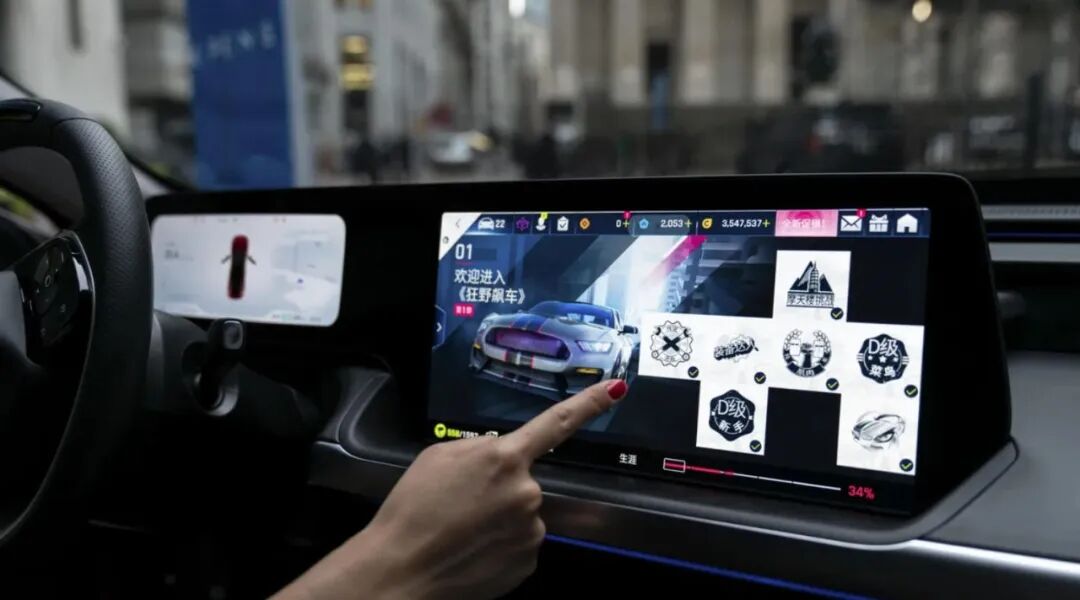
In March this year, Toyota's launch of the mid-to-large electric sedan bZ7 in China sent shockwaves through the industry. This model was not merely a localized adaptation but adopted Huawei's electric drive system and Momenta's autonomous driving technology—marking Toyota's first comprehensive adoption of intelligent solutions from Chinese suppliers in a core electric vehicle model.
Meanwhile, Toyota's fully localized mid-size electric SUV, the bZ3X, became a sales leader among joint-venture new energy vehicles upon its launch. Toyota Executive Vice President Hiroki Nakajima stated bluntly, "We are currently at the stage of receiving vehicles from our partners."
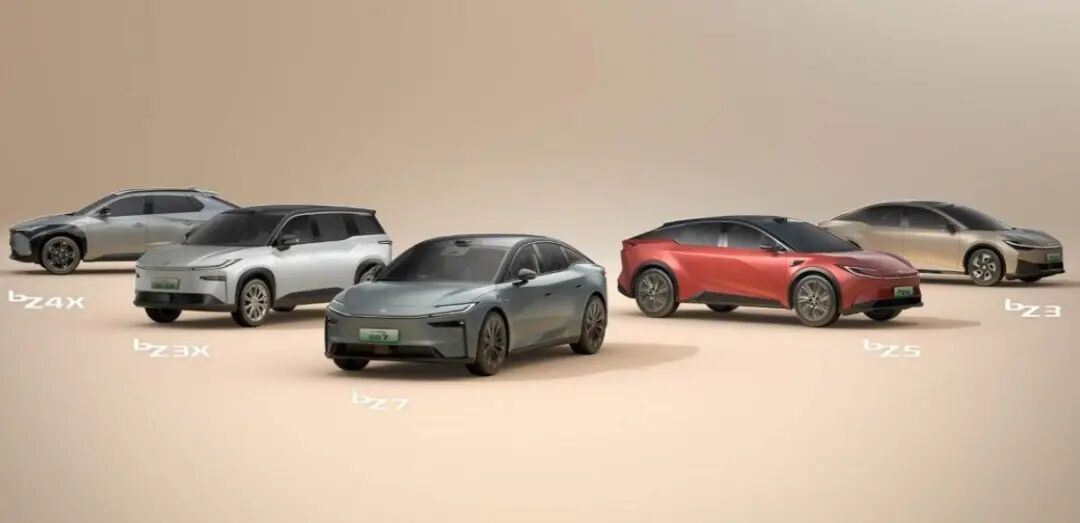
This open stance signifies a fundamental break from Toyota's past model, where the Japanese headquarters tightly controlled product definition rights while Chinese teams merely handled minor localization adjustments. Now, the balance of power has shifted.
Nissan's transformation is even more radical. Its mid-to-large pure electric model N7 and mid-size plug-in hybrid model N6 were entirely led by a Chinese R&D team headed by Dongfeng Motor, from design and development to parts selection. The N7 also pioneered the use of DeepSeek's AI voice assistant, directly embedding China's technological advancements in AI into the vehicle's system.
Nissan clearly positions its strategy as "In China, For China, To the World," indicating that the Japanese automaker no longer views China merely as a sales market but has established it as a global hub for electric vehicle R&D, procurement, and manufacturing. Mazda has also embraced this trend, beginning to export China-produced models to regions outside China.
As is well known, among Japan's three major automakers, Honda was the most resistant to change. However, as early as three years ago, Honda conducted multiple tests on GAC Group's electric vehicle platform but ultimately decided not to adopt it, insisting on going it alone. The cost of this strategic misjudgment was severe. As Chinese competitors launched models with high-tech features one after another, consumers voted with their feet, and Honda's sales in China rapidly halved.
In April this year, Honda President Toshihiro Mibe, under immense pressure from heavy losses and calls for his resignation, traveled alone to Guangzhou. During his three-day visit, he intensively toured multiple partners, including GAC. Just one month after the visit, on May 14, Honda officially announced it would use "platforms provided by local partners" in China and simultaneously began collaborating with Dongfeng Motor.
This decision means Honda has completely abandoned its previous insistence on in-house platform development, instead fully integrating into China's electric vehicle ecosystem. Thus, Japan's three major automakers—Toyota, Honda, and Nissan—have all entrusted their core electric platforms to Chinese partners.
It is worth noting that Toyota established a wholly-owned subsidiary in Shanghai in 2025, planning to locally produce Lexus-branded electric vehicles starting in 2027, with an annual target of 100,000 units. All aspects of the new vehicles, from R&D to mass production, will be handled by Chinese engineers. This represents not just a transfer of production capacity but a handover of leadership in knowledge production and technological innovation.
When Japanese automakers' electric vehicles roll off the production line equipped with Chinese-developed platforms, Chinese-supplied batteries, and Chinese-designed intelligent systems, the very essence of the concept of "Japanese cars" has undergone a fundamental transformation.
02 The Second Transformation of Japanese Cars
Of course, these decisions by Japanese automakers are not merely driven by profit motives but represent a life-or-death choice.
For a long time, Japanese brand electric vehicles have suffered from excessively high pricing in the Chinese market, lacking any price advantage over Chinese domestic models with similar or even superior performance. By adopting mature electric platforms provided by Chinese partners, Japanese automakers can completely bypass the enormous sunk costs of developing from scratch and directly tap into China's highly mature electric vehicle supply chain system.
China controls over 70% of global electric vehicle production and most battery manufacturing capacity. Its dense supplier network and robust engineering capabilities make component procurement costs far lower than in Japan. The effects of this cost restructuring are immediate, promising to bridge the previous price gap of 100,000 RMB and regain the qualification to compete head-on with Chinese rivals.
The deeper benefit lies in improved R&D efficiency. Chinese automakers treat vehicles as digital products, with an R&D model vastly different from the traditional Japanese approach of gradual, meticulous craftsmanship. Through AI-assisted R&D, development speeds have more than doubled compared to traditional Japanese methods.
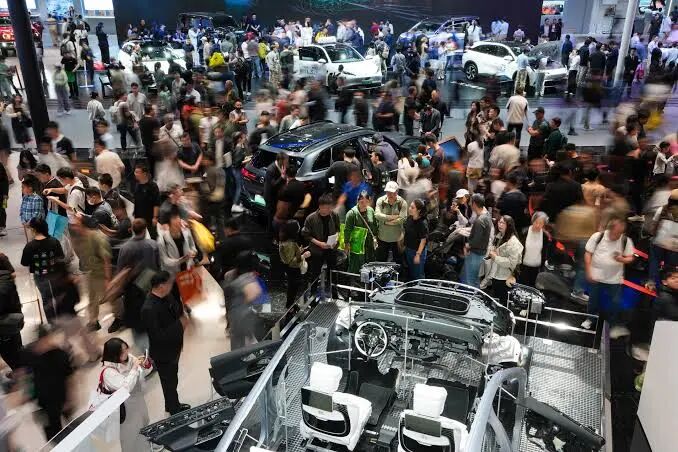
As one media outlet wrote: Toyota's decision to entrust Lexus R&D entirely to Shanghai engineers is driven by a deep-seated motive to learn and absorb Chinese manufacturing methods up close. Using "platforms provided by local partners" as a springboard, Japanese engineers can immersively observe how the Chinese automotive industry compresses product iteration cycles to the extreme.
Toyota's intentions are clear: first absorb Chinese automotive manufacturing experience, then return to the competitive stage with independently developed models. Honda's Toshihiro Mibe even made a solemn pledge: "We will definitely find a way to win within three years. If we can't, we're in trouble."
In fact, for Toyota, Honda, and Nissan, getting back on track in the Chinese market is just one aspect. For these global automakers, leveraging China's advantages to open up international markets is also a crucial opportunity.
With oil prices surging in the first half of the year, electric vehicles once again became the market focus. Japanese automakers significantly accelerated the pace of re-exporting Chinese-produced electric vehicles to their home market and third markets. In April 2026, Honda became the first Japanese automaker to sell a Chinese-made electric vehicle, the Insight, in the Japanese domestic market.
Nissan plans to sell the Chinese-produced N7 electric sedan in Southeast Asia and other regions, while Mazda has also initiated similar export plans. This new model of "Made in China, Supplied Globally" enables Japanese automakers to fully utilize China's cost and scale advantages to compete with Chinese rivals worldwide.
Particularly noteworthy is that Chinese cars have swept through traditional European automotive powerhouse markets. Last year, five Chinese automakers—BYD, SAIC, Geely, Chery, and Leapmotor—saw a 65% year-on-year increase in sales in Europe, surpassing Japanese automakers' performance in the region for the first time. Faced with this severe situation, the strategic significance of Japanese automakers using China as an export manufacturing base becomes increasingly prominent.
By integrating into China's electric vehicle supply chain, Japanese brands can defend against Chinese automakers' offensives with more competitive products in traditional strong markets like Southeast Asia.
As the Nikkei Shimbun observed, the current state of Japan's automotive manufacturing industry bears a striking resemblance to the historical trajectory of its television industry. Once hailed as the "King of Home Appliances," Japanese brands once dominated, but now rely on Chinese production lines and supply chains to survive.
However, for Japan's automotive industry, this "Sinicization" gamble carries far higher stakes than the home appliance sector. Automobiles account for roughly one-fifth of Japan's total export value. When this core industry becomes as deeply entwined with China's manufacturing ecosystem as a community of shared destiny, it brings not just cost reductions and efficiency gains but also signifies an irreversible eastward shift of the global automotive industry's center of power.
Editor-in-Charge: Cao Jiadong Editor: He Zengrong

THE END
-
![]()
Casarte Holds the Fort, COLMO Catches Up, Samsung Exits: Who Will Have the Last Laugh?
-
![]()
Striving to Lead in New Energy: Anhui's Challenge to Overcome the 'Hefei vs. Wuhu' Rivalry
-
![]()
Four Anhui Pioneers: Two Decades Shaping China’s Auto Industry
-
![]()
Important to Observe: BYD Surges 20% Against Market Trend in July, Will It Reclaim the 1 Trillion Yuan Mark or Soar Even Higher?
-
![]()
Autonomous Driving Enters the Second Half: ByteDance Enters the Field, NVIDIA Restructures, and the First IPO Emerges
-
![]()
Service Takes Center Stage: A 2026 Mid-Year Analysis of BBA Reputation Index
-
![]()
The Paradox of Car Sales: Why Do Automakers Keep Launching New Models Amid Rising Losses?
-
![]()
"If We Can't Find a Breakthrough in Three Years, We're Finished": Japanese Cars Are Increasingly Emulating Chinese Models