Striving to Lead in New Energy: Anhui's Challenge to Overcome the 'Hefei vs. Wuhu' Rivalry
 07/17 2026
 488
488
Hefei and Wuhu must learn to collaborate as well as compete.
'Who Will Shape the Future of Anhui's Automotive Industry?'
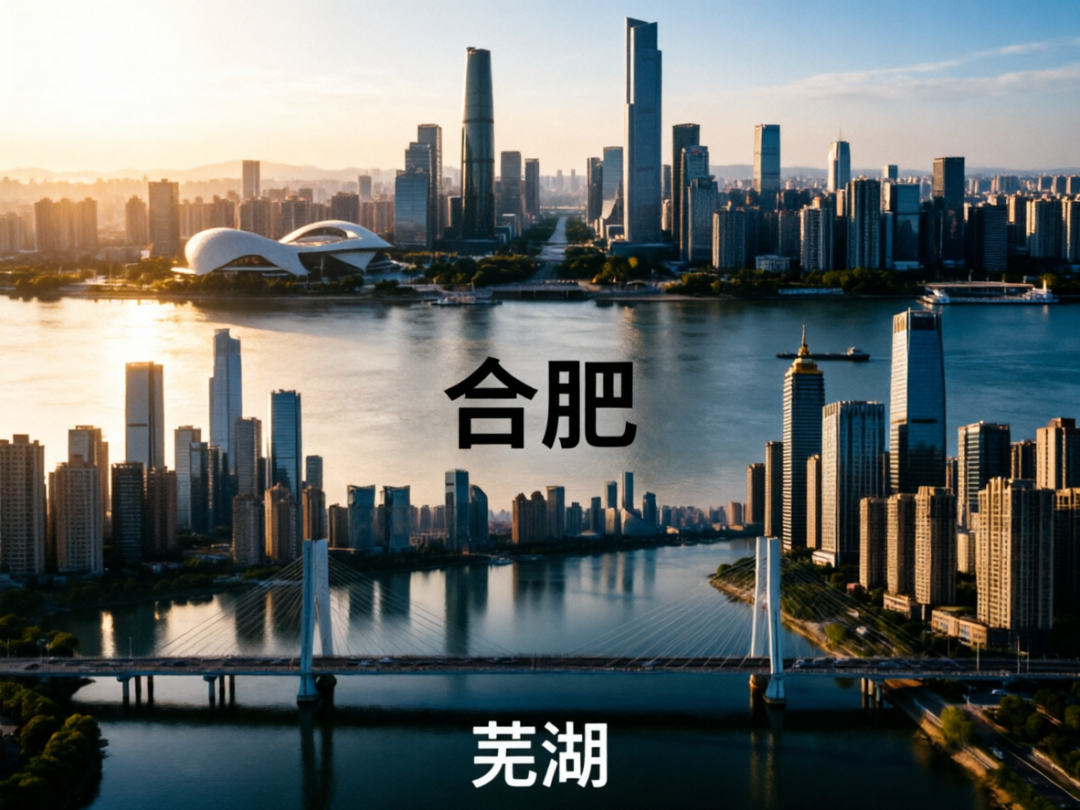
This question is tough to answer, and both Hefei and Wuhu aspire to claim this title.
Hefei is home to local automakers such as JAC, NIO, and Volkswagen Anhui. By attracting BYD's factory, it has established a thriving automotive industry chain. Wuhu, with Chery as its sole automaker, has successfully positioned itself as a key automotive export hub, leveraging its strong industrial leadership.
Hefei's industry chain focuses on intelligence and technology, adopting a capital investment strategy of 'attracting investment through investment.' In contrast, Wuhu's chain emphasizes a comprehensive layout of traditional automotive industries, following a path of 'nurturing local industry leaders.'
One city is rapidly growing, while the other is firmly established; both aim to lead Anhui's automotive industry. However, they have long been entangled in a 'Zhuge Liang vs. Zhou Yu' rivalry, refusing to give in to each other.
Competition? Anhui Sees It Differently.
Given the differing industry chain layouts and development paths, Anhui has devised a plan for Hefei and Wuhu to collaborate and take the Anhui brand global. Under this plan, Hefei is designated as the 'Capital of Intelligent Electric Vehicles,' while Wuhu is recognized as a 'world-class automotive industry cluster.'
This strategy arises from future necessity and a proactive approach to 'preparing for adversity in times of peace.'
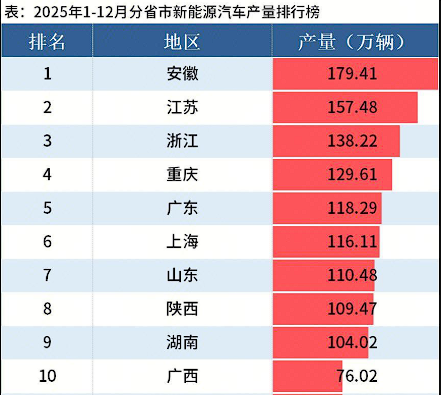
By 2025, Anhui Province is poised to surpass Jiangsu and Zhejiang, establishing itself as the new leader in new energy vehicles. The urgency for the 'Anhui brand' to go global has intensified. However, with Zhejiang closely following in new energy vehicle production, thanks to Geely and Leapmotor, Anhui needs to achieve provincial industrial synergy promptly to maintain its lead.
The first step for Hefei and Wuhu to achieve synergy is to overcome their rivalry and halt the 'Hefei-Wuhu competition.'
Industry-Driven Growth: Hefei's Ascent
When discussing Hefei's new energy industry, the most widely told story is its successful investment in NIO. At a critical juncture for NIO's stock price, Hefei's state-owned assets stepped in, enabling NIO to transition from a precarious position to a competitive player.
For many Hefei residents, NIO represents their first impression of the city's new energy vehicles. NIO is a hallmark of Hefei's recent success as a venture capital hub, driving rapid growth in Anhui's new energy vehicle sector.
Recent data shows that Hefei's new energy vehicle industry has grown significantly above the industry average, particularly in its contribution to the province, with an exponential upward trend.
A quick look: In 2021, Hefei produced only 147,000 new energy vehicles. By 2023, production had surged to 746,000 units, positioning Hefei as a top contender in the new energy vehicle sector. In 2024, Hefei successfully outpaced its rivals, claiming the top spot with 1,376,100 units produced.
Although Hefei's rise in the new energy vehicle industry is recent, its development can be traced back to 2011 when Anhui Province underwent a significant administrative division adjustment, impacting the economic development of the entire province over the following decade.
On August 22, 2011, the prefecture-level city of Chaohu, which had existed for decades, was dissolved, and its jurisdiction was divided among Hefei, Wuhu, and Ma'anshan. Hefei absorbed Chaohu's urban area and Lujiang County, gaining not only its inland lake but also land for southeastward urban expansion.
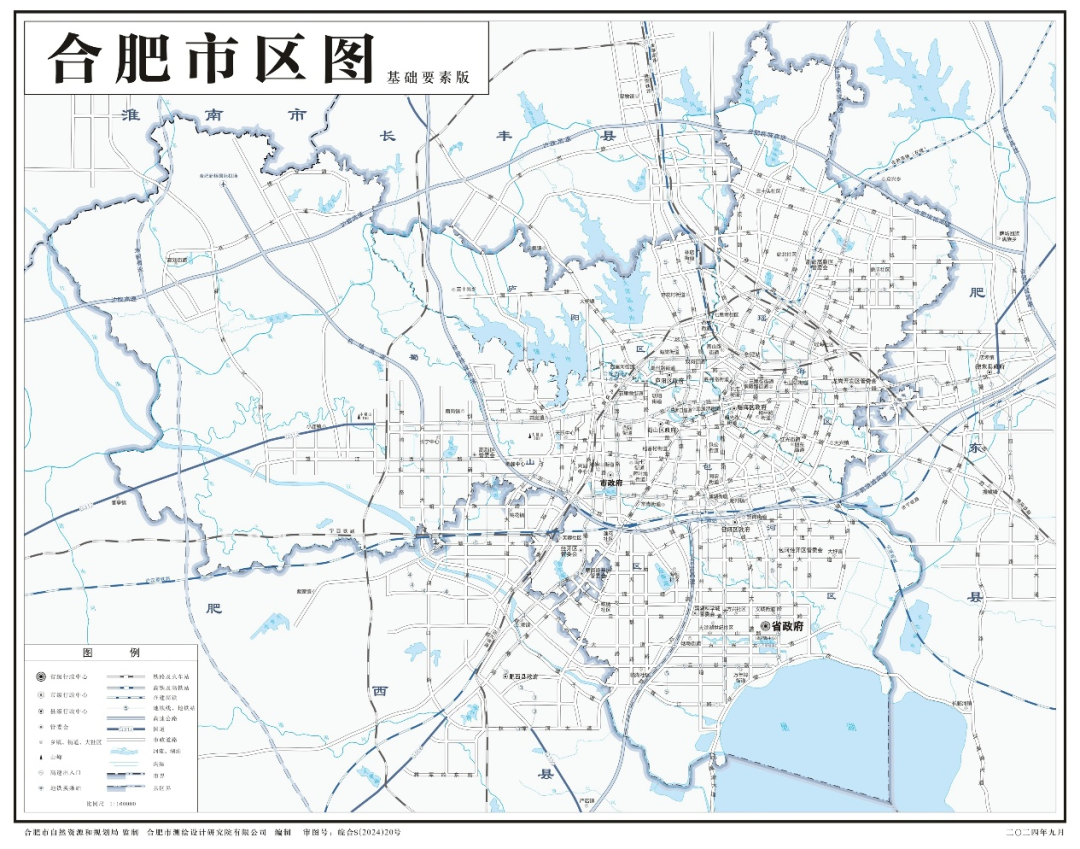
A satellite view of Hefei reveals that the northern part of the city's ring road is spacious, while the southern part is crowded, indicating a southward shift in urban development. The southern area has even extended beyond the ring road, with dense industrial zones built in regions bordering Feixi.
For urban development, land is always a scarce resource, especially for a city like Hefei, which relies on industry-driven growth. The demand for large areas of industrial land has become a challenge for Hefei's development.
However, whether it's the 'most successful venture capital city,' 'industry-driven growth,' or the division of Chaohu, all are intertwined with past events.
On Hefei's citizen forum, an old article occasionally resurfaces, titled simply 'He Changed Hefei.' It recounts the story of Sun Jinlong, the then-municipal party secretary of Hefei in 2005, marking the beginning of Hefei's explicit focus on industry-driven growth through the 'Action Plan for Accelerating Industrial Development.'
Subsequently, factories sprang up around Hefei, starting with white goods manufacturers like Haier, Midea, Gree, and Changhong, transforming Hefei into the 'Home Appliance Capital' within three years.
This was followed by Hefei's first 'venture capital' move, attracting BOE Technology, which brought a hundred-billion-yuan industrial cluster to Hefei and pioneered a successful 'Hefei Model' for investment attraction.
Driven by this model, Hefei introduced the LCD panel industry, followed by the chip industry, and later identified NIO in the new energy vehicle sector, attracting BYD and Volkswagen Anhui to establish operations, truly achieving the goal of transitioning from 'industry-driven growth' to 'industrial strength.'
Wuhu Doesn't Need to Emulate Hefei
As Hefei rises, Wuhu faces a question.
Can Wuhu truly become Anhui's 'next Hefei'?
After Hefei gained fame as the 'most successful venture capital city,' this question has been raised by many regarding Wuhu, Anhui's second-largest city. It's a question that raises concerns for many Wuhu residents.
Historically, Wuhu was Anhui's economic hub, with the Yangtze River flowing through it, endowing the city with a unique charm and aiming to become a 'Little Shanghai.' There was a time when Wuhu's development surpassed Hefei's.
However, Hefei holds the provincial capital status. The rivalry between the two cities has been ongoing. When Chery was the leader in independent brands during the fuel vehicle era, a Wuhu taxi driver remarked about Hefei, 'They compete with us, but they can't win.' Especially in Wuhu's automotive industry, which neither relies on Hefei nor wants to be 'bled dry.'
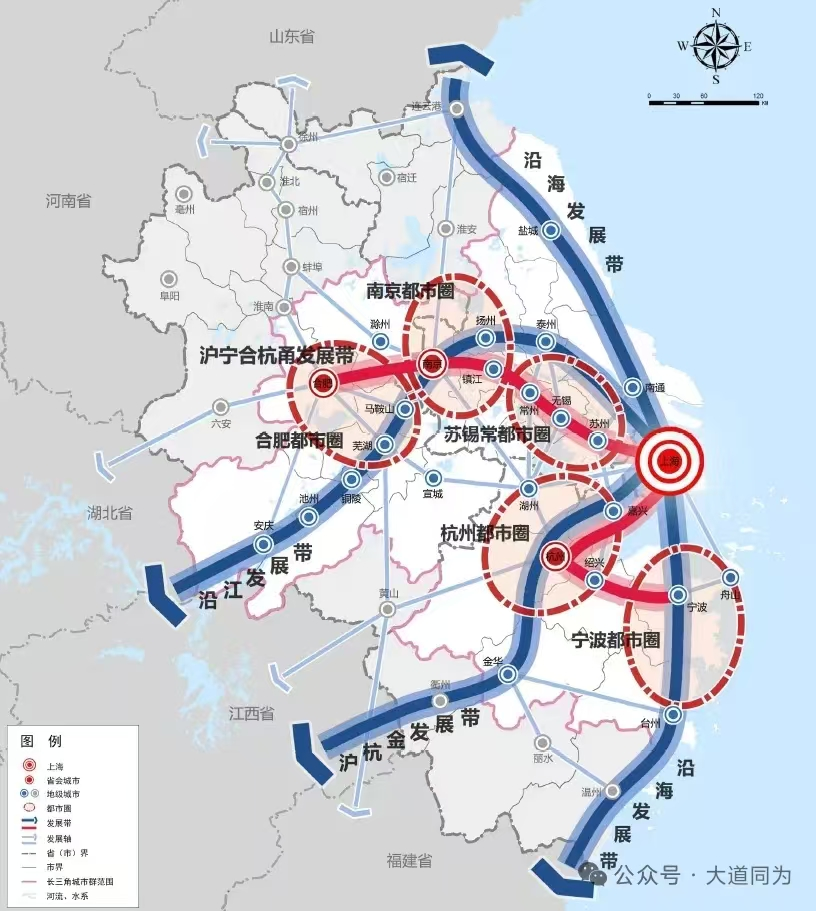
For a long time, Wuhu's relationship with Hefei was far less close than with Nanjing. A common saying went, 'Our closest friend is Nanjing; Hefei is more like a distant relative we rarely visit.'
The Yangtze River and Huai River divide Anhui into northern, central, and southern regions, bordering the Yangtze River Delta to the east, Jiangsu-Zhejiang-Shanghai to the south, and Shandong-Henan-Jiangsu to the north, making Anhui the province with the strongest 'networking ability' in China.
Wuhu and Hefei stand on opposite sides of the Yangtze River. Wuhu refuses to yield to Hefei, and Hefei cannot suppress Wuhu. At the dinner table, some drink Huangshan Maofeng tea, others eat fried dough sticks, each singing their tune, refusing to acknowledge the other.
For years, the 'Zhuge Liang vs. Zhou Yu' rivalry has been thoroughly played out between Wuhu and Hefei.
In 2020, Hefei secured NIO, 'opening a door to Hefei's new energy vehicle industry.' Since then, Hefei has been dubbed the 'most successful venture capital city.' At that time, Wuhu's top automotive brand, Chery, was earning less per vehicle sold than the price of a kilogram of pork, with debts nearing 70 billion yuan.
Under the trend of electrification and intelligence, the positions of Wuhu and Hefei have shifted. For a long time, Wuhu, with its major state-owned enterprises like Chery and Haisheng, suddenly faced the question of whether it could become the 'next Hefei.'
At that time, Wuhu residents could not accept this question. Even today, with Chery becoming China's automotive export bridgehead, Wuhu still cannot accept this question.
The 'Zhuge Liang vs. Zhou Yu' rivalry remains severe to this day.
Even though Anhui has set a plan hoping to break this outdated rivalry, Wuhu, which has long viewed itself as the 'old provincial capital,' does not intend to merely serve as a decorative role.
In 2023, Chery's sales reached 1.88 million units, and Wuhu published an article on its official platform titled 'A Single City's Dominance Is Not Spring,' directly targeting Hefei's dominant position, revealing an unabashed ambition.
'Pointing fingers at Hefei' is seen as Wuhu's rebellious statement. Some say it reflects Wuhu's dissatisfaction with Hefei's 'glory.' However, judging by the article's content, Wuhu may have been misunderstood.
The article states, 'Guangdong has four cities with GDP exceeding one trillion yuan: Shenzhen, Guangzhou, Foshan, and Dongguan. Jiangsu, besides Nanjing, has three cities with GDP exceeding one trillion yuan: Suzhou, Wuxi, and Nantong.'
The implication is that Anhui can do the same, and Wuhu has the ability and ambition to be Anhui's 'sub-center.' With enterprises like Conch Cement, Chery Automobile, and Three Squirrels, as well as thriving high-tech industries like new energy vehicles, big data, and artificial intelligence, Wuhu is capable of standing on its own.
Multi-city-driven growth is a trend, much like the economic competition among the 13 cities in 'fragmented Jiangsu.' Wuhu aspires to compete with Hefei.
Mutual Need
The pressure of industrial chain restructuring and the race of technological iteration have brought new challenges to both the Hefei Model and Wuhu Path in the second half of the competition.
Under these challenges, 'mutual need' becomes essential.
Although BYD and NIO represent Hefei's new energy vehicle industry, at its core, it relies on the complete automotive industry chain built by JAC, which has enabled Hefei to establish six automotive manufacturing bases.
Hefei's emphasis on NIO, besides the new energy sector, is primarily because JAC was NIO's contract manufacturer at the time. This first advanced manufacturing base, located near the JAC factory, remains one of NIO's main production sites.
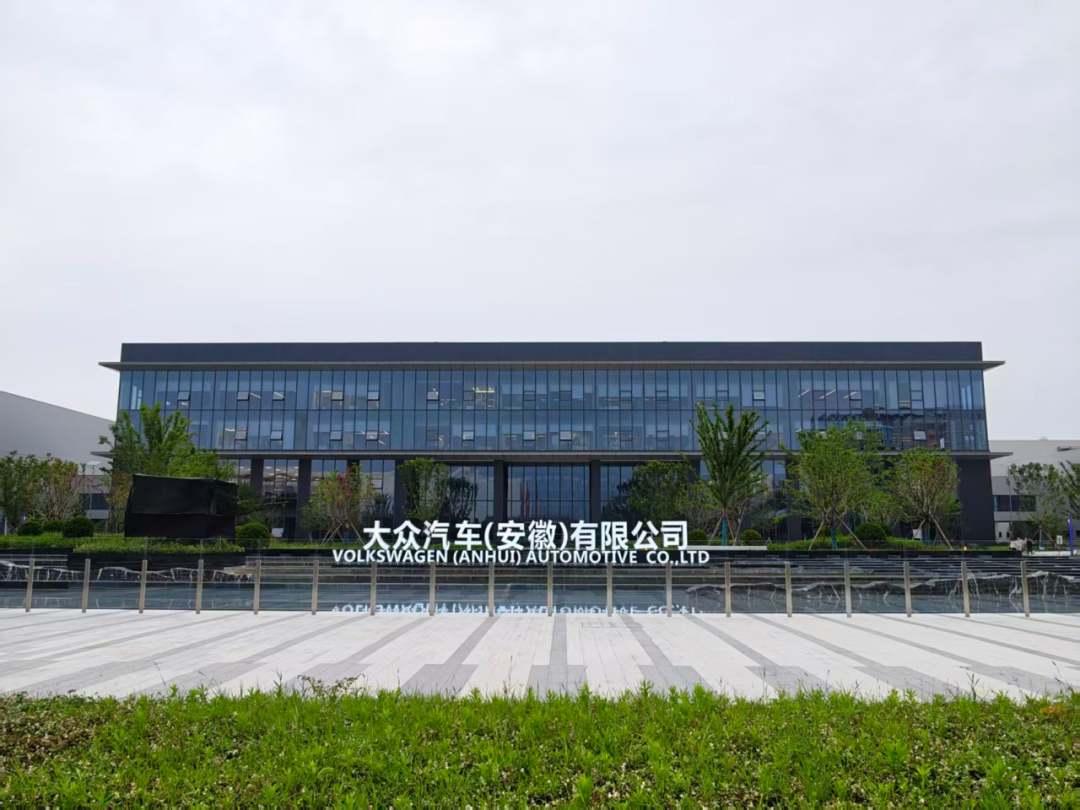
From the map, this NIO factory, located on the banks of the Paihe River in Feixi County, is at the corner of this new energy industrial cluster. Nearby are Volkswagen Anhui Factory, Volkswagen R&D Center, JAC Manufacturing Center, and JAC Zunjie's mega-factory, making it a hub of industry leaders.
These automakers have shaped the automotive industry in southern Hefei, which is also the southernmost part of the city's development. Further south lies farmland, as Anhui, one of the 13 major grain-producing regions, must also shoulder agricultural responsibilities.
Thus, in northwestern Hefei, NIO's Xinqiao Second Factory has risen. The choice of the Xinqiao Factory was not simply to find vacant land around the city. On one side of NIO's Xinqiao Factory is Hefei Xinqiao Airport, and on the other side is Changxin Memory Technologies.
Meanwhile, the NIO factory has attracted many upstream and downstream industries to Xinqiao. However, limited by NIO's current production capacity, this area has not yet grown into an industrial cluster like Feixi.
But at the northernmost end of Hefei, a super industry leader has already driven the rise of this remote area.
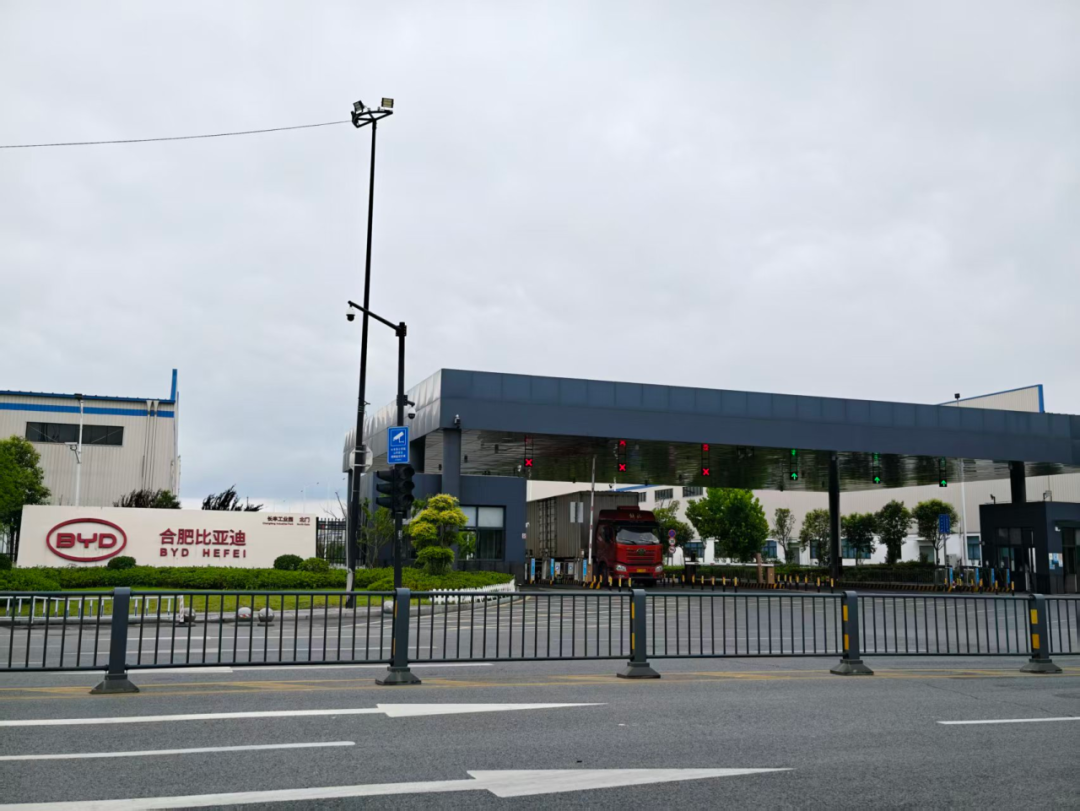
The story began in 2020, coincidentally when NIO decided to come to Hefei. That year, BYD's battery production base settled in Hefei, with a 6 billion yuan investment, laying the foundation for Hefei's current prosperity.
When BYD saw Hefei's layout in the new energy vehicle industry, it quickly expanded its cooperation. In July 2021, BYD Hefei Factory was signed, located in Changfeng County, northern Hefei.
At that time, Changfeng County had been out of poverty for a decade and had just entered the ranks of the top 100 counties in China.
Subsequently, Hefei demonstrated industrial collaboration to the outside world: construction began in 42 days, production started in 10 months, and by 2023, the factory's production capacity reached nearly 500,000 units, doubling Anhui's new energy vehicle output.
In 2025, with the third-phase factory in operation, BYD achieved a production volume of 810,000 units, with an output value of 85 billion yuan. That same year, the revenue of Hefei's automotive industry cluster exceeded 600 billion yuan.
Hefei's cooperation with BYD is not just about introducing a mega-factory but is a crucial part of systematically building a complete new energy vehicle industry chain ecosystem.
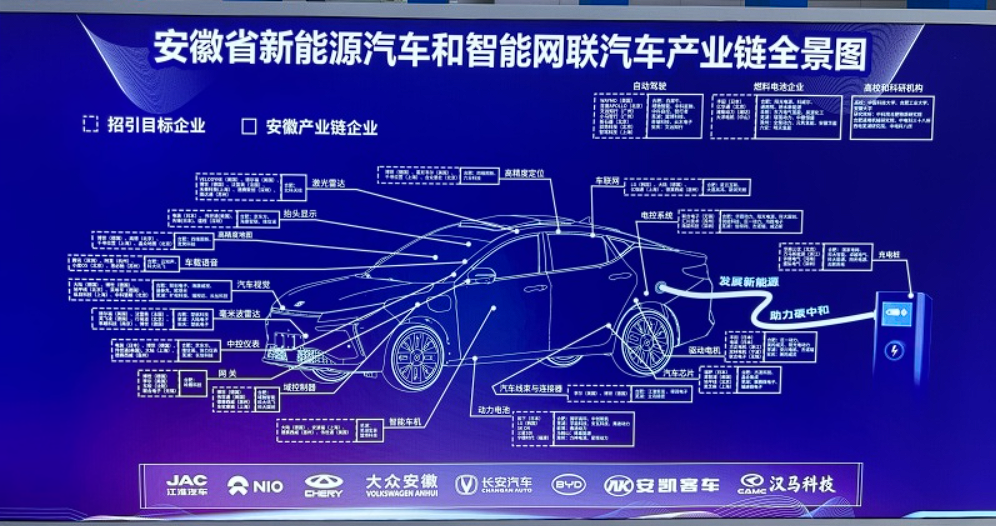
It can be said that Hefei's model has now reached a critical juncture of transitioning from 'investment attraction' to 'ecosystem construction.' To truly form a synergistic effect among 'foreign enterprises,' Hefei needs the experience of Wuhu's 'industry leader' model. Meanwhile, Wuhu must leverage Chery to lead the comprehensive upgrade of the local industrial chain, addressing the intelligence
To forge a formidable joint force and make strides on the global stage, collaboration between Hefei and Wuhu is indispensable. From the standpoint of human resources, the Hefei-Wuhu urban cluster stands out with the largest concentration of automotive industry experts. A significant number of professionals in this field lead a cross-city lifestyle, working in Wuhu while their families are based in Hefei.
Although there is a steady stream of talent flowing between Hefei and Wuhu, achieving seamless industrial coordination cannot rely solely on personnel movement. Nevertheless, under the strategic planning of Anhui Province, the previously fragmented landscape is undergoing transformation. The battery plant jointly constructed by Chery and CATL has been established in Chaohu, marking a gradual shift of industrial focus from Wuhu towards Hefei.
For Anhui to sustain its momentum and achieve even greater success, it is crucial to foster synergy between Hefei and Wuhu. Several regions are vying to become the leading province in the new energy sector, including neighboring Zhejiang and Guangdong, which has previously held the top position. Both are poised to seize any opportunity to surpass their competitors.
Anhui must remain vigilant and avoid complacency.
Note: Some images featured in this article are sourced from the internet. In the event of any copyright infringement, please contact us for prompt removal.
-END-

-
![]()
A16Z's Latest Insight: 80% of Tokens Are Idle; Managing AI Is the Next Trillion-Dollar Opportunity
-
![]()
Average Pricing Rivals Apple and Samsung: realme’s Pause in China Fuels OPPO’s Strategic Advance
-
![]()
Casarte Holds the Fort, COLMO Catches Up, Samsung Exits: Who Will Have the Last Laugh?
-
![]()
Striving to Lead in New Energy: Anhui's Challenge to Overcome the 'Hefei vs. Wuhu' Rivalry
-
![]()
Four Anhui Pioneers: Two Decades Shaping China’s Auto Industry
-
![]()
Important to Observe: BYD Surges 20% Against Market Trend in July, Will It Reclaim the 1 Trillion Yuan Mark or Soar Even Higher?
-
![]()
Autonomous Driving Enters the Second Half: ByteDance Enters the Field, NVIDIA Restructures, and the First IPO Emerges
-
![]()
Service Takes Center Stage: A 2026 Mid-Year Analysis of BBA Reputation Index