Important to Observe: BYD Surges 20% Against Market Trend in July, Will It Reclaim the 1 Trillion Yuan Mark or Soar Even Higher?
 07/17 2026
 508
508
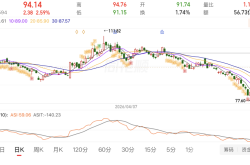
On July 16, Beijing time, BYD, a company dual-listed on the A-share and H-share markets, witnessed gains in both its stock segments. BYD's A-shares climbed by 2.59%, while its H-shares surged by 4.6%. Since reaching a low on June 29, BYD's A-shares have skyrocketed by over 20%, and its H-shares have risen approximately 25% from their low on June 30.
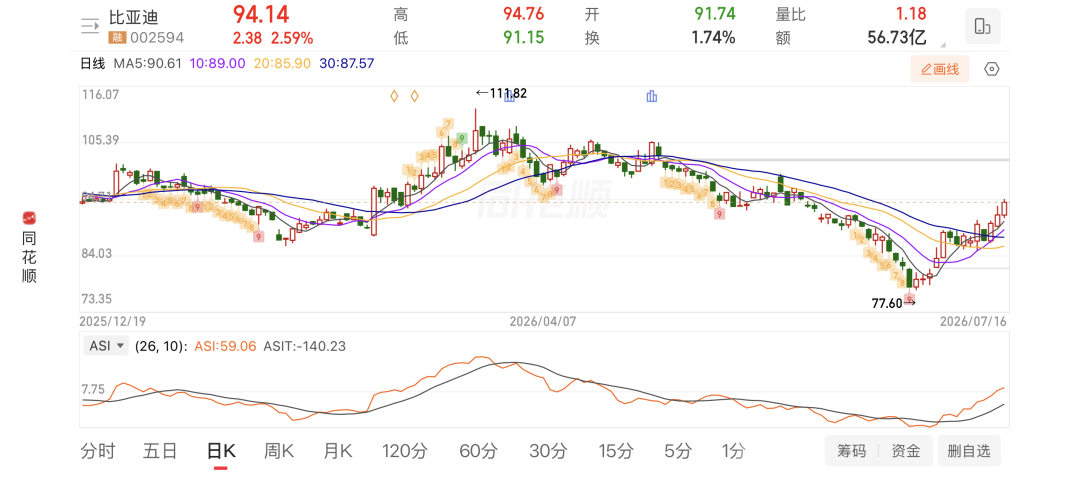
Amidst a persistent market downturn, BYD has bucked the trend this month, amassing a gain exceeding 20%. The latest closing market capitalization for BYD's A-shares stands at 858.29 billion yuan, with its H-shares closing at 829.21 billion yuan. The question now arises: Will BYD's current surge propel its market value back to the 1 trillion yuan threshold, or even surpass it?
A thorough analysis of BYD's recent surge reveals two primary catalysts: the new product cycle and explosive growth in overseas markets, encompassing both new energy vehicle and energy storage shipments. Could these factors propel BYD's market value back to the 1 trillion yuan mark, or even beyond? Whether it achieves a new all-time high hinges on the market environment.
According to BYD's latest sales data for June, the company sold a total of 403,500 vehicles, recording both year-on-year and month-on-month growth, with increases of 5.46% and 5.21%, respectively. The key driver behind this dual growth is the explosive surge in overseas sales.
In June, BYD's overseas sales reached 174,900 vehicles, marking a year-on-year increase of 95% and a month-on-month rise of 9.15%. In the first half of 2026, cumulative overseas sales amounted to 789,400 vehicles, up 70.65% year-on-year. Despite this overseas sales boom, BYD's total sales for the first half of the year stood at 1,808,500 vehicles, down 15.72% year-on-year, due to sluggish domestic sales performance.
Excluding overseas sales, BYD's domestic sales in June were 228,600 vehicles, a notable year-on-year decline of 21.94%. This was influenced by fierce domestic market competition, reduced subsidies, and an aging product cycle.
With the advent of BYD's new product cycle, domestic sales are anticipated to rebound and potentially embark on a new growth trajectory.
BYD's most significant technological breakthrough this year is the unveiling of its flash charging technology. According to the plan, BYD aims to offer flash charging as an option across its entire range of pure electric vehicles by 2026. The mass production plan will be implemented from top to bottom across all price segments, covering entry-level commuter models priced at 110,000 yuan to luxury cars priced at over 1 million yuan.
Judging by the order situation for BYD's latest model, the Datang EV, which is equipped with flash charging technology, EV models combined with this technology have been well-received by the market and users alike. Since its official launch on June 17, it garnered over 60,000 firm orders within 72 hours, with some sources claiming it reached 100,000 orders. The conversion rate from preliminary to firm orders reached 43.3%, with a 60%-70% increase in store visits and 85% of customers being repeat or upgrade buyers.
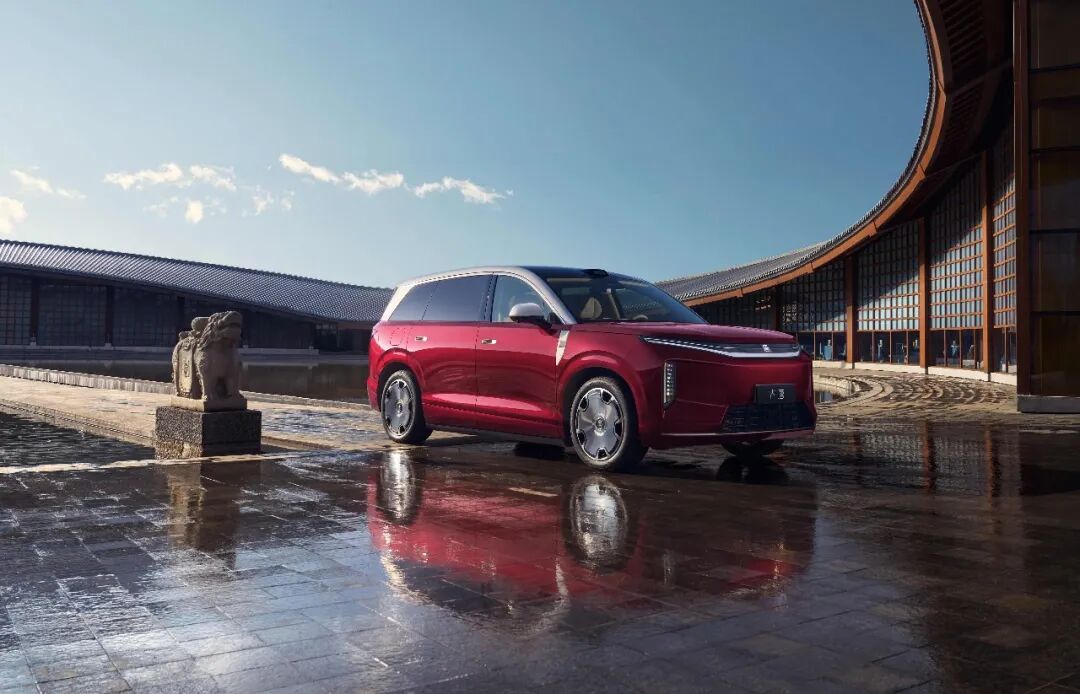
Currently, the waiting period for vehicles like the Datang EV is 2-3 months, primarily due to insufficient production capacity for the Datang-exclusive second-generation blade batteries. Presently, only a single production line in Shenzhen is ramping up. However, as multiple new production lines for the second-generation blade batteries come online, delivery speeds will continue to accelerate.
Nevertheless, in 2026, the flash charging version will only be introduced in pure electric models. Once the flash charging version encompasses all pure electric models, it may be extended to hybrid models in 2027. Currently, only the Yangwang U8 hybrid model is equipped with flash charging technology.
From this vantage point, BYD still holds some technological trump cards. However, popularizing flash charging technology in hybrid models might be somewhat superfluous; it would be more ideal for pure electric models. Alternatively, achieving the widespread adoption of 1000V megawatt flash charging in pure electric models could be considered, contingent on the cost reduction of flash charging technology at that time.
In addition to the new product cycle, BYD's export business has experienced explosive growth this year.
According to the plan, BYD aims to export 1.8 million vehicles in 2026, with 789,400 vehicles already exported in the first half of the year. In June alone, overseas sales reached 174,900 vehicles. If BYD can sustain this monthly sales level in the second half of the year, achieving the annual export target of 1.8 million vehicles should be feasible. If monthly sales continue to grow, BYD may even surpass its sales target.
Overseas markets have long been regarded as high-margin markets. Even after factoring in tariffs and transportation costs, BYD's overseas vehicle pricing is substantially higher than in the domestic market. Due to the explosive growth in overseas sales, institutions generally believe that BYD's Q2 profits could reach 8-9 billion yuan. Foreign banks such as Citi, UBS, and Goldman Sachs anticipate Q2 profits to reach 9.5-10.2 billion yuan.
UBS estimates that the net profit per vehicle in Q2 will be 8,728 yuan, a significant increase from Q1, driven by higher overseas vehicle premiums, better-than-expected energy storage shipments, and lower-than-expected exchange rate pressures (owing to the relatively stable RMB exchange rate).
The energy storage business is also BYD's most crucial second growth driver this year. Li Ke, BYD's Vice President, publicly stated that the 2026 energy storage production capacity has already been fully booked, with orders scheduled until 2028. In the first half of 2026, energy storage system shipments are expected to range from 68GWh to 75GWh, already surpassing the total for the entire year of 2025. The gross margin for the energy storage business is around 26%, higher than that of the automotive business.
Such a BYD warrants serious consideration from investors.
-
![]()
A16Z's Latest Insight: 80% of Tokens Are Idle; Managing AI Is the Next Trillion-Dollar Opportunity
-
![]()
Average Pricing Rivals Apple and Samsung: realme’s Pause in China Fuels OPPO’s Strategic Advance
-
![]()
Casarte Holds the Fort, COLMO Catches Up, Samsung Exits: Who Will Have the Last Laugh?
-
![]()
Striving to Lead in New Energy: Anhui's Challenge to Overcome the 'Hefei vs. Wuhu' Rivalry
-
![]()
Four Anhui Pioneers: Two Decades Shaping China’s Auto Industry
-
![]()
Important to Observe: BYD Surges 20% Against Market Trend in July, Will It Reclaim the 1 Trillion Yuan Mark or Soar Even Higher?
-
![]()
Autonomous Driving Enters the Second Half: ByteDance Enters the Field, NVIDIA Restructures, and the First IPO Emerges
-
![]()
Service Takes Center Stage: A 2026 Mid-Year Analysis of BBA Reputation Index