Casarte Holds the Fort, COLMO Catches Up, Samsung Exits: Who Will Have the Last Laugh?
 07/17 2026
 451
451
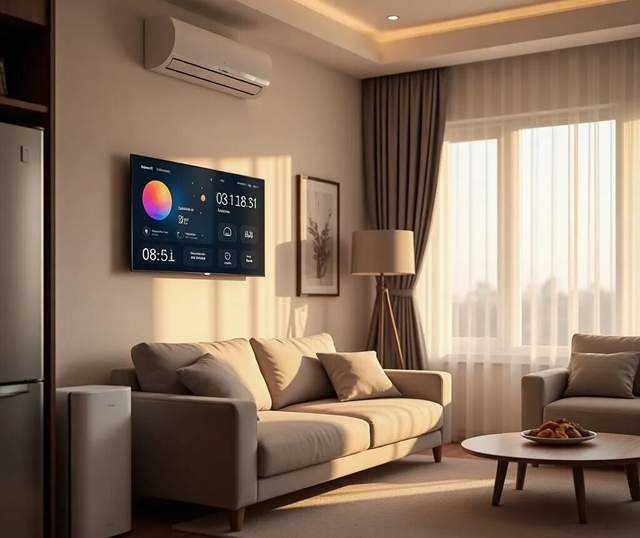
After a decade of hype, someone has finally set the rules for smart home appliances.
The two national standards for smart home appliances implemented in May this year classify smart home appliances into L1-L5 levels based on two dimensions: 'smart capability' and 'scenario effectiveness'. Before the implementation of this grading system, the home appliance industry often saw the phenomenon of 'pseudo-smart' products.
According to the Smart Home Appliance Consumer Survey Report released by the Jiangsu Provincial Consumer Protection Commission, 60% of respondents stated that the functionality usage rate of their smart home appliances was below 30%. Exaggerated functionality, complex operations, and poor interoperability have become the three main issues with smart home appliances.
After the release of the new national standards for smart home appliances, the phenomenon of 'pseudo-smart' products will be effectively addressed. This also means that only products meeting L4-level standards or above can be considered high-end. Against the backdrop of industry restructuring, the five leading brands—Casarte, COLMO, Siemens, Panasonic, and Samsung—each have their own approaches.
Casarte: Market Leader with Cognitive Gaps
As a leading domestic high-end home appliance enterprise, Casarte maintains an unshakable market position.
Casarte's most proud R&D achievement is L4-level proactive smart technology. The company's Maestro series products were the first to receive L4-level smart home appliance standard certification from the China Household Electrical Appliances Research Institute, marking the first such case in the high-end home appliance industry.
This series is equipped with the 'AI Eyes 2.0' system, enabling a service experience upgrade from 'passive command-based' to 'proactive perception-based.' The smart refrigerator in the suite can self-identify ingredients and recommend recipes to users.
Casarte's core advantage lies in its full-category original technology matrix, including proprietary technologies such as MSA oxygen control preservation, zoned washing and care, and dual-tower soft air. To date, it has accumulated over 3,000 patents, led the formulation of 82 international standards and 402 national standards, forming an irreplaceable full-category technology matrix.
In terms of design, Casarte follows the trend of 'home integration.' Its TV products feature an exclusive 'Dome Gray' color scheme with micron-level precision lithography texture and support fully flush, embedded installation, aligning with the current minimalist home decor aesthetic.
However, after the company's expansion, Casarte also has certain management blind spots.
There are flaws in its quality control and after-sales system. Consumer platforms like Heimao Complaints reveal that some of Casarte's high-end models suffer from core hardware failures and delayed after-sales responses. Additionally, since its after-sales service system is integrated into Haier's general service network, some users feel that Casarte's service standards do not match its product pricing.
There is no fully unified pricing system. Casarte's online e-commerce platforms and offline dealers have price discrepancies for their products. Some use different names for configuration distinctions, while some discounted products flow into third-party markets, undermining Casarte's high-end positioning and user trust.
COLMO: AI Innovator Facing the 'Middle Layer' Dilemma
COLMO, a high-end sub-brand of Midea Group, focuses on 'new tech luxury' and uses AI technology as its core entry point to create differentiated high-end smart experiences.
COLMO's greatest advantage is the industry's first AI Agent. In 2025, the company launched the 'COLMO AI Brain,' powered by Midea's self-developed 'Meiyan Large Model.' After over 100,000 hours of learning in family scenarios and training with millions of home data points, the 'COLMO AI Brain' achieves over 95% accuracy in user intent recognition and over 90% accuracy in device control, enabling proactive whole-home appliance management and seamless interaction.
COLMO's breakthrough lies in full-scenario smart synergy. It integrates five life systems—air, water, energy, diet, and laundry care—with over 1,000 smart devices connectable. A single command can trigger the collaboration response of 20 devices, placing its full-scenario interoperability at the forefront of the industry.
COLMO adheres to a principle of 'ultimate rational aesthetics' in design. By maintaining a 'Bauhaus' rational aesthetic style and using fully flush embedding technology, many of its products have won international design awards such as the German Red Dot Award and iF Design Award.
As an emerging brand, COLMO also faces growing pains.
Its brand positioning is stuck in an awkward 'middle layer.' COLMO struggles to challenge international luxury home appliance brands like Miele and Gaggenau while also failing to attract entry-level consumers due to its high pricing. Some consumers even view COLMO as a 'rebranded Midea' since it shares many core components with Midea, making it difficult to justify its premium pricing.
Additionally, COLMO has low openness, making it difficult to integrate with mainstream interconnected ecosystems like Xiaomi. Its cross-brand device compatibility is poor, and its heavy reliance on Midea's distribution network for channels results in a lack of targeted store displays, weakening its high-end brand positioning to some extent.
Siemens: German Precision Engineering's Persistence and Resistance to Change
Siemens, a century-old industrial giant, is renowned for its stable quality in the high-end market and holds a significant share in the RMB 10,000+ refrigerator market.
Product stability and reliability are key sources of its 'German flavor.' While Siemens no longer includes butter paper packaging, its products still have low failure rates and solid craftsmanship. Its core home appliance technologies, such as Zero-Degree BioFresh and iQ series inverter motors, are all developed with product durability in mind.
A strong brand image backs Siemens. As a global technology giant with businesses spanning industry, healthcare, and energy, Siemens' products carry technical heritage and credibility. For users seeking stability, Siemens is a reliable brand.
German design is simple and restrained, further highlighting Siemens' brand ethos. Its home appliance designs are understated yet elegant, following the embedded trend and emphasizing a balance of functionality and aesthetics. The 'Northern Lights' series is a prime example.
However, as a foreign brand, Siemens has struggled to keep pace with the Chinese market.
Its slow progress in software smartization is a clear sign. According to the China Household Electrical Appliances Research Institute's 2026 smart home appliance grading evaluation, most of Siemens' mainstream high-end models only reach L2-level intelligence. Its Home Connect interconnection system only offers basic functions like remote control and status queries, lacking proactive intelligence and a complete scenario ecosystem, causing its appeal to young high-end users to decline.
Siemens also tends to be overly conservative in marketing. The brand focuses too much on technical parameters and quality promotion, lacking lifestyle marketing and emotional value transmission, failing to break free from Chinese consumers' stereotypes of German companies.
Panasonic: Fine-Tuned Breakthroughs in Niche Segments
As a representative Japanese brand, Panasonic has seen its domestic home appliance business contract in recent years but still maintains a presence in the high-end market through technical accumulation in specific categories.
Panasonic has carved out a differentiated niche through refined health technologies. Its proprietary Nanoe purification and Bubble Wash technologies precisely address users' safety concerns in the post-pandemic era, establishing a clear user perception in the health home appliance segment.
Excellent space utilization and humanized design are another strength of Panasonic in the home appliance field. Given Japan's typically narrow living spaces, Panasonic has accumulated extensive experience in small-unit products. Its high-end refrigerators feature well-designed internal partitions and ergonomic operation logic, making them popular among refined household users.
However, as a purely Japanese brand, Panasonic also has notable shortcomings in the high-end home appliance sector.
The lack of a smart ecosystem is a key issue. Weak smart R&D capabilities are a common problem among Japanese companies. Panasonic's smart home appliances are mostly limited to single-category functionality optimization, lacking cross-category proactive smart interoperability. This limitation is particularly evident in the high-end smart home appliance market, where bundled solutions are popular.
Market visibility and channel contraction are also pain points for Panasonic and other Japanese companies. After domestic manufacturers ramped up efforts in the high-end market, Panasonic's home appliance business in China faced pressure, with fewer offline experience outlets, gradually diluting its recognition among young consumers compared to domestic brands.
Samsung: Stylish Design and Localization Struggles
Korean brands were once significant players in China's high-end home appliance market, but Samsung now faces a major turning point after announcing the withdrawal of its full-category home appliance business from the Chinese mainland market.
Highly recognizable stylish design is Samsung's forte. Its high-end home appliances feature avant-garde and bold designs, creating a unique brand identity. Products like the Bespoke series refrigerators and QLED series TVs have distinctive visual impacts, appealing to trendy young high-end users.
Samsung also has strengths in display and interconnection technologies. Many of its high-end home appliances can seamlessly integrate with its smartphones, tablets, and other devices, offering a cohesive ecosystem experience and certain synergistic advantages within the Korean tech ecosystem.
However, times have changed, and Samsung now faces significant challenges in China's high-end home appliance market.
Geopolitical shifts have led to strategic contractions by the Samsung Group. After terminating its home appliance business in the Chinese mainland, Samsung lost direct support from local supply chains, offline channels, and after-sales systems, causing its market influence to decline significantly.
At the software level, Samsung's home appliances suffer from inadequate localization. Its SmartThings ecosystem does not support mainstream Chinese interconnection platforms like HarmonyOS and Mi Home, failing to align with Chinese users' habits of voice control and device interoperability, prompting consumers to favor more convenient domestic brands.
Future Trends in High-End Smart Home Appliances: Three Predictions for the Shakeout Period
Standing at the industry turning point marked by the high requirements of the new national standards, the competitive logic of high-end smart home appliances is being completely reshaped. Four industry trends will influence the future market landscape and outcome.
Trend 1: The core of competition shifts from 'parameter inflation' to 'proactive service,' with L4-level intelligence becoming the entry requirement for high-end products.
The implementation of the new national standards provides a unified, quantifiable benchmark for smartization levels. L4-level native proactive intelligence becomes the threshold for high-end home appliances. AI large models learn users' lifestyles, predict scenarios, and make autonomous decisions, truly achieving a 'service finds the user' smart experience.
Trend 2: Ecosystem openness and interoperability become inevitable, while closed ecosystems face sustained pressure.
One of the biggest pain points in the current smart home industry is the inability of cross-brand devices to interconnect, preventing users from freely combining products from different brands. To address this, the Ministry of Industry and Information Technology has initiated the formulation of standards for smart home interoperability. Cross-brand, cross-protocol device interconnected has become an inevitable industry trend, and brands adhering to closed ecosystems will see their market space continue to shrink.
Trend 3: High-end brands are on the verge of a 'service litmus test,' and pseudo-high-end models will be eliminated by the market.
The premium pricing of high-end home appliances stems partly from the products themselves and partly from exclusive service experiences and full-cycle user support. Many 'pseudo-high-end' brands with unstable quality control, shared after-sales systems with mass-market brands, and chaotic pricing will gradually weaken and be eliminated by the market as consumer rationality returns.
The market landscape is characterized by 'one superpower and multiple strong players,' with cross-industry entrants potentially reshaping the value system.
The current market generally features a 'one superpower and multiple strong players' competitive landscape. Casarte leads with its full-category layout and deep channel advantages, while traditional brands like COLMO, Siemens, and Panasonic occupy niche markets through differentiated positioning.
However, the entry of cross-industry giants may reshape the home appliance value system. Tech companies like Huawei and Xiaomi are entering the home appliance industry with whole-home smart solutions, leveraging open ecosystems and extreme cost advantages to build unique late-mover advantages. The definition of high-end home appliance brands may change in the future.
So, the question remains: Which brand's smart home appliances do you think are more reliable? Feel free to share your opinions.
-
![]()
A16Z's Latest Insight: 80% of Tokens Are Idle; Managing AI Is the Next Trillion-Dollar Opportunity
-
![]()
Average Pricing Rivals Apple and Samsung: realme’s Pause in China Fuels OPPO’s Strategic Advance
-
![]()
Casarte Holds the Fort, COLMO Catches Up, Samsung Exits: Who Will Have the Last Laugh?
-
![]()
Striving to Lead in New Energy: Anhui's Challenge to Overcome the 'Hefei vs. Wuhu' Rivalry
-
![]()
Four Anhui Pioneers: Two Decades Shaping China’s Auto Industry
-
![]()
Important to Observe: BYD Surges 20% Against Market Trend in July, Will It Reclaim the 1 Trillion Yuan Mark or Soar Even Higher?
-
![]()
Autonomous Driving Enters the Second Half: ByteDance Enters the Field, NVIDIA Restructures, and the First IPO Emerges
-
![]()
Service Takes Center Stage: A 2026 Mid-Year Analysis of BBA Reputation Index