Revealed: CXMT’s New Wafer Fab Set to Establish Presence Here
 08/04 2026
 473
473
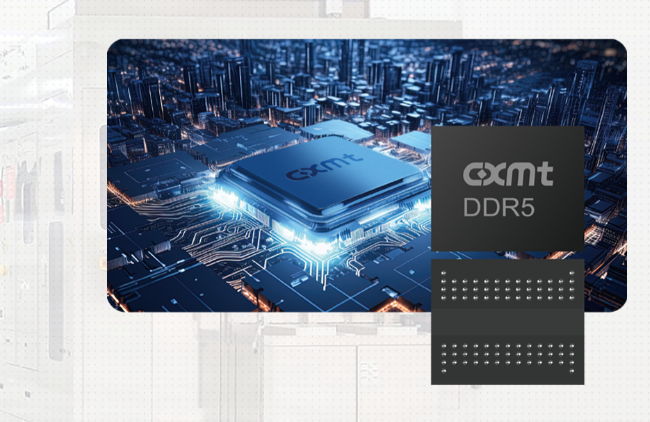
According to reports, Changxin Memory Technologies (CXMT), a Chinese memory chip manufacturer, is poised to construct its second 12-inch DRAM wafer fab in Yizhuang, Beijing, and is currently in negotiations with the Beijing Economic-Technological Development Area to secure financial support.
Insiders with knowledge of the situation disclosed that the proposed new wafer fab will be situated in the Yizhuang district of Beijing, an area where CXMT already operates an existing DRAM wafer fab. The project is still in its nascent stages of discussion, with the precise investment scale and capacity planning yet to be finalized.
Sources indicated that CXMT is actively seeking financial backing from the Yizhuang Development Zone management agency, as well as other state-owned technology enterprises, with a minimum funding request of 60 million yuan. The financing plan is subject to change, and the final source of funds has not been confirmed.
It is noteworthy that the cost of establishing a wafer fab capable of producing advanced DRAM typically surpasses $10 billion. The “initial support” sought by CXMT, starting at 60 million yuan (approximately $8.9 million), is relatively modest.
The 60 million yuan serves more as a commitment mechanism rather than direct project funding. It aims to leverage resources such as land, utilities, tax incentives, talent housing, as well as future capital injections from investment vehicles under the economic development zone and local state-owned enterprises. According to reports, other state-owned technology enterprises are also expressing interest in participating. In essence, the actual capital mobilized in the future is expected to far exceed 60 million yuan.
In reality, CXMT is not currently facing a shortage of funds. A month ago, its parent company, Changxin Technology, completed an $8.6 billion IPO, setting a new benchmark for semiconductor listings in China. In late July, CXMT itself raised an additional 7.5 billion yuan, boosting its registered capital from 23.89 billion yuan to 31.39 billion yuan.
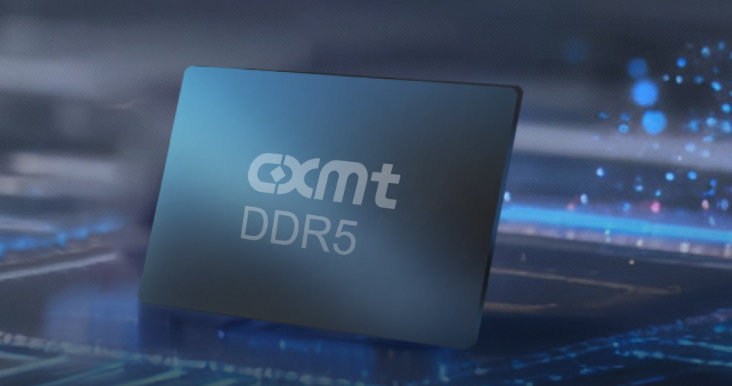
CXMT’s new plant has now become a highly sought-after asset for various regions, with its capacity expansion plans turning into a competitive bidding arena for cities.
Reuters previously reported that CXMT is simultaneously advancing new plants in Shanghai and Hefei, and is engaged in discussions with multiple regions for additional sites. Hefei already boasts two 12-inch DRAM plants, while Beijing has one, each with a monthly production capacity of approximately 100,000 wafers. If the second plant in Beijing is completed, combined with the production lines currently under construction, the overall monthly production capacity is anticipated to more than double, exceeding 600,000 wafers.
When a factory represents billions in investment, thousands of jobs, and a supply chain that has been constrained for years, cities' efforts to attract such investments are almost inevitable.
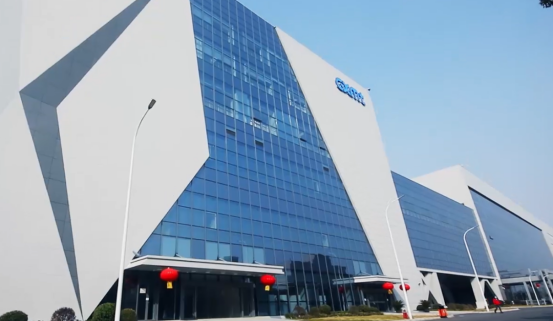
The expansions of SMIC and Yangtze Memory have followed a similar trajectory.
This model can thrive because the prevailing trends are favorable.
The demand for AI computing power, data centers, and consumer electronics has propelled the memory sector onto an upward trajectory. According to Counterpoint data, in the first quarter of 2026, CXMT had already emerged as the world’s fourth-largest DRAM manufacturer, with a market share of around 8%, and is projected to exceed 11% by 2028. Samsung, SK Hynix, and Micron still collectively accounted for nearly 90% of the market in that quarter.
The increase from 8% to 11% may appear modest. However, for a company that started from scratch in 2017, it is significant enough to prompt the three industry giants to reconsider China’s memory sector as a dynamic force rather than mere background noise.
Currently, CXMT’s advanced DRAM production still heavily relies on overseas equipment. If export control gaps widen further, its capacity expansion potential may increase even more, and the corresponding expansion plans will also expand.
It is worth mentioning that in terms of product development, CXMT’s LPDDR6 is nearing the end of the verification process and has been sampled to customers; its HBM production line for AI applications is also in the pipeline. As CXMT successfully commercializes high-end products and integrates into the supply chain, its market share is expected to grow further.
-
![]()
Doushengsheng: Is It Really 'Stealing the Base'?
-
![]()
Dealer Service Operation Capability | After-sales Customer Retention: Three Key Strategies for Attracting Customers with Competitive Pricing
-
![]()
Revealed: CXMT’s New Wafer Fab Set to Establish Presence Here
-
![]()
Is Ant Afu Facing Its First Leadership Shuffle? Official Statement Dismisses Claims as Baseless
-
![]()
Pixel 11 Specs and Price Leaked Early: Price Hike of $100, Yet Memory Trimmed to 12GB
-
![]()
Leapmotor Hits 100,000 Monthly Sales: Is the ‘NIO-XPeng-Li Auto’ Era Fading?
-
![]()
From a Free Academic Search Tool to a Leading Large Model Company, Zhipu Aims for the Summit
-
![]()
Two Truths About July's Auto Market: Domestic Focus on Technology, Overseas Focus on Speed | Second Half Kickoff ②