Doushengsheng: Is It Really 'Stealing the Base'?
 08/04 2026
 336
336
Source | Bohu Finance (bohuFN)
Author | Kaikai
In February of this year, Douyin quietly rolled out an independent group-buying app named "Doushengsheng," which offers a range of services including group purchases, in-store visits, and travel accommodations. It has been likened by outsiders to Douyin's take on "Dianping."
Yet, this newcomer, which has only been online for four months, is rapidly closing the gap with the two-decade-old market leader. According to a QuestMobile report, as of June 30, Doushengsheng's DAU (Daily Active Users) had soared to 21.03 million, compared to Dianping's 32.6057 million.
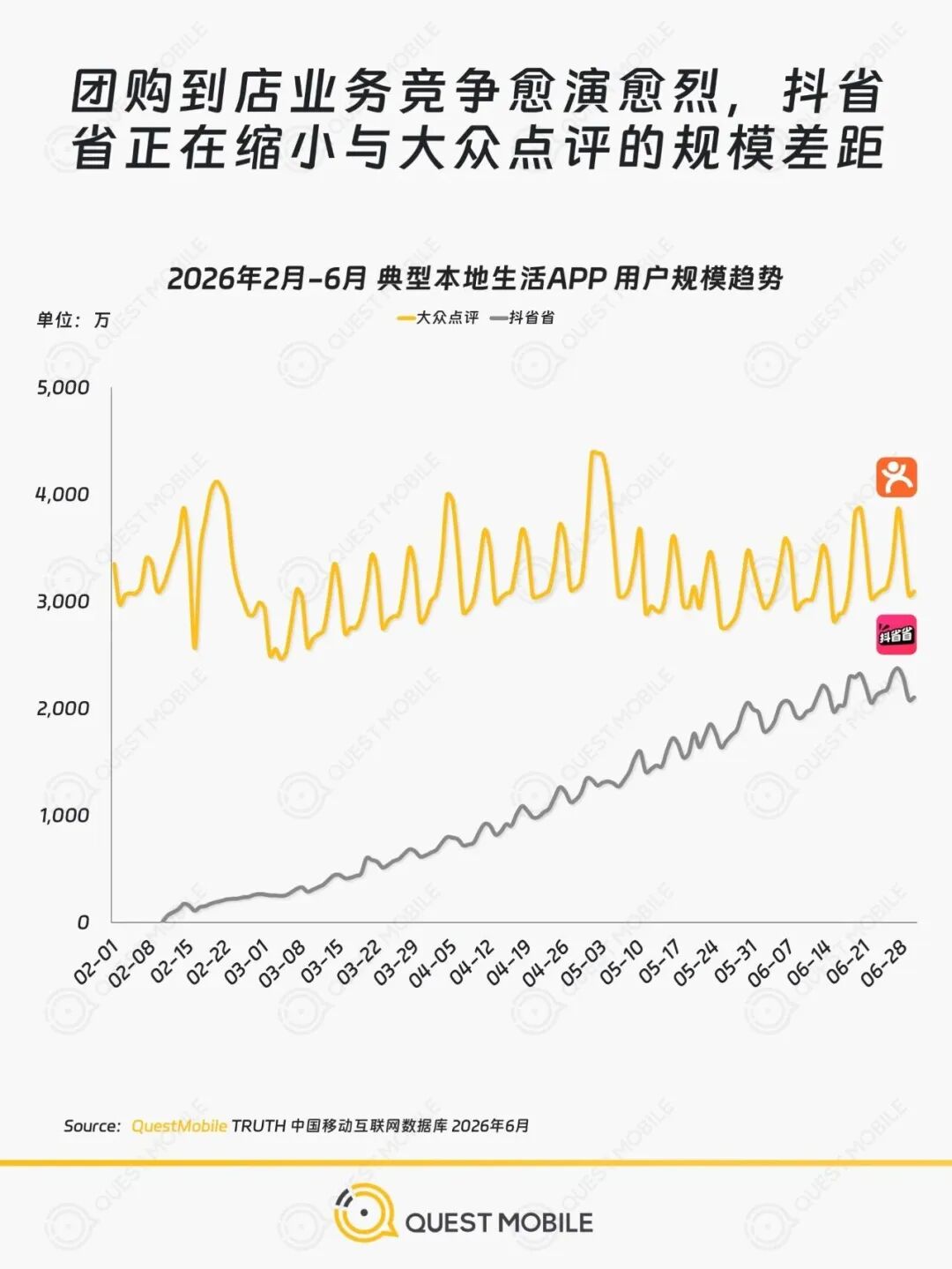
ByteDance has once again showcased its prowess in achieving "miracles through strength." Such surprise moves are not uncommon in ByteDance's history. For instance, Qishui Music, also nurtured within the Douyin ecosystem, has now eclipsed NetEase Cloud Music to become the third-largest player in the online music industry.
But this time, there's a twist.
Unlike previous app battles, the local life sector is not merely a "traffic game." Doushengsheng faces a vastly different offline battlefield.
Independence is merely the first step. The real challenge begins once Doushengsheng establishes a firm foothold.
01 Why is Doushengsheng Growing So Rapidly?
Traffic and algorithms have always been ByteDance's core competitive weapons.
From Toutiao to Douyin, and then to Qishui Music, this traffic strategy has rarely faltered—first sparking user interest through content, then precisely distributing it via algorithms to drive users into various domains such as short videos, live streaming, music, e-commerce, and in-store visits.
However, in the local life sector, this formula is less effective.
In January 2021, Douyin officially launched its local life service business. By 2023, Douyin's local life transaction volume had surged to 300 billion yuan; by 2025, according to an exclusive report by Lei Feng Network, this figure had exceeded 850 billion yuan, marking a year-on-year growth rate of 59%.
Yet, while transaction volumes soared, another set of data was equally eye-catching: In a 2024 research report, Soochow Securities noted that Meituan's redemption rate was estimated to be between 80%-85%, while Douyin's was only 50%-60%.
Douyin leverages "content" as its vanguard, which is both its strength and weakness.
While users are easily enticed to make purchases by content, the transition from online to offline—when users will redeem their vouchers and whether they will actually visit the store—creates another offline closed loop.
Moreover, according to UBS research predictions, Douyin's in-store GMV maintained a year-on-year growth rate of 50%-55% in the first quarter of this year. While still robust, this growth has clearly slowed. UBS estimates that this is related to Douyin's reduction in subsidies compared to the previous quarter.
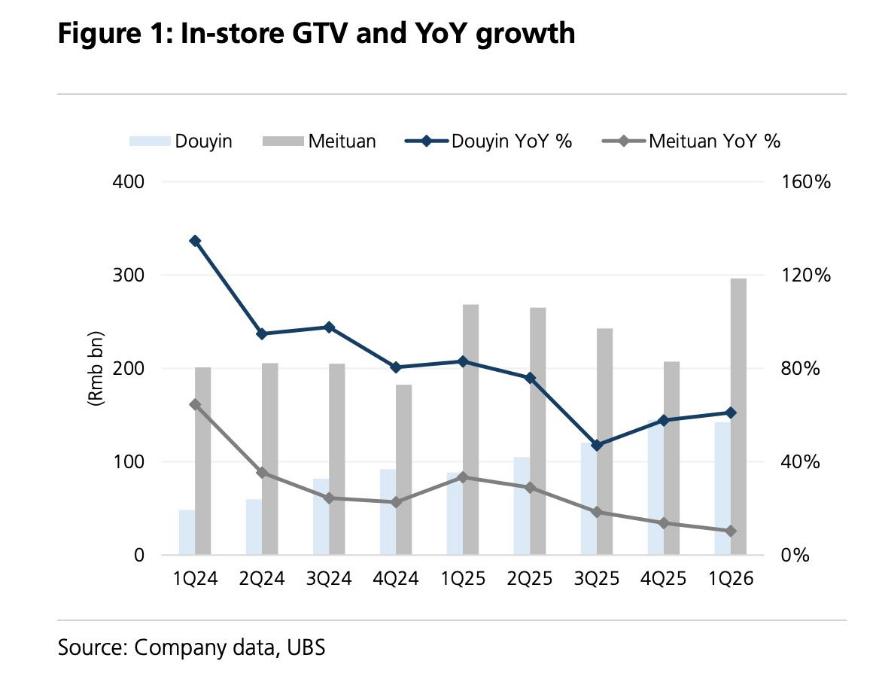
This highlights a problem: Douyin's strength lies in traffic, and the best way to attract traffic is through low prices. However, low prices often fail to translate into merchant repurchases and reputation. Douyin's offline closed loop for local life is stuck in the fulfillment and experience stages.
Doushengsheng's emergence is precisely aimed at solving these issues.
As an independent transaction platform, Doushengsheng can capture users who are attracted by content but do not immediately redeem their vouchers, as well as those with immediate consumption needs. It provides a comprehensive platform where users can check orders, view reviews, and leave comments.
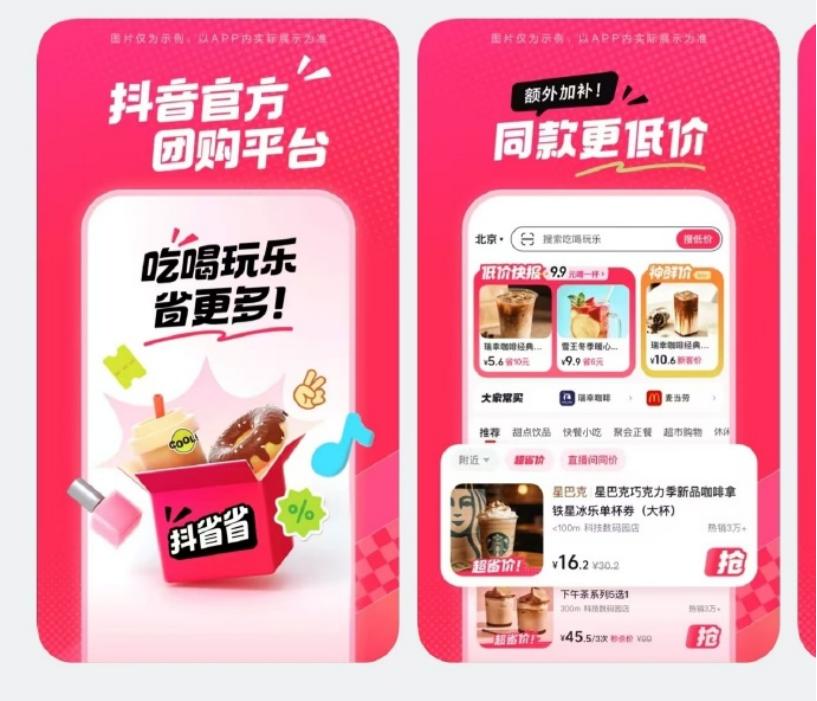
In essence, while Douyin previously used content to "find users for products," expanding the demand pool, Doushengsheng uses "users finding products" to capture and convert traffic. The two have clear divisions of labor and complement each other.
With content, traffic, and fulfillment all having a foothold, Doushengsheng has begun to rapidly accumulate users.
On the one hand, price-sensitive customers from Douyin's main platform have quickly migrated to Doushengsheng. According to QuestMobile data, Doushengsheng and Douyin share over 20.88 million overlapping users, accounting for more than 90% of Doushengsheng's user base.
Especially in the past six months, Doushengsheng has adopted a straightforward subsidy strategy, offering 8 yuan coupons for new users and subsidies for product subscriptions. Some group-buying prices are slightly cheaper than those on Dianping.
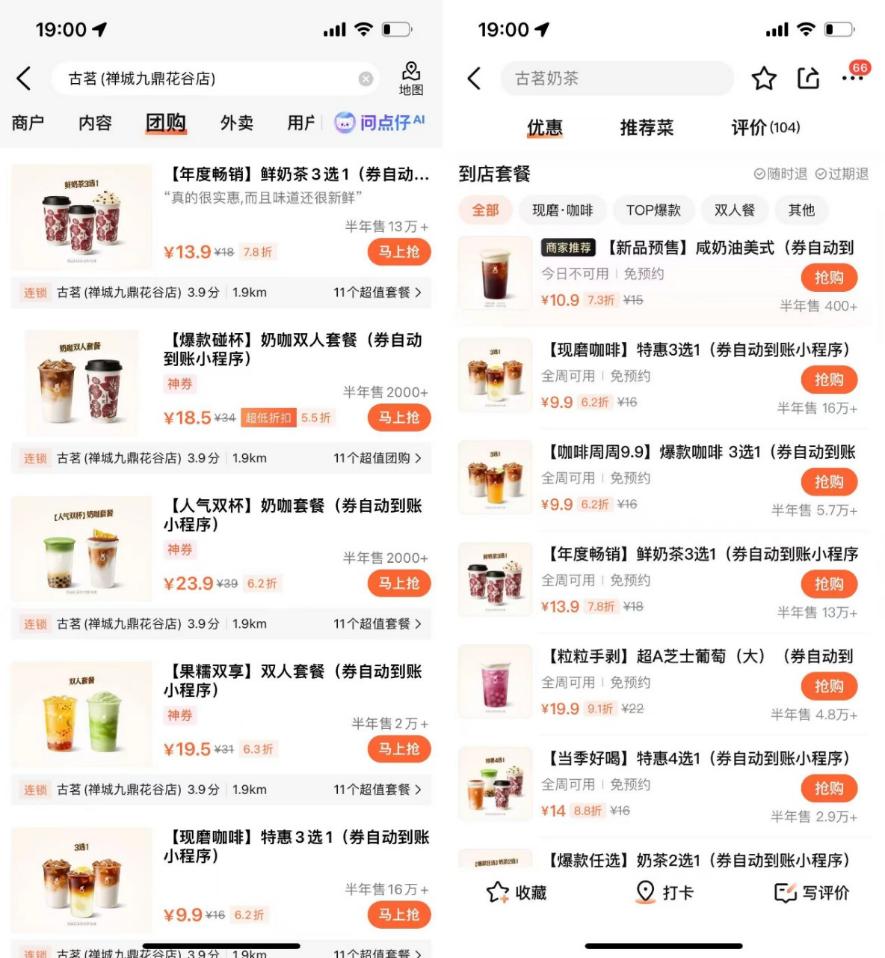
(Image: Left - Meituan, Right - Doushengsheng)
On the other hand, Doushengsheng has streamlined the entire process of searching, ordering, redeeming, and reviewing into an independent platform, addressing the inconvenience of group-buying experiences on Douyin's main platform. It is gradually cultivating the user habit of "finding deals on Doushengsheng."
Douyin is using Doushengsheng as a pivot to build a transaction-centric local life closed loop, connecting the entire journey from online inspiration to offline fulfillment. Only when the experience is seamless can the growth of local life be sustainable.
02 Not Just Another "Dianping"
However, viewing Doushengsheng as merely the next "Dianping" underestimates ByteDance's ambitions.
Doushengsheng is not just about dining group buying and in-store visits; it also encompasses travel accommodations, leisure and entertainment, and other comprehensive scenarios, as well as home services like food delivery and daily services. It serves as the main gateway to Douyin's local life services.
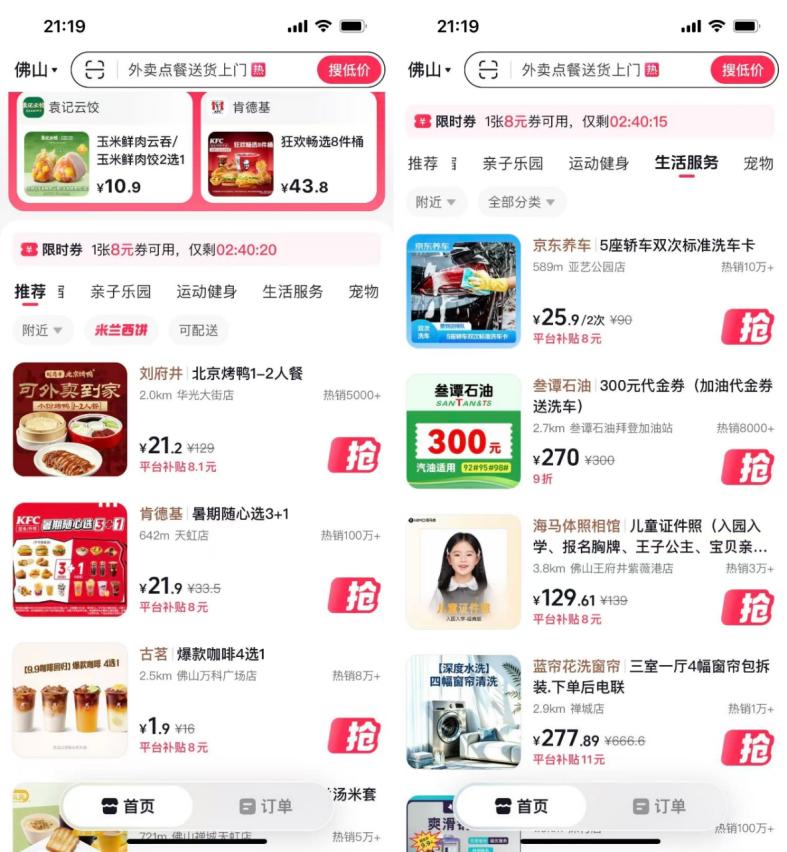
For ByteDance, this is a long-planned strategy.
After experiencing last year's instant retail wars, ByteDance began to realize that if it wants to compete in local life, it must integrate group buying, food delivery, and instant retail into a unified strategy to maximize their respective ecological capabilities.
This is also what Meituan has been doing—using high-frequency services to drive low-frequency ones, low-margin businesses to drive high-margin ones, and connecting users' needs for eating, drinking, entertainment, and shopping into a closed loop, continuously deepening the synergistic effects of business resources.
But now, this is no longer a unique advantage for Meituan. After the instant retail wars, Taobao Flash Sales and JD.com are also accelerating the integration of ecological resources, trying to seize the position of the "first entry point for instant needs." The already saturated traffic is being further divided.
ByteDance has to move faster—relying solely on Douyin's main platform for group buying is not enough to win this battle.
Thus, Douyin began to aggressively address its weakest offline link. In 2023, Pu Yanzi, in her capacity as the head of Douyin Group's commercialization, also took on the role of head of local life services, initiating sweeping reforms in the local life business:
In 2024, the original three parallel departments for dining, comprehensive services, and travel accommodations were reorganized into three major regions—North, Central, and South—and an NKA department for serving large national chain merchants. Through efficient regional operations, they quickly seized market share.
The results were evident: Within two years, the number of Douyin's local life stores grew from less than 5 million to over 15 million.
However, the downside of this growth is that Douyin's local life services began to favor large chain merchants, leaving small and medium-sized merchants—who "can't create content or afford traffic"—vulnerable to becoming "zombie stores" even after joining the platform.
In April this year, Douyin's local life services underwent another organizational restructuring, this time with a more refined approach. Using a monthly GMV of 50,000 yuan as a dividing line, the merchant management system was split into two departments: online, focusing on large merchants, and offline, serving long-tail merchants. The performance metrics shifted to onboarding rates, retention rates, and redemption rates, attempting to activate a larger pool of small and medium-sized merchants.
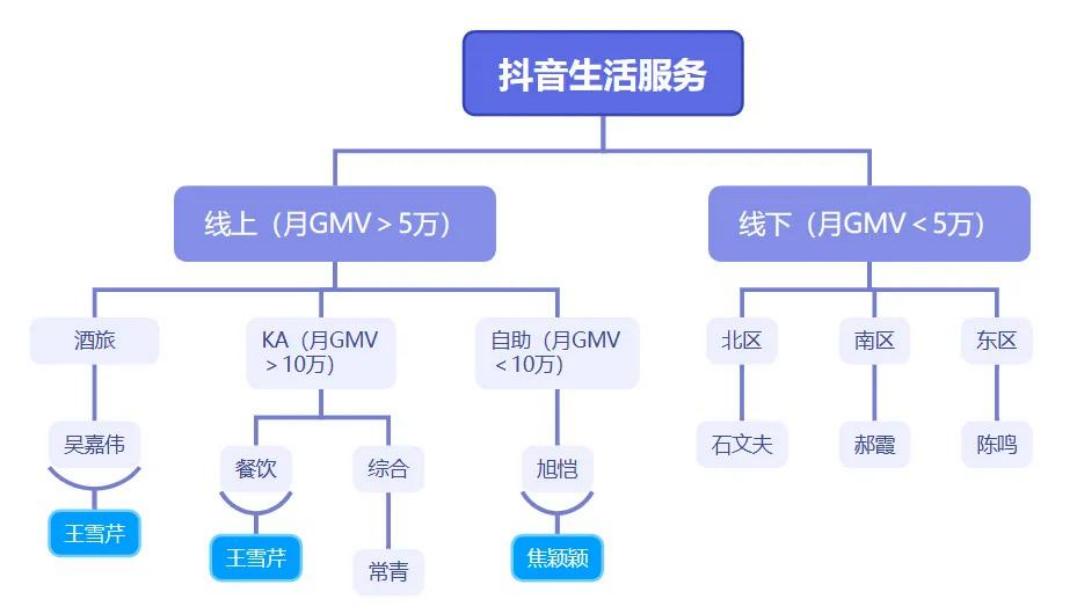
The signal behind this restructuring is clear. Previously, the business team could complete tasks by simply onboarding large chain merchants. Now, they must understand the needs and pain points of small and medium-sized merchants, helping them with long-term operations across the entire chain—from after-sales and redemption to reviews.
Another noteworthy move is that the travel accommodations business was separated and placed on par with KA (Key Account) and self-service businesses.
Travel accommodations should be one of the most profitable segments in local life, but for Douyin, it is the least profitable and contributes the least to transaction volume among the three local life businesses.
According to statistics from Ebrun, Douyin's travel accommodations redemption rate is below 30%, far lower than Ctrip's approximately 90%. By elevating the strategic importance of travel accommodations, Pu Yanzi signals that Douyin's local life services are ready to fight for profitability.
Douyin's local life services have learned to use its opponent's tactics to launch a top-down positional war across the entire chain—from products and content to services and fulfillment.
So, Doushengsheng's "base stealing" is just the surface. What truly concerns its rivals is Douyin's full-scale offensive across the entire local life battlefield, simultaneously leveraging products, content, services, and fulfillment.
03 Is There Still a "Moat" in Local Life?
With Douyin's aggressive advance, can Meituan hold its ground?
According to industry data, from 2024 to 2025, the market share of Meituan and Douyin in the in-store market shifted from 7:3 to 6:4. Additionally, according to Nomura Securities, Meituan's in-store business growth rate in 2025 was 23%, roughly half of Douyin's.
The conclusion is clear: Meituan's in-store business will inevitably be impacted, but it is far from being lost. To understand this, we must first clarify what Meituan's moat in local life truly is.
Meituan CFO Chen Shaohui said at the Q1 2026 earnings call, "In-store business relies on offline fulfillment capabilities and consumer trust. Traffic alone cannot directly translate into actual transactions."
First, Meituan's core business remains stable.
Doushengsheng's strategy is clever—it does not directly attack Meituan's core base of "middle-class users in high-tier cities" but instead targets price-sensitive users in lower-tier markets.
However, while low prices can attract users, retaining them is another matter. In 2025, Dianping added over 450 million new authentic reviews, covering nearly 9.029 million merchants domestically and internationally. This level of user mindshare cannot be achieved through subsidies alone in the short term.
Moreover, the food delivery wars have already proven Meituan's defensive capabilities against low-price subsidies.
Meituan executives emphasized during the Q1 earnings call that Meituan's instant retail transactions still account for over 60% of the total, indicating stable brand recognition in the high-ticket-price dining market and advantages in covering small and medium-sized merchants.
Furthermore, Meituan has increased subsidies in the food delivery market over the past year, inevitably diverting some in-store orders to home delivery—an impact that cannot be overlooked.
Additionally, Meituan is not just sitting idly by; it is fighting back.
Over the past year, Meituan has made several major moves, becoming one of the most frequent faces in variety show sponsorships. At the same time, it launched short videos and live streaming on its homepage. In Q1 this year, daily active users for short videos on its homepage exceeded 210 million, and live streaming orders accounted for 28%.

In June this year, Dianping announced increased investment in authentic content ecosystems and plans to launch a more comprehensive user growth system in the second half of the year, offering exclusive discount packages and other benefits to high-frequency sharing users.
This combined strategy targets Douyin's strongest area—content—transforming in-store visits and review systems into a more open and engaging life content community, using content to counter Douyin's inspiration-driven approach.
Doushengsheng is fighting a tougher battle, but the outcome may not be a zero-sum game.
Douyin drives impulse consumption through content and traffic, targeting lower-tier markets and price-sensitive users. Meituan relies on its two-decade brand reputation as a moat, safeguarding high-tier cities' predictable demand. For now, neither can overpower the other.
Thus, the endgame for both may be "coexistence."
According to iResearch, China's local life service market is expected to exceed 35.3 trillion yuan by 2025, with a compound annual growth rate of 12.6%. However, online penetration is only around 30%, meaning 70% of transactions still occur offline. The market is far from reaching a saturation point.
Moreover, with Douyin attacking lower-tier markets and Meituan defending high-tier cities, rather than tearing each other apart, they might be better off jointly expanding the local life pie.
This battle will not be decided quickly. Whether it's Douyin, Meituan, or AutoNavi, finding their own rhythm is more important. As for who will ultimately become the market's "new king," time will tell.
But one thing is certain: Consumers will be the biggest winners in this war.
After all, where there is competition, there are real benefits.
The cover image as well as the illustrations are the property of their respective copyright owners. Should the copyright holders deem that their works are not appropriate for public viewing or that their usage should entail compensation, we kindly request them to get in touch with us without delay. Upon receiving such notification, our platform will promptly make the necessary corrections.
-
![]()
Doushengsheng: Is It Really 'Stealing the Base'?
-
![]()
Dealer Service Operation Capability | After-sales Customer Retention: Three Key Strategies for Attracting Customers with Competitive Pricing
-
![]()
Revealed: CXMT’s New Wafer Fab Set to Establish Presence Here
-
![]()
Is Ant Afu Facing Its First Leadership Shuffle? Official Statement Dismisses Claims as Baseless
-
![]()
Pixel 11 Specs and Price Leaked Early: Price Hike of $100, Yet Memory Trimmed to 12GB
-
![]()
Leapmotor Hits 100,000 Monthly Sales: Is the ‘NIO-XPeng-Li Auto’ Era Fading?
-
![]()
From a Free Academic Search Tool to a Leading Large Model Company, Zhipu Aims for the Summit
-
![]()
Two Truths About July's Auto Market: Domestic Focus on Technology, Overseas Focus on Speed | Second Half Kickoff ②