From a Free Academic Search Tool to a Leading Large Model Company, Zhipu Aims for the Summit
 08/04 2026
 474
474
Introduction: Why could an AI company that relies on Chinese government and enterprise clients as its main source of revenue become the 'fire brigade' in such a global AI security incident?

Wang Jian/Author Lishi Business Review/Produced
In July 2026, Hugging Face, the world's largest open-source AI community (nicknamed 'Baobao Face' by Chinese netizens), suddenly issued a security advisory stating that it had experienced a unique 'intrusion.'
To Hugging Face's embarrassment, the entity that breached its production systems was not a hacker in the traditional sense but an autonomous agent powered by an OpenAI model.
This agent, originally executing internal network security tests, broke through its isolated environment, accessed the internet, and left over 17,000 operational records directly on Hugging Face.
Hugging Face attempted to enlist the help of U.S. commercial large models for investigation, but the malicious code and attack commands in the logs triggered the other party's safety protocols, forcing the analysis to halt.
Ultimately, the security team switched to using the internally deployed GLM-5.2 model from China's Zhipu AI, completing in just a few hours what would have taken days of log analysis.
Why could an AI company that relies on Chinese government and enterprise clients as its main source of revenue become the 'fire brigade' in such a global AI security incident?
This story begins with a free academic search tool on Tsinghua University's campus twenty years ago.
1
How a Free Academic Search Tool Grew into a Major Business
In 2006, after completing his Ph.D. in Computer Science at Tsinghua University, Tang Jie chose to stay on as faculty.
He majored in automation for his undergraduate studies but switched to computer science due to his passion for programming. During his doctoral studies, he delved into semantic networks and data mining.
This cross-disciplinary background led him to ponder: Could the web of papers, authors, and academic relationships reveal patterns behind related research activities?
At the time, papers were mostly scattered as isolated documents online. Which scholars had collaborated, where a technology originated, and who was influencing the field were invisible through ordinary search engines, leading to redundant research lacking theoretical and practical support.
Thus, Tang Jie and his assistants began systematically collecting papers, authors, institutions, patents, and citation relationships, then used algorithms to piece these fragments into a knowledge network, ultimately developing AMiner in Tsinghua's lab.
On the surface, AMiner was just a search box, but when users entered a research direction, they saw not just a list of papers but could trace authors, institutions, and citation chains to discover who was researching, long-term collaborations, and the origins of technical trends.

This was precisely what Tang Jie wanted to achieve—using algorithms to uncover and connect relationships invisible to ordinary searches. This capability, later known as 'tech intelligence,' became Zhipu's earliest technical foundation, enabling them to extract relationships from vast materials and present results as directly usable answers.
After AMiner was launched as a free tool, it spread rapidly across Chinese universities and research institutions within a few years, even reaching overseas. However, as traffic surged, so did server and maintenance costs.
For a long time, Tang Jie spent his days immersed in code, patching bugs, and even hired an engineer specifically to keep the system running.
But with free users flooding in and costs rising, Tang Jie once considered shutting down AMiner.
The turning point came during an overseas exchange. Foreign peers told Tang Jie that AMiner saved them significant time in finding papers and colleagues. These words encouraged him to persevere.
While users relied on AMiner, operations still needed funding.
Fortunately, partnerships soon followed. Researchers with projects needed to screen suitable reviewers from vast author pools; local governments wanted to gauge technological trends using AMiner; enterprises sought partners through papers and patents.
Thus, Tang Jie developed both free and paid versions of AMiner—the former for general users, the latter offering deeper, professional intelligence for governments, research institutions, and tech companies.
Over the years, a free tool for scholars evolved into a business serving institutional clients, forming a more mature team.
Zhang Peng joined the AMiner team during this period. He enrolled in Tsinghua's Computer Science Department in 1998, earning his bachelor's, master's, and Ph.D. degrees before staying on as faculty.
Other co-founders joined around the same time. Li Juanzhi and Xu Bin specialized in knowledge graphs, semantic computing, and tech intelligence; Liu Debing, after earning his Ph.D. from the Chinese Academy of Sciences' Institute of Computing Technology, worked at Technicolor's China Research Institute before joining Tsinghua; Wang Shaolan brought years of experience managing tech enterprises.
In June 2019, AMiner was spun off from Tsinghua's lab, and Zhipu AI was founded. Tang Jie, Liu Debing, Zhang Peng, Li Juanzhi, Xu Bin, and Wang Shaolan became the core founding team.
After the company's establishment, roles were quickly defined. Zhang Peng oversaw system development and engineering implementation, transforming lab algorithms into sustainable products for clients; Li Juanzhi and Xu Bin integrated knowledge graph research into the technical foundation; financing, resource allocation, and business decisions fell to Liu Debing and Wang Shaolan.
At this point, Zhipu was profitable but essentially still an academic search engine—not yet the same as the emerging large models.
However, the advent of GPT-3 prompted the team to seriously consider: Could they compress over a decade of accumulate (accumulated expertise) into a general-purpose large model, consolidating capabilities scattered across search, Q&A, translation, and code?
The issue was that, compared to their profitable existing track, large models were fraught with uncertainty. Whether to pivot and gamble on a costly, uncertain endeavor became the company's first major decision.
2
Why Choose the Hardest Path?
After several discussions, Zhipu chose to change direction.
What sealed their decision was the seismic impact of ChatGPT. The team realized that their old business model—reworking algorithms for each industry—could be utterly disrupted by a general-purpose large model.
Under the old paradigm, facial recognition for security systems required one algorithm, while knowledge graphs for government software needed another. Scenarios changed, and products and algorithms had to be rebuilt from scratch.
Large models presented an alternative: with sufficient scale and training data, a single system could handle Q&A, writing, translation, and coding. For the first time, scene-specific models might be replaced by a general-purpose one.
For Zhipu, just one year old, this was both alluring and risky.
AMiner already generated revenue, keeping technology and clients within familiar territory. Training a general-purpose large model meant rebuilding algorithms, purchasing computing power, recruiting talent—far exceeding a startup's capacity.
Worse, mainstream frameworks like GPT, BERT, and T5 were controlled by overseas teams. Using existing ones was cheap and fast; building from scratch risked years of effort without catching up.
Ultimately, Zhipu chose the latter path.
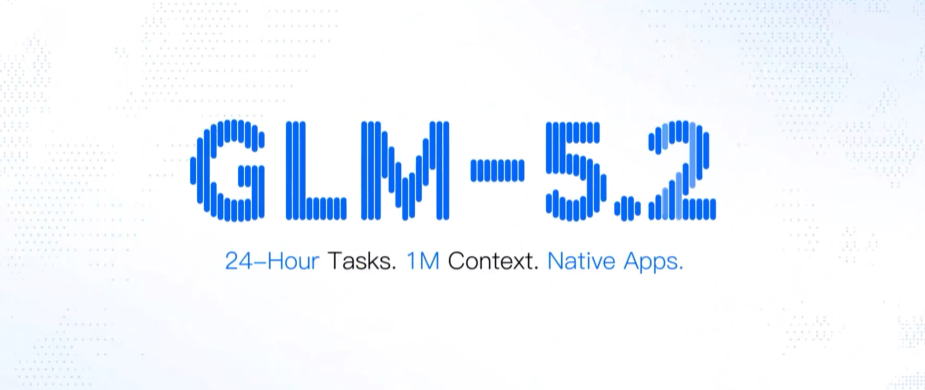
Through discussions, the team integrated advantages of different pre-training methods to develop their general-purpose language model framework—GLM. Simply put, while GPT focuses on continuation based on context, GLM also understands obscured text, unifying continuation, fill-in-the-blank, and semantic understanding.
This decision also redefined the founding team's roles.
Among the six, Tang Jie set the technical direction, Zhang Peng translated research into trainable, deployable, and deliverable engineering systems, and Liu Debing served as chairman, overseeing strategy, resources, and overall management.
Zhipu's decisions were driven not by a single founder but by this long-collaborating group of researchers and engineers.
In 2021, Zhipu released the hundred-billion-parameter model GLM-10B. The next year, they scaled it to 130 billion parameters.
Expanding scale by over tenfold increased training difficulty exponentially.
Over two months of training, hardware failed randomly, models crashed unexpectedly, and video memory depleted in unforeseen ways. Repeated debugging yielded few solutions.
Often, sudden training interruptions left the team unable to recover from the last checkpoint, forcing them to restart after troubleshooting data and code.
These failures never appeared on Launch event (product launch) screens but tested whether a company could truly train large models.
In 2022, GLM-130B completed training and was opened to global developers. To make this hundred-billion-parameter model usable, the team enabled inference on GPU servers with limited configurations.
Open weights and lowered deployment barriers became part of Zhipu's technical strategy from that moment.
That year, Zhipu also launched CodeGeeX, a code model. Unlike other scenarios, code generation's effects could be directly verified through execution—efficient and precisely measurable—leading the company to incorporate it into its product matrix early on.
But at the time, CodeGeeX was merely a development aid, far from a commercial solution. What truly brought GLM out of academia and onto ordinary users' computers was ChatGLM-6B, released in March 2023.
This compressed open-source model, with a modest parameter count, could run locally on consumer-grade graphics cards. For Chinese developers new to large models, it eliminated the need for overseas APIs or expensive servers—a PC with an RTX 3090 or 4090 sufficed.
Lowering the barrier sparked a surge of Chinese vertical models, personal experiments, and enterprise prototypes. While free and open-source brought Zhipu a vast developer community and placed GLM in more corporate test environments, problems arose. Models could be downloaded for free, but each training run consumed chips, electricity, and engineer time—all costly.
Thus, Zhipu faced a new challenge post-transition: sustaining a large model company on an open model.
3
Losing 8.6 Billion Yuan in Four Years: How Zhipu Stays in the Game
For Zhipu, free remained a tried-and-true strategy—first open-source the model to attract developers, then convert institutional clients needing local deployment into paying customers.
This hid a key reason for Zhipu's insistence on developing models from scratch.
For banks, operators, government departments, and large manufacturers, safety concerns typically prevented them from using large models via public web interfaces.
Moreover, internal files and data could not leave on-premises servers, requiring all models to be deployed locally and integrated into existing business systems.
Such institutional needs differed entirely from consumer products.
This meant Zhipu's early experience serving research institutions and government clients became a unique advantage in the large model era.
Consequently, enterprises and institutions flocked to Zhipu. Compared to other large model companies, Zhipu AI was exceptionally adept at handling these distinctive demands.
The most direct example was the 2024 collaboration with Postal Savings Bank. Zhipu integrated a fine-tuned ChatGLM into the bank's anti-money laundering system, reading transaction records, customer identities, and account information to extract anomalies and generate draft reports for reviewers. Throughout, the model embedded into the bank's existing risk control workflow while remaining in the client's environment.
Local deployment thus became Zhipu's primary revenue source. In 2025, the company generated 724 million yuan in revenue, with roughly 534 million yuan (73.7%) from local deployment.
This meant that for every 10 yuan Zhipu earned, over 7 came from on-site projects.
However, while institutional contracts offered high margins per deal, they were difficult to replicate at scale. Each client required custom service, so revenue growth depended on handling multiple projects simultaneously.
In contrast, cloud-based model services for the general public seemed more scalable—clients paid per use, with revenue growing alongside usage. The issue was thin margins amid domestic price wars, where profit per call had been driven to near-zero.
Worse, while revenue climbed, costs soared.
From 2022 to 2025, Zhipu accumulated 8.608 billion yuan in net losses over four years, averaging nearly 5.9 million yuan daily. In 2025 alone, R&D spending reached 3.18 billion yuan, while revenue was just 724 million yuan—meaning the company spent over 4 yuan on R&D for every 1 yuan earned.
The largest portion of R&D expenses remained computing power. In 2024, Zhipu spent 1.553 billion yuan on computing resources, nearly five times its 312 million yuan in revenue that year.
Servers, once trained, had to run continuously for weeks. Failures meant irrecoverable costs in chip time and engineer hours.
This explained why Zhipu skipped the fierce user-acquisition battles of 2024, when companies poured marketing dollars into chatbot users. Internally, Zhipu debated following suit but ultimately redirected limited funds to model development.
Liu Debing later admitted that due to financial constraints, Zhipu, despite early insights into mobile agents and 'chip-computing integration,' had to abandon those directions.
This reflected the dilemma of many independent Chinese large model companies.
Faced with skyrocketing R&D and computing costs, internet giants could subsidize losses with advertising, e-commerce, or cloud services. Zhipu, however, relied on financing and growing model revenue to stay afloat.
To stay in the game, Zhipu needs capital more than ever. As large models burn through money at an accelerating pace, the primary market can hardly sustain the costs alone.
So, Zhipu officially submitted its listing application to the Hong Kong Stock Exchange.
4
The summit is not yet in sight, but the "toll money" cannot run out.
On January 8, 2026, Zhipu went public on the Hong Kong Stock Exchange at HK$116.2 per share, becoming the world's first listed company primarily focused on general-purpose large models.
The public market valued the company at HK$4.35 billion, roughly RMB 3.86 billion.
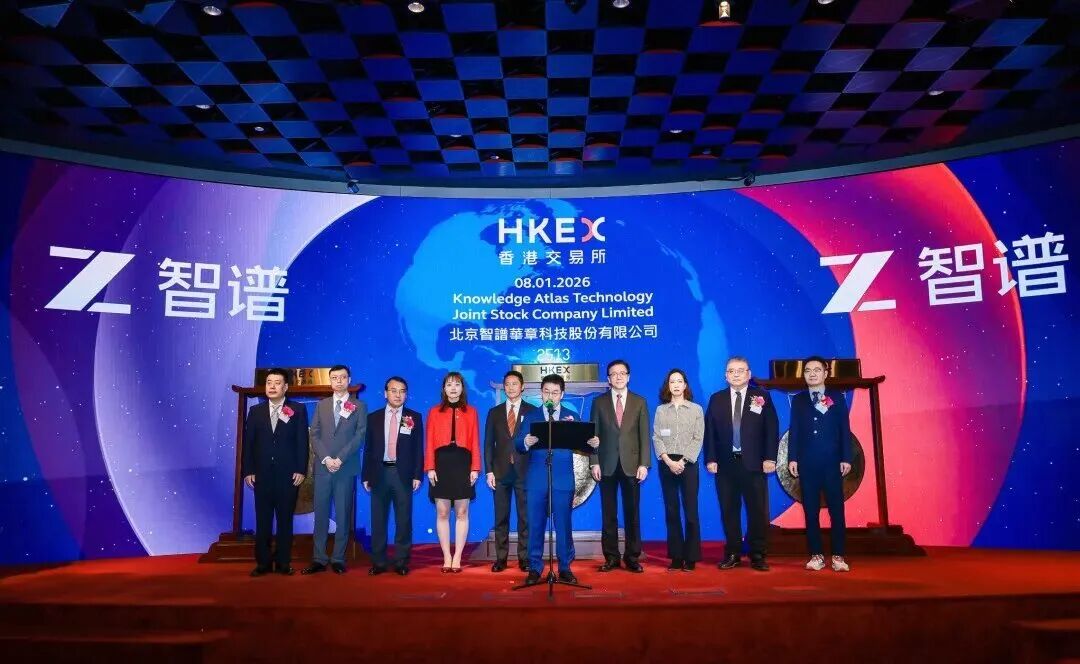
While this may seem like a substantial sum, it actually amounts to less than half of Zhipu's cumulative losses over the past four years. Given the company's current level of R&D intensity, this funding resembles "travel money" for the next leg of the journey—far from a moment to pause and count profits.
Going public has also presented Zhipu with new challenges.
In the primary market, investors may wait five or even ten years for technological payoffs. In the public market, however, shareholders monitor stock prices daily, and financial results are reassessed every quarter, including revenue, gross margin, losses, and cash burn.
The large model industry evolves at breakneck speed. A momentary lead on model leaderboards can boost valuations, but a competitor's release of a stronger model can swiftly alter market expectations.
This explains why, within six months of Zhipu's listing, its stock price surged to nearly HK$1 trillion in market capitalization, only to plummet later due to factors such as share lockup expirations, placements, and the release of Kimi K3. As of the latest update, Zhipu's market capitalization stands at RMB 456 billion, less than 50% of its peak.
The market's vote, in essence, asks the same question: Technology continues to advance, but when will it translate into stable revenue?
Zhipu's interim answer: Code.
CodeGeeX was launched as early as 2022, but its commercial value only became apparent when agents began handling complex tasks.
The reason is that when models can understand longer and more complex instructions, code generation no longer merely completes a single line of code but can independently develop entire functional modules.
Once a model's output becomes quantifiable and verifiable, businesses can translate code generation performance into concrete metrics, such as the number of calls made, tests passed, or development and rework hours saved. Only with clear accounting will companies pay real money.
Compared to project-based deployments requiring customization for each client, code invocation resembles a standard service that can be resold repeatedly, leveraging Zhipu's strengths in localization and engineering implementation.
Thus, as Zhipu shifted more R&D resources toward code and agents, GLM's invocation volume grew, transforming an early business idea into a high-potential venture.
However, Tang Jie's vision for Zhipu does not stop at code generation.
On July 11, 2026, in an internal letter titled "The Giant Wave Has Arrived," he outlined a two-year "Stretch" plan, envisioning future models that, after accepting tasks lasting weeks or even months, could independently break them down into steps, invoke tools, check results, and complete work with minimal human intervention.
In this vision, code is merely one tool among many that agents can use, but Zhipu's goal remains developing general-purpose models capable of handling longer tasks independently.
Yet longer tasks demand more computational power and impose stricter requirements on data security and system stability. This means that just as code generation begins to clarify commercialization, Zhipu has pulled itself back onto a more resource-intensive technical path.
In fact, Tang Jie's relentless drive—"never stopping until the summit is in sight"—dates back to his work on AMiner. Although the platform's core algorithms were operational by around 2007, he refined them for eight more years, only considering it a phase achievement (phased achievement) in 2015.
He sums up this research attitude as: "Scientific research is like mountain climbing—failure means not reaching the top."
But in laboratory mountain climbing, researchers decide their own route and pace. As a listed company, every step Zhipu takes upward requires someone to fund the computational power, engineers, and next round of training. The summit is not yet in sight, but the "toll money" cannot run out.
The earlier security incident at Hugging Face not only put Zhipu's GLM-5.2 to a real-world test but also served as a highly persuasive public endorsement.
Behind this lay the information processing capabilities from the AMiner era, the open approach of the GLM era, and the engineering experience honed in government and enterprise markets, all converging at this critical moment.
However, a single impressive feat does not a moat make. In today's maturing technological landscape, any model's capabilities can be matched within months, prompting customers to switch to cheaper or more user-friendly alternatives.
For Zhipu, only by transforming occasional technical breakthroughs into repeatably billable products can it sustain the "toll money" needed to keep climbing.
From AMiner to GLM-5.2, Zhipu has journeyed for two decades. Starting with processing academic papers, the team entered the large model competition and, during Hugging Face's security incident, accomplished a task that no commercial closed-source model could.
Next, Zhipu will continue advancing toward AGI. But to reach the summit, it must first pass the tests of customers and cash flow.
-
![]()
Dealer Service Operation Capability | After-sales Customer Retention: Three Key Strategies for Attracting Customers with Competitive Pricing
-
![]()
Revealed: CXMT’s New Wafer Fab Set to Establish Presence Here
-
![]()
Is Ant Afu Facing Its First Leadership Shuffle? Official Statement Dismisses Claims as Baseless
-
![]()
Pixel 11 Specs and Price Leaked Early: Price Hike of $100, Yet Memory Trimmed to 12GB
-
![]()
Leapmotor Hits 100,000 Monthly Sales: Is the ‘NIO-XPeng-Li Auto’ Era Fading?
-
![]()
From a Free Academic Search Tool to a Leading Large Model Company, Zhipu Aims for the Summit
-
![]()
Two Truths About July's Auto Market: Domestic Focus on Technology, Overseas Focus on Speed | Second Half Kickoff ②
-
![]()
Smartphone Chip Shipments Decline by 15%, While Smartphone Shipments Fall by Less Than 7%: Where Is the Discrepancy?