Dealer Service Operation Capability | After-sales Customer Retention: Three Key Strategies for Attracting Customers with Competitive Pricing
 08/04 2026
 416
416
Currently, the after-sales sector of automobile dealerships is grappling with the dual challenges of escalating customer churn and heightened competition. Attracting customers through competitive pricing has emerged as a prevalent strategy for many dealerships to break through the impasse. Nevertheless, while maintenance services priced at 99 yuan or 199 yuan may initially draw a surge of customers, they often lead to a scenario where dealerships "sacrifice profits for visibility." Customers capitalize on the discounts and then depart, seldom evolving into loyal clientele.
▍Problem Diagnosis: Why Do Customers Depart After Availing Discounts?
Reason 1: Customers possess inherent psychological barriers. In the public eye, low-price promotions at 4S dealerships are frequently perceived as mere marketing ploys, whereas independent repair shops are viewed as the "economical choice" for routine vehicle maintenance. Customers visit the dealership solely to seize the discounts, remaining vigilant against sales pitches from service advisors and lacking long-term consumption intentions.
Reason 2: The dealership's value proposition is overly simplistic. If the dealership merely offers basic oil changes without additional services, customers will perceive that "low-price maintenance is only worth that much" and fail to appreciate the professional and quality disparities between the 4S dealership and ordinary repair shops.
Reason 3: Customers lack binding incentives upon leaving the dealership. Without any exclusive benefits or consumption linkage mechanisms in place when customers depart, they sever ties with the dealership and have no incentive to return. The industry-wide emphasis on customer acquisition over retention fosters a "funnel-style" operation, ensnaring dealerships in a cycle of perpetual customer acquisition expenditures.
▍Core Strategies: Three Key Strategies for Customer Retention, Transforming Traffic into Enduring Relationships
There is nothing inherently flawed with attracting customers through competitive pricing; the error lies in treating it as the culmination of marketing efforts. The following three strategies empower dealerships to transform every instance of attracting customers with competitive pricing into the genesis of customer retention.
First Strategy: Revamp the Service Experience to Dismantle Customers' Preconceived Notions
The initial 1-2 hours of a customer's maiden visit represent a golden opportunity to dismantle their stereotypes about 4S dealerships. Dealerships must relinquish the inertia of eagerly pushing sales and instead concentrate on crafting a service experience.
1. Elevate "maintenance" to a "vehicle health checkup"
Upon initiating the service, service advisors can proactively introduce a complimentary 32-item in-depth vehicle condition assessment. They should modify their communication style, employing objective and restrained professional advice to foster trust without resorting to forceful sales pitches. For instance, they can apprise customers of component wear, remaining service life, and suggest deferring replacements based on necessity, actively assisting customers in saving money. This approach entirely dispels customers' apprehensions about "forced consumption."
2. Enhance the vehicle handover ceremony to fortify customer memory points
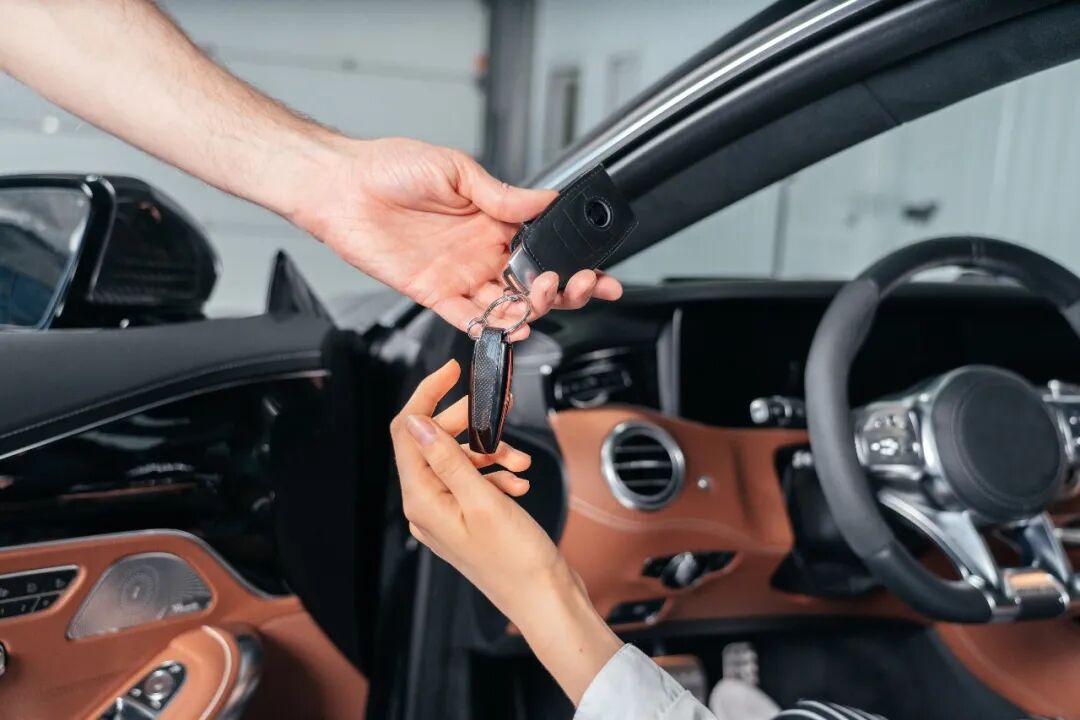
For customers enticed by low-price promotions, dealerships can focus on refining the vehicle handover process. Proactively inform customers about additional value-added services rendered, such as clearing debris from tires, calibrating tire pressure, and inspecting windshield wiper noises. Additionally, offer low-cost exclusive dealership gifts, such as customized windshield washer fluid or car wash towels. This enables customers to directly perceive the professionalism and warmth of the service.
Second Strategy: Devise Customer Retention Products to Proactively Secure Repeat Visits
The primary rationale behind customers' "disappearance" after a solitary purchase is the absence of sunk costs. Dealerships must proactively design exclusive customer retention products to furnish customers with reasons to return.
1. Introduce mileage- and time-triggered vouchers
Abandon generic no-threshold coupons and customize exclusive constrained voucher packages. For customers who avail of low-price maintenance, offer time-limited and mileage-limited special maintenance credits. Even if customers do not require immediate part replacements, they can utilize these credits to offset maintenance labor costs, engendering a perception that "returning to the dealership for consumption is more cost-effective" and encouraging "second visits."
2. Launch low-threshold "maintenance + X" mini-packages
Abandon high-threshold long-term maintenance packages and introduce cost-effective mini customer retention packages that resonate with the consumption psychology of customers attracted through promotions. Combine essential and high-frequency services such as regular maintenance, paint repair, and year-round complimentary car washes. Leverage exceptional value to win over customers, binding them to long-term dealership visits through frequent services and achieving customer retention.
Third Strategy: Optimize Internal Management to Construct a Closed-Loop Operating System
The successful execution of high-quality strategies hinges on team implementation. The root cause of customer retention failures in most dealerships lies in service advisors' disdain for low-price customers and perfunctory service, which stems from misaligned incentive mechanisms.

1. Recalibrate KPI assessment focus
Deviate from the sole emphasis on monthly output value and integrate the secondary return rate of low-price customers and package conversion rate into core assessment indicators. Introduce special customer retention bonuses. Employ mechanisms to incentivize service advisors to value low-price customers, proactively provide quality service, and manage customer relationships rather than approaching them perfunctorily.
2. Establish a standardized tiered follow-up process
Avoid short-term aggressive sales follow-ups and instead implement phased, precise outreach: 3 days post-maintenance: Conduct pure care-focused follow-ups, inquiring about vehicle usage and establishing a warm service persona; 15 days post-maintenance: Softly engage customers by sharing professional vehicle usage knowledge and moderately informing them of dealership promotions; 60 days post-maintenance: Precisely market to customers based on their vehicle condition assessment reports, reminding them to utilize exclusive vouchers and guiding them to return to the dealership for consumption.
Attracting customers through competitive pricing is not the terminus but the genesis of customer management. Customers only "chase deals" because they perceive 4S dealerships as "expensive and not worth it." Dealerships must seize the opportunity of the customer's visit to dismantle biases through exceeding expectations experiences, allay price concerns through customer retention products, and assist customers in rediscovering the professional value of 4S dealerships. By evolving from a vehicle maintenance assembly line to a car care concierge, customer attraction can genuinely retain people. The essence of customer retention has never been price but trust.
Layout | Zheng Li
Image Source | Qianku Network
-
![]()
Doushengsheng: Is It Really 'Stealing the Base'?
-
![]()
Dealer Service Operation Capability | After-sales Customer Retention: Three Key Strategies for Attracting Customers with Competitive Pricing
-
![]()
Revealed: CXMT’s New Wafer Fab Set to Establish Presence Here
-
![]()
Is Ant Afu Facing Its First Leadership Shuffle? Official Statement Dismisses Claims as Baseless
-
![]()
Pixel 11 Specs and Price Leaked Early: Price Hike of $100, Yet Memory Trimmed to 12GB
-
![]()
Leapmotor Hits 100,000 Monthly Sales: Is the ‘NIO-XPeng-Li Auto’ Era Fading?
-
![]()
From a Free Academic Search Tool to a Leading Large Model Company, Zhipu Aims for the Summit
-
![]()
Two Truths About July's Auto Market: Domestic Focus on Technology, Overseas Focus on Speed | Second Half Kickoff ②