iPhone 18 Adopts Unconventional '9GB' Memory Spec: Is Apple Still the 'Master of Precision'?
 06/29 2026
 468
468
Ultimately, it is the ordinary consumers who will bear the brunt of the escalating memory costs.
On June 25, Apple increased the prices of several Mac and iPad models. For instance, the 128GB iPad Air rose from $599 to $749, representing an average price hike of 20%. Interestingly, the iPhone was notably absent from this price increase list.
Could it be that Apple has suddenly had a change of heart? Not so fast—the real move is yet to unfold.
According to IDC, following the price hikes on Macs and iPads, the standard iPhone 18 may see a $50 price increase, while the iPhone 18 Pro and Pro Max could rise by up to $200. By this estimate, the starting price of the iPhone 18 Pro could approach $1,299, with the Pro Max potentially reaching $1,399. In other words, the price of the iPhone 18 Pro in the Chinese market could easily start at 10,000 yuan.
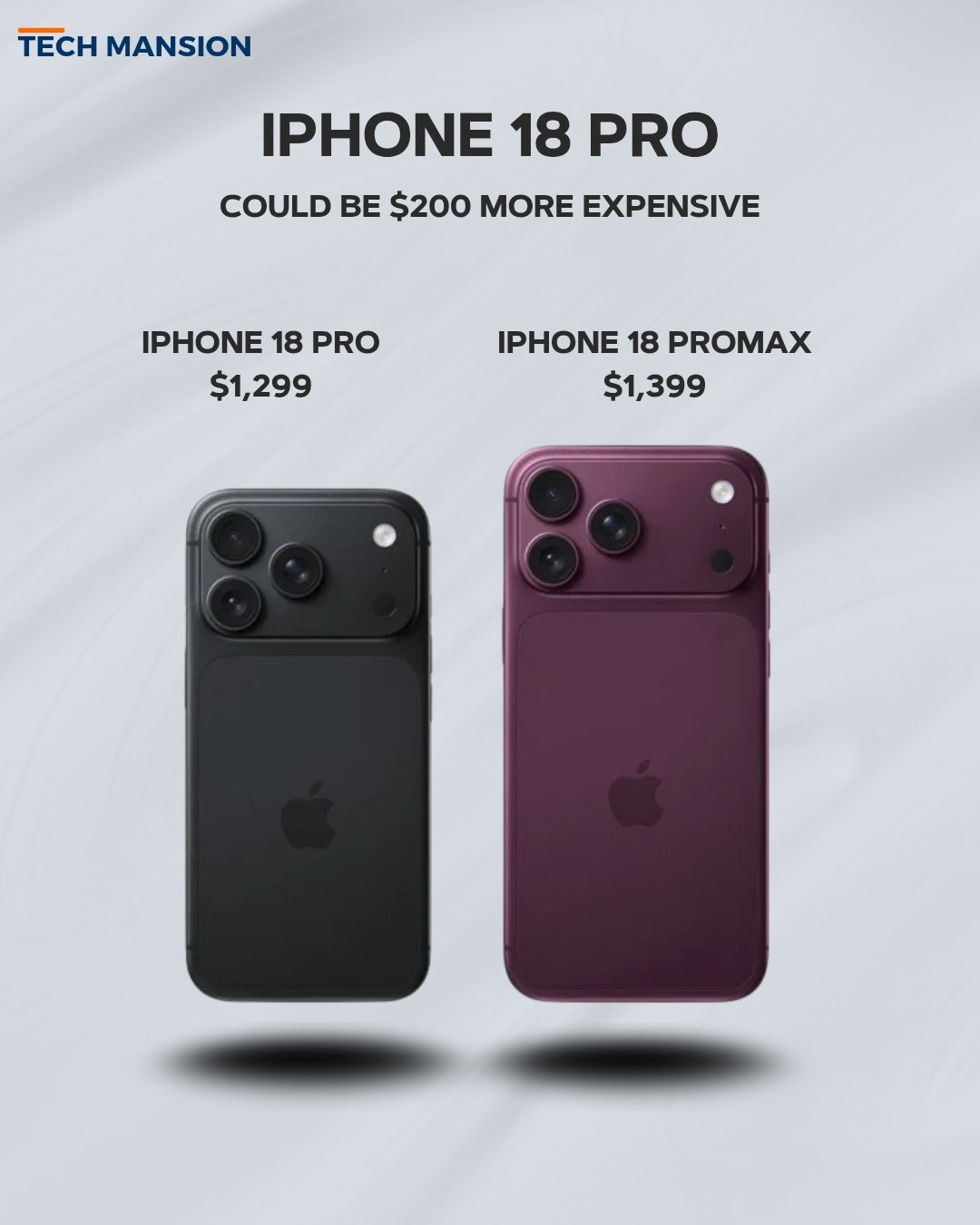
(Image Source: TechMansion)
For this round of price hikes, Apple's rationale is that the AI boom is consuming vast amounts of storage production capacity, leading to rapid increases in procurement costs for DRAM (memory) and NAND (flash storage), which the company can no longer absorb.
However, as Apple was busy explaining its soaring costs, Micron voiced its grievances. Micron executives hinted that during the previous downturn in the memory industry, some major clients leveraged their purchasing power to drive prices to rock bottom, exacerbating manufacturers' profit margins and forcing them to cut capacity investments. While Micron did not directly name names, the industry naturally pointed the finger at Apple.
Apple complains about memory manufacturers' excessive price hikes, while Micron resents major clients' aggressive price-cutting in the past. As both sides argue over responsibility, their solution is remarkably aligned: pass the costs onto consumers. Memory manufacturers like Micron, which sell storage at exorbitant prices, will enjoy soaring profits, while Apple's gross margins will also surge.
Apple's ability to control its supply chain has long been unmatched by competitors. Its massive purchasing volume allows it to engage multiple suppliers simultaneously and negotiate lower procurement prices through order allocation.
When the memory market is oversupplied, Apple can secure long-term contracts at low prices, and suppliers, eager to retain their major client, are willing to make concessions. Do these low prices ultimately benefit consumers? Clearly not.
According to Micron's Chief Business Officer Sumit Sadana, when memory industry profits hit rock bottom in 2023, some clients continued to aggressively push for lower prices. Micron had already warned them that such tactics would discourage investment. Now, with AI data centers buying up high-bandwidth memory and ordinary DRAM capacity expansion taking time, the reduced capacity built during that period has quickly turned into today's shortage.
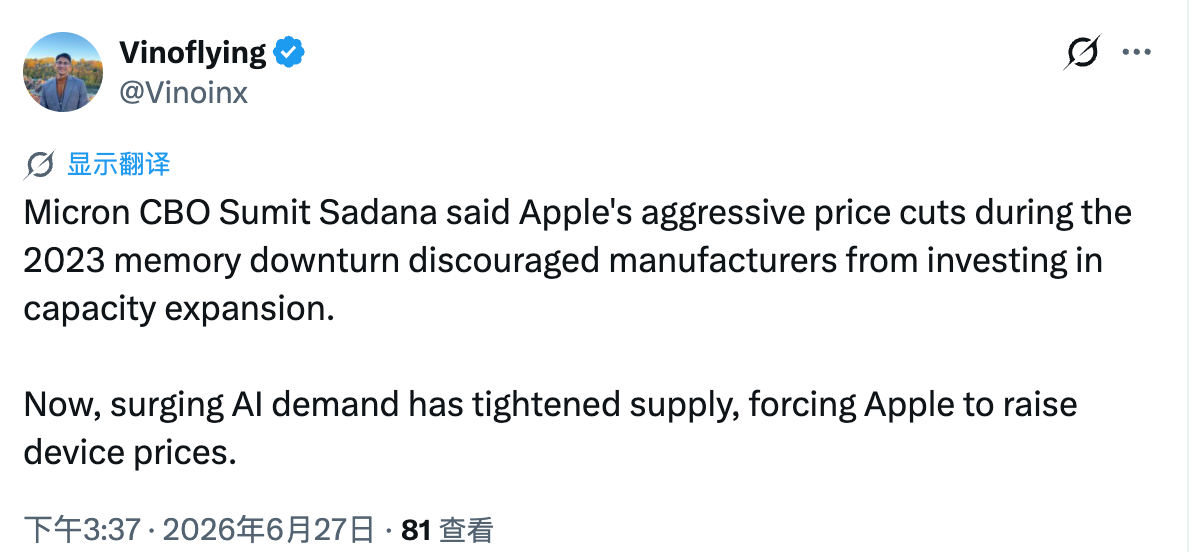
(Image Source: X)
Xiaolei believes these remarks carry a hint of irony. Apple has long excelled at capitalizing on industry cycles to buy cheap, but today it's being bitten by the same cycle. However, this bite seems to target Apple's profits less and users' wallets more.
Micron is hardly in a position that requires consumers to defend it. Its latest quarterly gross margin has approached 85%. While rising memory prices trouble Apple, they have also filled the coffers of upstream manufacturers. This situation resembles a debate between two high-margin players over who should earn slightly less, with consumers lacking any say in the negotiations.
Apple's cost pressures are equally real. According to TechInsights, the memory and storage costs for the iPhone 17 Pro were around $50, but similar components for the iPhone 18 Pro could approach $200. The roughly $150 increase per unit sufficiently explains Apple's inclination to raise prices.

(Image Source: X)
Recent reports indicate that Apple is seeking U.S. government approval to purchase chips from ChangXin Memory Technologies (CXMT). CXMT's core product is DRAM, and if this move succeeds, Apple could diversify its RAM suppliers and exert some price pressure on Samsung, SK Hynix, and Micron. However, Apple still needs to find another solution for reducing NAND capacity costs in iPhones.
This also exposes Apple's true approach: when the supply chain is favorable, it keeps the profits for itself; when the supply chain faces headwinds, it passes the pressure onto the market. Apple could certainly afford to earn slightly less or offset some price hikes through cost optimizations in other components, but it has chosen to raise prices further, apparently believing high-end users will still pay up.
But a bigger issue arises: despite the price hikes, the upgrade points for the iPhone 18 series remain unclear.
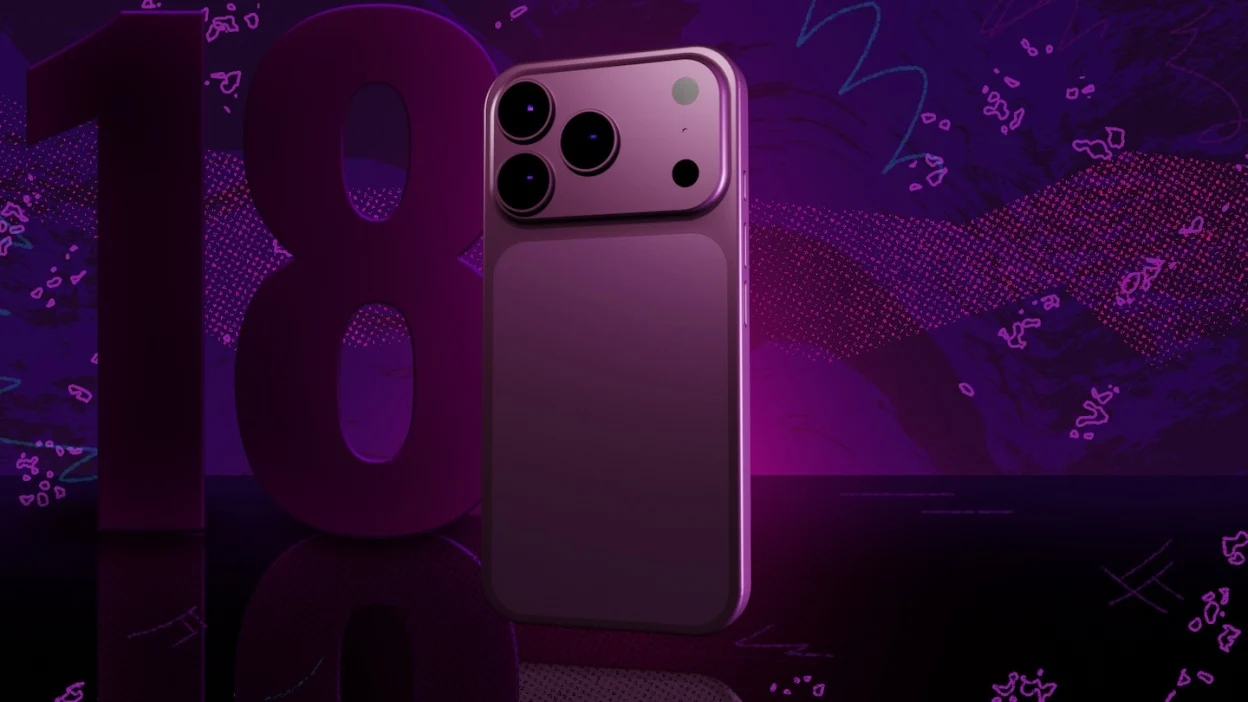
According to reports, the iPhone 18 Pro, Pro Max, and foldable models releasing in autumn 2026 will still feature 12GB of memory. The standard iPhone 18 and iPhone 18e, set to debut in spring 2027, will see memory increase from the current 8GB to 9GB.
A 9GB memory configuration is indeed unusual in today's smartphone market. Android flagships commonly offer 12GB and 16GB, while Apple has chosen the most peculiar number between 8GB and 12GB—just slightly more than the previous generation but not enough to encroach on the Pro series' specs. It's hard to believe this decision was made solely by engineers; the involvement of the finance department and product managers seems more plausible.
The standard iPhone 18's 9GB memory may adopt a 1.5GB×6 dies configuration, compared to the current 8GB setup of 2GB×4 dies. A 'die' refers to the DRAM chip within the package, and six dies do not equate to six separate memory chips on the motherboard.
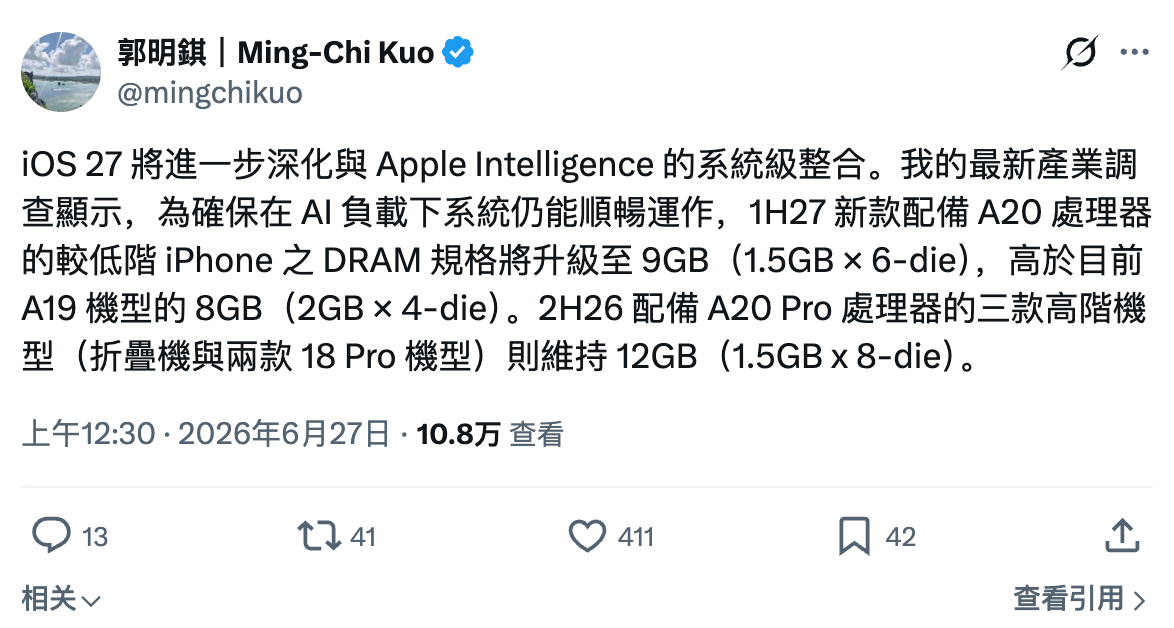
(Image Source: X)
Is the extra 1GB useful? Yes, a 12.5% increase over 8GB provides more headroom for the system and on-device AI models, potentially reducing the frequency of background apps being cleared. While the capacity is a genuine upgrade, the magnitude remains underwhelming. If the standard model only increases by $50, users can at least console themselves with the extra 1GB; however, if the Pro series maintains 12GB but charges $200 more, it's hard to accept with a smile.
This raises a more critical question: Can on-device AI even function properly?
Xiaolei believes on-device AI has practical value. Offline summarization, photo organization, and privacy-focused personal information processing are all tasks suited for completion on the phone, offering more stable response times. However, smartphones have clear limits in memory, cooling, and battery life, making them ill-suited for handling complex reasoning and prolonged Agent tasks independently. If only small models run on-device, Apple had no need to forcibly add 1GB of memory.
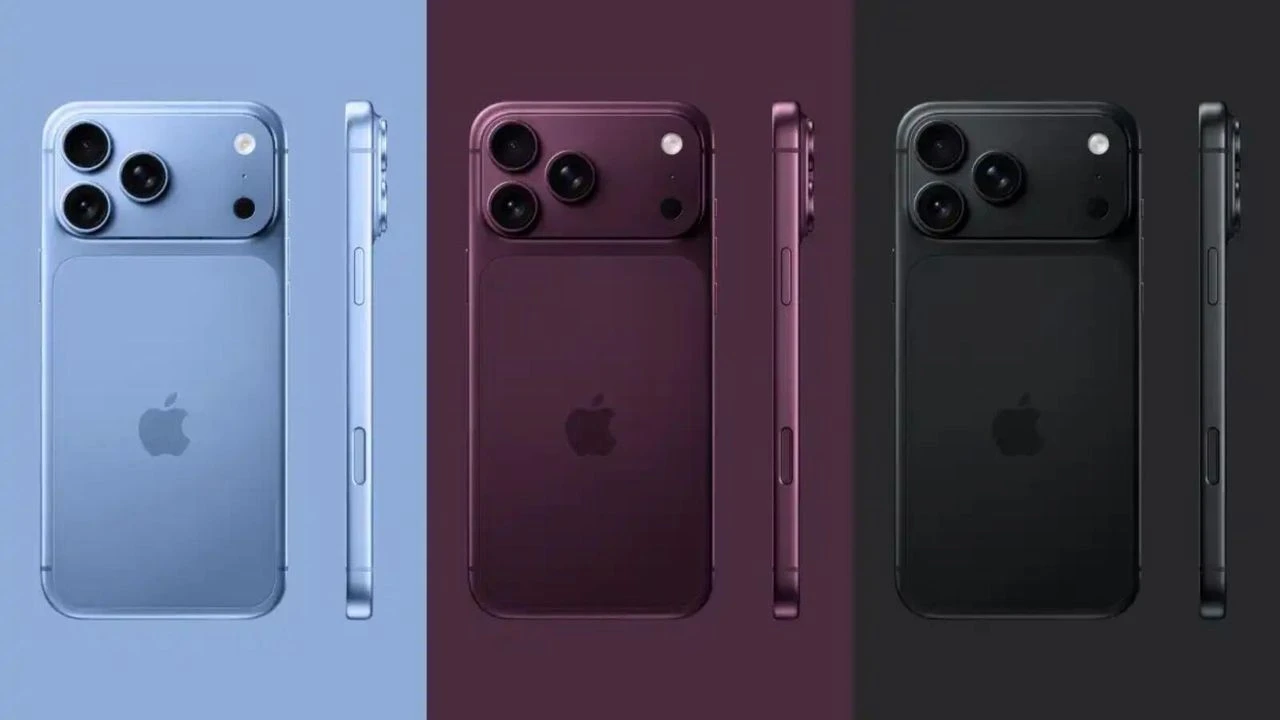
(Image Source: X)
Thus, the A20 Pro chip in the iPhone 18 Pro is rumored to adopt a 2nm process and WMCM packaging, moving DRAM from the top to the side of the chip to improve cooling and communication efficiency. The rumored 96-bit LPDDR6 memory and expanded neural engine also aim to create space for on-device AI. However, it remains unclear when Chinese consumers will gain access to Apple's AI features.
Apple has consistently adopted a hybrid approach to AI, handling simple tasks on-device and delegating complex reasoning to Private Cloud Compute. The 2026 plan even extends some high-load tasks to NVIDIA GPUs on Google Cloud. While Apple emphasizes on-device AI, it is actually building an end-to-end cloud collaboration system.
Although everyone knows that AI on smartphones—whether on-device, cloud-based, or hybrid—is still in its infancy compared to enterprise-grade Agents, recent discussions about cloud PCs, cloud OS, AI browsers, and AI assistants suggest that future endpoints may serve merely as gateways. The actual work could be done by Agents in the cloud, opening browsers, running software, and preserving task states. Users could switch to a lightweight device and continue their tasks seamlessly. This idea holds appeal for Agents requiring 24/7 operation.
Alibaba Cloud's Wuying is exploring this direction. Its AgentBay places cloud browsers, coding environments, desktops, and mobile device operations into isolated runtime spaces, allowing Agents to complete web operations or file processing in the cloud. Enterprises can create and reclaim environments per task, offering more convenient unified permissions and elastic scaling compared to purchasing a Mac mini for each employee. It also prevents Agents from directly accessing employees' personal files.
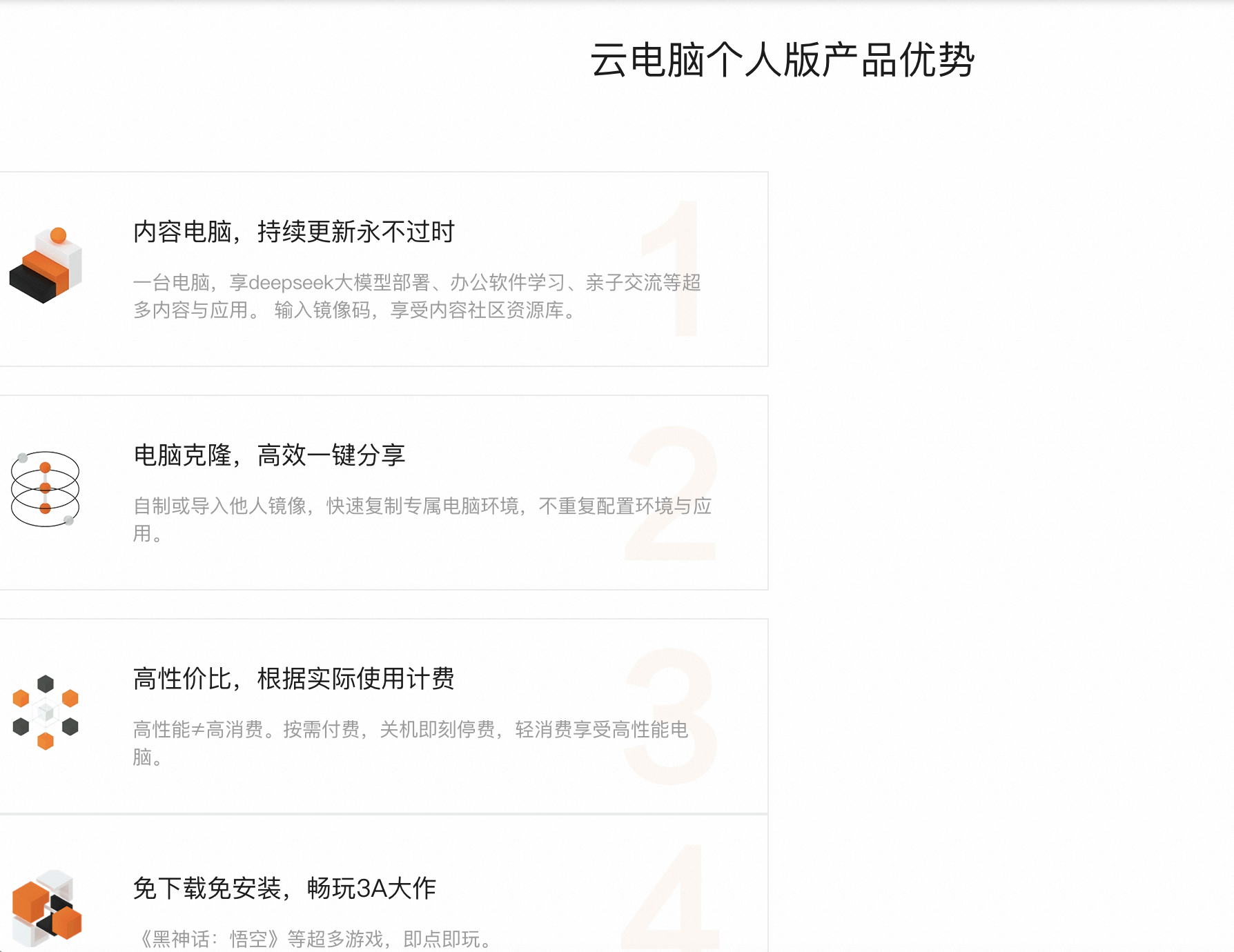
(Image Source: Alibaba)
This raises questions about Apple's justification for price hikes. As more AI capabilities rely on the cloud, why should consumers pay such a high premium for on-device hardware upfront? They pay once when buying the phone and may pay again for cloud services later—this 'double charging' is what users should truly guard against.
IDC predicts that global smartphone shipments could decline by 13.9% year-over-year in 2026, while average selling prices will continue to rise. Using an older iPhone with surplus performance for another year is hardly difficult. When the core selling point of new models hinges on AI potential that remains invisible for now, consumers' most direct response will be to extend their upgrade cycles.
Returning to the original question: Who will foot the bill for the iPhone 18 Pro's $200 price hike?
Xiaolei does not deny that AI is driving up smartphone hardware costs, and advanced processes and new packaging technologies require significant investment. However, consumers care about how much genuine value their money delivers. Especially for Chinese users, with core AI features still not fully implemented, asking them to pay a premium for AI hardware in advance seems unreasonable.
(Image Source: X)
On-device AI has its place, and cloud AI will increasingly handle complex tasks. Apple can continue optimizing the division of labor between the two, and cloud PCs like Alibaba Cloud's Wuying will find their market among enterprise Agents. However, none of these grand technological visions automatically justify iPhone price hikes.
Without sufficient 'strength' to prove the iPhone's price hikes are reasonable, Apple fans may simply respond with 'no purchase.'
iPhone, Apple, Storage, Smartphone, Memory
-
![]()
Depreciation Rate on Par with Mobile Phones: Just 40% Value Retention After Three Years—Why Do Battery Electric Vehicles Lose Their Worth?
-
![]()
Clearing Bugatti Stock Worth 7 Billion: Why is Porsche 'Cutting Ties'?
-
![]()
Don’t Dismiss Huawei’s Potential in Sedans Just Because the Shangjie Hasn’t Hit It Big Yet
-
![]()
Unsold Cars in China Find Success Overseas
-
![]()
Ghosn: Only I Can Save Nissan, Shareholders Beg Me to Return
-
![]()
Expanding Automobile Consumption: It's Time to Address the High Cost of Electric Vehicle Repairs
-
![]()
Luna Ultra Entangled in 'National Subsidy Fraud' Controversy, Insta360 Pushed to the Brink by DJI
-
![]()
People have long suffered from splash ads. Will the 'temporarily disappeared' traffic behemoth make a comeback?