Alibaba's AI Investment Spree: Can It Create a New Ecosystem Worth Billions?
 07/31 2026
 331
331
On the night of July 19, Moonshot AI suspended new individual subscriptions for Kimi K3. Within approximately 48 hours of K3's launch, user requests neared the upper limit of the existing cluster's capacity. The company decided to prioritize GPUs for paying members while awaiting additional computing resources.
Alibaba found itself at the crossroads of three roles during this computing shortage.
Firstly, as a shareholder of Moonshot AI, Alibaba's 2024 fiscal year annual report revealed an approximately $800 million investment for around a 36% stake in preferred shares of Moonshot AI, a proportion likely diluted by subsequent financing rounds. Secondly, as a cloud service provider, scaling up Kimi would increase Moonshot AI's demand for GPU computing power and supporting resources like networking, memory, and storage. If Alibaba Cloud provided these Addition (new) resources, it could secure corresponding orders. Thirdly, as a competitor, in the same week Kimi suspended new subscriptions, Alibaba rolled out a preview version of Qwen3.8-Max on Token Plan, Qoder, and QoderWork.
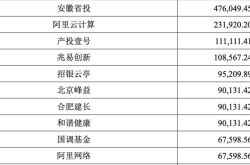
Eight days later, another Alibaba investment was repriced by the secondary market. On July 27, Changxin Technology issued shares at 8.66 yuan, closing at 49 yuan on its debut day with a total market capitalization of approximately 3.3 trillion yuan. The prospectus showed that before the listing, Alibaba held a combined 4.97% stake through Alibaba Cloud Computing and Alibaba Network, with a cumulative investment of around 7.6 billion yuan. Based on a rough calculation of the dilution after the new share issuance, Alibaba's stake stood at approximately 4.48%, corresponding to a closing market value of about 147 billion yuan and a paper gain of nearly 140 billion yuan.
On one hand, there's a shortage of computing power after model successes; on the other, storage companies' valuations rise post-listing. Alibaba's AI investments are forming a more comprehensive structure: when model companies succeed, it can share in the equity value; as industry demand for computing power grows, Alibaba Cloud has opportunities to secure new orders; and when storage becomes a bottleneck, it has already positioned itself upstream.
This resembles Alibaba's familiar investment approach, reemerging in a new context. The difference is that while Alibaba previously invested in external companies with the aim of integrating traffic and transactions into its own system, today it invests in a network of interconnected yet potentially competing firms.
Alibaba now holds more positions, but the Regret (slight pity) is the lack of a single hub to capture the full value generated by these positions.

Alibaba's past approach to technology was clear: critical capabilities were best kept in-house.
In 2017, Alibaba established the DAMO Academy, planning to invest over $15 billion within three years. Two years later, T-Head unveiled the Hanguang 800, Alibaba's first AI inference chip, initially serving internal functions like product search, recommendations, advertising, and customer service.
This internal focus continued into the era of large models. When releasing Tongyi Qianwen in 2023, Alibaba announced that the model would first integrate with DingTalk and Tmall Genie, gradually extending to other group businesses while being made available to enterprise clients via Alibaba Cloud. Alibaba Cloud provided the training and inference platforms, T-Head supplied the chips, and Taobao, DingTalk, and Kuake offered application scenarios. In February of the previous year, Alibaba announced plans to invest at least 380 billion yuan over three years in AI and cloud infrastructure; by May 2026, management indicated actual spending would exceed this plan.
This is Alibaba's strength: it Habit (tends to) first solve internal problems with technology before externalizing these capabilities as infrastructure.
However, the AI value chain is more fragmented than in the e-commerce era, with independent companies potentially emerging at every layer—chips, storage, data centers, foundational models, video models, agents, and consumer applications. Model rankings are still shifting, and new product forms have yet to stabilize. Relying solely on internal R&D means Alibaba must correctly predict technological paths, user entry points, and hardware cycles simultaneously.
Thus, Alibaba began rethinking its investment strategy. In the 2024 fiscal year, it invested in Moonshot AI; in July of this year, it joined Tencent, Baidu, and others in becoming a shareholder of Kling. This funding round exceeded 19 billion yuan, with Kling valued at $15 billion pre-investment, and Kuaishou retaining approximately 68% ownership post-funding.
Changxin operates further upstream. Alibaba's initial investment in Changxin in late 2021 was relatively limited. By June 2025, in Changxin's final pre-IPO funding round, Alibaba Cloud invested another 6.1 billion yuan, raising the group's total stake to nearly 5%, making it the largest pre-IPO industrial investor in Changxin.
From Alibaba's risk exposure perspective, these three investments correspond to different variables. Moonshot AI relates to general-purpose models and consumer entry points, Kling to whether video generation can form an independent market, and Changxin to the DRAM demand driven by AI infrastructure expansion.
Alibaba's renewed investment focus doesn't mean it has abandoned self-research. The 380 billion yuan infrastructure plan, Qwen, and T-Head remain central to its AI strategy. External investments address a different challenge: when model capabilities, product forms, and hardware supply are rapidly evolving, a single company cannot cover all paths through internal planning alone.
Consequently, investment methods have evolved. Previously, Alibaba's strategic investments often followed a sequence of equity participation, Increase holdings (increasing stakes), control acquisition, and organizational integration. Moonshot AI, Kling, and Changxin Technology have not been absorbed into Alibaba's business groups. Alibaba acquires stakes, while the invested companies retain their management teams, products, and clients.
This approach more closely resembles Tencent's past minority equity investments, where there is no rush to gain operational control, allowing invested companies to develop independently. Alibaba's distinction lies in its desire to still translate equity relationships into cloud orders, supply chain collaborations, and business partnerships.
Control is no longer the necessary endpoint, but industrial synergy remains. Alibaba, once known for integrating invested companies into its organizational structure, now allows them to remain independent. It no longer demands that every future first become "part of Alibaba."

During the mobile internet era, Alibaba's investments typically had clear destinations.
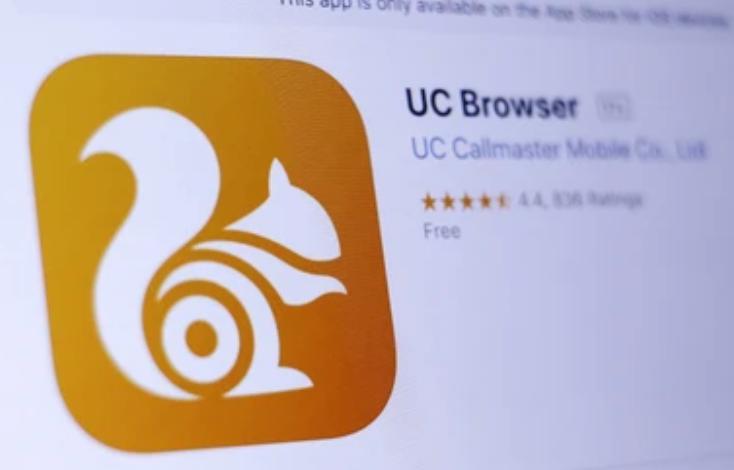
In 2009, Alibaba began investing in UC; by 2014, it completed a full acquisition, subsequently establishing the UC Mobile Business Group. UC's browser, search, app store, and mobile traffic were integrated into Alibaba's own mobile operations.
Ele.me followed a similar path. Alibaba first took a stake in 2016 and acquired the remaining shares in 2018 for an enterprise value of $9.5 billion. The goal then was to integrate Ele.me's instant delivery, local merchants, and consumer services into Alibaba's "New Retail" strategy. By June 2025, Ele.me was merged into Alibaba's China E-commerce Business Group, rebranding as Taobao Flash Sale in December of the same year.
These deals were not just about acquiring shares but also reshaping Alibaba's business boundaries. UC filled the mobile entry point gap; Ele.me enhanced local fulfillment capabilities. Browsers, search, Alipay, Taobao, merchants, and delivery services were ultimately reorganized around Taobao's accounts and transactions.
This was how the past "Alibaba ecosystem" was formed—first entering a company through equity, then integrating it into the group via organization, payments, traffic, and data. The investment endpoint was not merely holding shares but redefining Alibaba's own boundaries.
Moonshot AI and Kling lack such defined destinations. Alibaba's definite relationship with Moonshot AI begins with equity. Moonshot AI continues to independently operate Kimi, managing its own models, users, financing, and listing plans. If it procures Alibaba Cloud resources or collaborates with Alibaba businesses, Alibaba may gain cloud revenue and industrial synergy, but these benefits do not automatically follow investment. According to Tencent Technology, citing insiders, some of Alibaba's investments in model companies include "computing power discounts" or cloud resource arrangements, creating both equity relationships and cloud customer relationships simultaneously.
The same applies to Kling. Alibaba participated in the funding round, but Kuaishou remains in control, allowing Alibaba to share in Kling's valuation appreciation without determining its organizational Belonging (affiliation), computing power procurement, or commercialization direction, as it could after acquiring UC. Post-funding, Kuaishou still holds approximately 68% of Kling.
Changxin Technology further illustrates that investing across every layer of the industrial chain does not equate to simultaneously reaping operational benefits at every layer. As a Changxin shareholder, Alibaba can share in the growth of domestic DRAM demand and the company's valuation rise; as a cloud provider, it is also a purchaser of servers and memory.
According to the prospectus, Alibaba Cloud is also one of Changxin's clients. The same storage price hikes that benefit Changxin's revenue and valuation mean higher procurement costs for Alibaba Cloud. Gains on the equity ledger do not automatically improve cloud business profitability.
This differs from the closed loops seen with UC and Ele.me. UC's traffic growth could feed into Taobao and advertising; Ele.me's order growth could drive payments, delivery, and local merchant services. While value was distributed across different businesses, it ultimately revolved around a single transaction.
Today's AI investments resemble a portfolio. If external models succeed, Alibaba may share in equity appreciation; if industry demand for computing power grows, Alibaba Cloud has opportunities to secure new orders; if Qwen succeeds, model and application revenues remain within the group; if storage becomes a bottleneck, Alibaba has already secured upstream stakes.
This portfolio reduces the risk of betting on a single technological path, ensuring Alibaba is not entirely excluded from any particular future. However, it is difficult to organize these investments into a single operational system, as was possible with UC and Ele.me.
Alibaba is purchasing more possibilities rather than a new entry point.

An investment portfolio alone does not naturally form an ecosystem.
In March, Alibaba began artificially establishing a new organizational hub: the Alibaba Token Hub Business Group, directly overseen by Wu Yongming. Teams including Tongyi Labs, MaaS, Qwen, Wukong, and AI Innovation were placed under this new entity. Internally, three actions were planned for this system: creating Tokens, delivering Tokens, and applying Tokens.
Within this framework, Qwen is responsible for generating model capabilities, Alibaba Cloud for delivering models and computing power to enterprises, and Qwen, Wukong, and other group businesses for consuming Tokens while attempting to convert these interactions into consumer, office, and enterprise services. Models, cloud services, and applications, previously scattered across different organizations, are now expected to form a cohesive chain.
Qwen's integration with Taobao represents the most significant attempt along this chain. In May of this year, the Qwen App integrated with over 4 billion products on Taobao and Tmall. Users could search, compare, place orders, manage logistics, and handle after-sales within Qwen; Taobao also launched a Qwen shopping assistant internally.
This follows a familiar Alibaba path: users express needs, Qwen translates natural language into products and services, and Taobao provides the products and merchants. Payments, advertising, commissions, and fulfillment remain within the group; order data then feeds back to train recommendations and models, offering the potential for Tokens to evolve into transactions.
However, Taobao became the center of Alibaba's ecosystem because it controlled transactions. It had a unified settlement outcome: orders. Merchant advertising spend, platform-generated traffic, Alipay payments, and logistics volumes all ultimately tied back to transaction volume and revenue.
"Double 11" further compressed this system into a repeatable, measurable timeframe, where traffic, merchants, payments, logistics, servers, and user demand converged simultaneously. The platform knew how much traffic it invested, merchants knew how many orders they received, and payments and logistics knew the scale they needed to handle.
AI lacks such a settlement counter. Tokens only prove model usage, not completed transactions. Increased call volumes might simply reflect more users trialing the system or an agent repeatedly reading context, calling tools, and correcting errors to complete a task. Kimi K3 reaching capacity within two days of launch also demonstrates that the easier models are to use, total computing demand may not necessarily decline with unit cost reductions.
Alibaba Cloud has already seen revenue growth from overall AI demand, with external revenue increasing by 40% year-on-year in the quarter ending March 2026; AI-related product revenue reached 8.971 billion yuan for the quarter, accounting for 30% of external revenue and annualizing to over 35.8 billion yuan. The number of clients on the Bai Lian platform increased eightfold year-on-year.
AI has begun generating revenue for Alibaba Cloud, but how much the entire Alibaba group has gained from this round of AI investments remains unclear from current financial reports. Reuters Breakingviews noted in May that while Alibaba Cloud's revenue and profits are disclosed separately, some costs related to model training and chat applications are categorized under "all other" segments. While the cloud business shows returns, the profitability of the entire AI investment portfolio cannot be determined from a single financial statement.
The same AI strategy is recorded across different ledgers. Alibaba attempts to unify these businesses through Token Hub, but external investments remain outside this chain. Moonshot AI users do not automatically flow to Qwen; Kling revenue does not automatically go to Alibaba Cloud; Changxin profits do not automatically reduce Alibaba's storage costs. These companies' connections to Alibaba remain primarily through equity, procurement, and partnerships.
In the past, Alibaba built its ecosystem through unified accounts, payments, and transactions. Today, it has created an AI investment map but has yet to find a hub capable of consolidating the value represented on that map.

The paper gain from Changxin's listing, the traffic acquired by Kimi, and Alibaba Cloud's 40% external revenue growth all indicate that Alibaba's AI investments over the past few years are beginning to realize value.
However, these returns are not on the same chain. The value of Moonshot AI first manifests as equity, while Kling remains controlled by Kuaishou. The profits of Changxin may correspond to higher procurement costs for Alibaba Cloud. The revenue and traffic generated by Qwen and Tongyi Qianwen belong to Alibaba, which also needs to bear the costs of model training, inference, and customer acquisition on the consumption side.
These relationships make it difficult for Alibaba to determine whether its entire AI strategy has entered the harvest phase solely based on a single investment return or a cloud revenue growth rate. The unrealized gains from Changxin and the viral success of Kimi are more like two types of signals: On the one hand, Alibaba's early layout (Chinese term left as is for context, but translated meaning below) in different technological routes is beginning to be priced by the market. ( layout means 'strategic layout ' or 'strategic positioning') On the other hand, the stronger the demand, the more it needs to continue purchasing GPUs, expanding data centers, training models, and completing applications.
In the past, Alibaba was able to transform investments into organizational strength. UC was integrated into the Mobile Business Group, while Ele.me was incorporated into E-commerce and Instant Retail. External traffic and services were ultimately rearranged around Taobao transactions. In the AI era, Alibaba has already established positions in chips, storage, cloud, models, and applications. However, it still lacks a unified account, transaction, or profit metric to consolidate the value generated by these positions.
Alibaba has secured positions in more future possibilities but has not yet found a new Taobao that can organize these positions into a central hub.
*The featured image and illustrations in the text are sourced from the internet.
-
![]()
Unraveling the Decline of the Imported Car Market
-
![]()
Interpretation of the European + UK Automobile Market in the First Half of 2026: Electrification Surpasses Critical Point, Chinese Brands Experience Collective Growth in Sales
-
![]()
Farewell to the 'Little Blue Light': Advanced Driving Assistance Systems Still Require Standardization
-
![]()
Feishu Merges with Doubao, DingTalk Teams Up with Wukong: Are BAT Titans Attempting to 'Corner' AI Talent?
-
![]()
Final Ruling: Fuel-Powered Vehicles Are Far from Being Phased Out and Still Exhibit Robust Vitality
-
![]()
Bypass, Blockade, and Redirection: The Two Debuts of Doubao Phone
-
![]()
Lynk & Co Engineer Suggests Xiaopeng's 400V Battery Platform Is Obsolete; Xiaopeng Executive Calls It 'Unprofessional'; Xiaopeng Customer Service Denies Direct Performance Comparison
-
![]()
Alibaba's AI Investment Spree: Can It Create a New Ecosystem Worth Billions?