Too Pessimistic! MiniMax Isn't Doing That Badly
 08/27 2026
 335
335
China's independent model provider MiniMax, which has been gradually falling behind, released its first-half results after the market closed on August 26. With March and June as key inflection points, MiniMax's valuation plummeted from $55 billion to $13.5 billion. But is its actual performance really that dire?
Let's take a closer look:
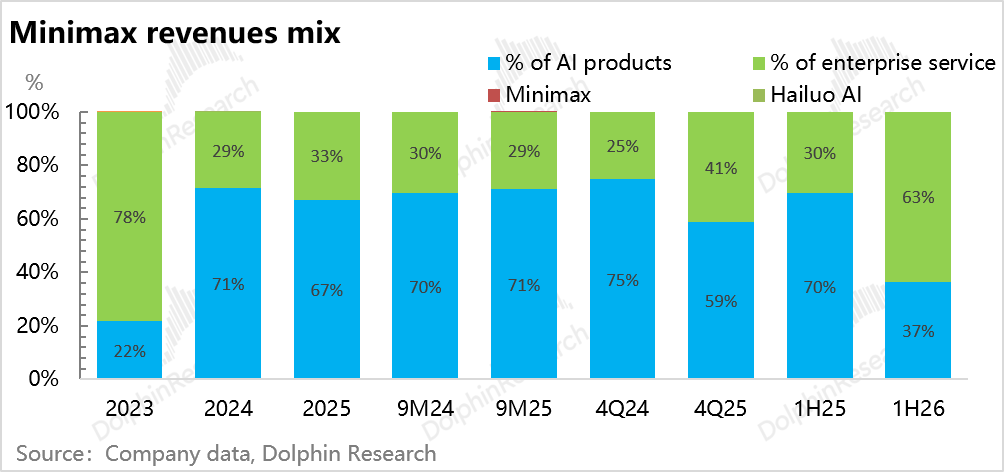
I. Revenue: In a Boom Year for Coding, To-C AI Apps Take a Backseat—B-End Now Contributes Over 60%!
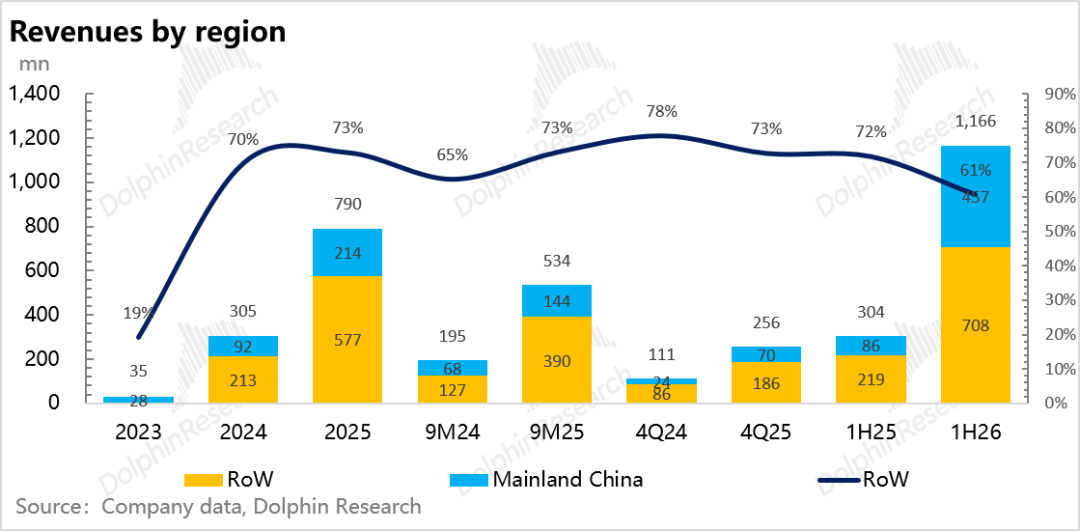
MiniMax's revenue structure in the first half of 2026 shifted significantly from its original focus on monetizing AI research value through international to-C channels. Here are some key figures:
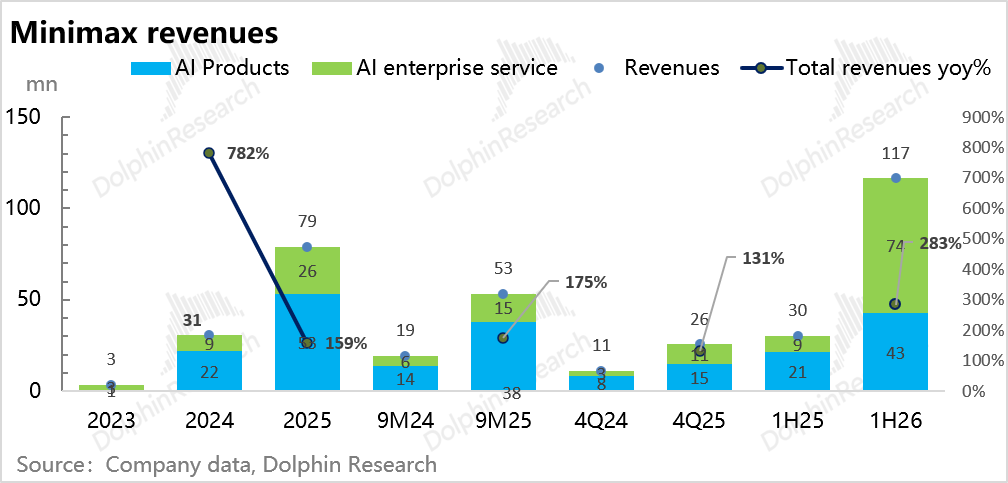
1. Total Revenue: $117 million, representing a 283% YoY increase.
2. Products: The AI app family (including Minimax, video generation app Conch AI, audio generation app Minimax Audio, and Talkie, primarily driven by Talkie and Conch AI) generated $43 million in revenue, up 101% YoY and accelerating from 82% in Q4. This growth was largely driven by the Conch app.
3. Enterprise Services: AI model-as-a-service for enterprise users, which involves selling API interfaces across various modalities and Coding Plans, generated $74 million in revenue. This represents a further acceleration to 703% YoY growth, following nearly 300% growth in Q4 last year.
Most market expectations were below $70 million. Given the known failure of the M3 model and its pricing in the market, this performance is actually not bad.
c. Key Takeaways: The company disclosed several hard-hitting details during its earnings call:
· ARR further increased to over $800 million in August; 80% of ARR came from enterprise users (vs. only 30% last year).
· Q2 revenue rose 81.8% QoQ compared to Q1.
· Token consumption in July reached 20 times that of January, primarily driven by multimodal capabilities of agents and M3 after the Spring Festival.
· Token growth also came from new use cases: interactions shifted from human-agent to agent-agent (significantly faster than human-agent), and rapid growth in per-user consumption.
Notably, the company set a full-year ARR target of $1 billion. The rapid consumption of tokens through M3 and agent interactions pushed ARR above $800 million in August. Amid widespread pessimism, sell-side estimates for August ARR were around $600 million.
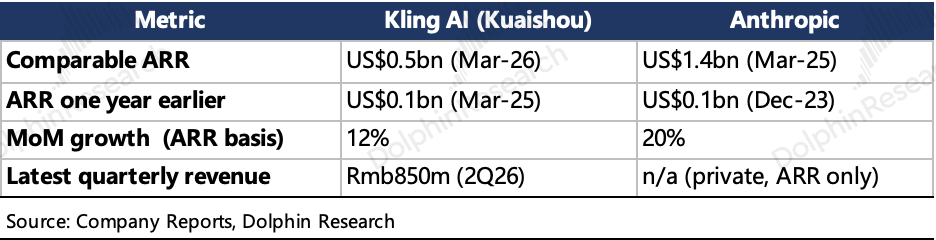
Additionally, the new video model H3 was only launched in late July and has garnered a strong reputation in video generation. With Kling's ARR seemingly stagnant, there is hope that H3 will capture more token consumption.
2) Overseas Revenue Share Drops to 60%
Another defining feature of MiniMax as a Chinese independent model provider is the monetization of AI apps overseas. However, with the rising share of to-B business, the overseas revenue share has dropped to 61%.
Given the significant decline in revenue from products primarily monetized through overseas AI apps, it is difficult to determine whether the overseas contribution share in API+coding to-B services is rising or falling.
Nevertheless, even for model-as-a-service revenue, Dolphin Research believes that MiniMax's pursuit of overseas markets remains essential.
4) Can Current Revenue Cover Training Costs for Previous Models? Coding Boom Benefits All Models
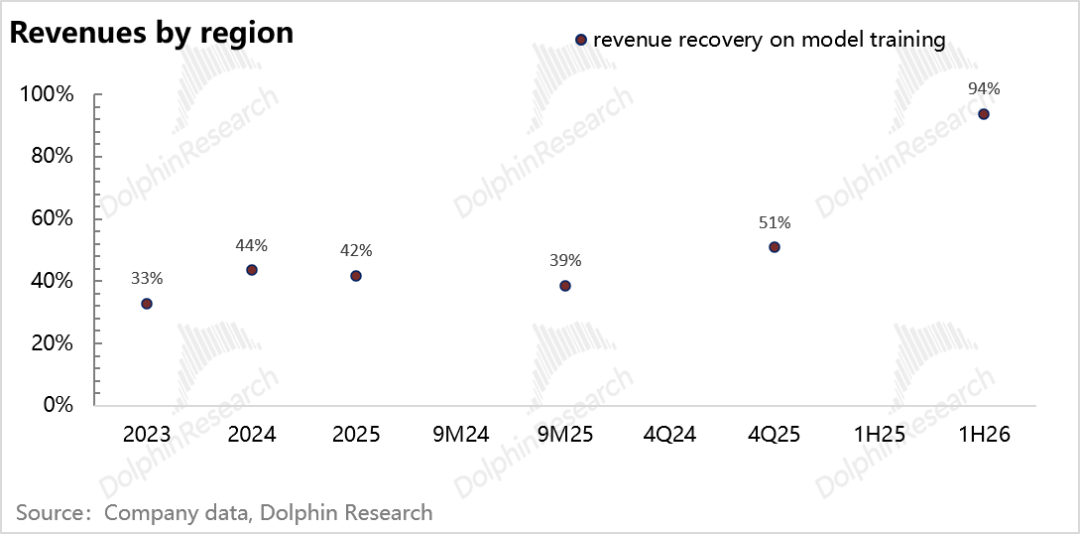
Since foundation models are updated annually, a model trained over a year only has a one-year service life. Thus, a model's economic viability can be partially assessed by comparing its direct and indirect revenue in a given year to the training costs incurred in the previous year.
The surge in to-B coding demand has significantly improved revenue recovery for training investments in previous models, even for providers like MiniMax, which has not been highly successful in coding.
Using total R&D expenditure from the first half of last year (primarily training costs and R&D personnel expenses) as a rough estimate for 2026, the revenue confirmed in the first half of this year was approximately 94% of the training costs incurred in the first half of last year. Recouping model training costs is no longer an issue.
III. Enterprise Services: API Price War Erodes MiniMax's Gross Margin
Previously, enterprise services enjoyed higher gross margins (economically, it's a matter of token inference cloud costs vs. Minimax's token pricing). Enterprise clients paying for API access were the norm, with gross margins nearing 70% in the first three quarters of last year.
However, in the first half of 2026, despite the significant increase in to-B business, the company's overall gross margin fell to 18%, down from 30% in Q4 and failing to reach 20%.
Dolphin Research estimates it may be around 25%. With model capabilities not strong enough and DeepSeek offering extreme cost-effectiveness, MiniMax, caught in the middle, saw to-B business surge but gross margins collapse amid API price cuts.
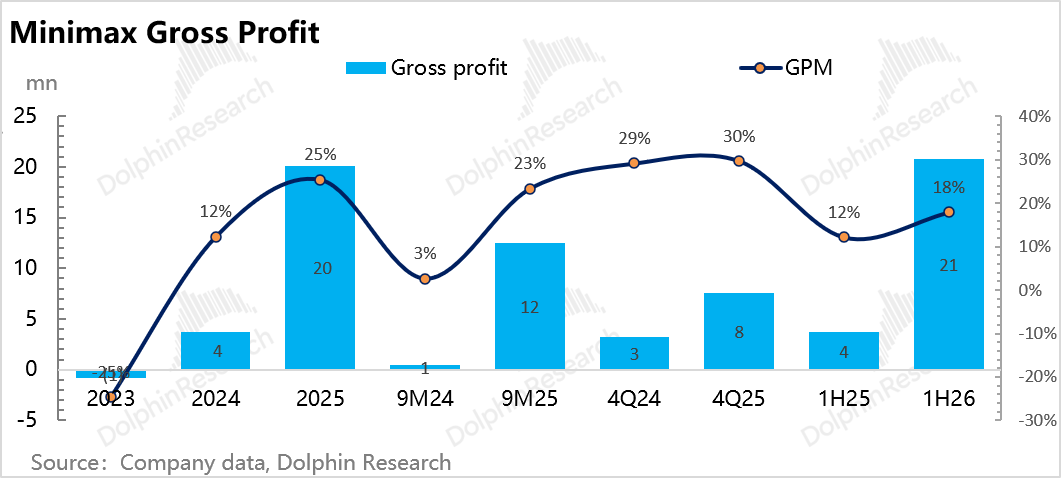
Since token inference costs dominate expenses, and industry-wide per-token compute costs are declining (though compute costs will rise in the second half of 2026), the benefits of falling token prices and increased consumption were primarily captured by SOTA model providers like Claude. Ordinary model providers, like MiniMax, were left competing on price. For MiniMax, this meant rising revenue but falling gross margins.
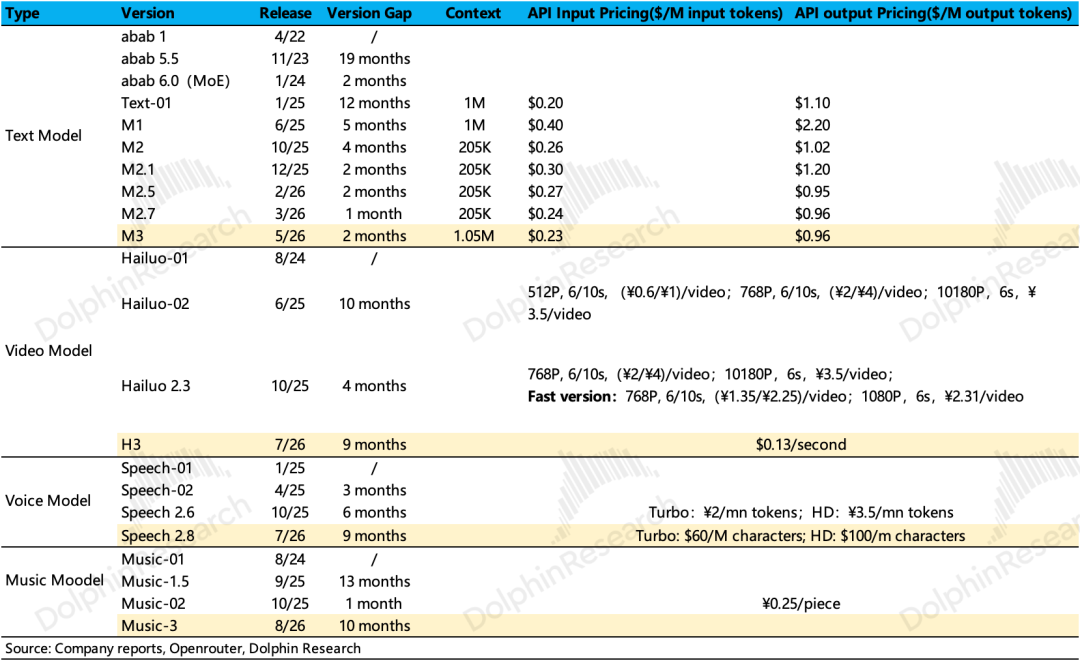
Notably, MiniMax's flagship M3 model released in the first half of the year not only failed to keep pace in coding—a key area—but also made a critical pricing mistake. Without sufficient communication, the pricing unit was changed from per-call to per-token consumed, making pricing opaque and failing to smoothly transition existing entitlements.
The result? A permanent 50% price cut shortly after a price hike. The model's improved capabilities did not translate to stronger pricing power, reflecting both its relatively low intelligence premium compared to peers and the pricing misstep.
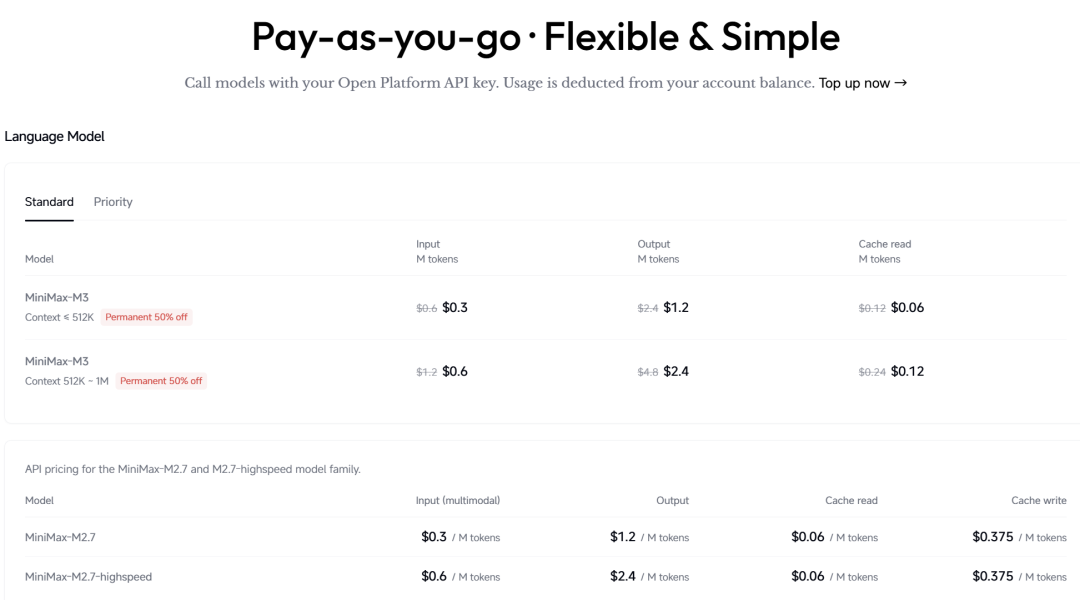
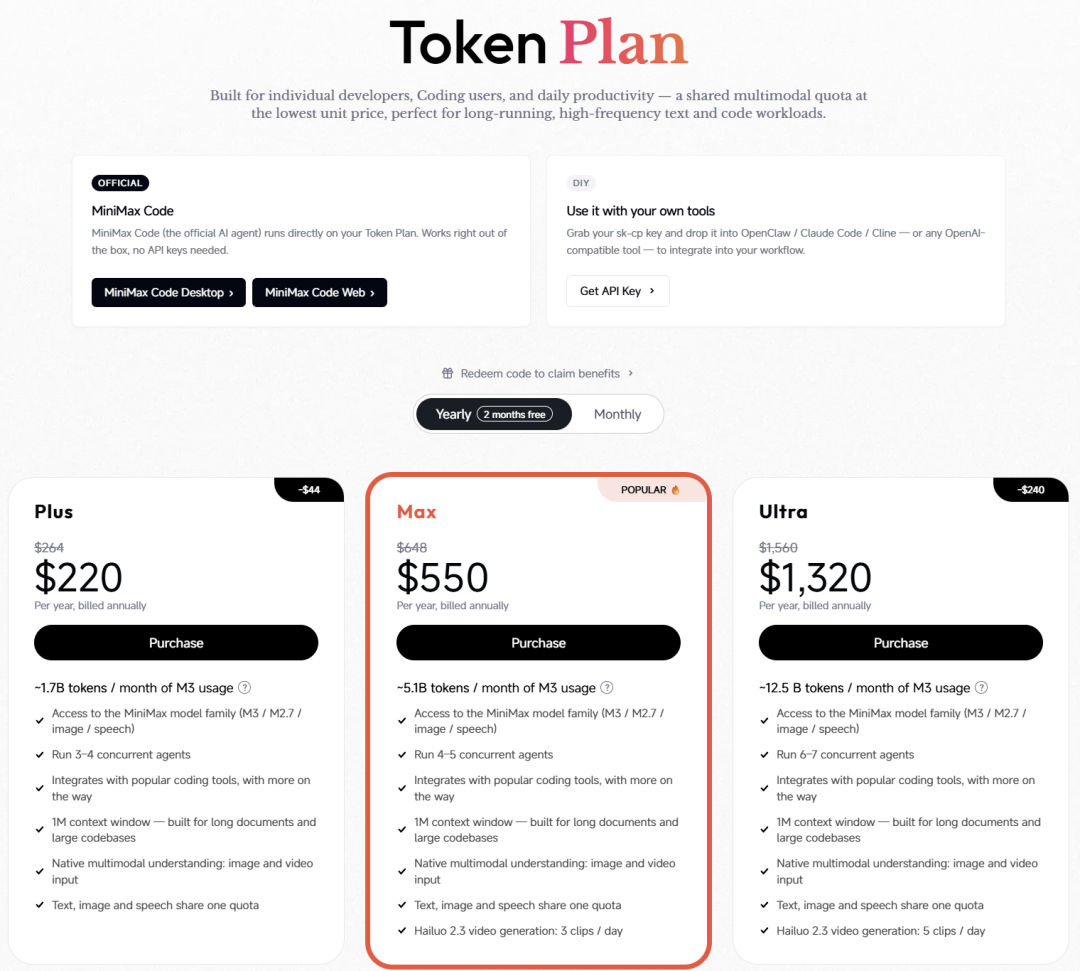
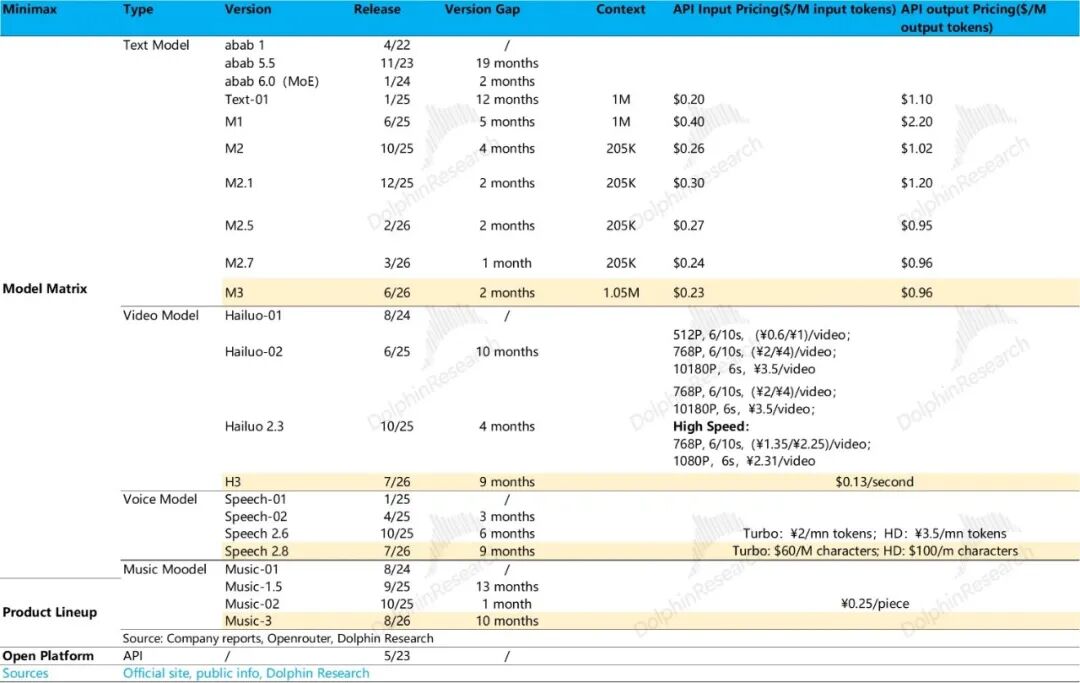
After this sequence of price hikes followed by cuts, the new model received no additional pricing compensation for its extended context length. Since this pricing adjustment occurred after June 15, 2026, the second half of the year will reveal whether API price cuts or cost reductions from domestic compute will prevail.
Nevertheless, the company is confident in improving gross margins in the second half of the year and provided guidance for sustained margin expansion beyond 2026.
IV. Losses: Absolute Value Widens, but Loss Rate Narrows—Not Bad
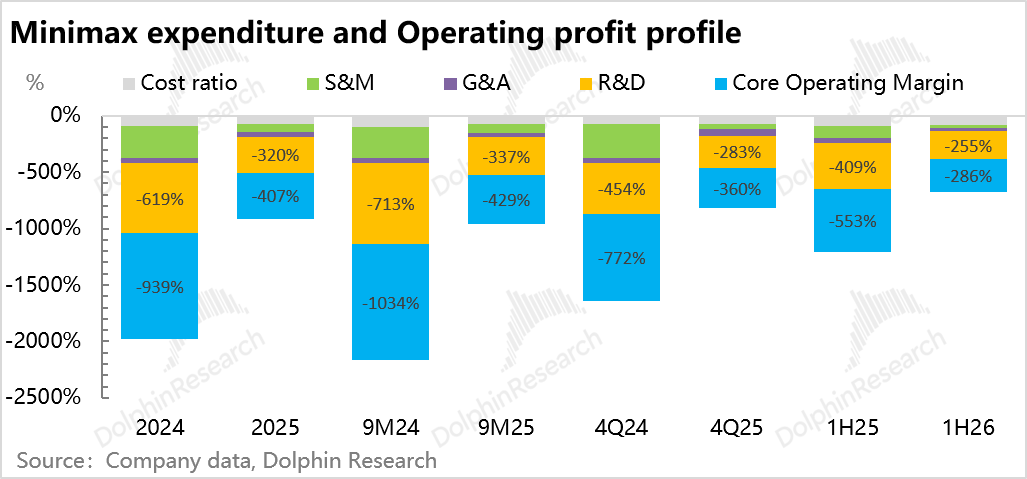
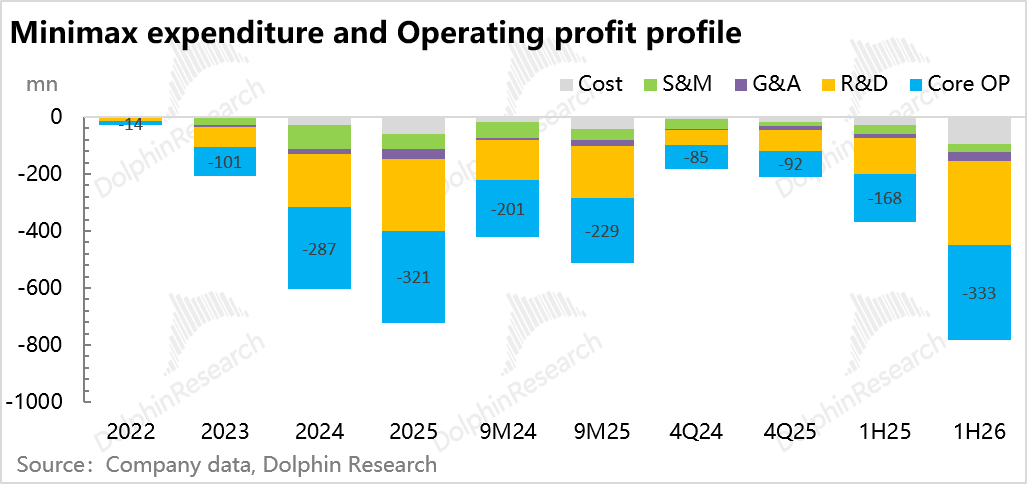
With revenue of just under $120 million in the first half of the year and an operating loss of $330 million (excluding changes in financial assets and amortization/depreciation), the absolute loss doubled YoY. However, the loss rate narrowed to 300% of revenue, which is not bad.
For large model businesses, seemingly decent gross margins are misleading because the largest investment—training costs—is classified under R&D expenses. With R&D expenses alone running at 3-5x revenue, breaking even is difficult as long as rapid model iteration through training continues (click here for why).
MiniMax's R&D expenses (primarily training costs) surged to $300 million in the first half of the year, 2.6x revenue. Despite a -18% YoY change in sales expenses, administrative expenses doubled (due to an expanded management team and higher external professional service costs), resulting in a $330 million operating loss from core business operations.
Dolphin Research's Overall View
Since the last earnings report, MiniMax and Zhipu, the two leading Chinese model providers listed in Hong Kong, have taken divergent paths. Zhipu, leveraging its strength in coding, maintains a valuation of over $60 billion even after a pullback, while MiniMax languishes at $13.5 billion, below Kling's $18 billion valuation in the primary market.
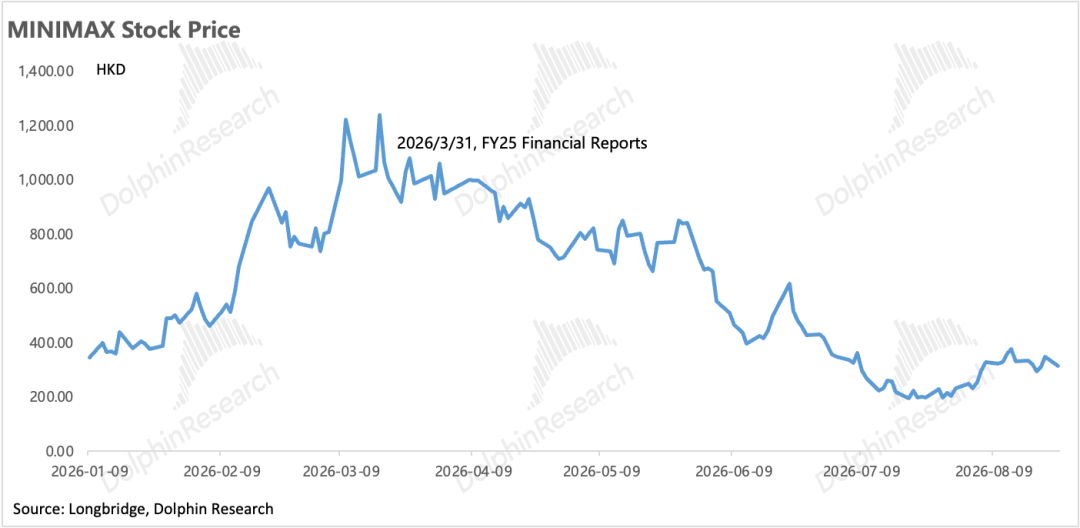
Dolphin Research attributes MiniMax's sharp decline to four key factors:
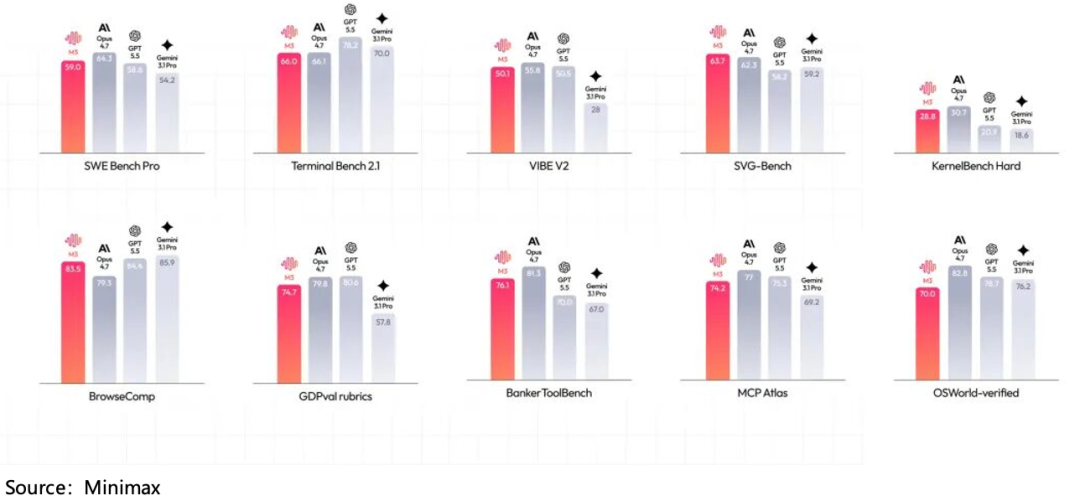
1) Core Issue: M3 Model Underperforms in Real-World Applications
A model's pricing power depends on its intelligence scarcity, and this round of successful monetization centers on to-B coding scenarios. MiniMax and OpenAI represent C-end models, while Anthropic and Zhipu represent B-end models.
In this context, MiniMax's M3 model, released on June 1, focused on native multimodality in its initial pre-training corpus. Based on Dolphin Research's findings, pure text accounted for only 15-20% of the corpus, which primarily consisted of text-image interleaved data, image captions, charts, webpage screenshots, and documents.
In post-training task self-execution (a key area for coding), the M3 model underperformed SOTA models in execution success rates and required excessive trial and error.
Coding emphasizes: a) 1M-long context agent task decomposition and collaboration; b) adversarial loops between producers and verifiers for continuous code generation and correction; and c) human-like computer interface interactions (clicking buttons, entering content). The M3 model was weak in pure code generation accuracy.
2) Slow Iteration of M3
More critically, as a flagship model, the M3 fell behind too quickly and iterated too slowly:
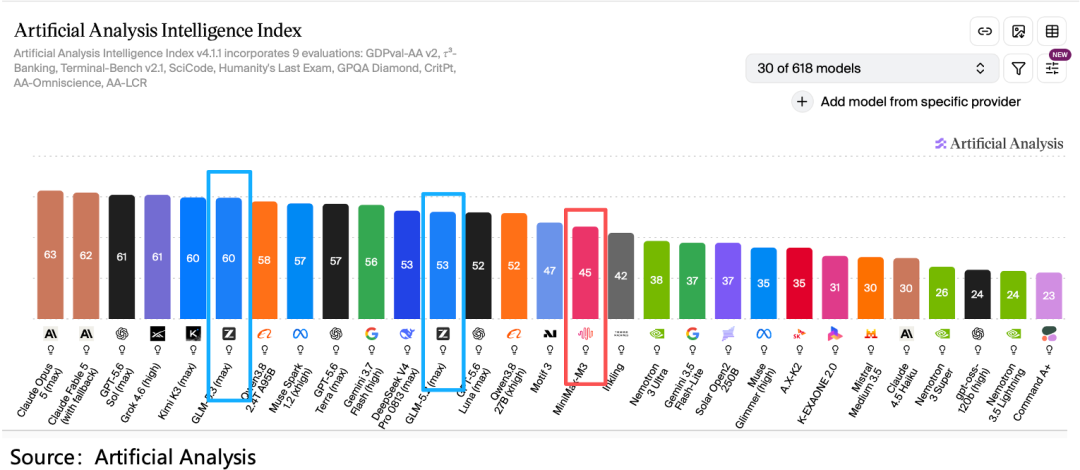
Zhipu: Just 12 days later, Zhipu released GLM 5.2 (initially ranked third globally and first in China for intelligence) and has maintained its second-tier standing, while the M3 has clearly fallen behind.
In contrast, the M3 model had significantly fewer parameters—total parameters of 428 billion and active parameters of 23 billion—compared to GLM-5.2 (744 billion/400 billion), DeepSeek V4 (1.6 trillion/490 billion), and Kimi/Qwen (>2 trillion each). Launching such a lightweight model as a flagship in June was striking.
The gap in new model progress is even more pronounced. Zhipu's GLM 5.3, released on August 14, also ranks among the top models, while MiniMax's next-gen model has yet to launch, highlighting a clear iteration gap.
Management admitted that its release timeline lagged slightly because the company was advancing multiple model routes within the M3 series (M3 language + H3 video) and could not focus solely on text models. Additionally, it was expanding its self-operated compute cluster in Q1 2026.
3) M3's Pricing Misstep at Launch
Under a training strategy emphasizing multimodality, Minimax's coding capabilities were comparatively weaker than its peers. After the launch of M3, product pricing mistakes were made:
Minimax's previous models have been known for offering high performance in lightweight packages. On June 1st, the M3 model was officially released, boasting decent performance. However, it stumbled in product strategy with a pricing error—doubling the price compared to M2.7 and significantly raising subscription plan costs.
On the same day as the release, without warning, the Coding Plan (based on rate limits with no monthly token cap) was replaced with the Token Plan (Plus package at 49 RMB/month = 600 million tokens ≈ 12,000 calls), sparking dissatisfaction among previous subscribers. For power users, the new package failed to meet their usage demands, leading to significant controversy within the developer community.
4) Compounding Challenges: Financing + Lock-Up Expiry
MiniMax's cornerstone and Pre-IPO investors' lock-up expired on July 8th, increasing the free float by 10 times (from 5.44% to 54.38% of total shares), resulting in greater selling pressure.
Simultaneously, the company raised approximately US$2.1 billion (HK$16 billion) in July through share placement and convertible bonds: the share placement accounted for 11% of total shares, and if the CB is fully converted, an additional 6%, leading to a maximum dilution of 17%.
This requires accelerated model iteration and ARR growth to offset the impact of equity dilution.
1)-4) Resonance: The market's sentiment further linearly interpreted the model's temporary setbacks as a structural decline in Minimax's model capabilities, suggesting a fall from the top tier to the second tier! The stock price plummeted.
This time, the company directly announced that its ARR exceeded US$800 million in August, implying a mere 17x PS, indicating that pessimism had gone too far. The market originally estimated it would likely fall short of its US$1 billion annual target.
Dolphin Research estimates that, based on an ARR of US$400 million in May and US$800 million in August, with a month-over-month increase exceeding 25%, a linear extrapolation suggests that exceeding US$1 billion by the end of the year is almost certain.
Given the resonance of the three factors mentioned below in the second half of the year, the probability of marginal improvement is actually not low.
Bottom Line—The competition among model manufacturers is actually characterized by interleaved leadership rather than sustained dominance by a single model in terms of SOTA performance or structural decline. When assets are linearly priced based on this mindset, it creates investment opportunities for both long and short positions.
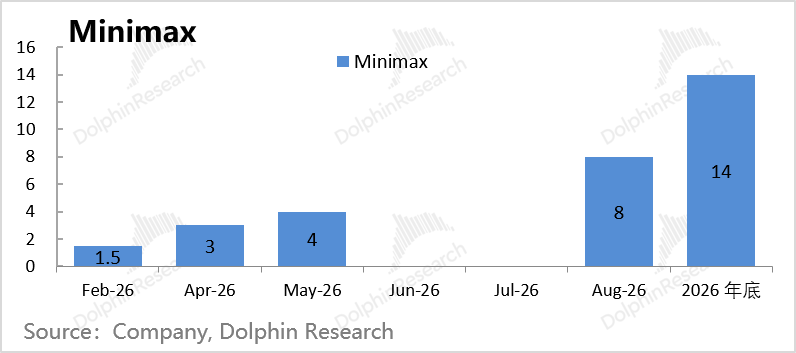
Dolphin Research believes that the catalysts for Minimax's upward trajectory in the second half of the year mainly involve the following three aspects:
1) Multimodal Investment: An Upward Option
This year, a significant reason for Minimax's weakness in coding was due to resources being diverted to multimodal development, which yielded little impact in the first half of the year. It wasn't until late July that the company launched its video model, H3.
In the video model domain: ByteDance's Seedance 2.0 was the first to achieve SOTA performance, followed by the simultaneous launch of H3 and Seedance 2.5 in late July. Compared to Seeddance 2.5, H3 primarily offers higher cost-effectiveness. While slightly inferior to ByteDance's model, it outperforms Kling and Google's Veo.
Considering that Kling currently generates US$42 million in monthly revenue, H3 should still have room for revenue growth. This can be viewed as an upward option, which needs to be tracked through subsequent increases in ARR.
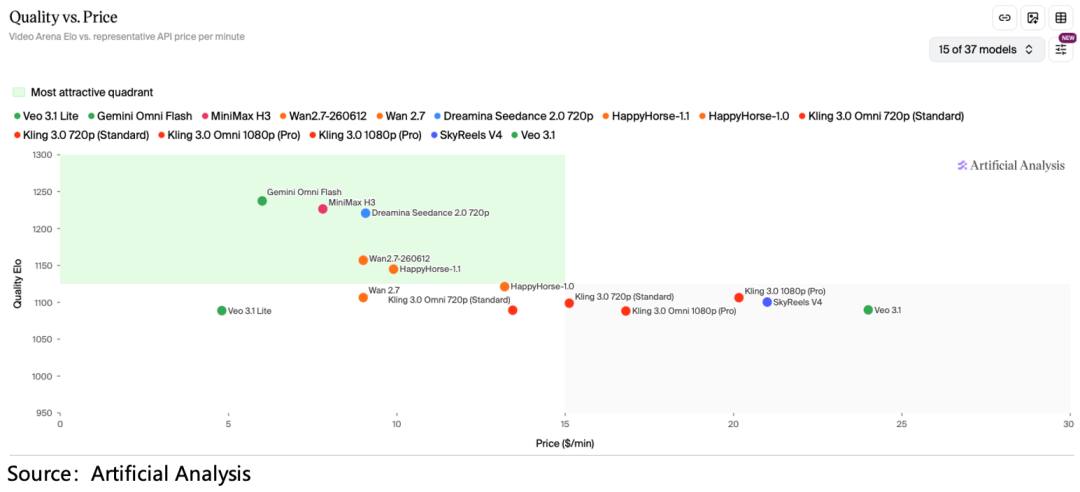
Of course, capturing revenue from major players' video models may not be so easy—both have extensive application ecosystems as CSPs. Minimax, relying solely on its model with weaker channel distribution, requires further observation.
2) M3.1: Can It Narrow the Coding Gap?
According to news, the updated version of M3, M3.1, focuses on post-training, effectively patching up gaps in the coding domain. It is expected to be released in August or September. Attention can be paid to whether the new model provides significant improvements in coding.
3) Blockbuster Model: Is the Trillion-Parameter Minimax M3pro Coming?
According to Minimax's pipeline, Minimax M3pro, the first trillion-parameter model, will be released in September-October: total parameters will jump from 428 billion to 2.7 trillion, with 60 billion activated parameters. Additionally, it is rumored that the company has begun researching a model with 5 trillion parameters.
However, concerning Minimax M3pro, to Dolphin Research's surprise, according to management's communication at the latest analyst day, the model's core pursuit is significant cost-efficiency advantages rather than SOTA performance. Management's tone shifted from March and May, when the goal was to "achieve Opus-level capabilities and rank among the global top tier." Management's judgment on the subsequent competitive landscape is that pricing, cost efficiency, and inference speed will become key drivers for user choice.
Dolphin Research's view is that, while the Scaling Law has not yet failed (adding parameters = increasing model intelligence), the model's intelligence level remains the most critical competitive factor. Competition based on cost-effectiveness will only truly emerge when SOTA models struggle to progress, and the intelligence gap between different models narrows.
The company's statement, in Dolphin Research's view, reflects a strategic choice: unlike Anthropic's pursuit of SOTA in text-only models overseas, OpenAI's pursuit of SOTA in multimodality, or DeepSeek's pursuit of relative leading cost-effectiveness in text-only models domestically, Minimax's strategic positioning may have shifted towards extreme cost-effectiveness with relative leadership in multimodality.
Under this strategic choice, the company still opted for multimodal R&D and expanded self-operated computing power during the text-first phase. However, Dolphin Research questions whether making this choice so early, to the extent of affecting model intelligence R&D, is advisable. Especially since competition from a cost-effectiveness perspective is currently fierce—for example, Kimi's K3 has set a new benchmark for the performance and price of subsequent open-source models. For more details, please click here.
- END -
// Reprint Authorization
This article is an original piece by Dolphin Research. Authorization is required for reprinting.
// Disclaimer and General Disclosure
This report is for general comprehensive data purposes only, intended for general reading and data reference by users of Dolphin Research and its affiliated institutions. It does not consider the specific investment objectives, investment product preferences, risk tolerance, financial status, or special needs of any individual receiving this report. Investors must consult with independent professional advisors before making investment decisions based on this report. Any person making investment decisions based on the content or information referenced in this report assumes their own risk. Dolphin Research shall not be liable for any direct or indirect responsibilities or losses that may arise from the use of the data contained in this report. The information and data in this report are based on publicly available sources and are for reference purposes only. Dolphin Research strives to ensure but does not guarantee the reliability, accuracy, and completeness of the information and data.
The information or opinions expressed in this report shall not, under any jurisdiction, be considered or construed as an offer to sell securities or an invitation to buy or sell securities, nor shall they constitute recommendations, inquiries, or endorsements of relevant securities or related financial instruments. The information, tools, and data contained in this report are not intended for or intended to be distributed to jurisdictions where the distribution, publication, provision, or use of such information, tools, and data contradicts applicable laws or regulations, or to citizens or residents of jurisdictions where Dolphin Research and/or its subsidiaries or affiliates are required to comply with any registration or licensing requirements in that jurisdiction.
This report merely reflects the personal views, insights, and analytical methods of the relevant creators and does not represent the stance of Dolphin Research and/or its affiliated institutions.
This report is produced by Dolphin Research, and the copyright is solely owned by Dolphin Research. No institution or individual may, without the prior written consent of Dolphin Research, (i) make, copy, duplicate, reproduce, forward, or create any form of copies or replicas in any manner, and/or (ii) directly or indirectly redistribute or transfer to other unauthorized persons. Dolphin Research reserves all relevant rights.
-
![]()
Too Pessimistic! MiniMax Isn't Doing That Badly
-
![]()
The 150,000-Yuan SUV Market: A Tempting yet Elusive Prize
-
![]()
The Endgame for New Car-Making Forces Is Set: Only a Three-Year Window Remains, Who Will Be Completely Eliminated?
-
![]()
Who Crossed the 'Kill Line' After DeepSeek's Price Adjustment?
-
![]()
Profits Plunge by 61% in the First Half of the Year! The Rise and Challenges of Great Wall Motors
-
![]()
BYD Han Unveiled for Pre-sale with Striking Design, Sparking Netizen Debate: Is It Merely an Enhanced Version of a Ride-Hailing Vehicle?
-
![]()
BAIC Taitan 700 vs. Xiangjie G9: A Clash of Kin, How Will Yu Chengdong Navigate This Challenge?", "Taitan 700, Xiangjie G9, BAIC, Huawei Intelligent Driving, Pricing Showdown", "BAIC has unveiled its
-
![]()
Volkswagen's Layoffs and Factory Closures: What Should Car Owners Make of It?